Hardcover. London, Oxford University Press, 1st, 1995, Book: Very Good, Dust Jacket: Near Fine, 499 pages. Hardcover. B/w illustrations throughout. Black cover boards, gilt title on spine. Dust jacket unclipped, excellent. Beautiful, like new condition. This is the first intellectual biography of Descartes in English; it offers a fundamental reassessment of all aspects of his life and work.
Softcover. NY, Routledge, reprint, 2016, Book: Very Good, Dust Jacket: None, Softcover, pictorial wrappers, 265 pages. Dialogue between characters is an important feature of South Asian religious literature: entire narratives are often presented as a dialogue between two or more individuals, or the narrative or discourse is presented as a series of embedded conversations from different times and places. Including some of the most established scholars of South Asian religious texts, this book examines the use of dialogue in early South Asian texts with an interdisciplinary approach that crosses traditional boundaries between religious traditions. The contributors shed new light on the cultural ideas and practices within religious traditions, as well as presenting an understanding of a range of dynamics - from hostile and competitive to engaged and collaborative. This book is the first to explore the literary dimensions of dialogue in South Asian religious sources, helping to reframe the study of other literary traditions around the world. Clean, bight copy.
Hardcover. NY, Macmillan, reprint, 1929, Book: Very Good, Dust Jacket: None, Hardcover, blue cloth with gilt letterng on spine and front cover, 242 pages. Does Civilization Need Religion? sets out from the fact that religion's inability to make its ethical and social resources available for the solution of the moral problems of modern civilization is one, and the neglected one, of the two chief causes responsible for its debilitated condition. It is convinced that if Christian idealists are to make religion socially effective they will be forced to detach themselves from the dominant secular desires of the nations as well as from the greed of economic groups. It aims to show that though neither the orthodox nor the modern wing of the Christian Church seems capable of initiating a genuine revival which will evolve a morality capable of challenging and maintaining itself against the dominant desires of modern civilization's needs, there are resources in the Christian religion which make it the inevitable basis of any spiritual regeneration of Western civilization. Does Civilization Need Religion? maintains that the task of redeeming Western society rests in a peculiar sense upon Christianity, which has reduced the eternal conflict between self-assertion and self-denial to the paradox of self-assertion through self-denial and made the Cross the symbol of life's highest achievement. It is persuaded that the idea of a potent but yet suffering divine ideal which is defeated by the world but gains its victory in the defeat must continue to remain basic in any morally creative worldview. Names on front fly leaf otherwise a clean copy.
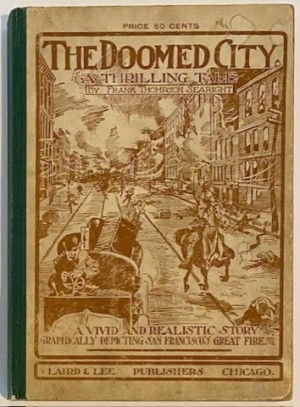
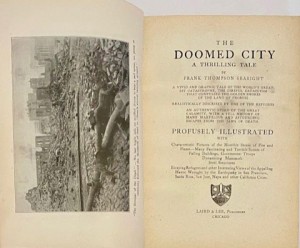
Hardcover. Chicago, IL, Laird & Lee, 1st, 1906, Book: Very Good, Dust Jacket: None, 186 pages. Hardcover. Illustrated front cover. Photo illustrated throughout. Green cloth spine. Original binding with a touch of water staining on front cover right corner. Pages and edges have a touch of tanning from age, doesn't affect text or images. Spine is becoming separated from coverboard, but still attached and repairable. "A vivid and realistic story graphically depicting San Fancisco's great fire."
Hardcover. NY, Harper Design, 1st, 2023, Hardcover in pictorial boards, 223 pages illustrated in color. From longtime fashion director, consultant, media personality, and author, Hal Rubenstein, comes a lush, full color, illustrated guide to the most influential fashion on television from the 1950s to today, revealing the surprising ways our favorite shows have significantly reflected and often shaped the way we dress. From Mary Tyler Moore's capri pants on The Dick van Dyke Show and Emma Peel's dominatrix jumpsuit on The Avengers to Olivia Pope's trademark white trench on Scandal and Don Drapers' grey sharkskin suits on Mad Men Dressing the Part is a rich history of popular American fashion and culture in the modern age. In this gorgeous compendium, the longtime fashion director and expert identifies the most stylish television shows of the past 70 years, highlighting the ways they have affected and often inspired ordinary Americans' wardrobes. Combining his decades of fashion expertise and insider knowledge with lush photographs, archival sketches, fascinating interviews with over two dozen of television's best costume designers, commentary from showrunners and co-stars, and little-known backstories, Rubenstein reveals with insight and wit how television has shaped everyday fashion, guiding and often elevating how we dress. Clean copy.
Hardcover. New York, Alfred A. Knopf, 1st Edition, 2023, Book: Near Fine, Dust Jacket: Near Fine, 695 pages. Hardcover. Decorated endpapers. Color and b/w illustrations throughout, including maps. Pages clean and bright. Spine straight. Binding tight. Dust jacket unclipped, excellent condition. Yellow cover boards, green quarter cloth, gilt title on spine.
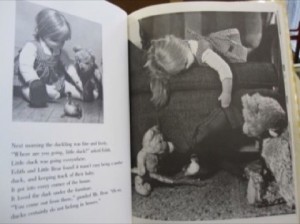
Hardcover. NY, Doubleday & Company, 2nd pr., 1981, Book: Very Good, Dust Jacket: None, Hardcover, pictorial cloth, 48 pages. Illustrated with Dare Wright's b&w photos featuring a doll with her teddy bears and a live duckling. No dust jacket, Clean and bright, no markings.
Hardcover. Berkeley CA, University of California Press, 1st, 1986, Book: Very Good, Dust Jacket: Very Good, Hardcover in a bright dust jacket, 264 pages, photographs throughout. Egypt After the Pharoahs treats the period which witnessed the arrival of the Greeks and Hellenistic culture in Egypt, the reign of the Ptolemies from Ptolemy I to Cleopatra, the conquest by Rome, the scientific and cultural achievements of Alexandria, and the rise of Christianity. The rich social, cultural, and intellectual ferment of this period comes alive in Alan Bowman's narrative. Clean copy.
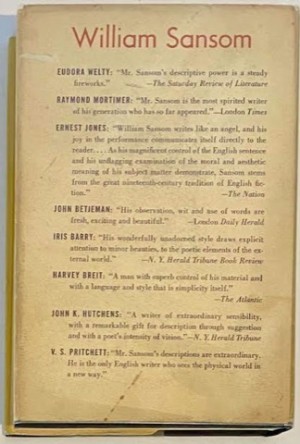
Hardcover. New York, Harcourt, Brace and Company, 1st American Edition, 1951, Book: Very Good, Dust Jacket: Good, 253 pages. Hardcover. Blue cover boards, pink title on spine, boards in excellent condition. Dust jacket unclipped, has some age wear, wrapped in clear, plastic mylar for protection. Pages have some very light tanning, unmarked. "Sansom has coupled his storyteller's art with his incomparable and lucent style."
Hardcover. NY, Rizzoli, 1st, 2010, Book: Very Good, Dust Jacket: Very Good, Hardcover in a bright dust jacket, 317 pages plus index. Definitive chronicle of Fellini's work, published on the 50th anniversary of "La Dolce Vita." Features the director's drawings, storyboards, notes, and commentary, and behind the scenes photos. Material is drawn primarily from archives of the Fondazione Federico Fellini and covers each film from his entire career. Clean copy. DUE TO WEIGHT, DOMESTIC SHIPPING ONLY.
Hardcover. New Haven CT, Yale University Press, 1st, 2004, Book: Very Good, Dust Jacket: Very Good, Hardcover in a bright dust jacket. 387 pages, b&w illustrations throughout. Remainder marks to top and bottom edge. Light edge wear to dust jacket. Else a very clean, tight copy.
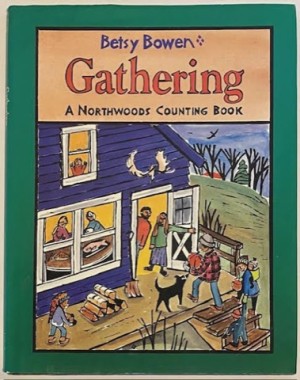
Hardcover. Boston, Little, Brown and Company, 1st, 1995, Book: Very Good, Dust Jacket: Very Good, Nonpaginated. Hardcover. Color illustrations throughout. Previous owner's name written on front flyleaf. Dust jacket unclipped. Blue cover boards, gilt title on spine. Binding tight. Spine straight. Pages clean, unmarked. Very good condition.
Softcover. Baltimore, Clearfield, reprint, 2000, Book: Very Good, Dust Jacket: None, Softcover, light gray wrappers, 278 pages. This volume consists of abstracts of genealogical data from four of New York's earliest newspapers--the New-York Gazette (1726-1744) and the New-York Weekly Journal (1733-1751), the two earliest city papers, and the New-York Mercury and the Weekly Mercury (1752-1783). These newspapers were originally produced as weeklies and usually consisted of four pages, with occasional supplementary issues. Their subject matter encompassed essays, treatises, parliamentary proceedings, governors' messages, European and West Indian news, shipping news, incidents culled from other newspapers, and many advertisements. In this volume of abstracts may be found items yielding information concerning marriage, birth, death, age, status, place of residence, and place of origin, covering, in all, the years 1726 through most of 1783. Treatment is not confined to New York, for among individuals mentioned are those from all the other colonies, especially New Jersey (which had no newspaper in the colonial period), New England, Pennsylvania, and Maryland.
Hardcover. NY, St Martins Press, 3rd pr, 1991, Book: Very Good, Dust Jacket: Very Good, Hardcover in a bright dust jacket, 404 pages, with black & white photographs. Minor dust jacket edge wear, otherwise, very clean and tight copy.
Hardcover. UK, Oxford University Press, 1st, 2012, Book: Very Good, Dust Jacket: Very Good, Hardcover in a bright, unclipped dust jacket. God in the Age of Science? is a critical examination of strategies for the philosophical defence of religious belief. The main options may be presented as the end nodes of a decision tree for religious believers. The faithful can interpret a creedal statement (e.g. "God exists") either as a truth claim, or otherwise. If it is a truth claim, they can either be warranted to endorse it without evidence, or not. Finally, if evidence is needed, should its evidential support be assessed by the same logical criteria that we use in evaluating evidence in science, or not? Each of these options has been defended by prominent analytic philosophers of religion. In part I Herman Philipse assesses these options and argues that the most promising for believers who want to be justified in accepting their creed in our scientific age is the Bayesian cumulative case strategy developed by Richard Swinburne. Parts II and III are devoted to an in-depth analysis of this case for theism. Using a "strategy of subsidiary arguments," Philipse concludes (1) that theism cannot be stated meaningfully; (2) that if theism were meaningful, it would have no predictive power concerning existing evidence, so that Bayesian arguments cannot get started; and (3) that if the Bayesian cumulative case strategy did work, one should conclude that atheism is more probable than theism. Philipse provides a careful, rigorous, and original critique of theism in the world today. Clean copy.
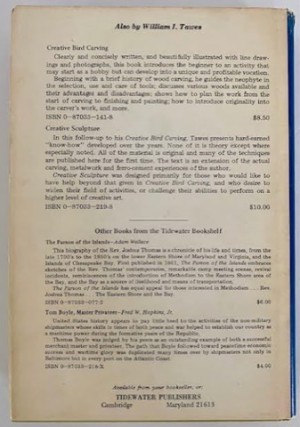
Hardcover. Cambridge, MD, Tidewater Publishers, 2nd pr., 1977, Book: Very Good, Dust Jacket: Good, 295 pages. Hardcover. B/w illustrations throughout. Light green cloth cover boards, gilt title on spine. Decorated endpapers. Dust jacket unclipped, has a touch of agewear (see images). Pages clean. Binding tight. Spine straight. By word, painting adn sketch, Mr. Tawes recalls with Bay salt and spice that tiny postage stamp of America he christens "the Creek Country."
Softcover. San Francisco, Pomegranate, Revised Ed., 2001, Book: Very Good, Dust Jacket: None, Softcover, 168 pages. Many cans of tuna have been opened and emptied since the collection's first mostly black-and-white edition, in 1981; the revised edition adds more color art as well as coverage of classics including The Cat in the Hat, Bill the Cat, and pets penned by B. Kliban and Edward Gorey. The volume covers cartoon depictions of the cat dating back to 1100 B.C., though the bulk of the images date to the 20th century. Brief essays about printing, literature, contemporary society, and other historical facts are interspersed with the goods selections from the comics themselves. Editor Whyte is a publisher who founded the Cartoon Art Museum in San Francisco.
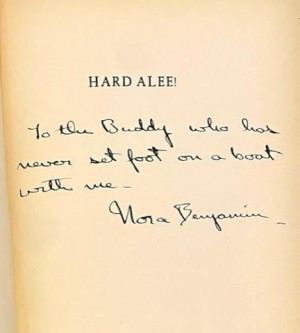
Hardcover. New York, Random House, 1st , 1936, Book: Very Good, Dust Jacket: Fair, 211 pages. Hardcover. INSCRIBED BY AUTHOR. B/w illustrations throughout. Decorated endpapers. Deckled edges. Blue cloth cover boards, white title on spine and design on front cover. Dust jacket has extensive agewear, wrapped in clear plastic mylar for protection. Tanning from age to pages and edges, doesn't affect text or illustrations.
Hardcover. NY, Jewish Theological Seminary of America, 2nd Ed., 1962, Book: Very Good, Dust Jacket: None, Hardcover, dark green cloth with gilt lettering on spine, 231 pages. (Essays in Judaism series) In this book, master Talmudist and scholar of the Greco-Roman world, the late Professor Saul Lieberman, elucidates words, texts, customs, and practices in either rabbinic or classical literature, often by reference to passages in the other. In Greek in Jewish Palestine, he demonstrates that almost every foreign word and phrase have their raison d'etre in rabbinic literature and that all Greek phrases in rabbinic literature are quotations. Hellenism in Greek Palestine is an inquiry into the spirit of many rabbinic observations and investigations of the facts, incidents, opinions, notions and beliefs to which the Rabbis allude in their statements. Name on front fly leaf, otherwise clean.
Hardcover. NY, Harper, 1st, 2022, Book: Very Good, Dust Jacket: Very Good, Hardcover in a bright dust jacket, 741 pages. From the archives of the American Film Institute comes a unique picture of what it was like to work in Hollywood from its beginnings to its present day. Gleaned from nearly three thousand interviews, involving four hundred voices from the industry, Hollywood: The Oral History, lets a reader listen in on candid remarks from the biggest names in front of the camera-Bette Davis, Meryl Streep, Tom Hanks, Harold Lloyd-to the biggest behind it-Frank Capra, Steven Spielberg, Alfred Hitchcock, Jordan Peele, as well as the lesser known individuals that shaped what was heard and seen on screen: musicians, costumers, art directors, cinematographers, writers, sound men, editors, make-up artists, and even script timers, messengers, and publicists. The result is like a conversation among the gods and goddesses of film: lively, funny, insightful, historically accurate and, for the first time, authentically honest in its portrait of Hollywood. Its the insiders story.Clean, bright copy.
Hardcover. New York, Harper & Brothers, 1st, 1950, Book: Very Good, Dust Jacket: None, 90 pages. Hardcover. Brown cloth cover boards, gilt title on spine and front cover. Red quarter cloth. Bumps to corners of covers, top and bottom of spine has some light fraying. Pages have a touch of tanning.
Softcover. UK, Sutton, Revised Ed., 1999, Book: Very Good, Dust Jacket: None, Softcover, 216 pages. Joachim of Fiore has been described as the most singular and fascinating figure of mediaeval Christendom. This title explores his unique understanding of history and looks at the powerful influence of his ideas.
Hardcover. Thoemmes Press, 1st, 1997, Book: Very Good, Dust Jacket: None, Hardcover, black cloth with gilt lettering on spine. 284 pages. the first scholarly edition of John Locke's A Vindication (1695) and A Second Vindication of the Reasonableness of Christianity (1697), in which Locke defends the New Testament and the Christian Religion against charges of heterodoxy. The texts are accompanied by a wealth of critical and contextual apparatus. Clean copy.
Softcover. San Rafael CA, Coracle Press, reprint, 2007, Book: Very Good, Dust Jacket: None, Softcover, 330 pages, b&w frontis. A new printing of the journal and letters of Stephen Mackenna (1872-1934), a vivid and representative thinker whose life intersected with many of the leading figures of his day, and especially those of the Irish literary renaissance. The editor, E. R. Dodds, writes: Stephen MacKenna's working life was divided among three countries, and was further broken by two complete changes of occupation and by continual changes of residence. When he died, he left behind him no wife, child or lifelong friend; . . . and with the exception of the 1907-9 Journal no papers of any considerable biographical value. He left instead a legend. In the Memoir which follows I have endeavored to recover and present the facts underlying the legend. Best known for what AE (George William Russell) called his 'noble translation of Plotinus', MacKenna nonetheless harbored views that collided with those of Plotinus, and so speaks to us as an authentic forerunner of the 'modern' human being, by which is meant those who, once their individual inner light is lit-and no matter how it may gutter in the wind of uncertain freedoms-must, even while hallowing earlier and magisterial records of paths of spiritual ascent, accept the need for a complete 'descent' (without which the whole engine of creation will have had no final purpose), with all the provisional darkness this may entail, so that the final ascent may be made in personal love and freedom. Clean, bright copy.

 "Descartes: An Intellectual Biographyby: Gaukroger, Stephen")


 "Dialogue in Early South Asian Religions: Hindu, Buddhist, and Jain Traditions by: Brian Black, Laurie Patton")
 "Does Civilization Need Religion?: A Study in the Social Resources and Limitations of Religion in Modern Lifeby: Reinhold Niebuhr")
 "Doomed City, The: a Thrilling Taleby: Searight, Frank Thompson")
 "Dressing the Part: Television's Most Stylish Showsby: Hal Rubenstein")
 "Earth Transformed, The: An Untold Historyby: Frankopan, Peter")


 "Edith and the Ducklingby: Dare Wright")

 "Egypt After the Pharaohs: 332 BC-AD 642: From Alexander to the Arab Conquest by: Alan K. Bowman")
 "Face of Innocence, Theby: Sansom, William")

 "Federico Fellini: The Films by: Kezich, Tullio")
 "First Nights: Five Musical Premieresby: Kelly, Thomas Forrest")
 "Gathering: A Northwoods Counting Bookby: Bowen, Betsy")

 "Genealogical Data from Colonial New York Newspapers: A Consolidation of Articles from The New York Genealogical and Biographical Record by: Kenneth Scott (Compiler)")
 "George Cukor: A Double Life : A Biography of the Gentleman Directorby: McGilligan, Patrick")
 "God in the Age of Science?: A Critique of Religious Reasonby: Philipse, Herman")
 "God, Man, Salt Water and The Eastern Shoreby: Tawes, William I")

 "Great Comic Catsby: Malcolm Whyte")
 "Hard Alee! (INSCRIBED BY AUTHOR)by: Benjamin, Nora")

 "Hellenism in Jewish Palestine: Studies in the Literary Transmission Beliefs and Manners of Palestine in the I Century B.C.E.-IV Century C.E. by: Lieberman, Saul")
 "Hollywood: The Oral Historyby: Basinger, Jeanine; Wasson, Sam")
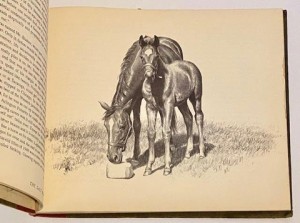
 "Horses Are Folksby: Anderson, C.W.")

 "Joachim of Fiore and the Prophetic Futureby: Reeves, Marjorie")
 "John Locke and Christianity: Contemporary Responses to the Reasonableness of Christianity (Key Issues Series)by: Nuovo, Victor {edited and introduced by )")
 "Journals and Letters of Stephen Mackennaby: Stephen Mackenna / E. R. Dodds /Padraic Colum (Editor)")