Softcover. Bowie MD, Heritage Books, 1st, 2001, Book: Very Good, Dust Jacket: None, Softcover, 375 pages. This collection of articles from thirty-four different newspapers begins with the "alarming intelligence" of the shots fired at Lexington and Concord, followed by the Battle of Bunker Hill and other skirmishes, military affairs and the siege of St. John's. The source of these articles include letters smuggled out of Boston by terrified colonists, proclamations, speeches, affidavts as well as unconfirmed reports and fabrications. Clean copy.
Softcover. Bowie MD, Heritage Books, reprint, 1997, Book: Very Good, Dust Jacket: None, Softcover, 325 pages, b&w illustrations. The village of Bergen, established in 1660, was the first permanent settlement in New Jersey. Now known as Hoboken and Jersey City, the marshy land on which Bergen was founded is just across the Hudson River from New York. At the beginning of this century, when this book was written((1902), the Bergen region was still known for an old-fashioned charm. Mr. Van Winkle used sources such as colonial and revolutionary documents, old newspaper articles and individual's reminiscences to compile this pleasant and enjoyable history. Light pencil marking to 10 pages.
Hardcover. Berkeley, University of California Press, 1st, 2001, Book: Very Good, Dust Jacket: Very Good, Hardcover in a bright dust jacket, 189 pages. In the fifth century AD, Proclus served as head of the Academy in Athens that had been founded 900 years earlier by Plato. This bilingual edition comprises Proclus's 17 arguments (II-XVIII) on the eternity of the world and for the existence of God. Name on front fly leaf, otherwise clean.
Hardcover. Philadelphia, American Philological Association, 1st, 1941, Book: Very Good, Dust Jacket: None, Hardcover, green cloth covers with gilt lettering on spine, 200 pages. The Greek text with facing translation runs from pages 22-199. The rest of the book is discussions chapters discussing the polemics between Stoic and Epicureans and the ways the Philodemus arguments might be improvements on Early Modern empiricism. Classic scholarly treatise presents a detailed study of the manner in which the problem of method was expressed by the empirically oriented philosophy of the Epicureans and Sceptics, and by their rationalistic opponents, the Stoics. Each of these schools developed a theory of signs, as the basis for both epistemological and logical speculations. Philodemus' treatise is a defense of Epicurean empirical method, and simultaneously an attack on the rival Stoic rationalistic method. This is first English translation of this work. Clean, bright copy.
Softcover. Duke University Press, 1st, 2017, Book: Very Good, Dust Jacket: None, Softcover, 381 pages, color and b&w illustrations. Photography is one of the principal filters through which we engage the world. The contributors to this volume focus on Walter Benjamin's concept of the optical unconscious to investigate how photography has shaped history, modernity, perception, lived experience, politics, race, and human agency. In essays that range from examinations of Benjamin's and Sigmund Freud's writings to the work of Kara Walker and Roland Barthes's famous Winter Garden photograph, the contributors explore what photography can teach us about the nature of the unconscious. They attend to side perceptions, develop latent images, discover things hidden in plain sight, focus on the disavowed, and perceive the slow. Of particular note are the ways race and colonialism have informed photography from its beginning. The volume also contains photographic portfolios by Zoe Leonard, Kelly Wood, and Kristan Horton, whose work speaks to the optical unconscious while demonstrating how photographs communicate on their own terms. The essays and portfolios in Photography and the Optical Unconscious create a collective and sustained assessment of Benjamin's influential concept, opening up new avenues for thinking about photography and the human psyche. Clean, bright copy.
Hardcover. London, Jonathan Cape, 1st, 1930, Book: Good, Dust Jacket: None, Hardcover, light pink cloth soiled, worn, 251 pages, B&w illustrations by Nancy Bankart Gurney. Interior clean and bright. The tales and adventures of Toby Tottel. An interwoven series of adventures very much of the "fantastical" and colorful, there are more colors than the pink the title mentions and much more wordplay. Visit the island of Purganda, Hedgehog Market, The Magical Forester, The Sinful Miller, etc.
Softcover. Souix City IA, Parnassos Press, 1st, 2019, Book: Very Good, Dust Jacket: None, Softcover, 312 pages. This book is born from a desire to understand how Plato influenced and was influenced by the intellectual culture of Western Greece, the ancient Hellenic cities of Sicily and Southern Italy. In 2018, a seminar on Plato at Syracuse was organized, in which a small group of scholars discussed a new translation of the Seventh Letter and several essays on the topic. The essays consider the historical, political, and philosophical implications of Plato's involvement in Syracuse. They also look at the reception of his voyage among fellow philosophers, ancient and modern. Clean copy.
Hardcover. London, Routledge and Kegan Paul, 4th pr., 1956, Hardcover, dark blue cloth with gilt lettering on spine, 376 pages. A cosmology is a narrative concerning the creation of the universe. Many ancient philosophers have written or elaborated this kind of work. The Platonic dialogue Timeus is an account of the work of the creator god (called the demiurge - or artisan) sculpting the chaotic material world in accordance with the immaterial model of the Ideas. But the text was written in a very hermetic and symbolic language, making its interpretation difficult or even impossible without the knowledge of the references and symbols used by Plato. This book is a complete translation of the text followed by a comprehensive commentary explaining in detail every passage. Francis MacDonald Cornford is one of the most important ancient philosophy scholars, and this work reveals his deep knowledge of Platonic and Greek thought. It is a must have for anyone interested in greek and Platonic philosophy.Two name stamps on prelim pages, otherwise clean.
Hardcover. Seattle, Fantagraphics Books, 1st, 2020, Book: Very Good, Dust Jacket: Very Good, Hardcover in a bright dust jacket, 345 pages. This volume includes a pig with an ominous resemblance to Nikita Khrushchev and a scruffy goat who looks exactly like Fidel Castro. Both assure Okefenokeeans that a one-party system is the way to go; all will be well economically, they explain, because "the shortage will be divided amongst the peasants." Other storylines spotlight Kelly's remarkable cast: Pogo Possum, Albert Alligator, Howland Owl, "Churchy" LaFemme, Beauregard Bugleboy, Porky Pine, Miz Ma'm'selle Hepzibah, Deacon Mushrat, and so many others. All 104 Sunday strips from those two years are included, with supplementary features (including comprehensive annotations and index) by comics historians R.C. Harvey, Maggie Thompson, and Mark Evanier. Clean copy.
Softcover. UK, Cambridge University Press, reprint, 2004, Book: Very Good, Dust Jacket: None, Softcover, orange wrappers, 341 pages. Classic scholarly text contains a collection of the surviving attested fragments of Posidonius, the leading stoic philosopher of his time in the first half of the first century, B.C. This exhaustive work was begun by Prof. Edelstein, a preeminent authority on Posidonius, and subsequently completed and edited after his death by Ian Kidd. There are some sixty different ancient reporters represented in this volume. First published in 1972, this re-issue contains 60 new readings, nearly eighty alterations to the apparatus criticus and corrections of errors. GREEK AND LATIN TEXT. Name on front fly leaf, otherwise, clean.
Softcover. UK, Cambridge University Press, reprint, 2004, Book: Very Good, Dust Jacket: None, Softcover, orange wrappers, 405 pages plus Concordance with Jacoby. Classic scholarly text contains a collection of the surviving attested fragments of Posidonius, the leading stoic philosopher of his time in the first half of the first century, B.C. This book translates the surviving evidence for one of the most important intellectual figures of the Graeco-Roman world, whose interests spread widely over philosophy, history and the sciences. The translations are accompanied by contextual introductions and explanatory notes, and a general introduction assesses the importance of Posidonius and his contribution. The order of fragments follows exactly that of the ancient texts collected and edited by L. Edelstein and I. G. Kidd in Posidonius Vol. 1 and completes (with Vol. 2 The Commentary) what has become the definitive modern edition. Name on front fly leaf, otherwise, clean.
Hardcover. UK, Cambridge University Press, 1st, 1991, Book: Very Good, Dust Jacket: Very Good, Hardcover in a bright dust jacket, 277 pages. Rivers examines the rise of Anglican moral religion during the period 1660-1780, and the reactions against it. Series Editor(s): Erskine-Hill, Howard; Richetti, John. Series: Cambridge Studies in Eighteenth-Century English Literature & Thought. Volume 1 ONLY. Name, date on front fly leaf.
Hardcover. Baltimore, Genealogical Publishing Co., reprint, 1976, Book: Very Good, Dust Jacket: None, Hardcover, orange cloth with purple and gilt title block an front and spine. 409 pages. VOLUME 6 ONLY of a 7 volume set. Reprint of the 1897 edition. Clean, bright copy.
Softcover. Bowie MD, Heritage Books, reprint, 2001, Book: Very Good, Dust Jacket: None, Softcover, 425 pages. A facsimile reprint of the 1904 edition. Volume 1 ONLY. The present-day New York City neighborhood of Harlem was founded in the mid-17th century by Dutch Protestants, whose numbers included Huguenots (or their descendants) who had fled the counter-Reformation in France and the Walloon provinces of Artois, Cambresis, and Hainalt. Riker's Harlem is an extremely detailed historical and genealogical account of Harlem from its establishment by Kuyter and Stuyvesant between 1656 and 1660 to the end of the 17th century. Following several preliminary chapters on the Dutch and French context for the settlement of "New Haerlem," the author treats us to what seem like minute-by-minute accounts of its colonial development, including early efforts to settle the territory that became Harlem, the original land patents and their subsequent rearrangement, Indian wars, displacement of Dutch rule by the British in 1663 (and the brief reoccupation by Dutch forces in 1673), 17th-century village life, migrations to New Jersey, influx of Swedes, difficulties in assimilating English ways, and much, much more.
Softcover. Bowie MD, Heritage Books, reprint, 2001, Book: Very Good, Dust Jacket: None, Softcover, Pages 426-908 . A facsimile reprint of the 1904 edition. Volume 2 ONLY. The present-day New York City neighborhood of Harlem was founded in the mid-17th century by Dutch Protestants, whose numbers included Huguenots (or their descendants) who had fled the counter-Reformation in France and the Walloon provinces of Artois, Cambresis, and Hainalt. Riker's Harlem is an extremely detailed historical and genealogical account of Harlem from its establishment by Kuyter and Stuyvesant between 1656 and 1660 to the end of the 17th century. Following several preliminary chapters on the Dutch and French context for the settlement of "New Haerlem," the author treats us to what seem like minute-by-minute accounts of its colonial development, including early efforts to settle the territory that became Harlem, the original land patents and their subsequent rearrangement, Indian wars, displacement of Dutch rule by the British in 1663 (and the brief reoccupation by Dutch forces in 1673), 17th-century village life, migrations to New Jersey, influx of Swedes, difficulties in assimilating English ways, and much, much more.
Hardcover. Springfield MA, Mcloughlin Brothers, 1st, 1940, Book: Very Good, Dust Jacket: None, Hardcover, pictorial boards with light edgewear, 60 pages illustrated in color and b&w by Clyne. Name stamp on front fly leaf, otherwise clean.
Hardcover. NY, Mysterious Press, 1st, 1992, Book: Very Good, Dust Jacket: Very Good, Hardcover in a bright, unclipped dust jacket. The third outing for Vermont cop Joe Gunther. A murdered stockbroker sets a sticky case into motion for Lt. Gunther. Three bodies later, Gunther must unravel a sinister puzzle involving drugs, a naive young police officer, and someone bent on revenge.
Hardcover. NY, Garland Publishing, reprint, 1979, Book: Very Good, Dust Jacket: None, Hardcover, orange cloth, facsimile reprints of Woolston's six essays plus 2 discourses on the defense of those discourses, published in 1727-1729. 622 total pages. Name on front fly leaf, otherwise clean.
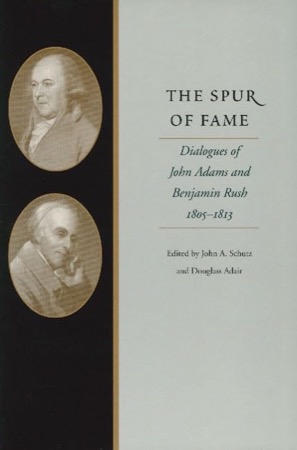
Softcover. Indianapolis, Liberty Fund, reprint, 2001, Book: Very Good, Dust Jacket: None, Softcover, 325 pages. John Adams and Benjamin Rush were two remarkably different men who shared a devotion to liberty. Their dialogues on the implications of fame for their generation prove remarkably timely--even for the twenty-first century. Adams and Rush championed very different views on the nature of the American Revolution and of the republic established with the United States Constitution; yet they shared one of the most important correspondences of their time. John Adams and Benjamin Rush met in 1774 as members of the Continental Congress--Adams from Massachusetts, Rush from Pennsylvania. In 1805, after Adams was defeated in his quest of a second term as the new republic's second President, the two men self-consciously commenced an exchange of letters. Their recurring subject was fame. This emphasis on fame was crucial, Adams and Rush believed, because on the fame attached to individual leaders of the Revolutionary generation would depend the view of the Revolution and of the Constitution and republican government that would be embraced by generations to come, including our own. The Liberty Fund edition of The Spur of Fame reproduces a text originally published by the Huntington Library.
Hardcover. UK, Oxford University Press, reprint, 1968, Book: Very Good, Dust Jacket: Very Good, Hardcover in a bright dust jacket, 196 pages. Translated with an Introduction and Philosophical Commentary by M. J. Charlesworth. This is the work in which Anselm (a medieval church father) presents his ontological argument for the existence of God. It's one of the most debated philosophical arguments for the existence of God in history. Clean copy.
Hardcover. NY, Parents' Magazine Press, 1st, 1976, Book: Very Good, Dust Jacket: None, Hardcover, pictorial boards, oblong format, color illustrations by Steven Kellogg. Energetic full-page pictures depict the old standard, written by Edward Bangs, who was a Minuteman at Lexington during his sophomore year at Harvard the year (1775) he adapted the song. Mild musty odor. No dust jacket.
Hardcover. NY, Random House, 1st, 1997, Book: Very Good, Dust Jacket: Very Good, Hardcover in a bright, unclipped dust jacket, 391 pages. Attractive copy of the fourth novel by Pulitzer Prize winner, Richard Russo. William Henry Devereaux, Jr., spiritually suited to playing left field but forced by a bad hamstring to try first base, is the unlikely chairman of the English department at West Central Pennsylvania University. Over the course of a single convoluted week, he threatens to execute a duck, has his nose slashed by a feminist poet, discovers that his secretary writes better fiction than he does, suspects his wife of having an affair with his dean, and finally confronts his philandering elderly father, the one-time king of American Literary Theory, at an abandoned amusement park. Such is the canvas of Richard Russo's Straight Man, a novel of surpassing wit, poignancy, and insight. As he established in his previous books Russo is unique among contemporary authors for his ability to flawlessly capture the soul of the wise guy and the heart of a difficult parent. In Hank Devereaux, Russo has created a hero whose humor and identification with the absurd are mitigated only by his love for his family, friends, and, ultimately, knowledge itself. Clean copy.
Hardcover. NY, DC Comics, 1st, 2024, Book: Very Good, Dust Jacket: Very Good, Hardcover in a bright dust jacket, color throughout. Classic Superman stories from the Silver Age are collected together in this brilliant hardcover omnibus. Fans of the Man of Steel won't want to miss this stunning collection of some of the best tales of the 1950's and 1960's! Superman- The Silver Age Omnibus Vol. 1 contains stories from Action Comics #241-265 and Superman #122-137.
Hardcover. NY, Oxford University Press, 1st, 1998, Book: Very Good, Dust Jacket: Very Good, Hardcover in a very good dust jacket with fading to spine, 403 pages. The concept of the atom is very near scientific bedrock, touching first causes, fundamental principles, our conception of the nature of reality. This book is a translation from the French of a history of atomic thought and theory, from ancient Greece to the present day. Pullman grounds his coverage of scientific theory always in the religious and philosophical context of the times, covering the whole period of Western civilization, including in passing the major scientific philosophies of the Muslim world and India. The transition of atomism from a philosophical position to an experimental science, in the mid-19th century, is well handled, and the coverage is nicely rounded out by a treatment of the first visual proof of atoms' material existence by direct microscopic imaging of individual atoms about 10 years ago. Name on front fly leaf otherwise clean.
Hardcover. Boston, Kluwer Academic Publishers, 1st, 1994, Book: Very Good, Dust Jacket: Good, Hardcover, in a bright dust tahathas a closed tear along spine edge, 223 pages. Name on front fly leaf, light pencil marking to 5 pages.
Softcover. UK, Cambridge University Press, reprint, 2004, Book: Very Good, Softcover, pages 423-902. Volume 2 ONLY of a three volume set of the classical articles and reviews of A. E. Housman. These papers were originally published between 1897 and 1914 in a variety of academic journals, many of which are now difficult to obtain. The editors have checked and, where necessary, supplemented and updated all the references and corrected errors in them, but have otherwise presented each paper, in full, with the minimum of editorial comment.
Hardcover. UK, Cambridge at the University Press, 2nd pr., 1926, Book: Very Good, Dust Jacket: None, Hardcover, dark blue cloth with gilt lettering on spine, 202 pages. When The Concept of Nature by Alfred North Whitehead was first published in 1920 it was declared to be one of the most important works on the relation between philosophy and science for many years, and several generations later it continues to deserve careful attention. This is the second printing published six years later. Whitehead explores the fundamental problems of substance, space and time, and offers a criticism of Einstein's method of interpreting results while developing his own well-known theory of the four-dimensional 'space-time manifold'. Name on front fly leaf, light pencil notations to 15 pages.
Hardcover. Philadelphia, Temple University Press, 1st, Book: Very Good, Dust Jacket: Very Good, Hardcover in a bright dust jacket, 211 pages. By treating the history of moral concepts as geological strata, Rosenthal discovered the archaeological method long before it became fashionable. The appeal of this book - in addition to its wryly delightful style - is to those for whom Hobbes and Spinoza's thoughts are themselves part of a continuing and unavoidable meditation on unavoidable questions.This is philosophy as an essentially moral, frustratingly human enterprise. Name on front fly leaf, otherwise clean.
Hardcover. NY, Doubleday , 1st, 2011, Book: Very Good, Dust Jacket: Very Good, Hardcover in a bright, unclipped dust jacket. Set in rural southern Ohio and West Virginia, The Devil All the Time follows a cast of compelling and bizarre characters from the end of World War II to the 1960s. There's Willard Russell, tormented veteran of the carnage in the South Pacific, who can't save his beautiful wife, Charlotte, from an agonizing death by cancer no matter how much sacrifi-cial blood he pours on his "prayer log." There's Carl and Sandy Henderson, a husband-and-wife team of serial kill-ers, who troll America's highways searching for suitable models to photograph and exterminate. There's the spider-handling preacher Roy and his crippled virtuoso-guitar-playing sidekick, Theodore, running from the law. And caught in the middle of all this is Arvin Eugene Russell, Willard and Charlotte's orphaned son, who grows up to be a good but also violent man in his own right. Donald Ray Pollock braids his plotlines into a taut narrative that will leave readers astonished and deeply moved. With his first novel, he proves himself a master storyteller in the grittiest and most uncompromising American grain.
Hardcover. Delmar NY, Scholars Facsimiles and Reprints, reprint, 1977, Book: Very Good, Dust Jacket: None, Hardcover, blue cloth with gilt lettering on spine, 597 pages. A facsimile reproduction of the 1605 London edition. Du Bartas was extremely popular in early modern England, and was still being read widely in the later seventeenth century even as his reputation in France began to decline. His world-famous La Sepmaine, ou creation du monde (1578), an epic poem on the creation of the world, divided into seven parts, for each of the seven days of creation, was first translated into English in 1598 and published in 1605 and was reprinted six times up until 1641. "No other poem (besides those in the Bible itself) was read as widely as the Semaines were across early modern English and Scottish society. Based on references to Sylvester in print, Snyder believed that 'Clearly everyone in pre-Restoration England who had received a literary education read the 'Weekes' ande almost all.... Admired it'. Clean copy.
Hardcover. NY, New York Genealogical & Biographical Society, 1st, 2000, Book: Very Good, Dust Jacket: None, Hardcover, red cloth with gilt lettering, 150 pages, b&w illustrations. Clean copy.
Hardcover. Edinburgh, T & T Clark, Revised Ed., 1998, Book: Very Good, Dust Jacket: Very Good, Hardcover in a bright dust jacket, 704 pages. Volume 3/Part 1 ONLY. A New English Edition revised and edited by Geza Vermes, Fergus Millar and Matthew Black. Critical presentation of the whole evidence concerning Jewish history, institutions, and literature from 175 BC to AD 135; with updated bibliographies. Name on front fly leaf, otherwise clean.
Hardcover. NY, The Dial Press, 1st, 1955, Book: Very Good, Dust Jacket: None, Hardcover, light gray boards with a red cloth spine, 431 pages. Clean copy. Book opens to half-title page, so assumed front fly leaf gone.
Hardcover. London, Hodder and Stoughton, 1st, 1938, Book: Very Good, Dust Jacket: None, Hardcover, maroon cloth with gilt stamped spine, 255 pages including index. Karl Barth (1886-1968), the Swiss Reformed professor and pastor, was once described by Pope Pius XII as the most important theologian since Thomas Aquinas. As principal author of 'The Barmen Declaration', he was the intellectual leader of the German Confessing Church -- the Protestant group that resisted the Third Reich. This volume contains The Gifford Lectures he delivered in Aberdeen in 1937 and 1938. Name on front fly leaf, pencil marking (mostly underlining) to half the pages. Sound copy.
Hardcover. UK, Routledge/Thoemmes, reprint, 1992, Book: Very Good, Dust Jacket: None, Hardcover, red cloth with gilt lettering on spine, 260 pages, b&w illustrations. A reprint of the 1949 edition with a new introduction by David Berman. Clean, bright copy.
Hardcover. Cambridge MA, Harvard University Press, 2nd pr., 1968, Book: Very Good, Dust Jacket: Good, Hardcover in a lightly worn dust jacket, 108 pages. "As the ancients themselves knew, Stoicism was not a uniform doctrine. Throughout the centuries there existed factions; the Stoics treasured their independence of judgment and quarreled among themselves." Yet, "despite their individual differences, the Stoic dissenters remained Stoics. That which they had in common, that which made them Stoics, is what I understand as the meaning of Stoicism." Thus delimiting his framework, Ludwig Edelstein attempts to define Stoicism by grasping the elusive common element that bound together the various factions within the ethical system. He begins this exemplary essay with a description of the Stoic sage--the ideal aimed at by Zeno and his followers--which establishes the basic characteristics of the philosophy. Mr. Edelstein then proceeds to a more detailed examination, discussing the Stoic concepts of nature and living in accord with nature; the internal criticism of the second and first centuries B.C., which indicates the limitations and possibilities inherent in the doctrine; the Stoic's way of life and his attitude toward practical affairs, revealing the values cherished by the adherents of the Stoa; and, finally, the place of Stoicism in the history of philosophy. Clean copy.
Hardcover. NY, Charles Scribner's Sons, reprint, 1929, Book: Very Good, Dust Jacket: None, Hardcover, frontis. with tissue guard., 277 pages. Original blind decorated black cloth with embossed illustration to front board. A mystery novel by the author of The Phantom of the Opera, one of the first in the 'locked room' sub-genre, first published in 1908 by Daily Mail (UK) and Brentano's (US) (Adey [Locked Room Murders] 1201). It has been adapted to film several times. The S.S. Van Dine Detective Library edition. Name and address on front fly leaf, otherwise clean.
Hardcover. Albany, University of New York Press, 1st US, 1970, Book: Very Good, Dust Jacket: Very Good, Hardcover in a light blue dust jacket that has some fading, 222 pages. The Philosophy of Chrysippus is a reconstruction of the philosophy of an eminent Stoic philosopher, based upon the fragmentary remains of his voluminous writings. Chrysippus of Cilicia, who lived in a period that covers roughly the last three-quarters of the third century B.C., studied philosophy in Athens and upon Cleanthes' death became the third head of the Stoa, one of the four great schools of philosophy of the Hellenistic period. Chrysippus wrote a number of treatises in each of the major departments of philosophy, logic, physics, and ethics. Much of his fame derived from his acuteness as a logician, but his importance for Stoic philosophy generally was acknowledged in antiquity in the saying, "Had there been no Chrysippus, there would be no Stoa." In his account of Chrysippus' philosophy Mr. Gould frequently introduces comparisons and contrasts with Plato and Aristotle to help emphasize the continuity between Hellenic and early Hellenistic philosophy. Name and date on front fly leaf, otherwise clean.
Hardcover. Gloucester MA, Peter Smith, reprint, 1964, Book: Very Good, Dust Jacket: None, Hardcover, cream-colored cloth with black lettering on the spine, 441 pages. Translated into English by Virginia Conant. Name on front fly leaf, otherwise clean.
Hardcover. London, Longmans, Green and Co., 3rd Ed., 1929, Book: Good, Dust Jacket: None, Hardcover, maroon cloth with gilt lettering on spine, 270 pages. Spine faded, foxing/spotting to edge of text block. Volume 1 only. Name on front fly leaf. Clean internally.
Hardcover. Cambridge MA, Harvard University Press , 1st, 1934, Book: Very Good, Dust Jacket: None, Hardcover, blue cloth covers with gilt lettering on the spine, 424 pages. Bookplate on inside front cover, otherwise clean. Volume 2 ONLY of a 2 volume set.
Hardcover. Rutland VT, Charles E. Tuttle Co., 1st, 1963, Book: Very Good, Dust Jacket: Good, Hardcover in a lightly worn and faded dust jacket. Not only reluctant, a Siamese princess is very shy, especially around men. Retelling of a very old folk tale from Thailand. 62 pages illustrated in color by Sukit Chuthama. Alert for book banners: bare-breasted ladies! Inscription on front fly leaf, otherwise clean.
Softcover. New Brunswick NJ, Rutgers University Press, reprint, 1992, Book: Very Good, Dust Jacket: None, Softcover, 329 pages, b&w illustrations. Deals with activity during the American Revolutionary War in the Hackensack Valley which lies in north-eastern New Jersey and Rockland County, New York. The area, populated mainly by settlers of Dutch descent, lay between the British and the American lines, and suffered from marauders and plundering expeditions from both sides. Very light pencil marking to about 30 pages.
Softcover. UK, Clarendon Press, reprint, 1992, Book: Very Good, Dust Jacket: None, Softcover, 291 pages. It is widely supposed that Hume (1711-1776) invented and espoused the `regularity' theory of causation, holding that causal relations are nothing but a matter of one type of thing being regularly followed by another. It is also widely supposed that he was quite right about this, and that it was one of his greatest contributions to philosophy. Galen Strawson argues in this book that the regularity theory of causation is indefensible, and that Hume never adopted it in any case. Name on front fly leaf, otherwise clean.
Hardcover. Cambridge MA, Belknap Press: An Imprint of Harvard University Press, 1st, 2022, Book: Very Good, Dust Jacket: Very Good, Hardcover in a bright dust jacket, 406 pages. A bold and beautifully written exploration of the "afterlife" of God, showing how apparently secular habits of mind in fact retain the structure of religious thought. Once in the West, our lives were bounded by religion. Then we were guided out of the darkness of faith, we are often told, by the cold light of science and reason. To be modern was to reject the religious for the secular and rational. In a bold retelling of philosophical history, Michael Rosen explains the limits of this story, showing that many modern and apparently secular ways of seeing the world were in fact profoundly shaped by religion. Clean copy.
Hardcover. Cambridge MA, The MIT Press, 1st, 2014, Book: Very Good, Dust Jacket: Very Good, Hardcover in a bright dust jacket, 294 pages. An examination of the powerful social and psychological factors that hold the belief in moral responsibility firmly in place. The philosophical commitment to moral responsibility seems unshakable. But, argues Bruce Waller, the philosophical belief in moral responsibility is much stronger than the philosophical arguments in favor of it. Philosophers have tried to make sense of moral responsibility for centuries, with mixed results. Most contemporary philosophers insist that even conclusive proof of determinism would not and should not result in doubts about moral responsibility. Many embrace compatibilist views, and propose an amazing variety of competing compatibilist arguments for saving moral responsibility. In this provocative book, Waller examines the stubborn philosophical belief in moral responsibility, surveying the philosophical arguments for it but focusing on the system that supports these arguments: powerful social and psychological factors that hold the belief in moral responsibility firmly in place. Clean copy.
Hardcover. Boston, Houghton Mifflin, 1st, 1990, Book: Very Good, Dust Jacket: Very Good, Hardcover in an unclipped dust jacket with light fading to spine. Collection of stories about a platoon of soldiers in the Vietnam War. First trade edition with 1 in number row. Clean copy.

 "Newspaper Datelines of the American Revolution, Vol. 1: April 18, 1775 to November 1, 1775 by: Lucier, Armand Francis")






 "Plato at Syracuse: Essays on Plato in Western Greece with a new translation of the Seventh Letter by Jonah Raddingby: Reid, Heather L./Ralkowski, Mark (Editors)")


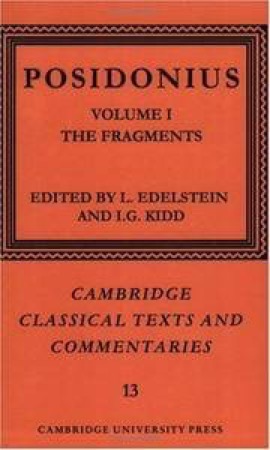
 "Posidonius: Volume III The Translation of the Fragmentsby: Posidonius; edited by L. Edelstein & I. G. Kidd")

 "Records of New Amsterdam From 1653 t0 1674 Anno Domini - Vol. 6: Minutes of the Court of Burgomasters and Schepens May 8 1666 to Sept. 5 1673 Inclusive. by: Fernow,")






 "Steven Kellogg's Yankee Doodle by: Edward Bangs")








 "The Dog Doctor: A Comedy Short Starring Patsy & Chipperby: Irma Simonton Black, Peter Frye/John R. Fischetti")


 "The Giraffe Who Went To Schoolby: Wilde, Irma")









 "The Reluctant Princess: A Legend of Love in Siam by: Mom Dusdi Paribatra /(Illustrations Sukit Chuthama)")

 "The Secret Connexion: Causation Realism and David Humeby: Strawson, Galen")


 "The Things They Carriedby: Tim O'Brien")