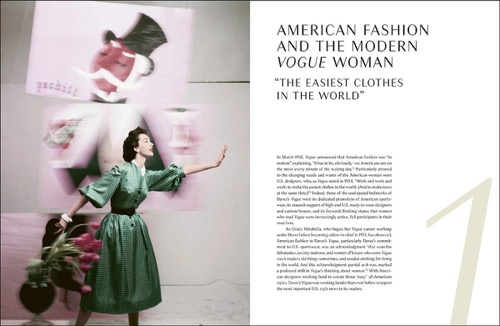
Softcover. NY, Thames & Hudson, 1st, 2019, Book: Very Good, Dust Jacket: None, Softcover in a cardboard slipcase. A large-scale publication dedicated to the 1950s as captured in the pages of American Vogue. This book is illustrated by fashion's greatest photographs of that period-the era when the magazine became the cultural force it is today. One of only seven editors in chief in American Vogue's history, Jessica Daves has remained one of fashion's most enigmatic figures. Diana Vreeland's direct predecessor in the role, it is Daves who first catapulted the magazine into modernity. A testament to a changing America on every level, Daves's Vogue was the first to embrace a "high/low" blend of fashion in its pages and to introduce world-renowned artists, literary greats, and cultural icons into every issue, offering the reader a complete vision of how design, interiors, architecture, entertaining, art, literature, and culture all connected and contributed to refining and defining taste and personal style. Daves profiled icons of American style, from John and Jackie Kennedy to Charles and Ray Eames, alongside Dior, Chanel, Givenchy, and Balenciaga creations. Organized in multifaceted, thematic chapters, 1950s in Vogue features carefully curated photographs, illustrations, and page spreads from the Vogue archives (with iconic images as well as lesser-known wonders), and unpublished photographs and letters from Jessica Daves's personal archives. Clean, bright copy. Slipcase with minor wear, line in bottom edge. PLEASE NOTE: DUE TO WEIGHT, DOMESTIC SHIPPING ONLY.
Softcover. Chicago, American Planning Association, 1st, 2002, Book: Very Good, Dust Jacket: None, Softcover, oblong format, 210 pages. Color illustrations. Above and Beyond takes an aerial view to conclusively demonstrate how suburban sprawl is forever changing the look of America -- and how that can be avoided. Alex MacLean's photographs -- many of them combined with computer simulations to illustrate how landscapes are transformed over time -- show how traditional development patterns produce more compact cities and towns. In conjunction, the authors introduce communities that have successfully fought sprawl, invigorated their town areas, and overcome the car-culture mentality of sprawl development. The case they make, and the examples they offer, will inspire planners, officials, and concerned citizens everywhere. Clean copy.
Hardcover. New York , W. W. Norton & Company, 1st, 2003, Book: Very Good, Dust Jacket: Very Good, Like new in publishers shrink-wrap. For most of his life as a photographer, David Plowden has admired and photographed barns. In recent years, as their disappearance accelerated, he made it his mission to document these beautiful structures, before they too are lost. The result is this beautiful book, his hymn to the American barn. 160 pages, 140 duotone photographs.
Softcover. US, Laurence King Publishing, 1st, 2013, Book: Very Good, Dust Jacket: None, 186 pages, illustrated throughout in color and b&w. Light edgewear to wrappers, else a clean, tight copy. This is the first comprehensive survey of Modernist graphic design as it emerged in America in the period from 1920 and 1960 in various media--advertising, information design, brand identity, magazine design, book design, and posters. It examines the great works which by mid-century had defined American graphic design. The book begins with a section devoted to the emergence of Modernism and its major historical influence, such as European avant-garde movements, popular culture, educational innovations such as the Bauhaus School, architecture, industrial design, and photography. The heart of the book includes the key works of mid-century Modernism as it matured into a fully-formed American style, bringing together such great names as Alexey Brodovitch, Lester Beall, Paul Rand, Saul Bass, Will Burtin, and Alvin Lustig. The final section looks at the impact of and reactions to this new movement as graphic design in America matured in the 1960s and beyond.
Hardcover. The Monacelli Press, 1st, 2004, Book: Very Good, Dust Jacket: Very Good, Hardcover, 160 pages. Lynn Davis records the natural and architectural monuments of the world. In this collection of 100 duotone photographs she presents a series of architectural images throughout the United States, ranging from icons of modern and contemporary architecture to the Hoover Dam, a series of lighthouses, the Very Large Array in New Mexico, and the Epcot Center at Disney World. Davis possesses a unique sense of composition and cool aesthetic that brings out purity and form. The exquisite duotone photography and often quirky definition of architecture are timeless.
Hardcover. Woodstock, New York, The Overlook Press, 1st, 1981, Book: Near Fine, Dust Jacket: Near Fine, Encyclopedic volume featuring the historical evolution of American homes. Hardcover, 320 pages. Over 1000 black/white illustrations, including architectural plans for each variety of home discussed. Cloth bound book is in near fine condition, only flaw on the dust jacket is a small blue ink stain on the front.
Softcover. NY, Universe Publishing, 2nd pr., 2006, Book: Very Good, Dust Jacket: None, Softcover, 272 pages illustrated in color and b&w. The first book to capture the philosophy and spirit behind the work of Charles and Ray Eames, An Eames Primer offers an in-depth look at the couple's prolific legacy--one that has placed them among the most important American designers of the twentieth century. Those who know one or two aspects of the Eameses' work are often surprised to learn just how far and vast their range extended. Yet throughout their myriad works, from architecture and furniture to exhibition and design and filmmaking, their core philosphy prevails. An Eames Primer is the first book to illuminate this seamless connection. Author Eames Demetrios explores the rich energy of the Eameses' world from a unique perspective, informed by his close relationship with Charles and Ray. He shares personal anecdotes, previously unpublished photos, and his extensive interviews with former friends and colleagues of the Eameses to make connections between the Eameses' influential philosophy and their widely admired work. For those unacquainted with the designers, the stories behind the design process will inform, entertain, and inspire, while readers with an extensive knowledge of the Eameses' work gain a deeper level of understanding their process.
Hardcover. Kehrer, 1st, 2012, Book: Very Good, Dust Jacket: Very Good, Hardcover, 120 pages. All across the world a uniform, homogeneous model of development, inspired by Los Angeles style urban sprawl--consisting of massive freeways, parking lots, shopping malls, and large-scale master-planned communities with golf courses--is being stamped onto the earth's topography. This globalized model of architecture does not respect or adapt itself to the natural or cultural environment onto which it is implanted. German American photographer Robert Harding Pittman began working on this project in Los Angeles ten years ago. Since then he has been photographing the spread of "L.A. style development" in Las Vegas, Spain, France, Germany, Greece, Dubai, and South Korea.
Hardcover. Baltimore, Johns Hopkins University, 1st, 2002, Book: Very Good, Dust Jacket: None, An extraordinary work, unparalleled in its breadth and depth of detail, this three-volume set offers the first comprehensive history of architecture and town planning throughout colonial North America, from Russian Alaska to French Quebec, to Spanish Florida and California, to British, Dutch, and other settlements on the East Coast. Across this vast terrain, James Kornwolf conjures the outlines of the constructed environment as it emerged in settlements and communities, in structures and sites, and in the flourishes and idiosyncrasies of the families and individuals who erected and inhabited colonial buildings and towns. Here as never before readers can observe the impulses and principles of colonial design and planning as they are implemented in the buildings and streets, harbors and squares, gardens and landscapes of the New World. Incorporating more than 3,000 illustrations, Kornwolf's massive work conveys the full range of the colonial encounter with the continent's geography, from the high forms of architecture through formal landscape design and town planning. From these pages emerge the fine arts of environmental design, an understanding of the political and economic events that helped to determine settlement in North America, an appreciation of the various architectural and landscape forms that the settlers created, and an awareness of the diversity of the continent's geography and its peoples. Considering the humblest buildings along with the mansions of the wealthy and powerful, public buildings, forts, and churches, Kornwolf captures the true dynamism and diversity of colonial communities-their rivalries and frictions, their outlooks and attitudes-as they extended their hold on the land. His work conveys for the first time the full scale, from intimate to grand, of their enduring transformation of the natural landscape of North America. NOTE: DOMESTIC SHIPPING ONLY.
Hardcover. Salem, MA, Essex Institute, 1983, Book: Very Good, Dust Jacket: Good, Hardcover. Reference guide to historical architecture in Salem, Massachusetts, with reviews of over 350 buildings. 311 pages, fully illustrated with black/white photographs and maps. Cloth bound book is in near fine condition, no internal marks; dust jacket has wear at the corners and on the ends of the spine, two rips along the top edge.
Softcover. Princeton, New Jersey, Princeton University Press, 1998, Book: Very Good, Dust Jacket: None, Softcover. Historical and biographical volume on the architect Frank Lloyd Wright. 544 pages. Includes drawings, notes, and writings by Frank Lloyd Wright. Near fine condition; book is still in shrinkwrap that has some tears near the spine and on some corners.
Hardcover. US, Center for American Places, 1st, 2011, Book: Very Good, Dust Jacket: Very Good, Hardcover, 80 pages. Like new in publisher's shrink-wrap. From 2000 to 2007, Jay Wolke photographed in the south of Italy to capture the complexity of a region that is colloquially known as Il mezzogiorno. What he found in this historic and often troubled landscape was an elaborate set of physical, social, and political forces manifested in an extraordinary tapestry of visual information. Both referential and suggestive, Wolke's pictures reveal the marks of a long line of invaders, conquerors, and occupiers from the Greeks to the Spanish to the Camorra. Architectural and structural adaptations and "resignations" are evident in every scene and serve as the photographer's focus. Although the landscape is marred by layers of dysfunction and greed, we can't help but view it through the lens of the timeless belief in the bel paese--the beautiful country.
Softcover. New Haven, Yale University Press, 1st, 2000, Book: Very Good, Dust Jacket: None, Softcover. This gorgeous volume was published in conjunction with the Metropolitan Museum of Art exhibition "Art and the Empire City: New York, 1825-1861." Its 636 pages include a stunning array of prints and photographs. A painted overlook of New York City wraps around the front and back cover. The front cover has a small crease at the top left edge. On page 240, type is slightly out of register but remains readable.
Hardcover. Baltimore, Johns Hopkins University Press, 1st, 2008, Book: Very Good, Dust Jacket: Very Good, Hardcover in a bright dust jacket, 307 pages with index. Having studied over 3,000 surviving alley houses in Baltimore through extensive land records and census research, Mary Ellen Hayward systematically reconstructs the lives, households, and neighborhoods that once thrived on the city's narrowest streets. In the past, these neighborhoods were sometimes referred to as "dilapidated," "blighted," or "poverty stricken." In Baltimore's Alley Houses, Hayward reveals the rich cultural and ethnic traditions that formed the African-American and immigrant Irish, German, Bohemian, and Polish communities that made their homes on the city's alley streets. Featuring more than one hundred historic images, Baltimore's Alley Houses documents the changing architectural styles of low-income housing over two centuries and reveals the complex lives of its residents. Clean copy.
Hardcover. Norman OK, University of Oklahoma Press, 1st , 1950, Book: Very Good, Dust Jacket: Very Good, Hardcover in a lightly worn dustjacket. Ground plans of the Indian villages of New Mexico and Arizona with aerial photos & scale drawings.
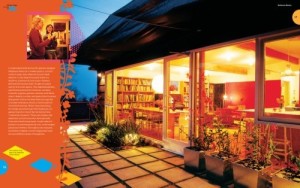
Hardcover. NY, Reagan Books, 1st, 2006, Book: Very Good, Dust Jacket: None, Hardcover, 272 pages. Through striking illustrations and stunning photographs, Bohemian Modern explores the unique structural and interior designs that have put California's ultra-chic Silver Lake neighborhood at the forefront of a new style phenomenon. One of the country's most renowned modernist architects, Barbara Bestor has fully embraced and perfected Silver Lake's "bohemian modern" style: a practical philosophy that is Californian in origin but achievable anywhere. It is a look that favors raw, authentic materials, brilliant colors, creative space planning, and a natural flow between indoors and outdoors. The results, as Bohemian Modern presents, are striking: a flawlessly restored Neutra house decorated with both whimsy and restraint, a rooftop constructed for viewing the stars, a lavish outdoor garden delicately integrated into the surrounding architecture, a double-sided bookcase that soars three stories and serves as a functional art installation...there is no limit to the creativity and beauty of Silver Lake style.
Hardcover. NY, Russell Sage Foundation, 1st, 1994, Book: Very Good, Dust Jacket: Very Good, Hardcover, 400 pages, b&w illustrations. Little over a century ago, New York and Budapest were both flourishing cities engaging in spectacular modernization. By 1930, New York had emerged as an innovating cosmopolitan metropolis, while Budapest languished under the conditions that would foster fascism. Budapest and New York explores the increasingly divergent trajectories of these once-similar cities through the perspectives of both Hungarian and American experts in the fields of political, cultural, social and art history. Their original essays illuminate key aspects of urban life that most reveal the turn-of-the-century evolution of New York and Budapest: democratic participation, use of public space, neighborhood ethnicity, and culture high and low. What comes across most strikingly in these essays is New York's cultivation of social and political pluralism, a trend not found in Budapest. Nationalist ideology exerted tremendous pressure on Budapest's ethnic groups to assimilate to a single Hungarian language and culture. In contrast, New York's ethnic diversity was transmitted through a mass culture that celebrated ethnicity while muting distinct ethnic traditions, making them accessible to a national audience. Mild fade to spine of dust jacket, otherwise clean.
Hardcover. Boston, MA, Houghton Mifflin, 1st, 2000, Book: Very Good, Dust Jacket: Very Good, Hardcover, 192 pages, illustrated throughout in color. Blue cloth, silver titles. Pictorial dust jacket. Light wear to cover, else like new.
Hardcover. Salt Lake City, Gibbs Smith, 1st, 2005, Book: Very Good, Dust Jacket: Very Good, Hardcover, 229 pages, profusely illustrated in b&w. In "Building with Nature: Inspiration for the Arts & Crafts Home" Freudenheim weaves together the lives and philosophies of William Morris, John Ruskin, Frederick Law Olmsted, John Muir, Greene & Greene, Irving Gill, Bernard Maybeck, and others with the dramatic economic, social, design and cultural changes that took place in America between 1876 and 1916. Chronicling both intellectual theory and architectural history, this ground-breaking book will appeal to general readers as well as to those enthusiastic about the Arts and Crafts Movement, its architecture and furniture. Freudenheim demonstrates how the "simple life" manifested in the rustic architecture found in Yosemite, English cottages, Japanese barns, and Swiss chalets, became the basis for the design of the American Arts and Crafts home advocated by these pioneering thinkers. Their devotion to simplicity for both the interior and exterior design of these houses also helps to explain why they embraced plain, sturdy Mission Style furniture. Freudenheim points out how numerous individuals, both American and British, helped spread these ideas across America.
Hardcover. NY, Norton, 1st, 2001, Book: Very Good, Dust Jacket: Very Good, Hardcover, 304 pages. Nineteen essays, by a diverse group of historians and others who experience and study Gilbert's buildings in their professional lives, detail the intricate relationship between Gilbert's work and the long-standing tradition of public architecture in America. This volume examines Gilbert's work in five unique categories: the building of a national practice, an evaluation of his Minnesota State Capitol as "a defining moment" in American civic architecture, his New York career, his response to civic ideals in his plans for towns and universities, and his work in the public domain. Illustrations, some in color.
Softcover. New York, Rizzoli, 1st, 1993, Book: Very Good, Dust Jacket: None, 305 pages, illustrated throughout in color and b&w. Light edgewear and sun-fade to spine. Previous owner's signature on front end paper. Clean, tight copy. Briefly traces the career of this contemporary American architect and shows examples of his houses, apartment buildings, libraries, museums, schools, hotels, churches, and conference centers.
Softcover. NY, Princeton Architectural Press, 1st, 2006, Book: Very Good, Dust Jacket: None, Softcover, 224 pages, color photos. Charles Rose embraces the vast and varied panorama of the American landscape. The profile of his award-winning Paintrock Camp in Hyattville, Wyoming, follows the contours of a nearby canyon; Roses's adaptive reuse of an industrial structure in New York City's Chelsea neighborhood preserves the existing streetscape while creating a seamless flow between inside and out; and the shape of his United States Port of Entry project in Del Rio, Texas, was determined by the scorching Texan sun and features sustainable landscapes. With surprising use of volumes, materials, and geometries, agile movement of spaces, and an active language of planes and lines, Rose creates dynamic, expressive architecture that reminds us that buildings can be both sensitive to their locale and embrace the timeless principles of geometry, material, light, and shadow. Clean copy.
Softcover. Munich, Prestel/Art Institute of Chicago, 1st, 1987, Book: Very Good, Dust Jacket: None, Softcover, 480 pages, b&w and color illustrations. Published in association with the Art Institute of Chicago and in conjunction with an exhibition presented there in the summer of 1988, as well as in Paris and Frankfurt-am-Main in 1987-88. Contributors to the text include Robert Bruegmann, Sally Chappell, Meredith L. Clausen, Joan E. Draper and others.
Hardcover. Chicago, IL, Chicago Historical Society, 1st, 1979, Book: Very Good, Dust Jacket: Very Good, Hardcover. History of the art of glass and ceramics in Chicago. Focuses on both small-scale, decorative works and larger, architectural pieces. Illustrated with 221 photographs (mostly black/white, few color). Dust jacket in very good condition, shows slight rubbing on the back, but cloth bound book in near fine condition with virtually no flaws.

 "1950s in Vogue: The Jessica Daves Years, 1952-1962by: Tuite, Rebecca C.")

 "Above And Beyond: Visualizing Change In Small Towns And Rural Areas by: Campoli, Julie; Humstone, Elizabeth; Maclean, Alex")
 "American Barn, Theby: Plowden, David")
 "American Modernism: Graphic Design 1920 to 1960 (Mini)by: Remington, R. Roger")
 "American Monumentby: Lynn Davis and Witold Rybczynski")
 "American Shelter: An Illustrated Encyclopedia of the American Homeby: Walker, Lester")
 "An Eames Primerby: Eames Demetrios")
 "Anonymization: The Global Proliferation of Urban Sprawlby: Pittman, Alison Nordstrom, Bill McKibben, Robert Harding")
 "Architecture and Town Planning in Colonial North America (3 Vol. Set)by: James D. Kornwolf and Georgiana W. Kornwolf")
 "Architecture in Salem: An Illustrated Guideby: Tolles, Jr. & Tolles, Bryant F. & Carolyn K.")
 "Architecture of Frank Lloyd Wright, Theby: Levine, Neil")
 "Architecture of Resignation: Photographs from the Mezzogiornoby: Wolke, Jay")
 "Art and the Empire City: New York, 1825-1861by: Voorsanger, Catherine, and John Howat")
 "Baltimore's Alley Houses: Homes for Working People Since the 1780s by: Hayward, Mary Ellen")
 "Bird's Eye View of the Pueblosby: Stubbs, Stanley A.")
 "Bohemian Modern: Living in Silver Lakeby: Barbara Bestor and Geoff McFetridge")

 "Budapest and New York: Studies in Metropolitan Transformation, 1870-1930by: Bender, Thomas, Schorske, Carle E. (Ed.)")
 "Building Bigby: Macaulay, David")
 "Building with Nature: Inspiration for the Arts and Crafts Homeby: Freudenheim, Leslie M.")
 "Cass Gilbert, Life and Work: Architect of the Public Domainby: Barbara S. Christen, Steven Flanders, et al.")
 "Charles Moore: Buildings and Projects 1949-1986by: Johnson, Eugene J.")
 "Charles Rose, Architectby: Rose, Charles A.")
 "Chicago Architecture 1872-1922 Birth of a Metropolisby: Zukowsky (Ed.), John")
 "Chicago Ceramics & Glass: An Illustrated History from 1871 to 1933by: Darling, Sharon S.")