Hardcover. Florida, Brevard County Historical Commission, 1st, 1995, Book: Very Good, Dust Jacket: Good, Hardcover, 271 pages. Extensive b&w photography throughout. Gilt decoration on cover. Gilt titles on spine. Small tear to bottom corner of dust jacket repaired with tape. Light wear to dust jacket. Otherwise clean, tight copy.
Hardcover. New York, G. P. Putnam, 1st, 1853, Book: Good, 366 pages. Leather cover with raised bands and ornate decoration. Gilt all edges and marled endpapers. B&w frontispiece with tissue-guard and b&w and color illustrations with tissue guards throughout. Color illustrations on tipped-in plates. Rubbing and wear to cover edges and some light foxing throughout. Else a clean, good copy.
Hardcover. New York, Doubleday, Page, and Company, 1st, 1925, Book: Fair, Dust Jacket: None, Volume to accompany the American Wing of the Metropolitan Museum of Art in New York. 302 pp. Features 20 color plates in addition to 217 other black/white illustrations (mostly photographs). Covers beginnings of New England through the Early Days of the Republic. Development of Interior Architecture and House Decoration from craftsmen influenced by old world style and the evolution.Shows significant wear due to age and water damage. Discoloration throughout, though text still entirely legible and color still vivid in the plates. Edges show significant wear as well. Prior owner's name and date (1929) written in ink twice inside the cover.
Hardcover. New Haven CT, Yale University Press, 1st, 2008, Hardcover, 384 pages. When George Washington embarked on his presidential tours of 1789-91, the rudimentary inns and taverns of the day suddenly seemed dismally inadequate. But within a decade, Americans had built the first hotels--large and elegant structures that boasted private bedchambers and grand public ballrooms. This book recounts the enthralling history of the hotel in America--a saga in which politicians and prostitutes, tourists and tramps, conventioneers and confidence men, celebrities and salesmen all rub elbows. Hotel explores why the hotel was invented, how its architecture developed, and the many ways it influenced the course of United States history. The volume also presents a beautiful collection of more than 120 illustrations, many in full color, of hotel life in every era.
New Haven CT, Yale University Press, 1st, 2008, Book: Very Good, Dust Jacket: Very Good, Hardcover in a bright dust jacket. 375 pages including index, color and b&w illustrations. When George Washington embarked on his presidential tours of 1789?-91, the rudimentary inns and taverns of the day suddenly seemed dismally inadequate. But within a decade, Americans had built the first hotels?, large and elegant structures that boasted private bedchambers and grand public ballrooms. This book recounts the enthralling history of the hotel in America?a saga in which politicians and prostitutes, tourists and tramps, conventioneers and confidence men, celebrities and salesmen all rub elbows. Hotel explores why the hotel was invented, how its architecture developed, and the many ways it influenced the course of United States history. The volume also presents a beautiful collection of more than 120 illustrations, many in full color, of hotel life in every era. Clean, bright copy.
Softcover. Durham NC, Duke University Press, 5th pr., 1999, Book: Very Good, Dust Jacket: None, Softcover, 250 pages, b&w illustrations. This entertaining and playful book views Disney World as much more than the site of an ideal family vacation. Blending personal meditations, interviews, photographs, and cultural analysis, Inside the Mouse looks at Disney World's architecture and design, its consumer practices, and its use of Disney characters and themes. This book takes the reader on an alternative ride through "the happiest place on earth" while asking "What makes this forty-three-square-mile theme park the quintessential embodiment of American leisure?" Turning away from the programmed entertainment that Disney presents, the authors take a peek behind the scenes of everyday experience at Disney World. In their consideration of the park as both private corporate enterprise and public urban environment, the authors focus on questions concerning the production and consumption of leisure. Featuring over fifty photographs and interviews with workers that strip "cast members" of their cartoon costumes, this captivating work illustrates the high-pressure dynamics of the typical family vacation as well as a tour of Disney World that looks beyond the controlled facade of themed attractions. Clean copy.
Hardcover. Athens, University of Georgia, 1st, 1998, Book: Very Good, Dust Jacket: Very Good, Hardcover, 316 pages, b&w photographs. Light rubbing to dust jacket, sticker residue on rear. Else a clean, tight copy. During the Gilded Age, Jekyll Island, Georgia, was one of the most exclusive resort destinations in the United States. Owned by the most elite and inaccessible social club in America, a group whose members included Rockefellers, Pulitzers, Vanderbilts, Goulds, and Morgans, this quiet refuge in the Golden Isles was the perfect winter getaway for the wealthy new industrial class of the snowbound North. In this delightful book, a companion volume to The Jekyll Island Club: Southern Haven for America's Millionaires, June Hall McCash focuses on the social club's members and the "cottages" they built near the clubhouse between 1888 and 1928. Illustrated with hundreds of never-before-published photographs from private family collections, The Jekyll Island Cottage Colony tells the stories of each home, the owners' connections with the island, and their interactions with one another.
Hardcover. Ostfildern GR, Hatje Cantz, 1st, 2008, Book: Very Good, Dust Jacket: Very Good, Hardcover, 288 pages 231 illustrations 60 in color with 274 plans and drawings. Biography. Like new in publisher's shrink-wrap. Josef Paul Kleihues (1933-2004) was one of the most prolific architects of postwar Germany, famous both as the Director of the International Building Exhibition Berlin in 1987 and for his design for the Museum of Contemporary Art in Chicago. He was also known for his sensitive interventions into older buildings, an instance of which is the former Hamburger Bahnhof--now the Museum fur Gegenwart--in Berlin, where Kleihues intermixed glass walls and light installations by the American Minimalist Dan Flavin with the building's original nineteenth-century Neoclassical design. (His reconstruction was widely deemed to rival or even surpass Gae Aulenti's overhaul of the interior of the Musee d'Orsay in Paris.) This first volume of a three-part monograph presents projects up to 1980, including the highly acclaimed Berlin Sanitation Department and the Neukolln Hospital. Even in these early works, Kleihues' practical, problem-solving approach is already evident, indicating his readiness to reflect on the traditional approaches of Modern architecture and his capacity to expand them in interesting ways. This very generously illustrated volume was designed by Kleihues himself, just before his death in 2004.
Hardcover. NY, D.A.P./Distributed Art Publishers, 1st, 2008, Book: Very Good, Dust Jacket: None, Hardcover, 89 pages, large format. Tipped-on front board. Slight bump to bottom right corner. In publisher shrink wrap. A natural chronicler of all things uniquely American, photographer Lee Friedlander here puts his lens to the work of Frederick Law Olmsted (1822-1903), designer of many of this country's most iconic public landscapes and the father of North American landscape architecture. Olmsted was responsible for a staggering number of America's greatest parks, including the Niagara reservation (North America's oldest state park), Washington Park, the Biltmore Estate, the U.S. Capitol building landscape and entire parkway systems in Buffalo and Louisville. His most famous work remains New York City's Central Park, a pioneering egalitarian gesture that, at the time, was very unusual for its ready accessibility. No dust jacket issued. DOMESTIC SHIPPING ONLY.
Hardcover. Boston, Massachusetts, Harry N. Abrams, 1st, 1992, Book: Very Good, Dust Jacket: Very Good, 470 pages. Brown cloth cover, color illustrated dust jacket, 113 color and 206 illustrations. Still in original shrink wrap; book in excellent condition. American artists have been inspired by Italy since the 1760s, when Benjamin West, the first American painter to travel there, was drawn to the ancient Roman ruins and magnificent Renaissance architecture, statuary, and frescoes. This intriguing, superbly illustrated book is the first to explore the fascination Italy held for the American artist from West's time to the eve of World War I.The unique sense of the past found in Italy, where tangible evidence exists of a continual civilization from antiquity to the present, lured countless American artists to its cities, towns, and countryside. Painters from West and Copley in the eighteenth century to Cole, Inness, Whistler, Sargent, and Prendergast in the nineteenth century were inspired to create many of their finest works in Italy, as were American sculptors such as Hiram Powers and Harriet Hosmer and writers from Washington Irving to Henry James. This in-depth study includes 319 illustrations, of which 113 are reproduced in full color, many of works that have not previously been published. Theodore E. Stebbins, Jr., John Moors Cabot Curator of American Paintings at the Museum of Fine Arts, Boston, and Professor of Art History at Boston University, provides a broad overview of the American perception of Italy and the unique role that Italy played in the formation of American art.
Hardcover. Boston, Massachusetts, Harry N. Abrams, 1st, 1992, Book: Very Good, Dust Jacket: Very Good, 470 pages. Brown cloth cover, color illustrated dust jacket, 113 color and 206 illustrations. Still in original shrink wrap; book in excellent condition. American artists have been inspired by Italy since the 1760s, when Benjamin West, the first American painter to travel there, was drawn to the ancient Roman ruins and magnificent Renaissance architecture, statuary, and frescoes. This intriguing, superbly illustrated book is the first to explore the fascination Italy held for the American artist from West's time to the eve of World War I.The unique sense of the past found in Italy, where tangible evidence exists of a continual civilization from antiquity to the present, lured countless American artists to its cities, towns, and countryside. Painters from West and Copley in the eighteenth century to Cole, Inness, Whistler, Sargent, and Prendergast in the nineteenth century were inspired to create many of their finest works in Italy, as were American sculptors such as Hiram Powers and Harriet Hosmer and writers from Washington Irving to Henry James. This in-depth study includes 319 illustrations, of which 113 are reproduced in full color, many of works that have not previously been published. Theodore E. Stebbins, Jr., John Moors Cabot Curator of American Paintings at the Museum of Fine Arts, Boston, and Professor of Art History at Boston University, provides a broad overview of the American perception of Italy and the unique role that Italy played in the formation of American art.
Softcover. Baltimore, Johns Hopkins University Press, 1st, 1995, Book: Very Good, Dust Jacket: None, Softcover in pictorial wraps, 259 pages with bibliography, index. Illustrated with vintage and contemporary photographs. First published in 1985, author Liebs' work established the 20th Century roadside landscape as a subject for serious study. Liebs traces the transformation of commercial development as it moved from centralized town main streets outward along street car line and highways (with old gas stations, small restaurants, motels, and truck stops) to the "miracle miles" and shopping malls of today. This, the first softcover edition, contains new commentary by the author. Clean copy.
Softcover. Flagstaff, AZ, Northland Press, 3rd pr, 1981, Book: Very Good, Dust Jacket: None, Softcover, 131 pages, b&w photographs. Light creases to front wrapper. Else a very clean, tight copy. An architect for the Santa Fe Railway and the Fred Harvey Company, Colter laid the groundwork for female architects who followed. Seven of her remarkable structures are preserved in Grand Canyon's historic district. This is her story.
Hardcover. New Haven CT, Yale University Press, 1st, 2012, Book: Very Good, Dust Jacket: Very Good, Hardcover, 288 pages. As a prolific photographer for House Beautiful, Better Homes and Gardens, Architectural Digest, and Sunset magazine, Maynard L. Parker (1900-1976) was a pioneer in documenting residential spaces and landscapes for postwar America. His extensively published, sun-kissed brand of photography made him a critical contributor to domestic design culture from the 1940s into the 1960s. Parker's lens revealed the homes and lifestyles of affluent Americans and celebrities, including Judy Garland, Clark Gable, and Bing Crosby, as well as the interiors, gardens, and built works of Samuel Marx, Frank Lloyd Wright, Thomas Church, and Cliff May, offering an alluring template for living in a new consumer age. Maynard L. Parker: Modern Photography and the American Dream is the first monograph to consider Parker and his work. Lavishly illustrated essays by leading scholars set Parker's photography against the backdrop of an unprecedented demographic shift, the Cold War, and a suburban society increasingly fixated on consumption.
Hardcover. New York, Macmillan Company, 1st, 1932, Book: Good, Dust Jacket: None, Non-paginated. Hardcover. Black & white photographs by Lewis W. Hine. Previous owners inscription on front endpaper; handwritten poem on rear endpaper. Green cloth covers with light rubbing to corners. No dust jacket.
Softcover. Bowie MD, Heritage Books, reprint, 2001, Book: Very Good, Dust Jacket: None, Two softcover volumes 391 & 392 pages. Volumes 1 and 2 complete, a facsimile reprint of the 1897 edition by Lippincott. This two-volume series takes the reader on a journey through the colonies of Virginia, Massachusetts, Connecticut, Rhode Island, New Hampshire, Pennsylvania, New Jersey, New York, Maryland, Carolina, and Georgia. The charm of the journey is in its variety, as the reader passes through communities of such striking individuality that they assume the character of different nations. Each colony has a set of opinions and laws peculiar to itself, and it is not uncommon to find the laws of one in contradiction with the laws of another. This text explores the settlement and history of each colony prior to the American Revolution. Topics include development of the colonies' government, laws, religion, schools, boundaries, industries, layout of the cities, fashions, homes, social activities, slavery, architecture, interaction with the Indians, and customs. At least one prominent person from each colony is discussed, amongst them, William Penn of Pennsylvania, John Smith of Virginia, George Calvert of Maryland, and General Oglethorpe of Georgia. Light sunning ti spines.Clean copies.
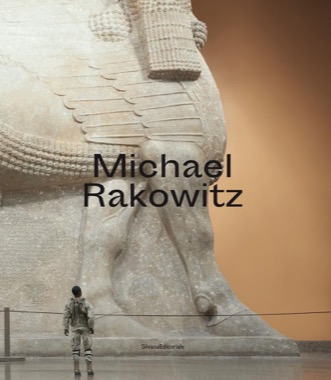
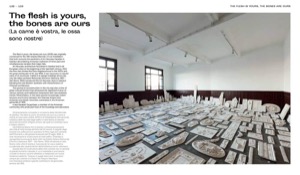
Hardcover. Milan, Silvana Editoriale, 1st, 2020, Book: Very Good, Dust Jacket: Very Good, Hardcover in a bright dust jacket. Iraqi-American artist Michael Rakowitz's (b. 1973, USA) first major European survey presents a sequence of installations drawing on architecture, cultural artifacts and cuisine to tell stories of social ritual, conflict and loss. It encompasses work considering the citizen visionaries of post Soviet Hungary, Middle Eastern Beatles fans and the stonecarvers of Afghanistan, with Rakowitz's casts of players and objects revealing the legacy of colonization, modernism and globalism. The artist's life-size replica of the gigantic lamassu, one of two monumental winged bulls that once guarded the gates of Nineveh in Iraq, currently features on Trafalgar Square's Fourth Plinth. This recreation of an ancient mythological creature is made from everyday date syrup cans and is part of an epic endeavour to recreate all 7,000 objects looted from the Iraq Museum in 2003, as well as those destroyed more recently at archaeological sites like Nimrud, also presented here. Text in English and Italian. Short closed tear to dj corner. otherwise like new. DOMESTIC SHIPPING ONLY.
Hardcover. NY/Cambridge MA, The Architectural History Foundation/The MIT Press, 1st, 1984, Book: Very Good, Dust Jacket: Very Good, Hardcover in a bright dust jacket. This is the first complete biography of the inimitable society architect Addison Mizner, whose Spanish Revival buildings created a new style of resort architecture for Palm Beach and south Florida during the boom years of the 1920s. Clean copy.
Hardcover. Thomas Jefferson Foundation, reprint, 2006, Book: Very Good, Dust Jacket: Very Good, Hardcover in a bright dust jacket, oblong format, 80 pages. Each year approximately 500,000 people journey up the winding, narrow road from Charlottesville, Virginia, to visit Monticello, the home of Thomas Jefferson. In 1990 a team of architects from the Historic American Buildings Survey (HABS) made this same journey to record Jefferson's residence inside and out. Monticello in Measured Drawings presents HABS' unique set of plan, elevations, sections, and details of the house as it was actually built. They expose many of Monticello's behind-the-scenes mysteries. Seeral reveal the house's complex facade, while others details the relationship of individual floors and the fascinating array of architectural elements found throughout the house.
Hardcover. Thomas Jefferson Foundation, reprint, 2006, Book: Very Good, Dust Jacket: Very Good, Hardcover in a bright dust jacket, oblong format, 80 pages. Each year approximately 500,000 people journey up the winding, narrow road from Charlottesville, Virginia, to visit Monticello, the home of Thomas Jefferson. In 1990 a team of architects from the Historic American Buildings Survey (HABS) made this same journey to record Jefferson's residence inside and out. Monticello in Measured Drawings presents HABS' unique set of plan, elevations, sections, and details of the house as it was actually built. They expose many of Monticello's behind-the-scenes mysteries. Seeral reveal the house's complex facade, while others details the relationship of individual floors and the fascinating array of architectural elements found throughout the house.
Hardcover. Ontario CA, Vanwell Publishing St. Catherines, Ontario, 1st, 1996, Book: Very Good, Dust Jacket: Very Good, Hardcover, 344 pages, illustrated throughout in color and b&w. Clean, unmarked copy with only minor wear to dust jacket.
Softcover. New York , Watson-Guptill, 1st, 1999, Book: Very Good, Dust Jacket: None, Square 4to, stiff pictorial wrappers. 228 pages, over 400 color photographs and b/w plans and drawings.
hardcover. NY, Macmillan , 1st, 1909, Book: Very Good, Dust Jacket: None, Red cloth hardcover with gilt lettering, 424 pages. 98 Black & white and 25 color illustrations by Joseph Pennell. Color illustrated frontispiece with tissue-guard. Light edgewear to covers. Rear and front hinge cracked.
Hardcover. New York, Rizzoli, 1st, 1989, Book: Very Good, Dust Jacket: Very Good, Hardcover, 228 pages. B&w and color illustrations throughout. Text and photos tells the stories behind the numerous homes and public buildings of Newport R.I. Brand new copy, still in original shrink wrapping. In mint condition.

 "History of Brevard County, Vol. 1by: Shofner, Jerrell H")
 "Homes of American Authorsby: n/a")
 "Homes of Our Ancestors, Theby: Halsey & Tower, R. T. H. & Elizabeth")
 "Hotel: An American Historyby: Andrew K. Sandoval-Strausz")
 "Hotel: An American Historyby: Andrew K. Sandoval-Strausz")
 "Inside The Mouse: Work and Play at Disney World by: The Project on Disney")
 "Jekyll Island Cottage Colony, Theby: McCash, June Hall")
 "Josef Paul Kleihuesby: Kleihues, Josef Paul, Andrea Mesecke and Thorsten Scheer")
 "Lee Friedlander: Photographs, Frederick Law Olmsted: Landscapesby: Lee Friedlander")
 "Lure of Italy, The: American Artists and The Italian Experience, 1760 - 1914by: Stebbins, Theodore E. Et al.")
 "Lure of Italy, The: American Artists and The Italian Experience, 1760 - 1914by: Stebbins, Theodore E. Et al.")
 "Main Street to Miracle Mile: American Roadside Architecture by: Chester H. Liebs")
 "Mary Colter - Builder upon the Red Earthby: Grattan, Virginia L.")
 "Maynard L. Parker: Modern Photography and the American Dreamby: Jennifer A. Watts")
 "Men at Workby: Hine, Lewis W.")
 "Men, Women & Manners in Colonial Times (2 Volumes)by: Sydney Geo Fisher")


 "Michael Rakowitz by: Carolyn Christov-Bakargiev")
 "Mizner's Florida: American Resort Architectureby: Curl, Donald Walter")
 "Monticello in Measured Drawings: Drawings by the Historic American Buildings Survey / Historic American Engineering Record, Nationa Park Service by: William L. Beiswa")
 "Monticello in Measured Drawings: Drawings by the Historic American Buildings Survey / Historic American Engineering Record, Nationa Park Service by: William L. Beiswa")
 "Moshe Safdieby: Kohn, Wendy")
 "New American Cottage, The - Innovations in Small-Scale Residential Architectureby: Trulove, James Grayson and Il Kim")
 "New New York, Theby: Van Dyke, John C. and Joseph Pennell")
 "Newport Housesby: Mulvagh, Jane , Mark A. Weber")