Hardcover. Verba Volant, 1st, 2005, Book: Very Good, Dust Jacket: Very Good, Hardcover in a bright dust jacket, 480 pages, 796 b/w & 12 color illustrations. A showcase of the Architecture & Decorative arts of the Art Deco period. Originally published in 1930, in Italy, under the title 'Le Arti d'Oggi' the book is divided into six sections - Architecture, Interiors, Metalwork, Ceramics, Glasswork & Fabrics. A superb pictorial reference for anyone interested in the art & design of the 1920 art deco period.
Softcover. Bright Mountain Books , 1st, 2007, Book: Very Good, Dust Jacket: None, Softcover, 358 pages, b&w illustrations throughout, Sometimes called the Paris of the South, Asheville, North Carolina, is known for its grand mountain views, rich and diverse culture, deep-rooted artistic heritage, historic architecture, and the legendary Biltmore Estate. Asheville: Mountain Majesty is an excellent source for discovering, or rediscovering, these and other facets of the city and its history.A lifelong resident of Asheville and regional historian, author Lou Harshaw offers a firsthand look at the history and development of this magnificent city by drawing upon a host of historical sources as well as an extensive oral tradition. She follows the development of Asheville from village to town to city, always reflecting the feeling of the times. The result is a journey through time, documenting the evolution of one of the most intriguing cities in the United States.Asheville: Mountain Majesty is enhanced by a wealth of period images, complemented by the author's contemporary photography.
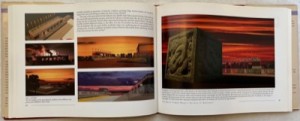
Hardcover. Salt Lake City, University of Utah Press, 1st, 2001, Book: Very Good, Dust Jacket: Very Good, Hardcover in a bright dust jacket. Oblong folio in color pictorial jacket; 208 pages most in color. The Templo Mayor precinct at Tenochtitlan in Mexico was an important center in Aztec ceremonial life, providing the setting for displays of highly-energized rituals. This book uses the latest archaeological research and cutting-edge computer-generated three-dimensional color imagery to reconstruct the spaces where these ritual dramas were played out. Through a series of isometric drawings and sections cut through buildings, the author has created a compelling reconstruction of how the temple looked, and how it evolved from a scatter of mud and thatch huts to become one of the most impressive urban complexes in the world. Clean copy.
Softcover. London, Academy Editions Ltd, 1st, 1995, Book: Very Good, Dust Jacket: None, Softcover, 128 pages. Illustrated in color and b&w. Baillie Scott's long career spanned the years from 1892 to 1939 - several ages in architecture. He may be considered a third-generation Arts and Crafts architect, who joined the movement after it had become well established and took its ideas to everyman. He invented a new type of small house by opening up a plan around a spacious house-place or hall and extending the interior into the garden. These airy little houses, with their intimate alcoves and sunny verandas, captured William Morris's vision: 'Simplicity of life, even the barest, is not a misery, but the very foundation of refinement: a sanded floor and whitewashed walls, and the green trees, and flowery meads... will turn all "operatives" into workmen, into artists, into men.' This book includes many newly commissioned photographs of Baillie Scott's houses, as well as original drawing and new research. By looking at his writing and revisiting his buildings - some previously unknown - it makes available the work of an important architect of the Arts and Crafts movement. It reveals for the first time the beauty of Baillie Scott's architectural works and the fascinating breadth of his theory and practice. Clean copy.
Hardcover. Baltimore, Johns Hopkins University Press, 1st, 2008, Book: Very Good, Dust Jacket: Very Good, Hardcover in a bright dust jacket, 307 pages with index. Having studied over 3,000 surviving alley houses in Baltimore through extensive land records and census research, Mary Ellen Hayward systematically reconstructs the lives, households, and neighborhoods that once thrived on the city's narrowest streets. In the past, these neighborhoods were sometimes referred to as "dilapidated," "blighted," or "poverty stricken." In Baltimore's Alley Houses, Hayward reveals the rich cultural and ethnic traditions that formed the African-American and immigrant Irish, German, Bohemian, and Polish communities that made their homes on the city's alley streets. Featuring more than one hundred historic images, Baltimore's Alley Houses documents the changing architectural styles of low-income housing over two centuries and reveals the complex lives of its residents. Clean copy.
Hardcover. New York , Quantuck Lane, 1st, 2005, Book: Very Good, Dust Jacket: Very Good, Hardcover, 176 pages, color photographs. Like new in publisher's shrink-wrap. The North Fork is the roughly sixty-mile-long spit of New York's Long Island that runs from Riverhead to Orient Point. With the fairly well protected Long Island Sound on the North and Peconic Bay on the South, it was a logical place for some of the earliest English immigrants to settle and build barns. It is still home to more working farms than any other part of the island. And from the timber-frame barns of the British farmers of the seventeenth century to the pole barns of the twentieth, the variety is stunning. In a survey sponsored by the Old House Society in Cutchogue, Mary Ann Spencer spent the last few years making a comprehensive inventory and photographing more than six hundred barns on the North Fork. Two hundred of them are still in use, although their fate is by no means certain. Here in their glory (and sometimes less than that) are the most interesting barns,which reveal, among other things, their functional development, their often haphazard fenestration, their soft patina of age, and their fit in the landscape. Spencer's complete survey forms a second part of this book, which provokes feelings of nostalgia and raises our fears for the future of these wonderful structures. More than 150 color photographs.
Middlesex, Baltimore, Victoria, Penguin Books, 1st, 1965, Book: Very Good, Dust Jacket: Good, Hardcover, burgundy cloth covers in an edgeworn dust jacket. 370 pages, 200 black-and-white illustrations, 32 figures as drawings (floor plans, sectional and frontal views, etc), maps. Translated from the German by Elisabeth Hempel and Marguerite Kay. Clean. No slipcase.
Hardcover. Larkspur Landing, Lapis Press, 1st, 1985, Book: Very Good, Dust Jacket: Very Good, 157 pages. Hardcover. Illustrated with full color and black & white photographs. Wrinkling to bottom right corner of page 147/148. Dust jacket with light wear along edges. Clean, tight copy.
Hardcover. NY, Farrar, Straus & Giroux, 1st, 2006, Book: Very Good, Dust Jacket: Very Good, Hardcover in a bright dust jacket. 375 pages. B&W photographs and illustrations. Pictorial dust jacket. Green cloth with gilt title to spine. Erratum laid-in. Overall, a clean, tight copy. ohn Betjeman was by far the most popular poet of the twentieth century; his collected poems sold more than two million copies. As poet laureate of England, he became a national icon, but behind the public man were doubts and demons. The poet best known for writing hymns of praise to athletic middle-class girls on the tennis courts led a tempestuous emotional life. For much of his fifty-year marriage to Penelope Chetwode, the daughter of a field marshal, Betjeman had a relationship with Elizabeth Cavendish, the daughter of the Duke of Devonshire and lady-in-waiting to Princess Margaret. Betjeman, a devout Anglican, was tormented by guilt about the storms this emotional triangle caused. Betjeman, published to coincide with the hundredth anniversary of the poet's birth, is the first to use fully the vast archive of personal material relating to his private life, including literally hundreds of letters written by his wife about their life together and apart. Here too are chronicled his many friendships, ranging from "Bosie" Douglas to the young satirists of Private Eye, from the Mitford sisters to the Crazy Gang. This is a celebration of a much-loved poet, a brave campaigner for architecture at risk, and a highly popular public performer. Betjeman was the classic example of the melancholy clown, whose sadness found its perfect mood music in the hymns of a poignant Anglicanism. Clean copy.
Hardcover. Norman OK, University of Oklahoma Press, 1st , 1950, Book: Very Good, Dust Jacket: Very Good, Hardcover in a lightly worn dustjacket. Ground plans of the Indian villages of New Mexico and Arizona with aerial photos & scale drawings.
Hardcover. Harrisburg PA, National Historical Society, reprint, 1988, Book: Very Good, Dust Jacket: None, Hardcover, glossy green pictorial boards. No DJ as issued. Volume 11 of the Architectural Treasures of Early America. From material originally published as White Pine Series of Architectural Monographs edited by Russell F. Whitehead and Frank Chouteau Brown. 224 page book with historic photographs and home plans. Clean copy.
Hardcover. New York , Monacelli, 1st, 2003, Book: Very Good, Dust Jacket: Very Good, 336 pages, illustrated with color plates, additional drawings and plans. Very good hardcover in a bright dust jacket.
Hardcover. New York , Monacelli, 1st, 2003, Book: Very Good, Dust Jacket: Very Good, 336 pages, illustrated with color plates, additional drawings and plans. Very good hardcover in a bright dust jacket.
Hardcover. NY, Reagan Books, 1st, 2006, Book: Very Good, Dust Jacket: None, Hardcover, 272 pages. Through striking illustrations and stunning photographs, Bohemian Modern explores the unique structural and interior designs that have put California's ultra-chic Silver Lake neighborhood at the forefront of a new style phenomenon. One of the country's most renowned modernist architects, Barbara Bestor has fully embraced and perfected Silver Lake's "bohemian modern" style: a practical philosophy that is Californian in origin but achievable anywhere. It is a look that favors raw, authentic materials, brilliant colors, creative space planning, and a natural flow between indoors and outdoors. The results, as Bohemian Modern presents, are striking: a flawlessly restored Neutra house decorated with both whimsy and restraint, a rooftop constructed for viewing the stars, a lavish outdoor garden delicately integrated into the surrounding architecture, a double-sided bookcase that soars three stories and serves as a functional art installation...there is no limit to the creativity and beauty of Silver Lake style.
Hardcover. NY, Reagan Books, 1st, 2006, Book: Very Good, Dust Jacket: None, Hardcover, 272 pages. Through striking illustrations and stunning photographs, Bohemian Modern explores the unique structural and interior designs that have put California's ultra-chic Silver Lake neighborhood at the forefront of a new style phenomenon. One of the country's most renowned modernist architects, Barbara Bestor has fully embraced and perfected Silver Lake's "bohemian modern" style: a practical philosophy that is Californian in origin but achievable anywhere. It is a look that favors raw, authentic materials, brilliant colors, creative space planning, and a natural flow between indoors and outdoors. The results, as Bohemian Modern presents, are striking: a flawlessly restored Neutra house decorated with both whimsy and restraint, a rooftop constructed for viewing the stars, a lavish outdoor garden delicately integrated into the surrounding architecture, a double-sided bookcase that soars three stories and serves as a functional art installation...there is no limit to the creativity and beauty of Silver Lake style.
Hardcover. NY, Simon & Schuster, 3rd pr., 2000, Book: Very Good, Dust Jacket: Very Good, Hardcover in a bright dust jacket, color illustrations. Renowned artist and architect Maya Lin's visual and verbal sketchbook--a unique view into her artwork and philosophy. Boundaries is her first book: an eloquent visual/verbal sketchbook produced with the same inspiration and attention to detail as any of her other artworks. Like her environmental sculptures, it is a site, but one which exists at a remove so that it may comment on the personal and artistic elements that make up those works. In it, sketches, photographs, workbook entries, and original designs are held together by a deeply personal text. Boundaries is a powerful literary and visual statement by "a leading public artist" (Holland Carter). It is itself a unique work of art. Clean copy.
Hardcover. Milwaukee WI, Bruce Publishing, reprint, 1945, Book: Very Good, Dust Jacket: None, Hardcover, oblong brown cloth with black lettering and design, 62 pages illustrated with b&w illustrations and photos. Detailed instructions on building birdhouses. Foxing to endpapers otherwise a clean copy.
Hardcover. Paris, Flammarion, 1st, 2011, Book: Very Good, Dust Jacket: Very Good, Hardcover in a lightly worn dust jacket, 167 pages, illustrated in color and b&w. A rare discovery of more than 150 previously unpublished photographs in black and white and in color, from a legendary photographer. Despite strong personal and professional ties in the U.S.--Henry Miller, Harper's Bazaar's Carmel Snow, and Edward Steichen, who featured Brassai's work in many MoMA exhibitions--Brassai remained reticent about travel to the U.S. until 1957 when Holiday magazine offered generous compensation (and artistic freedom) to photograph New York and Louisiana. From the first symbolic image of this voyage--the Statue of Liberty appearing over the ship's prow--Brassai came under the spell of America and his photographs innately captured his new perspective. In New York, he was captivated by the graphic skyscrapers and the rhythmic to-ing and fro-ing of the crowds. Unlike his static photographs of Paris--posing prostitutes, embracing lovers, sleeping street people--here he captured sequences of movement--children playing, fashionable women parading by, or the effects of light filtering through the urban architecture. In Louisiana, he continued to photograph more languorous sequences, but here he reveled in color--the copper skin of sunbathers, the pastel tones of prom dresses, the vibrant neon of amusement park attractions. The New Orleans music halls, nightlife, women, and exotic vegetation recall scenes from 1930s Paris. This exuberant study of 1950s America offers the reader unprecedented access to Brassai's work, including previously unpublished color photography. Front dj flap with mild wear otherwise a clean, bright copy.
Hardcover. London, Frances Lincoln, 1st, 2011, Book: Good, Dust Jacket: Very Good, Hardcover in a bright dust jacket. 255 pages, illustrated in color and b&w. Brenda Colvin (1897-1981) ranks with Sylvia Crowe and Geoffrey Jellicoe as a pioneer of twentieth-century landscape design in Britain. This first full account of her life and work demonstrates her importance. Early in her career Colvin visited the USA to see the new civic landscaping projects, especially the parkways. In England she transformed the landscapes of power stations, reservoirs, industrial sites, new towns and national parks and worked on private gardens. Her simple planting style and her ecological approach had enormous influence. NOTE: There is a very mild ripple/wave throughout the pages, otherwise a clean, bright copy. DOMESTIC SHIPPING ONLY.
Hardcover. NY, McGraw-Hill, 11th ed., 1946, Hardcover, black cloth in a worn, chipped dust jacket. Small sticker on dj spine. 169 pages, b&w illustrations, Practical reference data on materials, design, and construction methods employed in brick construction; for contractors, builders, architects, engineers, and students...".
Softcover. London, Seven Dials, Cassell & Co., 1st, 2000, Book: Very Good, Dust Jacket: None, 224 pages. Softcover with French flaps. Color and b/w illustrations throughout. Previous bookstore price tag on back cover. Edges of pages slightly yellow, otherwise very clean inside and out.
Softcover. NY, W. W. Norton , 1st, 2008, Book: Very Good, Dust Jacket: None, Softcover. Color photos throughout. What do the Bari Pork Store (King of the Sausage), the Los Doctores Tires Shop, the Great Eagle Photo Company, and the St. Jude Religious Articles shops have in common? If you were Paul Lacy, they would be among the hundreds of storefronts you photographed on bicycle trips throughout Brooklyn. Over the years Lacy has managed to capture every conceivable type of shop, decorated with spectacular and wildly varied signs and displays and representing countless ethnic groups. A more colorful array of graphics, both amateur and professional, is unimaginable. Brooklyn's storefronts are a vibrant canvas that reflects the changing trends and distinct character of this dynamic community. You don't have to be from Brooklyn to enjoy this book-playful while documenting a fast-changing scene, it transcends geography to speak to anyone with an interest in urban culture. Clean copy.
Softcover. Budapest, Municipal Information Office , 1st, 1931, Book: Good, Dust Jacket: None, 28 pages, soft cover with string binding. Tipped-in plate on cover. 14 color paintings with tissue guards throughout. Some slight wrinkling on several pages. Edge and self wear. All pages clean and legible.
Hardcover. NY, Russell Sage Foundation, 1st, 1994, Book: Very Good, Dust Jacket: Very Good, Hardcover, 400 pages, b&w illustrations. Little over a century ago, New York and Budapest were both flourishing cities engaging in spectacular modernization. By 1930, New York had emerged as an innovating cosmopolitan metropolis, while Budapest languished under the conditions that would foster fascism. Budapest and New York explores the increasingly divergent trajectories of these once-similar cities through the perspectives of both Hungarian and American experts in the fields of political, cultural, social and art history. Their original essays illuminate key aspects of urban life that most reveal the turn-of-the-century evolution of New York and Budapest: democratic participation, use of public space, neighborhood ethnicity, and culture high and low. What comes across most strikingly in these essays is New York's cultivation of social and political pluralism, a trend not found in Budapest. Nationalist ideology exerted tremendous pressure on Budapest's ethnic groups to assimilate to a single Hungarian language and culture. In contrast, New York's ethnic diversity was transmitted through a mass culture that celebrated ethnicity while muting distinct ethnic traditions, making them accessible to a national audience. Mild fade to spine of dust jacket, otherwise clean.

 "Arts in the '20s: Architecture and Decorative Arts in Europe by: Papini, Roberto")
 "Asheville: Mountain Majestyby: Harshaw Lou")
 "Aztec Templo Mayor: A Visualization by: Antonio Serrato-Combe")

 "Baillie Scott: The Artistic House by: Haigh, Diane")
 "Baltimore's Alley Houses: Homes for Working People Since the 1780s by: Hayward, Mary Ellen")
 "Barns of the North Forkby: Spencer, Mary Ann")
 "Baroque Art and Architecture in Central Europeby: Hempel, Eberhard")
 "Being and Circumstance - Notes Toward a Conditional Artby: Irwin, Robert")
 "Betjeman: A Life by: Wilson, A.N.")
 "Bird's Eye View of the Pueblosby: Stubbs, Stanley A.")
 "Blueprints for America's Past (Architectural Treasures of Early America, Vol. 11) by: Mullins, Lisa C. (editor)")
 "Blurred Zones: Investigations of the Interstitial: Eisenman Architects 1988-1998by: Eisenman, Peter")
 "Blurred Zones: Investigations of the Interstitial: Eisenman Architects 1988-1998by: Eisenman, Peter")
 "Bohemian Modern: Living in Silver Lakeby: Barbara Bestor and Geoff McFetridge")

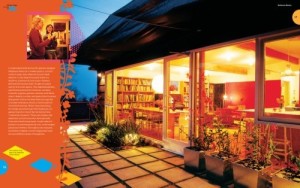
 "Bohemian Modern: Living in Silver Lakeby: Barbara Bestor and Geoff McFetridge")

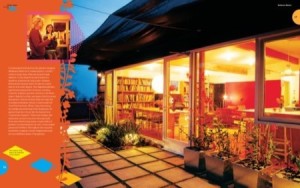
 "Boundariesby: Maya Lin")
 "Boy Bird House Architectureby: Baxter. Leon H.")
 "Brassai in America, 1957by: Saint-Cyr, Agnes De Gouvion")
 "Brenda Colvin: A Career in Landscape by: Trish Gibson")
 "Brick Structuresby: Stoddard, Ralph P.")
 "Brickwork: Architecture & Designby: Plumridge, Andrew, Wim Meulenkamp")
 "Brooklyn Storefrontsby: Lacy, Paul")
 "Budapest by: NA")
 "Budapest and New York: Studies in Metropolitan Transformation, 1870-1930by: Bender, Thomas, Schorske, Carle E. (Ed.)")