Hardcover. New York, Watson-Guptill Publications, 1st, 1978, Book: Very Good, Dust Jacket: Very Good, Hardcover in a bright, unclipped dust jacket. Quarto Format. 208 pages, 150 black-and-white and 48 colored illustrations. Notes; Bibliography; Index. Collection of paintings of the American West, primarily Native Americans. DUE TO WEIGHT, DOMESTIC SHIPPING ONLY.
Softcover. Detroit, Wayne State University, reprint, 2010, Book: Very Good, Dust Jacket: None, Softcover, 280 pages. Originally published in 1977 and long out of print, Maurice Yacowar's Hitchcock's British Films was the first volume devoted solely to the twenty-three films directed by Alfred Hitchcock in his native England before he came to the United States. As such, it was the first book to challenge the assumption that Hitchcock's 'mature' period in Hollywood, from the late 1940s to the early 1960s, represented the director's best work. In this traditional auteurist examination of Hitchcock's early work, author Maurice Yacowar considers Hitchcock's British films in chronological order, reads the composition of individual shots and scenes in each, and pays special attention to the films' verbal effects.Yacowar's readings remain compelling more than thirty years after they were written,
Hardcover. New York, HarperCollins Publishers, 1st, 1995, Book: Near Fine, Dust Jacket: Near Fine, Hardcover. SIGNED AND INSCRIBED BY ASHLEY WOLFF ON TITLE PAGE WITH ILLUSTRATED SKETCH. Blue board with black cloth spine, pictorial dust jacket, gorgeous full page color illustrations. Extremely slight rubbing to dust jacket, covers and pages crisp, clean and unmarked; a beautiful book in excellent condition.
Hardcover. New York, HarperCollins Publishers, 1st, 1995, Book: Near Fine, Dust Jacket: Near Fine, Hardcover. SIGNED AND INSCRIBED BY ASHLEY WOLFF ON TITLE PAGE WITH ILLUSTRATED SKETCH. Blue board with black cloth spine, pictorial dust jacket, gorgeous full page color illustrations. Extremely slight rubbing to dust jacket, covers and pages crisp, clean and unmarked; a beautiful book in excellent condition.
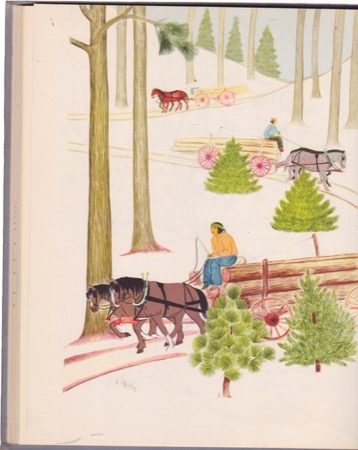
Hardcover. NY, William Morrow and Co., 1st, 1939, Book: Good, Hardcover, oblong salmon cloth-covered boards, illustrated paper label on front cover, wear to corners. Prose and poetry on eleven aspects of Pueblo Indian life, each passage accompanied by a beautiful color illustration after watercolors by Native American artists, including Allan Houser, an Apache who was the great-grandson of Geronimo and Gerald Nailor, a Navajo; both of whom studied at the Santa Fe School. Mild soil, shelfwear. No markings.
Softcover. Seattle, University of Washington Press, 1st, 2000, Book: Very Good, Dust Jacket: None, Softcover. Like new in publishers shrink-wrap. Chief Joseph's exhausted words of surrender, 'Hear me, my chiefs, I am tired; my heart is sick and sad. From where the sun now stands, I will fight no more forever', are the accepted end of the Nez Perce War of 1877, in which several bands of Nez Perce attempting to find a new home outside their diminished Idaho reservation clashed with the U.S. military (and occasionally other Indians) along the Clearwater and Big Hole Rivers, and finally at the foot of the Bear Paw Mountains. However, a number of Nez Perce escaped transportation to Indian Territory with Joseph and continued their flight to Canada, with perhaps a hundred eventually joining Sitting Bull's Lakota."I Will Tell of My War Story" reproduces, describes, and discusses a remarkable series of drawings by an anonymous Indian artist who fought with Chief Joseph and later reached Canada. The drawings, in red, blue, and black pencil, include portraits of principal participants in the war, battle scenes, and views of Nez Perce camp life and celebrations during the war and after. The drawings are preserved in a small pocket ledger labeled 'Cash Book' on the front, which was acquired by Indian Agent Charles D. Warner in the 1880s. It was willed by him to a family living in northern Idaho, and is now in the collection of the Idaho State Historical Society. Scott Thompson worked closely both with the owners and with members of the Nez Perce community in preparing his manuscript. Thompson's detective work and research methods to identify Nez Perce and other parties pictured in the Cash Book make fascinating reading. He is careful to point out what is speculation and what has been documented or attested to by experts on dress, weapons, ceremony, and other aspects of Native culture. The Cash Book drawings are unique in several ways. They are one of very few firsthand pictorial records of the Nez Perce War, representing an even scarcer record of this war as seen from the Indian viewpoint. They contain invaluable historical and ethnographic information not only explicit in the form of military and Native dress, regalia, and quite graphic battle scenes, but also implicit. The drawings reveal an important stage of cultural adaptation as shown by the mixture of white and Native goods combined in Nez Perce material culture during the 1870s and 1880s, and by the artist's assimilation of white/European drawing techniques such as texture and perspective. The artist combined these drawing techniques with Native art traditions to make exceptionally effective pictorial communications. Scott M. Thompson is an art teacher at Chase Middle School in Spokane, Washington.
Hardcover. San Francisco CA, California Academy of Sciences, 1st, 1981, Book: Very Good, Dust Jacket: None, Hardcover, 96 pages, an exhibition catalog with 43 color plates. Essays by Donald Hagerty, Dan Dixon, Ansel Adams, others. INSCRIBED BY DAN DIXON (the artist's son) on front fly leaf. Embossed white cloth covers in a matching slipcase. 8 page exhibition brochure listing 118 works is laid in.
Barre, MA, Barre Publishers, 1st, 1972, Book: Very Good, Dust Jacket: Very Good, Hardcover, 152 pages, photographs by Curtis. Introduction and commentary by Don D. Fowler. One hundred and eighteen superb representative photographs have been selected from Curtis's monumental work and reproduced in this book by The Meriden Gravure Company. Don Fowler describes Curtis the photographer and ethnographer, and the Indian groups depicted, commenting on the unique cultural characteristics of each tribe.
Hardcover. NY, The Viking Press, 5th pr., 1950, Book: Very Good, Dust Jacket: None, Hardcover, gray cloth covers stamped in blue, 56 pages illustrated in color and b&w by Herrera. Covers with some discoloration, interior clean, no markings.
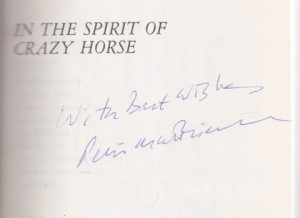
Softcover. NY, Viking Press, Uncorr. proof, 1983, Book: Very Good, Dust Jacket: None, Softcover, yellow wrappers. Unrevised and unpublished proofs. Page numbers hand written, 562 pages. SIGNED BY MATTHIESSEN on half-title page: "With best wishes/Peter Matthiessen". The author's controversial and suppressed book about the confrontation between American Indian activists and the FBI in the early 1970s at Pine Ridge Reservation near Wounded Knee. Clean, bright copy.
Hardcover. New York, Viking Press, First Thus, 1983, Book: Very Good, Dust Jacket: Very Good, 628 pages. Hardcover. Bright dust jacket with light sun fading to spine. Clean & unmarked text. A nice copy.
Hardcover. Paris/London, Robert Delpire/Photography Magazine, 1st, 1956, Book: Very Good, Dust Jacket: None, Hardcover, 25 pages & 77 plates, finely printed in photogravure. Original white cloth. 4to. Text by Manuel Tunon de Lara. Werner Bischof's last assignment, completed by Robert Frank and Pierre Verger. Early Frank publication, preceding The Americans. Clean. No dust jacket
Hardcover. Portland, Or., C. H. Belding, 1st, 1978, Book: Very Good, Dust Jacket: Very Good, Hardcover, 119 pages, illustrated throughout in color. Clean, unmarked copy with only minor wear to dust jacket.
Hardcover. Chicago, A. C. McClurg and Co., reprint, 1934, Book: Very Good, Dust Jacket: None, 213 pages, 254 illustrations in color and b&w. First published in 1914, this is the 1934 reprint. Light yellow cloth with two-color design. Previous owner's signature, date on front fly leaf. Otherwise clean, very good.
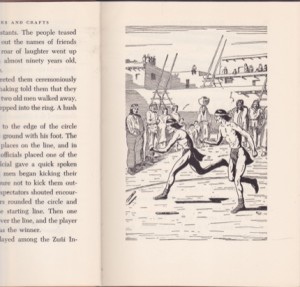
Hardcover. NY, William Morrow & Co., 1st, 1957, Book: Very Good, Dust Jacket: None, Hardcover, tan cloth covers stamped in black. 126 pages, b&w illustrations by author.14 games such as guessing game, tross ball, toss and catch, Indian rattles, Hopi Kachinas. Name on inside front cover, otherwise clean.
Softcover. West Danville VT, United Methodist Church, 1st, 1976, Book: Very Good, Dust Jacket: None, Softcover booklet, stapled wrappers, 16 pages. Indian Joe was a Native American guide active in the early conflicts and settlement of Vermont in the 1700s. B&w illustrations, photo of his tomb in the Oxbow cemetery in Newbury, Vermont. Clean copy.
Hardcover. Boston, Rand Avery Company, 1st, 1915, Book: Very Good, Dust Jacket: None, Hardcover, blue cloth with black lettering, 92 pages, 7 b&w plates. A collection of folklore from in and around the "Crystal Hills" of New Hampshire gathered from tales of old settlers and records in historical societies and town libraries. Clean copy.
Hardcover. Hartford CT, Hurlbut, Scranton & Co., 1st, 1864, Book: Very Good, Dust Jacket: None, Hardcover, 763 pages, illustrated with many full-page plates, most hand-colored (including second title page). Leather bound with some splitting along spine edges. Black spine label with gilt lettering. Internally very good, minor foxing.
Hardcover. Chicago, M.A. Donohue and Co., 1st, 1940, Book: Very Good, Dust Jacket: None, Hardcover, pictorial boards with blue cloth spine.64 pages. Six full page color illustrations by Lone Wolf. Map on end papers. Edgewear rubbing to covers.
Softcover. Memphis, TN, The Dixon Gallery and Gardens, 1st, 1982, Book: Very Good, Dust Jacket: None, Softcover, 206 pages. With newspaper clipping slipped in. Illustrated in B&W and color. overall tight and clean copy. The narrative essays chart the routes taken by the American painters as they progressed from their experience at French communities to the re-establishment of their careers on native soil. Also included with the essays are the vivid artwork of these painters.
Softcover. Baltimore, John Hopkins University Press, 1st, 1995, Book: Very Good, Dust Jacket: None, Softcover in illustrated wrappers, 304 pages. Illustrated with B&W engravings. Jens Jensen was one of America's greatest landscape designers and conservationists. Using native plants and "fitting" designs, he advocated that our gardens, parks, roads, playgrounds, and cities should be harmonious with nature and its ecological processes-a belief that was to become a major theme of modern American landscape design. In Jens Jensen: Maker of Natural Parks and Gardens, Robert E. Grese draws on Jensen's writings and plans, interviews with people who knew him, and analyses of his projects to present a clear picture of Jensen's efforts to enhance and preserve "native" landscapes.
Hardcover. NY, Hudson Hills Press, 1st, 2000, Book: Very Good, Dust Jacket: Very Good, Hardcover in a bright dust jacket. The American son of great German Surrealist master Max Ernst, Jimmy Ernst (1920-1984) developed a distinct style, marrying abstract, crystalline form to sirituality, influenced by jazz and Native American culture. 166 pages, 44 b&w, 62 color plates. Considers the life and work of German-born American expressionist Jimmy Ernst (1920-1984). Brings together reproductions of his finest paintings, along with a tribute by Kurt Vonnegut, two revelatory interviews, poems by Louis Simpson, a selection of the artist's own writings, and a monographic essay by Donald Kuspit. Includes a chronology, exhibitions and collections histories, and a bibliography. Features an essay combining biography, art criticism, and psychological analysis, interviews, and more. Preface by Kurt Vonnegut. Clean copy.
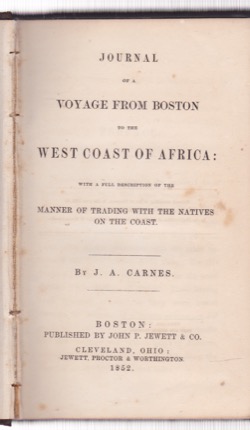
Hardcover. Boston, John P. Jewett & Co., 1st, 1852, Book: Very Good, Dust Jacket: None, Hardcover, original blind stamped cloth with gilt stamped lettering on spine. 479 pages with mild foxing to a few pages. Very good plus, no markings.
Hardcover. Long Beach CA, Safari Press, 2nd Ed., 20ll, Book: Very Good, Dust Jacket: Very Good, Hardcover in a bright dust jacket. Stone kept a series of journals during his arctic travels from 1896 through 1903 in which he recorded his struggles against raging blizzards, hostile natives, daunting physical risks, and mind-warping loneliness and boredom. B&w illustrations. Still in publisher's shrink wrap.

 "Henry Farnyby: Carter, Denny")
 "Hitchcock's British Films by: Yacowar, Maurice")
 "How Chipmunk Got Tiny Feet: Native American Animal Origin Stories (SIGNED BY ILLUSTRATOR)by: Hausman, Gerald and Ashley Wolff")
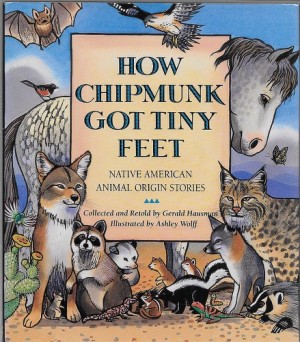
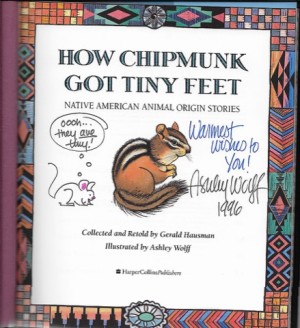
 "How Chipmunk Got Tiny Feet: Native American Animal Origin Stories (SIGNED BY ILLUSTRATOR)by: Hausman, Gerald and Ashley Wolff")
 "I Am A Pueblo Indian Girlby: E-Yeh-Shure(Blue Corn)- Louise Abeita/ Intro. by Oliver La Farge")
 "I Will Tell of My War Story: A Pictorial Account of the Nez Perce War (Samuel and Althea Stroum Book)by: Thompson, Scott M.")
 "Images of the Native Americanby: Dixon, Maynard")
 "In a Sacred Manner We Live: Photographs of the North American Indianby: Curtis, Edward S.")
 "In My Mother's Houseby: Ann Nolan Clark/Velino Herrera")

 "In the Spirit of Crazy Horse (SIGNED PROOF)by: Matthiessen, Peter")

 "In the Spirit of Crazy Horseby: Matthiessen, Peter")


 "Incas to Indiansby: Bischof, Werner, Robert Frank and Pierre Verger")
 "Indian Baskets of the Northwest Coastby: Lobb, Allan")
 "Indian Blankets and Their Makersby: James, George Wharton")
 "Indian Games and Crafts by: Hofsinde, Robert (Gray Wolf)")

 "Indian Joe: The Friendly Indian Guideby: William Parker Neal")
 "Indian Legends of the White Mountainsby: English, J. S.")
 "Indian Races of North and South America, The: Including the Late Sioux War and Indian Massacre in Minnesotaby: Brownell, Charles de Wolf")
 "Indians Of Yesterdayby: Gridley/Lone Wolf, Marion E.")
 "International Episode, An: Millet, Monet and their North America Counterpartsby: Meixner, Laura L.")
 "Jens Jensen: Maker of Natural Parks and Gardensby: Grese, Robert E.")
 "Jimmy Ernstby: Ernst, Jimmy / Donald Kuspit/ Kurt Vonnegut")
 "Journal of a Voyage From Boston to the West Coast of Africa; with a Full Description of the Manner of Trading with the Natives on the Coastby: J. A. Carnes")
 "Journal of Andrew Stone: Expeditions to Arctic and Subarctic America after Wild Sheep, Grizzly, Caribou, and Muskoxen 1896-1903by: Margaret Frisina")