Philadelphia, Lippincott , 1st , 1951, Book: Very Good, Dust Jacket: Good, Hardcover, 64 pages. Black & white drawings by Leaf. Dust jacket worn, chipped. Children's names in crayon on inside front cover. Otherwise clean.
Hardcover. Baltimore, Johns Hopkins University Press, 1st, 2012, Book: Very Good, Dust Jacket: Very Good, Hardcover, 276 pages, b&w illustrations. Few people have had as profound an impact on the history of New York City as William J. Wilgus. As chief engineer of the New York Central Railroad, Wilgus conceived the Grand Central Terminal, the city's magnificent monument to America's Railway Age. Kurt C. Schlichting here examines the remarkable career of this innovator, revealing how his tireless work moving people and goods over and under Manhattan Island's surrounding waterways forever changed New York's bustling transportation system. After his herculean efforts on behalf of Grand Central, the most complicated construction project in New York's history, Wilgus turned to solving the city's transportation quandary: Manhattan - the financial, commercial, and cultural hub of the United States in the twentieth century - was separated from the mainland by two major rivers to the west and east, a deep-water estuary to the south, and the Harlem River to the north. Wilgus believed that railroads and mass transportation provided the answer to New York City's complicated geography. His ingenious ideas included a freight subway linking rail facilities in New Jersey with manufacturers and shippers in Manhattan, a freight and passenger tunnel connecting Staten Island and Brooklyn, and a belt railway interconnecting sixteen private railroads serving the metropolitan area.
Hardcover. NY, Doubleday, 1st, 1972, Book: Very Good, Dust Jacket: Very Good, Hardcover in a bright, lightly worn dust jacket, 510 pages. Bibliography, Index. Numerous b&w photographs, drawings, and maps throughout text. A portrayal of the history, geography, architecture, and people of fourteen ancient cities at their height, among them Thebes, Jerusalem, Babylon, Athens, Carthage, and Rome. Clean copy.
Hardcover. Washington DC, Goverment Printing Office, 1st, 1950, Hardccover, olive green cloth with gilt title on spine. 715 pages, Illustrated with b/w photos, drawings, portraits, tables, maps, fold-in maps & color map in rear pocket. Smithsonian Institution Bureau of American Ethnology Bulletin 143. Small ownership sticker inside front cover, otherwise clean, tight copy.
Hardcover. Rockland, C. E. Hunt & Co., 1st, 1878, Book: Fair, Ends at page 502; MIssing back pages. B&w frontispiece and illustrations throughout. Ornately decorated red cloth cover with gilt titles and decoration. Cover separated with soiling, rubbing, and edgewear. Foxing to edges and some light spotting throughout.
Hardcover. Brattleboro VT, George H. Salisbury, 1st, 1846, Book: Good, Dust Jacket: None, 396 pages, embossed brown cloth covers, gilt lettering on spine. The cloth along the spine has some wear and fraying, some color fade to cloth on spine and edges, previous owner's signature on inside front cover. The title page has a small piece at top cut away, the front fly leaf has the top corner chipped off. Internally the pages are clean and bright.
Hardcover. New York, Farrar Straus Giroux, 1st, 2008, Book: Very Good, Dust Jacket: Very Good, Non-paginated. Hardcover. SIGNED BY THE AUTHOR AT BOTTOM OF TITLE PAGE. Full color illustrations by Shulevitz. Clean, bright copy.
Hardcover. New York, Farrar Straus Giroux, 1st, 2008, Book: Very Good, Dust Jacket: Very Good, Non-paginated. Hardcover. SIGNED BY THE AUTHOR AT BOTTOM OF TITLE PAGE. Full color illustrations by Shulevitz. Clean, bright copy.
Hardcover. Chapel Hill NC, University of North Carolina Press, 1st, 2001, Book: Very Good, Dust Jacket: None, Hardcover, blue cloth covers with silver lettering, 384 pages, b&w illustrations. Say "New England" and you likely conjure up an image in the mind of your listener: the snowy woods or stone wall of a Robert Frost poem, perhaps, or that quintessential icon of the region--the idyllic white village. Such images remind us that, as Joseph Conforti notes, a region is not just a territory on the ground. It is also a place in the imagination. This ambitious work investigates New England as a cultural invention, tracing the region's changing identity across more than three centuries. Incorporating insights from history, literature, art, material culture, and geography, it shows how succeeding generations of New Englanders created and broadcast a powerful collective identity for their region through narratives about its past. Whether these stories were told in the writings of Frost or Harriet Beecher Stowe, enacted in historical pageants or at colonial revival museums, or conveyed in the pages of a geography textbook or Yankee magazine, New Englanders used them to sustain their identity, revising them as needed to respond to the shifting regional landscape. Clean copy. No dust jacket.
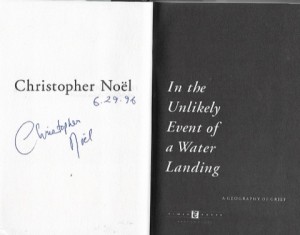
Hardcover. New York , Times Books, 1st, 1996, Book: Very Good, Dust Jacket: Very Good, 273 pages. Hardcover with dust jacket. SIGNED BY NOEL on title-page. Clean, unmarked copy with only minor wear to dust jacket.
Hardcover. New York, Hunt & Eaton, 1st, 1892, Book: Good, Dust Jacket: None, Hardcover, 562 pages. B&w frontispiece and b&w photographs throughout. Decorated cover with minor soiling and wearing and rubbing to edges. Ex-library stickers on front flyleaf and rear endpapers. Decorated endpapers.
Hardcover. NY, Simon & Schuster, 1st, 2000, Book: Very Good, Dust Jacket: Very Good, Hardcover in a bright, unclipped dust jacket. In a stunning feat of meticulous reportage, Pulitzer Prize winner Richard Ben Cramer ultimately puts to rest the "Where have you gone, Joe DiMaggio?" question with iconoclastic bravura. In Cramer's evaluation, the hero America held onto so desperately for so long was really a creation of a nation's communal imagination. The Joe DiMaggio that America tried so hard to believe in was never really here at all. There was, of course, a Joe DiMaggio, and he had a splendid career in Yankee pinstripes--once hitting safely in an unimaginable 56 consecutive games--and a troubled marriage with Marilyn Monroe, each augmenting the other in our national mythology. But myths tend to be skin-deep, and Cramer's biography thrives in an internal geography well below the surface. The map he charts is of a cold, small, often nasty, uncaring, resentful, self-centered man, a man of public grace and private misery who broke friendships, shunned family, and chased money with the same focused energies he once harnessed to run down fly balls.
Hardcover. Baltimore MD, Johns Hopkins University Press, 1st, 1998, Book: Very Good, Dust Jacket: Very Good, Hardcover in a bright dust jacket, 356 pages, b&w illustrations. Starrs offers a detailed and comprehensive look at one of America's most enduring institutions. Richly illustrated with 130 photographs and maps, the book combines the authentic detail of an insider's view (Starrs spent six years working cattle on the high desert Great Basin range) with a scholar's keen eye for objective analysis. Tracing the geography and history of ranching in the United States, Starrs tells how Anglo settlers first encountered the open grasslands of the West - an environment alien to most of the European experience." Clean copy.
Hardcover. London, Eliot Stock, 1st, 1896, Book: Fair, Dust Jacket: None, AUTHOR'S INSCRIPTION on tipped-in card. 241 pages, b&w illustrations by Alfred Beaver and others. Light green cloth covers w/ gilt lettering and design. Ink markings to first few pages. Wear to cover corners. Hinges cracked. Staining to end papers and some pages.
Hardcover. Baton Rouge, Louisiana State University Press, 1st, 2011, Book: Very Good, Dust Jacket: Very Good, Hardcover in a bright dust jacket, 175 pages, b&w illustrations. Vermont-native Twitchell sets out from his current home in Florida on the inauguration day of America's first black president to find the "real" South and to try to understand the truth about his illustrious ancestor. He travels in an RV from Georgia's Okefenokee Swamp across Alabama and Mississippi to Coushatta, Louisiana. As he drives through the heart of Dixie, Twitchell sorts through the prejudices he learned from his northern rearing. In searching for the culture he had held at arm's length for so long, he tours small-town southern life -- in campgrounds, cotton gins, churches, country fairs, and squirrel dog kennels -- and uncovers some fundamental truths along the way. Notably, he discovers that prejudices of race, class, and ideology are not limited by geography. As one man from Georgia mockingly summed up North versus South stereotypes, "Y'all are rude and we're stupid." Unexpectedly, Twitchell also uncovers facts about his great-grandfather and sheds new light on his family's past. An enlightening, humorous, and refreshingly honest search, Look Away, Dixieland reveals some of the differences and similarities that ultimately define us as a nation. Clean copy.
Hardcover. Middlebury VT, Middlebury Historical Society, 1st, 1885, Book: Very Good, Dust Jacket: None, 68 pages, plate with color maps. Terra-cotta cloth with gilt lettering. Small area of discoloration to front and rear covers, otherwise very good.
Hardcover. Boston, Thomas and Andrews, Abridged, 1798, Book: Fair, Dust Jacket: None, 388 pages. Hardcover. Printing date: June, 1798. "An Abridgment of the American Gazetteer..." Previous owners name on rear endpaper. All pages darkened with varied amounts of foxing. Fold-out map at front separated at fold. Leather covers with heavy wear, chipped at top and bottom of spine. Corners rubbed, bumped.
Hardcover. Washington DC, National Geographic Society, 1913, Book: Very Good, Dust Jacket: None, Hardcover, six bound editions from the first 6 months of 1913. Nice folding map of Central America/ Caribbean (pg. 166), fold-out b&w photo of Machu Picchu (pg. 434), poster-size fold-out of Titkana Peak (pg. 600, Color porfolio of 50 birds of Farm and Orchard (pgs. 669-697) with paintings by Louis Agassiz Fuertes. Interior pages and fold-outs pristine, rear upper spine label rubbed, faded. DOMESTIC SHIPPING ONLY.
Softcover. Washington DC, National Geographic Society, 1st, 1930, Book: Very Good, Dust Jacket: None, Original magazines July - December 1930, in a green pebbled hardcover binding. Magazines are dated and paged, with photographs and maps, but do not have covers, advertisements, etc. Includes: Mexico's west coast; 3 articles on the conquest of Antarctica; Unmapped areas of China, Unexplored areas of the Philippines; Chateau country of France; Yugoslavia; Virgil's Aeneid and Roman Geography; Strange tribes in the Shan States of Burma; The Yukon trail of 1898; Viking life in the Faeroes; and much more. Clean, bright volume.
Softcover. Washington DC, National Geographic Society, 1st, 1917, Book: Very Good, Dust Jacket: None, Softcover, illustrated with b&w photos, maps, advertisements. Original yellow and black wrappers, spine with light wear, good to very good. Articles include: The Food Armies of Liberty, The Geography of Medicines, A Few Glimpses into Russia, Conserving the Nation's Man Power.
Hardcover. Locust NJ, Jervey Close Press, 1st, 1964, Book: Very Good, Dust Jacket: None, Hardcover, blue cloth with gilt lettering. 128 pages with index, bibliography, b&w illustrations. Using a collection of eyewitness accounts, diaries, logbooks, military papers, newspapers and magazines of the times, the author looks at the long neglected history of this fascinating part of the New Jersey coast, from lower New York Bay and the Atlantic Highlands to Sandy Hook. Folded dust jacket laid in. Clean copy.
Hardcover. New Haven, S. Converse, 4th Ed., 1823, Book: Good, Dust Jacket: None, 856 pages, the Fourth Edition, revised and corrected of this classic work. Bound in worn calf with an inch and a half tear to top of spine. Previous owners signatures on front fly leaf. Very good with light, scattered foxing. Issued with an separate atlas of maps which is missing.
Hardcover. Baltimore, The Johns Hopkins University Press, 2nd printing, 1995, Book: Very Good, Dust Jacket: Very Good, Hardcover, 348 pages, illustrated throughout in b&w. Light shelf-wear to dust jacket. Overall, a tight clean copy. "In this original and authoritative work, Vance argues that the railroad in North America is a distinct indigenous creation and not an importation from Britain and Europe. His combined familiarity with railroading, routes and cities, facilities, and North American geography is unsurpassed and the result is quite unlike anything in the historical or specialist literature."--Donald Meinig, Syracuse University "No previous book has presented the over-all picture of the development of the North American railroad network with Vance's emphasis on the reciprocal relationships among the economic and technological conditions on the one hand and the geographic aspects of development on the other. The scope of the presentation is virtually encyclopedic -- and there is no doubt that the book will quickly become a standard reference on the subject." -- Harold M. Mayer, University of Wisconsin, Milwaukee

 "Geographia New Map of England & Wales, showing counties in colours. (ca. 101 x 75 cm) by: n/a")
 "Geography Can Be Funby: Leaf, Munro")
 "Grand Central's Engineer, William J. Wilgus & the Planning of Modern Manhattan by: Schlichting, Kurt C.")
 "Great Cities of the Ancient Worldby: L. Sprague De Camp")
 "Handbook of South American Indians, Volume 6 - Physical Anthropology, Lingustics and Cultural Geography of South American Indians by: Steward, Julian H. (ed.)")
 "History of Turkey and the War in the Eastby: Hammond, R. A.")

 "How I Learned Geography (SIGNED COPY)by: Shulevitz, Uri")
 "How I Learned Geography (SIGNED COPY)by: Shulevitz, Uri")
 "Imagining New England: Explorations of Regional Identity from the Pilgrims to the Mid-Twentieth Centuryby: Joseph A. Conforti")
 "In the Unlikely Event of a Water Landing - A Geography of Grief (SIGNED COPY)by: Noel, Christopher")

 "India and Malaysiaby: Thoburn, J. M.")
 "Joe DiMaggio: The Hero's Lifeby: Richard Ben Cramer")
 "Let the Cowboy Ride: Cattle Ranching in the American Westby: Paul F. Starrs")
 "LINCOLN'S INN FIELDS AND THE LOCALITIES ADJACENT: Their Historical and Topographical Associationsby: Heckethorn, Charles W.")
 "Look Away Dixielandby: Twitchell, James B.")
 "Marble Border of New England, The: Its Geology and Marble Development in the Present Centuryby: (Middlebury Historical Society)")
 "Morse's Gazetter - An Abridgment of the American Gazetteerby: Morse, Jedidiah")
 "National Geographic January -June 1913 vol. XXIV No.1 includes Beacons of the Sea: Lighing of the coasts of America by George Putnam by: N/A")
 "National Geographic Magazine - Vol. LVIII July - December 1930 (Six Issues)by: National Geographic Society")
 "National Geographic Magazine - Vol. XXXII No. 3 September 1917by: National Geographic Society")
 "Nauvoo to the Hook: An Iconography of a Barrier Beach by: Moss, George H")
 "New Universal Gazetteer or Geographical Dictionary/ Containing a Description of the Various Countries, Provinces,by: Morse, Jedidiah and Richard")
 "North American Railroad, The : Its Origin, Evolution, and Geographyby: Vance Jr., James E.")