Hardcover. Springer, 1st, 2021, Book: Very Good, Dust Jacket: None, Hardcover, glazed pictorial boards, 894 pages. INSCRIBED BY BOTH AUTHORS on front fly leaf. This work is a large, powerfully illustrated interdisciplinary natural sciences volume, the first of its kind to examine the critically important nature of ecological paradox, through an abundance of lenses: the biological sciences, taxonomy, archaeology, geopolitical history, comparative ethics, literature, philosophy, the history of science, human geography, population ecology, epistemology, anthropology, demographics, and futurism. The ecological paradox suggests that the human biologicaland from an insular perspective, successful struggle to exist has come at the price of isolating H. sapiens from life-sustaining ecosystem services, and far too much of the biodiversity with which we find ourselves at crisis-level odds. It is a paradox dating back thousands of years, implicating millennia of human machinations that have been utterly ruinous to biological baselines. Clean copy. DUE TO WEIGHT, DOMESTIC SHIPPING ONLY.
Hardcover. Cambridge MA, MIT Press, 3rd pr., 2010, Book: Very Good, Dust Jacket: Very Good, Hardcover in a bright dust jacket, 354 pages. As curator Steve Dietz has observed, new media art is like contemporary art -- but different. New media art involves interactivity, networks, and computation and is often about process rather than objects. New media artworks are difficult to classify according to the traditional art museum categories determined by medium, geography, and chronology and present the curator with novel challenges involving interpretation, exhibition, and dissemination. This book views these challenges as opportunities to rethink curatorial practice. It helps curators of new media art develop a set of flexible tools for working in this fast-moving field, and it offers useful lessons from curators and artists for those working in such other areas of art as distributive and participatory systems. The authors, both of whom have extensive experience as curators, offer numerous examples of artworks and exhibitions to illustrate how the roles of curators and audiences can be redefined in light of new media art's characteristics. Rethinking Curating offers curators a route through the hype around platforms and autonomous zones by following the lead of current artists' practice. Name on front fly leaf, otherwise clean.
Hardcover. New York, Margaret K. McElderry Books, 1st, 2004, Book: Very Good, Dust Jacket: Very Good, Hardcover, 48 pages. Illustrated by Erik Blegvad. Clean, unmarked copy with only minor wear to dust jacket. John Harrison (1693-1776), an Englishman without any scientific training, worked tirelessly for more than forty years to create a perfect clock. The solution to this problem was so important that an award of 20,000 pounds sterling (equal to several million dollars today) was established by the English Parliament in 1714. Harrison won recognition for his work in 1773. Together with beautifully detailed pictures by Erik Blegvad, Louise Borden's text takes the reader through the drama, disappointments, and successes that filled Harrison's quest to invent the perfect sea clock.
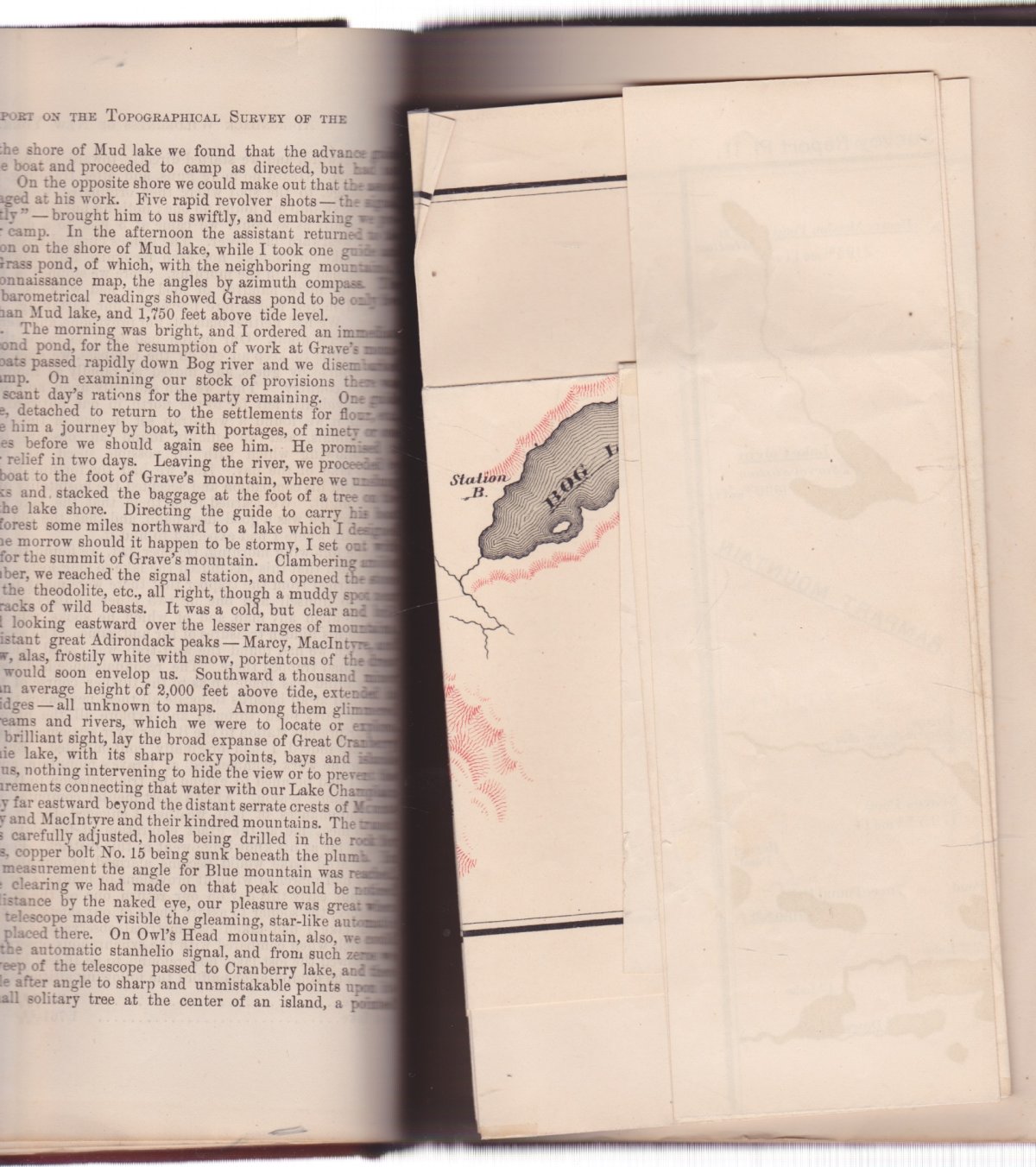
Hardcover. Albany, Weed Parsons and Co., 1st, 1874, Book: Good, Dust Jacket: None, Hardcover, 305 pages, 9 folding maps, b&w plates. Rust color cloth with soil, spotting. Light scuffing to some parts of cloth edges. The top 1/2" of spine cloth is missing. Previous owner's signature on front fly leaf. Interior is very good, sound with all maps present and in very good condition.
Softcover. Philadelphia, University of Pennsylvania Press, 1st pbk, 1998, Book: Very Good, Softcover, 330 pages. Twelve literary scholars and historians investigate the ways in which space and place are politically, religiously, and culturally inflected. Exploring medieval texts as diverse as Icelandic sagas, Ptolemy's Geography, and Mandeville's Travels, the contributors illustrate the intimate connection between geographical conceptions and the mastery of land, the assertion of doctrine, and the performance of sexuality. Clean copy.
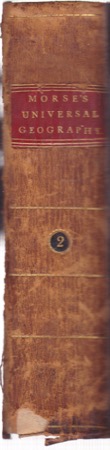
Hardcover. Boston, Thomas & Andrews , 6th Ed., 1812, Book: Good, Dust Jacket: None, Hardcover in contemporary calf, with gilt letting on red leather spine label and sound and bright internally with 3 fold-out maps (Africa, Asia/Arabia and Europe). Covers worn, bottom of spine has a small chunk gone from bottom, about a square inch. Interior clean, minor foxing. VOLUME 2 ONLY.
Softcover. McGill-Queen's University Press, reprint, 1987, Book: Very Good, Dust Jacket: None, Softcover, 913 pages, b&w illustrations, maps. Trigger's work integrates insights from archaeology, history, ethnology, linguistics, and geography. This wide knowledge allows him to show that, far from being a static prehistoric society quickly torn apart by European contact and the fur trade, almost every facet of Iroquoian culture had undergone significant change in the centuries preceding European contact. He argues convincingly that the European impact upon native cultures cannot be correctly assessed unless the nature and extent of precontact change is understood. His study not only stands Euro-American stereotypes and fictions on their heads, but forcefully and consistently interprets European and Indian actions, thoughts, and motives from the perspective of the Huron culture. The Children of Aataentsic revises widely accepted interpretations of Indian behaviour and challenges cherished myths about the actions of some celebrated Europeans during the "heroic age" of Canadian history. In a new preface, Trigger describes and evaluates contemporary controversies over the ethnohistory of eastern Canada.
Hardcover. London, Edward Arnold, 2nd pr., 1905, Book: Fair, Dust Jacket: None, Hardcover, original blue cloth covers worn with faded gilt lettering. Frontis. missing, hinges cracked, B&w photos, folding maps present. An account of the British territories in East Africa, intended as a guide for prospective colonisers, and future developers. Topics discussed include the physical geography, native peoples such as the Swahilis, the Masai, Somalis, and Nandi, vegetations and animals, slavery, the Uganda railway and more. Sir Charles Eliot was a British colonial administrator and commissioner for the Protectorate of British East Africa, now Kenya.
Hardcover. NY, Simon & Schuster, 1st, 1993, Book: Very Good, Dust Jacket: Very Good, Hardcover in a bright, unclipped dust jacket, 303 pages. Eighty percent of everything ever built in America has been built since the end of World War II. This tragic landscape of highway strips, parking lots, housing tracts, mega-malls, junked cities, and ravaged countryside is not simply an expression of our economic predicament, but in large part a cause. It is the everyday environment where most Americans live and work, and it represents a gathering calamity whose effects we have hardly begun to measure. In The Geography of Nowhere, James Howard Kunstler traces America's evolution from a nation of Main Streets and coherent communities to a land where everyplace is like noplace in particular, where the city is a dead zone and the countryside a wasteland of cars and blacktop. Now that the great suburban build-out is over, Kunstler argues, we are stuck with the consequences: a national living arrangement that destroys civic life while imposing enormous social costs and economic burdens. Kunstler explains how our present zoning laws impoverish the life of our communities, and how all our efforts to make automobiles happy have resulted in making human beings miserable. Name on front fly leaf, otherwise like new.
Hardcover. Vancouver, Raincoast Books, 1st, 2003, Book: Very Good, Dust Jacket: Very Good, Hardcover in a bright dust jacket, 307 pages. b&w illustrations. In the mid-1800s, George Back went on three Arctic expeditions with Sir John Franklin across the barren lands of the Canadian north. But unlike Franklin, Back lived to tell his tales in journals, drawings, watercolors, and maps. Noted writer Peter Steele drew on these sources, along with contemporary accounts, to craft this gripping tale of resilience in the face of incredible odds. The book thrillingly recounts the near-impossible circumstances of these expeditions -- the fights with the Hudson Bay Company, rations that failed to get through, even cannibalism. Back survived these horrors to lead an exploration of the Great Fish River, now named Back River in his honor. His return upstream, hauling his handmade boat up 83 sets of rapids, is one of the greatest-ever feats of heroism and endurance. Clean copy.
Hardcover. NY, Charles Scribner's Sons, 1st, 1952, Book: Very Good, Dust Jacket: Good, Hardcover in an edgeworn dust jacket, 325 pages, b&w illustrations. "The Ocean River is that tremendous current, the Gulf Stream, and here for the first time its complete scientific and historical story is told. This beautifully written book fully explains a phenomenon which has had, and is having, an incalculable influence on the history and civilizations of the Atlantic community and therefore on the whole world." Clean copy.
Hardcover. NY, Norton, 1st US, 1985, Book: Very Good, Dust Jacket: Very Good, Hardcover in a bright dust jacket, 192 pages. The photos are breathtaking not necessarily for their quality - many are washed out and most of the subject matter is routine day to day military stuff - but for their rarity. While the Germans seem to have been at least as far advanced in the use of color photography as the Americans, there is still a paucity of color photography in the public record. That is being addressed by the various nations who took large amounts of color film in an official capacity, including the US, UK, Germany and Canada. The book's captions are adequate to the task, and there are good historical sections, as well as an introduction by Max Hastings as well as commentary by an actual German war correspondent. The strength of the book is in its ability to bring the participants of the subject campaign - the German invasion of Russia up to and including Stalingrad - to life. The use of a large format allows one to note small details of the photos, and relate to the subject matter on a personal level. Despite the lack of "action" shots, there is much to see in facial expressions, uniform details, and especially geography as the Russian steppe is shown in summer and winter, as well as the famous Russian mud (Rasputitsa) about which so much has been written.
Cambridge UK, Cambridge University Press, reprint, 1994, Book: Very Good, Dust Jacket: None, Softcover, 240 pages, b&w illustrations, diagrams. The exploration and colonisation of the Pacific is a remarkable episode of human prehistory. Early sea-going explorers had no prior knowledge of Pacific geography, no documents to record their route, no metal, no instruments for measuring time and none for exploration. Forty years of modern archaeology, experimental voyages in rafts, and computer simulations of voyages have produced an enormous range of literature on this controversial and mysterious subject. This book represents a major advance in knowledge of the settlement of the Pacific by suggesting that exploration was rapid and purposeful, undertaken systematically, and that navigation methods progressively improved. Using an innovative model to establish a detailed theory of navigation, Geoffrey Irwin claims that rather than sailing randomly downwind in search of the unknown, Pacific Islanders expanded settlement by the cautious strategy of exploring upwind, so as to ease their safe return. The author has tested this hypothesis against the chronological data from archaeological investigation, with a computer simulation of demographic and exploration patterns and by sailing throughout the region himself. Clean copy.
Hardcover. Cambridge UK, Cambridge University Press , 1st, 1985, Book: Very Good, Hardcover, blue clith with gilt lettering on spine, 328 pages. Dr Moore's enterprising book focuses on an apparent paradox: the failure of Sri Lanka's highly politicized smallholder electorate to place on the national political agenda issues relating to the public distribution of material resources. Sri Lanka has more than fifty years' history of pluralist democracy and such issues directly affect the interests of the smallholder population. Yet successive Sri Lankan governments have pursued economic policies favouring food consumers and the state itself at the expense of agricultural producers. In exploring the features of Sri Lanka's history, geography, politics and economy which explain this paradox, the author looks in detail at some of the dominant features of contemporary Sri Lanka: the political consequences of the plantation experience; the persistence of elite political leadership; and the causes and consequences of ethnic conflict. Clean copy, paper tanning slightly.
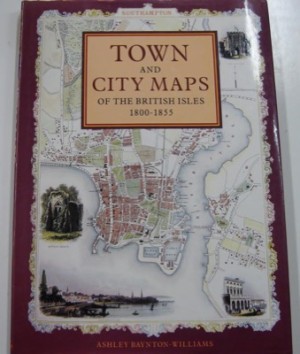
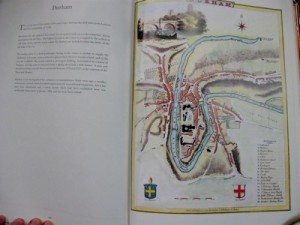
Hardcover. London, Studio Editions, 1st, 1992, Book: Very Good, Dust Jacket: Very Good, Hardcover in a bright dust jacket, 128 pages. Color plates throughout. This book includes the work of nine leading cartographers spanning the first half of the nineteenth century. Clean copy.
Hardcover. Camden NJ, International Marine, 1st, 2002, Book: Very Good, Dust Jacket: Very Good, Hardcover in a bright dust jacket. 278 pages, b&w illustrations. Navigation at sea was a matter of guesswork until well into the 19th century. Changing that became the obsession of Matthew Fontaine Maury. While others built railroads, Maury mapped highways of wind and current over the seas. Hearn uses Maury's career as a window on America's maritime development in the 19th century, including the clipper-ship era of the 1850s, the rise of steam and steel, and the Civil War. Clean copy.
Hardcover. Edinburgh, Cadell and Co., Reprint, 1829, Book: Very Good, Dust Jacket: None, 3 volume set. REBOUND. Each volume contains original pages, new covers. Age toning throughout with margins discolored to preliminary and end pages. Vol. 1 - 421 pages, fold out map tipped in to front with tape & small tears to edges; Vol. 2 - 432 pages; and Vol. 3 - 436 pages with fold out table tipped in to rear. Previous owner's book plate on front end paper on each volume.
Hardcover. NY, W. W. Norton, 1st, 1991, Hardcover in a bright dust jacket, 254 pages. Red phono disc of Tuvan throat singing still attached. As a stamp-collecting boy always fascinated by remote places, Nobel Prize-winning physicist Richard Feynman was particularly taken by the diamond-shaped stamps from a place called Tannu Tuva deep within Outer Mongolia. He hoped, someday, to travel there. In 1977, Feynman and his sidekick - fellow drummer and geography enthusiast Ralph Leighton - set out to make arrangements to visit Tuva, doing noble and hilarious battle with Soviet red tape, befriending quite a few Tuvans, and discovering the wonders of Tuvan throat-singing. Their Byzantine attempts to reach Tannu Tuva would span a decade, interrupted by Feynman's appointment to the committee investigating the Challenger disaster, and his tragic struggle with the cancer that finally killed him. Tuva or Bust! chronicles the deepening friendship of two zany, brilliant strategists whose love of the absurd will delight and instruct. Clean copy.
Hardcover. New York, William Morrow and Company, 1st, 1963, Book: Very Good, Dust Jacket: Good, Hardcover, 208 pages, illustrated with 50 early photographs and sketches. Minor dust jacket edge wear and rubbing, otherwise, very clean and tight copy.

 "On the Nature of Ecological Paradox by: Tobias, Michael Charles; Morrison, Jane Gray")
 "Rethinking Curating: Art After New Mediaby: Beryl Graham, Sarah Cook, Steve Dietz")
 "Sea Clocks: The Story of Longitudeby: Borden, Louise/Erik Blegvad")
 "State of New York Report on the Topographical Survey of the Adirondack Wilderness of New York for the Year 1873by: Colvin, Vanplanck")

 "Text and Territory: Geographical Imagination in the European Middle Ages by: Tomasch, Sylvia; Gilles, Sealy (Editors)")
 "The American Universal Geography; Or, A View of the Present State of all the Kingdoms, States, and Colonies in the Known World. In Two Volumes. (VOL. 2 ONLY)by: Morse")
 "The Anthropology of Landscape: Perspectives on Place and Spaceby: Editor: Hirsch, Eric, Editor: O'Hanlon, Michael")
 "The Children of Aataentsic; A History of the Huron People to 1660 by: Bruce G. Trigger")
 "The East Africa Protectorateby: Eliot, Sir Charles")
 "The Geography of Nowhere: The Rise and Decline of America's Man Made Landscape by: Kunstler, James Howard")
 "The Man Who Mapped the Arctic: The Intrepid Life of George Back, Franklin's Lieutenant by: Steele, Peter")
 "The Ocean River: The Story of the Gulf Streamby: Chapin, Henry & Smith, Walton F. G.")
 "The Onslaught: The German Drive to Stalingrad : Documented in 150 Unpublished Colour Photographs by: Heinrich Von Einsiedel")
 "The Prehistoric Exploration and Colonisation of the Pacific by: Geoffrey Irwin")
 "The State and Peasant Politics in Sri Lankaby: Moore, Mick")
 "Town and City Maps of the British Isles 1800-1855by: Baynton-Williams, Ashley")
 "Tracks in the Sea: Matthew Fontaine Maury and the Mapping of the Oceans by: Hearn, Chester G.")
 "Travels in North America in the Years 1827 and 1828 (3 Volume Set)by: Hall, Captain Basil")
 "Tuva or Bust: Richard Feynman's Last Journey by: Leighton, Ralph")
 "West on the 49th Parallel: Red River to the Rockies, 1872-1876by: Parsons, John E.")