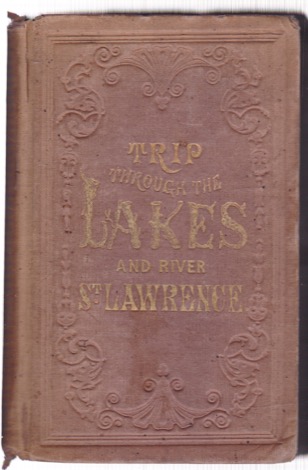
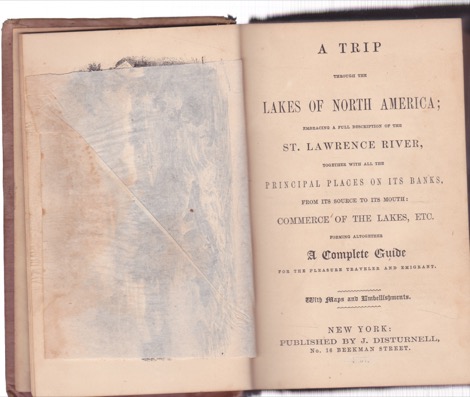
Hardcover. NY, J. Disturnell, 1st, 1857, Book: Good, Dust Jacket: None, A Trip Through the Lakes of North America: Embracing a full description of the St. Lawrence River, together with all the principal places on its banks, from its source to its mouth (1857). Hardcover, original blind-stamped tan cloth, 364 pages + ads. 2 maps, one large fold-out in rear of the Valley of the St. Lawrence River and Lake Country, b&w engravings. Binding worn, clean, overall Good+.
Hardcover. Chicago, University of Chicago Press, 1st, 2007, Book: Good, Dust Jacket: Good, Hardcover in a lightly worn dust jacket. 553 pages, b&w illustrations. A spectacular reading of Western philosophy, religion, and mythology that draws on early maps and atlases, Plato, Kant, and Wittgenstein, Thomas Pynchon, Gilgamesh, and Marcel Duchamp, Abysmal is itself a minimalist guide to the terrain of Western culture. Olsson roams widely but always returns to the problems inherent in reason, to question the outdated assumptions and fixed ideas that thinking cartographically entails. A work of ambition, scope, and sharp wit, Abysmal will appeal to an eclectic audience--to geographers and cartographers, but also to anyone interested in the history of ideas, culture, and art. Name written on front fore-edge of book, otherwise clean.
Softcover. Chicago, University of Chicago Press, reprint, 1983, Book: Very Good, Dust Jacket: None, Softcover with pages and covers in pristine condition. Like new, in shrinkwrap. Rosenberg's critial essays on the theatre. Originally published in 1970. CONTENTS: The stages: geography of action; A psychological case; From play acting to self; Criticism-action; Actor in history; Guilt to the vanishing point; Missing persons. Clean copy.
Hardcover. New York , Edmund and George W. Blunt, 18th Edition., 1857, Dust Jacket: None, 739 pages, contains 4 fold-out maps and charts. 2 maps with tears, one detached, all present. Original calf covers with spine label. Edges worn, hinges cracked, some tan staining to some page margins. Soiling to rear end papers and text block, top and bottom edges. Overall good plus.
Hardcover. White River Junction VT, Chelsea Green Publishing, 1st, 2014, Book: Very Good, Dust Jacket: Very Good, Hardcover in a bright, unclipped dust jacket. Named one of the Best Wine Books of 2014 by The New York Times, An Unlikely Vineyard tells the evolutionary story of Deirdre Heekin's farm from overgrown fields to a fertile, productive, and beautiful landscape that melds with its natural environment. Is it possible to capture landscape in a bottle? To express its terroir, its essence of place-geology, geography, climate, and soil-as well as the skill of the winegrower? That's what Heekin and her chef/husband, Caleb Barber, set out to accomplish on their tiny, eight-acre hillside farm and vineyard in Vermont. Challenged by cold winters, wet summers, and other factors, Deirdre and Caleb set about to grow not only a vineyard, but an orchard of heirloom apples, pears, and plums, as well as gardens filled with vegetables, herbs, roses, and wildflowers destined for their own table and for the kitchen of their small restaurant. They wanted to create, or rediscover, a sense of place, and to grow food naturally using the philosophy and techniques gleaned from organic gardening, permaculture, and biodynamic farming. Clean copy.
Hardcover. New York , W. W. Norton & Company, 1st, 2006, Hardcover in a bright dust jacket. Like many who grew up during the spread of sprawl--with its predictable landscape of housing developments, shopping malls, interstate highways, and big-box construction--acclaimed photographer Jeff Brouws is drawn to places that still embody the vernacular past as well as to those that starkly portray the soulless, franchised American landscape. What began as cultural geography of Main Streets became a visual critique of the myth of upward mobility that created this car-centered, paved-over universe. Some images look outward to the edges of suburbia where sprawl is encroaching upon nature. Others turn inward, documenting the devastated inner cities. All the stunning color photographs reflect the complex beauty and desolation of visual life in our time. 100 color photographs.
Hardcover. NY, W. W. Norton & Company, 1st, 2006, Book: Very Good, Dust Jacket: Very Good, Hardcover in a bright dust jacket. Like many who grew up during the spread of sprawl--with its predictable landscape of housing developments, shopping malls, interstate highways, and big-box construction--acclaimed photographer Jeff Brouws is drawn to places that still embody the vernacular past as well as to those that starkly portray the soulless, franchised American landscape. What began as cultural geography of Main Streets became a visual critique of the myth of upward mobility that created this car-centered, paved-over universe. Some images look outward to the edges of suburbia where sprawl is encroaching upon nature. Others turn inward, documenting the devastated inner cities. All the stunning color photographs reflect the complex beauty and desolation of visual life in our time. 100 color photographs.
Hardcover. Baltimore, Johns Hopkins University, 1st, 2002, Book: Very Good, Dust Jacket: None, An extraordinary work, unparalleled in its breadth and depth of detail, this three-volume set offers the first comprehensive history of architecture and town planning throughout colonial North America, from Russian Alaska to French Quebec, to Spanish Florida and California, to British, Dutch, and other settlements on the East Coast. Across this vast terrain, James Kornwolf conjures the outlines of the constructed environment as it emerged in settlements and communities, in structures and sites, and in the flourishes and idiosyncrasies of the families and individuals who erected and inhabited colonial buildings and towns. Here as never before readers can observe the impulses and principles of colonial design and planning as they are implemented in the buildings and streets, harbors and squares, gardens and landscapes of the New World. Incorporating more than 3,000 illustrations, Kornwolf's massive work conveys the full range of the colonial encounter with the continent's geography, from the high forms of architecture through formal landscape design and town planning. From these pages emerge the fine arts of environmental design, an understanding of the political and economic events that helped to determine settlement in North America, an appreciation of the various architectural and landscape forms that the settlers created, and an awareness of the diversity of the continent's geography and its peoples. Considering the humblest buildings along with the mansions of the wealthy and powerful, public buildings, forts, and churches, Kornwolf captures the true dynamism and diversity of colonial communities-their rivalries and frictions, their outlooks and attitudes-as they extended their hold on the land. His work conveys for the first time the full scale, from intimate to grand, of their enduring transformation of the natural landscape of North America. NOTE: DOMESTIC SHIPPING ONLY.
Hardcover. Philadelphia, Lea & Blanchard, reprint, 1851, Book: Very Good, Dust Jacket: None, Hardcover, maroon boards with brown calf spine, title label on front cover. 21 double-page maps detailing the geography of ancient nations, featuring color country borders, extensive index. Maps include: Orbis Veteribus Notus; Britannia; Hispania; Gallia; Germania; Vindelicia; Italia, Pars I; Italia, Pars II; Macedonia; Graecia extra Pelo; Peloponnesus; Insulae Maris Aegaei; Asia Minor; Oriens; Syria; Palaestina; Armenia; Africa; Mauritania, Numidia and Africa Propria; and Aegyptus. Spine neatly re-inforced with clear tape, clean, bright copy.
Softcover. NY, W. W. Norton , 1st, 2008, Book: Very Good, Dust Jacket: None, Softcover. Color photos throughout. What do the Bari Pork Store (King of the Sausage), the Los Doctores Tires Shop, the Great Eagle Photo Company, and the St. Jude Religious Articles shops have in common? If you were Paul Lacy, they would be among the hundreds of storefronts you photographed on bicycle trips throughout Brooklyn. Over the years Lacy has managed to capture every conceivable type of shop, decorated with spectacular and wildly varied signs and displays and representing countless ethnic groups. A more colorful array of graphics, both amateur and professional, is unimaginable. Brooklyn's storefronts are a vibrant canvas that reflects the changing trends and distinct character of this dynamic community. You don't have to be from Brooklyn to enjoy this book-playful while documenting a fast-changing scene, it transcends geography to speak to anyone with an interest in urban culture. Clean copy.
Hardcover. Chicago, U.S. Publishing House, Book: Very Good, Dust Jacket: None, Hardcover, 250 pages, containing maps of all the states and territories of the United States, all the continents, empires, kingdoms and republics, together with maps of the leading cities of the United States, and useful and instructive colored diagrams, charts and engravings. With all populations according to 1890 census. Large format, brown pebbled cloth covers, minor wear.
Hardcover. New York , HarperChildrens, 1st, 2008, Book: Very Good, Dust Jacket: None, Hardcover, 240 pages. Clean, tight copy. As children, C.S. Lewis and his brother W.H. Lewis created the fantasy world of Boxen. This book collects stories and illustrations, history, geography etc of Boxen. Reproduced original illustrations by the authors. Introduction by Douglas Gresham. The History of Boxen by Walter Hooper.
Hardcover. London, Harper Collins, 1st, 1993, Book: Very Good, Dust Jacket: Very Good, Green cloth-covered boards in excellent condition; slight top edge wear to pictorial dust jacket. 256 pp. This rare title includes extensive photographic documentation of the diversity of bird life in the former Soviet Union. This book also discusses the rich physical geography of the region, accompanied by more than 300 color and b/w photos.
Softcover. Norfolk VA, Jamestown Exposition Company, 1st, 1907, Book: Very Good, Dust Jacket: None, A softcover booklet with orange covers picturing indian at a campfire, printed in black. 17 pages of copy with b&w illustrations. The main attraction here are the two folding maps attached to front and back covers. Front: Population near Hampto roads Virginia in 3-colors, about 15 X 22". The Rear: Historical Tidewater Virginia, detailing railroads and steamship lines (foreign and domestic). Bott maps clean, no tears.
Hardcover. Pound Press, 1st, 2009, Book: Very Good, Dust Jacket: Very Good, Hardcover in a bright dust jacket. Photographing the intersection between culture and nature for over 25 years, Virginia Beahan creates luminous and finely detailed images with an 8x10 view camera that describe the complexities of this relationship in diverse geographic settings. Her eight-year project in the waning years of Fidel Castro's revolutionary Cuba resulted in a major 2009 monograph entitled CUBA singing with bright tears. The images depict a country both tragic and beautiful, struggling beneath the weight of history. Larger-than-life images of revolutionary heroes Che Guevara and Jose Marti populate the island. The Bay of Pigs is sublime and treacherous; an atmospheric body of water rimmed with jagged black coral is the same unwelcoming shore that greeted invading CIA-trained Cuban exiles over forty-seven years ago. On a billboard, Fidel Castro reminds us that the US might invade again, and if so, he "will die fighting." Virginia Beahan's work falls within the tradition of great American photographers such as Walker Evans and Robert Adams. Her luminous and detailed large-format photographs reveal a landscape imbued with nuanced stories of culture shaped by geography and human action. Cuba's long and complicated relationship with the United States is part of this unfolding drama. Clean, bright copy.
Softcover. Durham NC, Duke University Press, 1st, 2014, Book: Very Good, Dust Jacket: None, Softcover, 416 pages. Open from 1942 until 1945, the Hollywood Canteen was the most famous of the patriotic home front nightclubs where civilian hostesses jitterbugged with enlisted men of the Allied Nations. Since the opening night, when the crowds were so thick that Bette Davis had to enter through the bathroom window to give her welcome speech, the storied dance floor where movie stars danced with soldiers has been the subject of much U.S. nostalgia about the 'Greatest Generation.' Drawing from oral histories with civilian volunteers and military guests who danced at the wartime nightclub, Sherrie Tucker explores how jitterbugging swing culture has come to represent the war in U.S. national memory. Yet her interviewees' varied experiences and recollections belie the possibility of any singular historical narrative. Some recall racism, sexism, and inequality on the nightclub's dance floor and in Los Angeles neighborhoods, dynamics at odds with the U.S. democratic, egalitarian ideals associated with the Hollywood Canteen and the 'Good War' in popular culture narratives. Clean copy in publisher's shrinkwrap.
Softcover. Durham NC, Duke University Press, 1st, 2014, Book: Very Good, Dust Jacket: None, Softcover, 416 pages. Open from 1942 until 1945, the Hollywood Canteen was the most famous of the patriotic home front nightclubs where civilian hostesses jitterbugged with enlisted men of the Allied Nations. Since the opening night, when the crowds were so thick that Bette Davis had to enter through the bathroom window to give her welcome speech, the storied dance floor where movie stars danced with soldiers has been the subject of much U.S. nostalgia about the 'Greatest Generation.' Drawing from oral histories with civilian volunteers and military guests who danced at the wartime nightclub, Sherrie Tucker explores how jitterbugging swing culture has come to represent the war in U.S. national memory. Yet her interviewees' varied experiences and recollections belie the possibility of any singular historical narrative. Some recall racism, sexism, and inequality on the nightclub's dance floor and in Los Angeles neighborhoods, dynamics at odds with the U.S. democratic, egalitarian ideals associated with the Hollywood Canteen and the 'Good War' in popular culture narratives. Clean copy in publisher's shrinkwrap.
Hardcover. Yokohama, unknown, 1st, 1909, Book: Good, Dust Jacket: None, 842 pages, gray cloth covers worn, spine cloth loose from spine backing, hinges cracked. Inside very good,clean, lacks title page which may never have been printed. A detailed collection of names, places, events, throughout Japanese history. English text. From a library in Japan with card and envelope inside rear cover and sticker on spine. Uncommon.
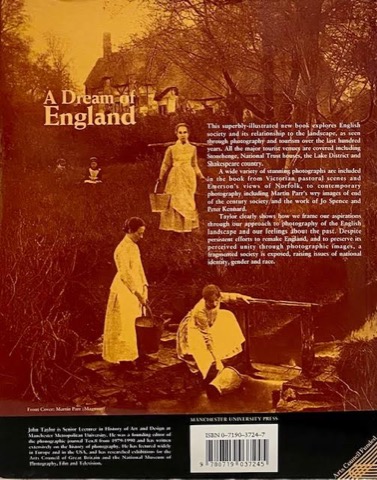
Softcover. Manchester, England, Manchester University Press, 1st Paperback Edition, 1994, Book: Very Good, Dust Jacket: None, 300 pages. Softcover. Color and b/w illustrations throughout. Wrapper very good, has a crease at the top right corner of front cover. Pages clean and unmarked, edges have some light foxing/tanning. Binding tight. In great shape. This superbly-illustrated new book explores English society and its relationship to the landscape, as seen through photography and tourism over the last hundred years.
Hardcover. New York, J.B. Lippincott Company, 1st, 1937, Book: Very Good, Dust Jacket: None, 88 pages. Hardcover with no dust jacket. Minor wear to covers. Delightfully illustrated work filled with color pictorial maps by Helene Carter, and written by Jannette Lucas, the assistant librarian of Vertebrate Paleontology of the New York Museum of Natural History.
Hardcover. London UK, Chapman & Hall, 1st, 1995, Book: Very Good, Dust Jacket: None, 510 pages, illustrated throughout in b&w. Pictorial laminated boards, no dust jacket. Light wear to edges of spine. else a very neat, clean, unmarked copy.
Softcover. NY, Scala Publishers, 1st, 2006, Book: Very Good, Dust Jacket: None, Softcover, 160 pages illustrated in color. Unique in its diversity within a small region, the embroidery of the Epirus region of Greece and the islands of the Aegean and Ionian Seas provides an insightful look at the relationships between textiles and culture. The geographical position of the area along trade routes opened the region to many influences, including Venetian, Ottoman, Greek and Italian, from the 17th to the 19th centuries. The textiles were created by brides and their families for their dowries, and include colorfully-embroidered bed tents, bed curtains, large covers, pillows, handkerchiefs and panels from women's clothing. Designs range from geometrical patterns to whimsical floral and animal motifs in a range of colors and designs, using a variety of techniques. This new study characterizes the embroidery by its design as well as geography, examining the motifs and structural characteristics with exquisitely presented new photography. Clean copy.
Hardcover. Boston, Tappan, Whittemore, and Mason, 1st, 1849, Book: Good, Dust Jacket: None, 216 pages. Hardcover. Engraved map frontispiece, full page tissue guarded engraved plate of State House, preface page, black leather spine with gilt lettering and decoration, embossed patterned border to front and rear cover. Wear to cover, map frontispiece chipped, previous owner's inscription to title page, faded coin sized red stamps on title page, pages 19, 29, 55.

 "A Trip Through the Lakes of North America: Embracing a full description of the St. Lawrence River...(1857)by: John Disturnell")
 "Abysmal: A Critique of Cartographic Reasonby: Gunnar Olsson")
 "Act and the Actor: Making the Selfby: Harold Rosenberg")
 "American Coast Pilot: Containing Directions for the Principal Harbors, Capes and Headlands on the Coasts of North and South Americaby: Blunt, Edmund M.")
 "An Unlikely Vineyard: The Education of a Farmer and Her Quest for Terroir by: Heekin, Deirdre")
 "Approaching Nowhere: Photographsby: Brouws, Jeff (Photographer)")
 "Approaching Nowhere: Photographsby: Brouws, Jeff (Photographer)")
 "Architecture and Town Planning in Colonial North America (3 Vol. Set)by: James D. Kornwolf and Georgiana W. Kornwolf")
 "Atlas of Antient Ancient Geography by: Butler, Samuel")

 "Brooklyn Storefrontsby: Lacy, Paul")
 "C. A. Gaskell Family and Business Atlas of the World, The - New and Completeby: Gaskell, C. A.")
 "California: Mapping the Golden State through History: Rare and Unusual Maps from the Library of Congress Mapping the States through Historyby: Vincent Virga and Ray J")
 "Childhood Chronicles Before Narnia: Boxenby: Lewis, C. S.")
 "Collins Guide: Birds of Russiaby: Knystautas, Algirdas")
 "Commemorating the Event of the First Permanent English Settlement in America: 1607 Jamestown Exposition - May 1st to Nov 1st 1907by: Jamestown Exposition Company")
 "CUBA: singing with bright tearsby: Virginia Beahan; Contributor Jon Lee Anderson/Pico Iyer")
 "Dance Floor Democracy: The Social Geography of Memory at the Hollywood Canteen by: Tucker, Sherrie")
 "Dance Floor Democracy: The Social Geography of Memory at the Hollywood Canteen by: Tucker, Sherrie")

 "Dream of England, A: Landscape, Photography and the Tourist's Imaginationby: Taylor, john")

 "Earth Changes, Theby: Lucas, Jannette May; Carter, Helene")
 "Ecology of World Vegetationby: Archibold, O.W.")
 "Embroidery of the Greek Islands and Epirus Regionby: Sumru Belger Krody")
 "Gazetteer of Vermontby: Hayward, John")