Hardcover. Evanston IL, Northwestern University Press, 1959-1963, Book: Very Good, Dust Jacket: None, Four hardcover volumes: Vol. 1, East Africa November 1889 to December 1890, 432 pages. Vol. 2, East Africa December 1890 to December 1891, 481 pages. Vol. 3, East Africa January 1892 to August 1892, 454 pages. Vol. 4, Nigeria 1894-5 and 1898, 444 pages. Black-and-white illustrations and maps; Bindings vary: Vols. 1, 3 and 4 are matching green cloth with gilt lettering on spine. Vol. 2 is terra-cotta cloth with a black clorh spine. Previous owner'e signature in 1 and #. Otherwise clean and tight set.
Hardcover. London, Edward Arnold, 2nd pr., 1905, Book: Fair, Dust Jacket: None, Hardcover, original blue cloth covers worn with faded gilt lettering. Frontis. missing, hinges cracked, B&w photos, folding maps present. An account of the British territories in East Africa, intended as a guide for prospective colonisers, and future developers. Topics discussed include the physical geography, native peoples such as the Swahilis, the Masai, Somalis, and Nandi, vegetations and animals, slavery, the Uganda railway and more. Sir Charles Eliot was a British colonial administrator and commissioner for the Protectorate of British East Africa, now Kenya.
Hardcover. NY, Prentice Hall, 1st, 1991, Book: Very Good, Dust Jacket: Very Good, Hardcover in a bright, unclipped dust jacket. Describes the author's experiences traveling through Africa, meeting and talking with warriors, activists, and poachers. 334 pages, clean copy.
Softcover. Berkeley CA, University of California Press, 1st pbk, 1981, Book: Very Good, Dust Jacket: None, Softcover, yellow wrappers, 258 pages. Examines the unique religious brotherhoods of Morocco, tracing their origins to two saints from the late 17th and early 18th centuries, Sidi Ali ben Hamdush and Sidi Ahmed Dghughi. Known for their dramatic and sometimes controversial rituals, such as trance dances and acts of self-mutilation, the Hamadsha are healers who address spiritual and psychogenic ailments through symbolic and therapeutic practices. Their activities, deeply rooted in the Moroccan cult of saints, reflect a complex interplay of Islamic mysticism, local traditions, and social dynamics. Through these rituals, the Hamadsha incorporate patients into their brotherhoods, providing them with new roles and a symbolic framework to articulate and resolve personal and societal tensions. Drawing on extensive fieldwork, historical analysis, and psychoanalytic perspectives, this study explores the Hamadsha's history, their organizational structure, and their relationship with Moroccan culture and religion. It examines the saints' tombs as focal points of veneration, the social dynamics of the brotherhoods, and their therapeutic methods, including pilgrimages and trance dances. Clean copy.
Hardcover. NY, Harcourt, Brace and Company, 1st, 1957, Book: Very Good, Dust Jacket: Very Good, Hardcover in a bright, unclipped dust jacket. 115 pages illustrated in b&w line by Enrico Arno. This entertaining collection of twenty-one folk tales from the Ashanti people of Ghana in West Africa takes its title from the wild 'dance' the spider Anansi performed when he tried to hide some burning hot beans under his hat. Clean copy.
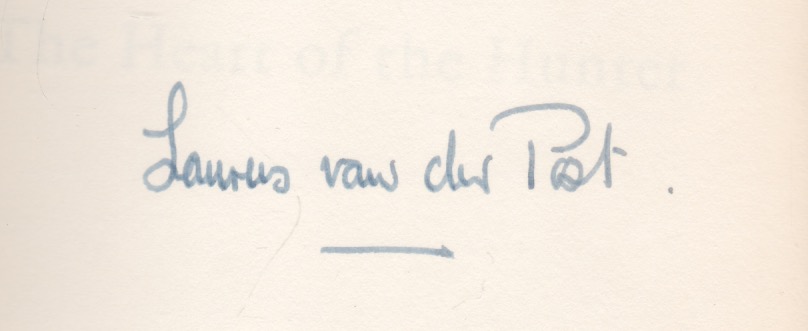
Hardcover. NY, William Morrow, 1st, 1961, Book: Very Good, Dust Jacket: None, Hardcover, light gray boards with a blue cloth spine, 268 pages. The author's passionate concern for Africa and for the human spirit is evident in this portrait of the "First People" of southern Africa, the Bushmen. Van der Post describes his desert travels, the splendid landscape and wildlife, and his encounters with the Bushman, an elusive culture. Drawings by Maurice Wilson. SIGNED BY VAN DER POST on the front fly leaf. No dust jacket, Clean copy.
Softcover. NY, Red Sea Press, 1st, 2018, Book: Very Good, Dust Jacket: None, Softcover, 321 pages. This book tells the story about an African Jewish community known as the Beta Israel that used to live in the northern part of Ethiopia. They were repatriated to Israel in many waves with the aid of the Israeli government and the Jewish Diaspora. The Beta Israel had struggled and faced hardships in order to live out their destiny which was to migrate to the Promised Land. However, their struggle did not stop there. They have had to struggle again to overcome unexpected and new challenges after their long anticipated migration. The book is organized around these two issues. The early chapters of the book describe the quest for Beta Israel identity within Ethiopia and explore their origins. The discussion on this topic is based on mainly textual analyses of previous works on the Beta Israel. It outlines their history and explores their origins. It examines whether the different types of oppressive Ethiopian regimes have contributed to their decision to leave for the Promised Land. It sketches the socio-economic background of the twentieth-century Aliyah, and briefly analyses the impact of the political upheavals in Ethiopia between 1974 and 1991 when the Derg, the post Haile Selassie military regime, was in power.
Softcover. London, September Publishing, 1st, 2022, Book: Very Good, Dust Jacket: None, Softcover, 302 pages. A uniquely vivid and wickedly funny memoir of growing up ambitious, creative and sometimes hungry in Malawi, by the award-winning conceptual artist. Clean copy.
Hardcover. London, Routledge & Kegan Paul, reprint, 1951, Book: Very Good, Dust Jacket: None, Hardcover, yellow-orange cloth with stamped gilt lettering. One of the earliest and most comprehensive ethnographical studies of the Khoisan peoples. The interior contents (xi + 450 pp.) are clean, complete, and securely bound. These contents include two rear fold-out maps and 16 b&w plates. Owner's name inside front cover otherwise clean.
Hardcover. Berkeley, University Of California Press, 1st, 1984, Book: Very Good, Dust Jacket: Very Good, Hardcover in a bright dust jacket, 278 pages. History of the Pedi's struggle to keep the land that belonged to them in South Africa. Clean copy.
Hardcover. London, John Murray, 1st, 1966, Book: Very Good, Dust Jacket: Very Good, Hardcover in a bright dust jacket, 227 pages. "In North Africa, between the Sahara and the Mediterranean, [are] four...States...Libya, Morocco, Tunisia, and Algeria. Together they form what the Arabs call 'The Maghrib', and Sir Geoffrey Furlonge calls 'The Lands of Barbary'." Black and white photographic plates.
Hardcover. London, Chatto & Windus, 1st, 1965, Book: Very Good, Dust Jacket: Very Good, Hardcover in a lightly worn dust jacket with a faded spine. 451 pages, 14 illustrations, 3 maps. A comprehensive history of Tanganyika. Previous owner's signature, date on front fly leaf.
Hardcover. NY, The Century Co., 1st, 1925, Book: Good, Dust Jacket: None, Hardcover, 355 pages, frontis, 64 plates from photos, two colored folding maps each showing author's route, index. . The author, a popular travel writer and explorer, traveled from the Indian Ocean, across Tanganyika and the Congo to the Atlantic, and described the peoples, tribes and nature in some detail. The photographs are by Rexford W Barton and by the author. Corners bumped, fading to gilt on spine, rear hinge cracked.
Softcover. UK, Penguin Books, reprint, 1983, Book: Very Good, Dust Jacket: None, Softcover, 317 pages. The roots of apartheid. The book relates the history of a small people, the Afrikaners, and their attempts to remake their particular world according to a rational plan from the radical Right. First published in 1975. Clean copy.
Hardcover. Chicago, University of Chicago Press, 1st, 1988, Book: Very Good, Dust Jacket: Very Good, Hardcover in a bright, unclipped dust jacket, 223 pages. The Nzema of West Africa, who inhabit a land of forest and lagoons along the Atlantic, continue a heritage untapped by anthropologists and scarcely influenced by Western civilization. Vinigi L. Grottanelli first discovered the rich culture of this southern Ghanaian tribe in 1954. Over the next three decades, intermittent sojourns enabled Grottanelli to develop friendships with the Nzema and learn about their beliefs, traditions, and practices. In twenty absorbing vignettes, The Python Killer renders a vivid portrayal of Nzema life. B&w illustrations. Clean copy.
Hardcover. Cambridge MA, Harvard University Press, 3rd pr., 1971, Book: Very Good, Dust Jacket: Very Good, Hardcover in a bright dust jacket, 362 pages including index and bibliography. Map. Footnotes. Illustrations. This was the first comprehensive and thoroughly documented study of the political evolution of these two then emerging nations of tropical Africa. Basing his analysis on a variety of primary sources, including interviews with many leading figures, the author traces the origins of the full-fledged political parties in both Malawiand Zambia and describes the formation and development of the early Congresses which were to become the dominant movements during their struggles for independence.
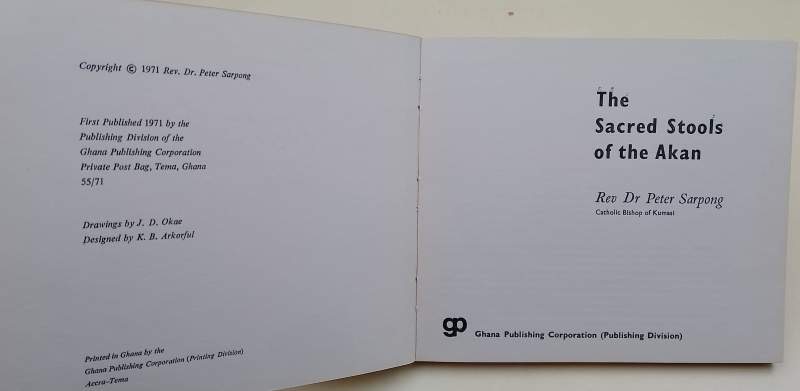
Softcover. Tema Ghana, Ghana Publishing Corp. , 1st, 1971, Book: Very Good, Dust Jacket: None, Softcover, 83 pages, b&w illustrations. Part of a doctoral thesis accepted by the University of St. Thomas Aquinas in Rome. A study of the wooden stools and their religious meaning in the culture of the Akan people of Ghana. Clean copy.
Hardcover. Astra House, 1st, 2022, Book: Very Good, Dust Jacket: Very Good, Hardcover in a bright, unclipped dust jacket. 288 pages. In these confessional pages, women control their own bodies and desires, work toward healing their painful pasts, and learn to assert their sexual power. Weaving a rich tapestry of experiences with a sex positive outlook, The Sex Lives of African Women is an empowering, subversive book that celebrates the liberation, individuality, and joy of African women's multifaceted sexuality. From a queer community in Egypt, to polyamorous life in Senegal, and a reflection on the intersection of religion and pleasure in Cameroon, feminist author Nana Darkoa Sekyiamah explores the many layers of love and desire, its expression, and how it defines who we are.
Hardcover. Toronto, McClelland & Stewart, 1st, 1990, Book: Very Good, Dust Jacket: Very Good, Hardcover in a bright, unclipped dust jacket. 321pages, b&w illustrations. The Sharpeville Six were six South African protesters convicted of the murder of Deputy Mayor of Sharpeville, Kuzwayo Jacob Dlamini, and sentenced to death. On September 3, 1984, a protest march in Sharpeville turned violent (some of the crowd threw stones at Dlamimi's house, he responded by firing a gun and a riot ensued and the Deputy Mayor was murdered. Mojalefa Sefatsa, Theresa Ramashamola, Reid Mokoena, Oupa Diniso, Duma Khumalo and Francis Don Mokhesi were arrested in the following months, found guilty of murder under the "Common purpose" doctrine and sentenced to death by hanging on December 12, 1985. Christian Mokubung and Gideon Mokone were also sentenced to eight years in prison. All were represented by lawyer Prakash Diar, the author of this book.
Hardcover. NY, Africana Publishing, 1st US, 1971, Book: Very Good, Dust Jacket: Very Good, Hardcover in a bright dust jacket, 419 pages, 6 maps, appendix, bibliog., index. Based on many original & unpublished materials, this book examines the impact of Omani rule & trade and the growing involvement of Western powers in Zanzibar politics in the first half of the 19th century. Owner's signature on front fly leaf, college bookplate on inside front cover. About 10 pages with light underlining.
Softcover. Johannesburg, Picador Africa, reprint, 2017, Book: Very Good, Dust Jacket: None, Softcover, 376 pages. INSCRIBED BY EDITOR on title page, Clean copy. First published in the U.S. under a different title in 1978.
Hardcover. London, Secker & Warburg, reprint, 1955, Book: Very Good, Dust Jacket: Fair, Hardcover in a very worn, chipped dust jacket, 255 pages, fold-out chart in rear. A blow by blow account of the Mau Mau leader's trial that lasted for over 100 days, "one of the most dramatic and important this century". In 1952, Kenyatta was arrested in Kenya by the British colonial authorities and charged with masterminding the anti-colonial Mau Mau Uprising. Although protesting his innocence, a view shared by later historians, he was convicted. He remained imprisoned at Lokitaung until 1959 and was then exiled to Lodwar until 1961. Appears to be a book club edition. Overall clean copy but cheap paper is tanning.
Hardcover. NY, Dodd Mead, 3rd pr., 1943, Book: Very Good, Dust Jacket: None, Hardcover, bright red cloth stamped in black. Endpapers map, b&w photographs. 410 pages. The widow of Carl Akeley, naturalist, tells the story back of the exhibits for which he was responsible in the Natural History Museum in New York. This is virtually a biography, with that as a focus; it is a record of the uphill struggle to get the chance to do the thing for which he was gifted and trained; the experiences securing his speciments, adventures in the wilderness, African jungles, the Belgian Congo, the Uganda frontier -- and the immense concentration on details to get the exhibits together and to present them with complete fidelity. Clean copy.

 "The Diaries of Lord Lugard, 4 Volume Set by: Lord Lugard/Margery Perham and Mary Bull (edited by)")
 "The East Africa Protectorateby: Eliot, Sir Charles")
 "The Frozen Leopard: Hunting My Dark Heart in Africaby: Aaron Latham")
 "The Hamadsha: A Study in Moroccan Ethnopsychiatry by: Crapanzano, Vincent")
 "The Hat Shaking Dance and Other Tales from the Gold Coast by: Courlander, Harold")
 "The Heart of the Hunter (SIGNED COPY)by: Laurens Van der Post")

 "The Illustrated Book About Africaby: Sutton/H.B. Vestal, Felix")
 "The Impossible Return: Struggles of the Ethiopian Jews, the Beta Israelby: Abebe Zegeye")
 "The Jive Talker: Or How to Get a British Passport by: Samson Kambalu")
 "The Khoisan Peoples of South Africa: Bushmen and Hottentots by: Schapera, I.")
 "The Land Belongs to Us: The Pedi Polity the Boers and the British in the Nineteenth Century Transvaal by: Delius, Peter")
 "The Lands of Barbaryby: Furlonge, Geoffrey")
 "The Making of Tanganyikaby: Listowel, Judith")
 "The Map That Is Half Unrolled: Equatorial Africa From the Indian Ocean to Atlanticby: E. Alexander Powell")
 "The Puritans in Africa: Story of Afrikanerdom by: W. A.( William Abraham) De Klerk")
 "The Python Killer: Stories of Nzema Lifeby: Grottanelli, Vinigi L.")
 "The Rise of Nationalism in Central Africa: The Making of Malawi and Zambia, 1873-1964by: Robert I. Rotberg")
 "The Sacred Stools of the Akan by: Sarpong, Peter, Illustrated by Okae, J.D.")

 "The Sex Lives of African Women: Self Discovery Freedom and Healing by: Sekyiamah, Nana Darkoa")
 "The Sharpeville Six: South African Trial That Shocked the World by: Prakash Diar")
 "The Swahili Coast: Politics, Diplomacy and Trade on the East African Littoral, 1798-1856 by: Nicholls, C.S.")
 "The Testimony of Steve Biko by: Arnold, Millard W. (Ed.)")

 "The Wilderness Lives Again: Carl Akeley and the Great Adventure by: Akeley, Mary L. Jobe with (F. Trubee Davison")