Hardcover. Salem MA, Peabody Museum, 1st, 1981, Book: Very Good, Dust Jacket: Very Good, Hardcover in a bright, price clipped dust jacket. 192 pages with frontispiece, maps, color plates, black and white plates, figures, facsimiles and index. Admiral Henry Byam Martin's first command in the British Navy was Captain of the 50-gun frigate, H.M.S. Grampus, in the year 1846. He was ordered to a sail from Plymouth 'round the Horn to Hawaii for further orders. Those orders sent him to Tahiti for a full year, the fatal year in which the French subjugated the Tahitians by bloody force, made the island a "Protectorate" of France but allowed the glamorous Queen Pomare to be the titular ruler until they took it over completely, as a colony, in 1880. This Polynesian portion of Captain Martin's daily Journal has lain unnoticed in the depths of the British Museum until this publication. But it still sparkles with wit and with acute observations of the personalities and events of that critical year in the struggle between the French and English for the conquest of the Pacific and the hopeless struggles of the poor islanders to defend their homelands and their freedom. Inscription on front fly leaf, otherwise clean.
Cambridge UK, Cambridge University Press, reprint, 1994, Book: Very Good, Dust Jacket: None, Softcover, 240 pages, b&w illustrations, diagrams. The exploration and colonisation of the Pacific is a remarkable episode of human prehistory. Early sea-going explorers had no prior knowledge of Pacific geography, no documents to record their route, no metal, no instruments for measuring time and none for exploration. Forty years of modern archaeology, experimental voyages in rafts, and computer simulations of voyages have produced an enormous range of literature on this controversial and mysterious subject. This book represents a major advance in knowledge of the settlement of the Pacific by suggesting that exploration was rapid and purposeful, undertaken systematically, and that navigation methods progressively improved. Using an innovative model to establish a detailed theory of navigation, Geoffrey Irwin claims that rather than sailing randomly downwind in search of the unknown, Pacific Islanders expanded settlement by the cautious strategy of exploring upwind, so as to ease their safe return. The author has tested this hypothesis against the chronological data from archaeological investigation, with a computer simulation of demographic and exploration patterns and by sailing throughout the region himself. Clean copy.
Hardcover. NY, Praeger Publishers, 1st US, 1969, Book: Very Good, Dust Jacket: Very Good, Hardcover in an unclipped dust jacket with light edgewear, faded spine. 276 pages, 81 photos, 27 drawings, 11 maps. Volume 65 in the series 'Ancient People and Places', edited by Glyn Daniel. Owner name inked on inside front cover, otherwise clean.
Hardcover. Oxford UK, Clarendon Press, 1st, 1986, Book: Very Good, Dust Jacket: Very Good, Hardcover in a bright dust jacket, 412 pages including index. Dispelling the general assumption that social institutions survive because of their sophisticated adaptive advantages, this ground-breaking work asserts that the commonest customs and institutions may endure because of their very simplicity or as a result of simple human proclivity. Using religious, military, and kinship institutions to illustrate this argument, the author shows that a precise combination of these factors may lead to the emergence of new forms of social evolution. Clean copy.
Softcover. Berlin/NY, Mouton de Gruyter, reprint, 1994, Book: Very Good, Dust Jacket: None, Softcover, 266 pages. Edward Sapir (1884-1939), one of this century's leading figures in American anthropology and linguistics, planned to publish a major theoretical statement on culture and psychology. He developed his ideas in a course of lectures presented at Yale University in the 1930s, which attracted a wide audience from many social science disciplines. Unfortunately, he died before the book he had contracted to publish could be realized. Like de Saussure's (ours de Linguistique Generale before it, this work has been reconstructed from student notes, in this case twenty-two sets, as well as from Sapir's manuscript materials. Judith Irvine's meticulous reconstruction makes Sapir's compelling ideas - of surprisingly contemporary resonance - available for the first time. Clean, unmarked copy.
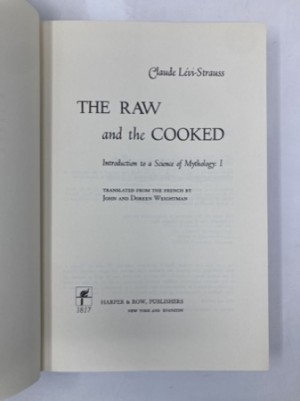
Hardcover. NY, Harper & Row, 1st US, 1969, Book: Very Good, Dust Jacket: Very Good, Hardcover in an unclipped dust jacket with a sunned spine. This is the first of a series of volumes in which the famous French anthropologist attempts to reduce some of the basic myths of the South American Indians to a comprehensible psychological pattern. 387 pages. Dust jacket with light edgewear. Clean copy.
Softcover. New Brunswick, Rutgers University Press, 1st, 1989, Book: Very Good, Dust Jacket: None, Softcover, 262 pages. Explores various expressions of religious fervor such as shamanism, trances, possession, witchcraft and cult activity. Using cultural anthropology and psychoanalysis as a base, the contributors ask how religious imagination connects concepts of the self to ideas of the sacred. Light pencil underlining to about 25 pages.
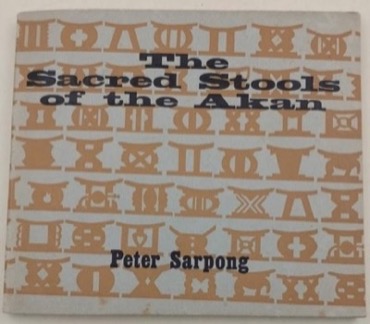
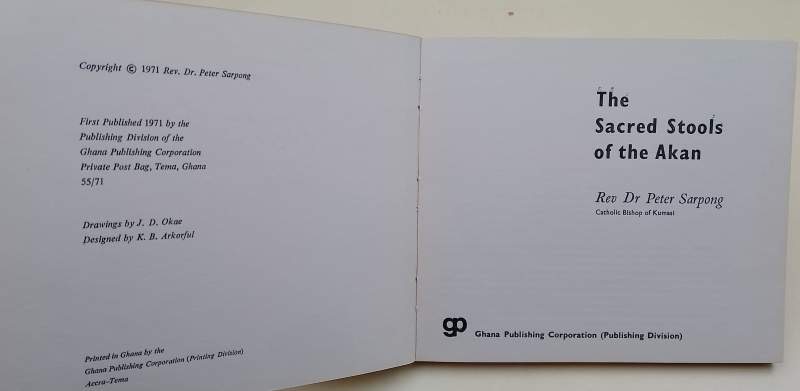
Softcover. Tema Ghana, Ghana Publishing Corp. , 1st, 1971, Book: Very Good, Dust Jacket: None, Softcover, 83 pages, b&w illustrations. Part of a doctoral thesis accepted by the University of St. Thomas Aquinas in Rome. A study of the wooden stools and their religious meaning in the culture of the Akan people of Ghana. Clean copy.
Hardcover. Canberra AU, Australian National University Press, 1st, 1984, Book: Very Good, Dust Jacket: Very Good, Hardcover in a bright dust jacket, b&w frontis portrait, 302 pages. Clean, bright copy.
Hardcover. NY, Harry N. Abrams, 1st, 1998, Book: Very Good, Dust Jacket: Very Good, Hardcover in a bright dust jacket. 120 pages illustrated in color. Since the first report of cave art (at Altamira in 1879), attempts have been made to explain the purpose of the mysterious drawings. Art for art's sake; totemism; hunting, destructive, or fertility magic; and modern structuralist theories have all been proposed. Clottes and Lewis-Williams propose a new theory emphasizing the shamanic aspects of Paleolithic cave paintings. After an unavoidably technical chapter providing the basics of shamanism, the authors examine Paleolithic paintings from across France and Spain, noting the use of animal figures, composite figures combining both human and animal characteristics, and geometric designs that are all common elements of shamanism. The bulk of the book is both fascinating and thought-provoking, and while it is not likely to be the last word on the subject, it is an important contribution to the field. Clean, bright copy.
Softcover. Toronto CA, McClelland and Stewart, 1st, 1987, Book: Very Good, Dust Jacket: None, Softcover, 264 pages, 125 color, 135 black & white. Published in conjunction with an exhibition. "A major study of the artistic traditions of Canada's Native peoples and of their place in the cultures and belief systems in which they originated. Here, for the first time, is Native Canadian work from museums and private collections around the world. The works, and the essays that describe their contexts, bring to life the spiritual and aesthetic identity of the craftspeople and their societies. From richly ornamented costumes displaying the wealth of their owners to practical techologies that enabled the peoples to thrive in their environments, these treasures reflect Native life at the time of contact with Europeans." Clean copy.
Softcover. Madras, Government Press, 1st, 1931, Book: Very Good, Dust Jacket: None, Softcover, Heavy gray paper wraps, 158 pages. 12 plates of b/w photographs. A complete survey of the origin and development of the Brahmanas as well as an authoritative exposition of their liturgical codes and an accurate account of their cultural life. This work also deals with Vaishnavism of south India. Azhvars, Acharyas, Ramanuja, Visistadvaita philosophy, cardinal principles of Sri Vaishnavism. Some interesting illustrations enhance the beauty of this volume. Light wear to wrappers, clean copy.
Hardcover. Cambridge UK, Cambridge University Press , 1st, 1985, Book: Very Good, Hardcover, blue clith with gilt lettering on spine, 328 pages. Dr Moore's enterprising book focuses on an apparent paradox: the failure of Sri Lanka's highly politicized smallholder electorate to place on the national political agenda issues relating to the public distribution of material resources. Sri Lanka has more than fifty years' history of pluralist democracy and such issues directly affect the interests of the smallholder population. Yet successive Sri Lankan governments have pursued economic policies favouring food consumers and the state itself at the expense of agricultural producers. In exploring the features of Sri Lanka's history, geography, politics and economy which explain this paradox, the author looks in detail at some of the dominant features of contemporary Sri Lanka: the political consequences of the plantation experience; the persistence of elite political leadership; and the causes and consequences of ethnic conflict. Clean copy, paper tanning slightly.
Hardcover. NY, Africana Publishing, 1st US, 1971, Book: Very Good, Dust Jacket: Very Good, Hardcover in a bright dust jacket, 419 pages, 6 maps, appendix, bibliog., index. Based on many original & unpublished materials, this book examines the impact of Omani rule & trade and the growing involvement of Western powers in Zanzibar politics in the first half of the 19th century. Owner's signature on front fly leaf, college bookplate on inside front cover. About 10 pages with light underlining.
Softcover. NY, Holt, Rinehart and Winston , 1988, Softcover, 184 pages, b&w illustrations. INSCRIBED BY WEINER on the inside front cover. This re-examination of the Trobrianders of Papua New Guinea, the people described in Malinowski's classic ethnographic work of the early 20th century, provides a balanced view of the society from a male and female perspective, including coverage of new discoveries about the importance of woman's work and wealth in the society.
Hardcover. Seattle, University of Washington Press, 1st US, 1982, Book: Very Good, Dust Jacket: Good, Hardcover in a lightly worn, chipped dust jacket. 249 pages, b&w photos. The book is almost entirely about trying to understand the deep meaning of the unusual-looking Sxwayxwey* mask of the Coast Salish, by referring to the origin myths, dances and costumes associated with it. A large part of the book attempts to clarify this by contrasting and comparing it with the Tsonoqua mask which is associated with several tribal groups from various parts of coastal British Columbia. He weaves a huge matrix of elements of the masks, the dance costumes, the dances, the origin myths, related myths, and only kind-of-sort-of related myths. Clean copy.
Hardcover. Berkeley, University of California Press, 1st, 1992, Book: Very Good, Dust Jacket: Very Good, Hardcover in a bright dust jacket. 305 pages. The Wrestler's Body tells the story of a way of life organized in terms of physical self-development. While Indian wrestlers are competitive athletes, they are also moral reformers whose conception of self and society is fundamentally somatic. Using the insights of anthropology, Joseph Alter writes an ethnography of the wrestler's physique that elucidates the somatic structure of the wrestler's identity and ideology. Young men in North India may choose to join an akhara, or gymnasium, where they subject themselves to a complex program of physical and moral fitness. Alter's first-hand description of each detail of the wrestler's regimen offers a unique perspective on South Asian culture and society. Wrestlers feel that moral reform of Indian national character is essential and advocate their way of life as an ideology of national health. Everyone is called on to become a wrestler and build collective strength through self-discipline. Clean copy.
Hardcover. Stanford CA, Stanford University Press, 1st, 1986, Book: Very Good, Dust Jacket: Very Good, Hardcover in a bright dust jacket, 264 pages, color and b&w illustrations. The book focuses on the Aboriginal system of land tenure in the northeast of Arnhem Land, Australia. Yolngu land tenure is a system based on rational economic principles while deriving its validity and moral force from a rich religious mythology. The book is a contribution to the ethnography of Australian Aborigines, to comparative hunter-gatherer studies, to the analysis of systems of land tenure, and to the history of ideas about property. Clean copy.
Softcover. Chicago, University of Chicago Press, 1997, Book: Very Good, Dust Jacket: None, Softcover, pictorial wrappers, 311 pages. For generations of anthropologists, the Baining people have presented a challenge, because of their apparent lack of cultural or social structure. This group of small-scale horticulturists seems devoid of the complex belief systems and social practices that characterize other traditional peoples of Papua New Guinea. Their daily existence is mundane and repetitive in the extreme, articulated by only the most elementary familial relationships and social connections. The routine of everyday life, however, is occasionally punctuated by stunningly beautiful festivals of masked dancers, which the Baining call play and to which they attribute no symbolic significance. In a new work sure to evoke considerable repercussions and debate in anthropological theory, Jane Fajans courageously takes on the "Baining Problem," arguing that the Baining define themselves not through intricate cosmologies or social networks, but through the meanings generated by their own productive and reproductive work.
Hardcover. London, The Athlone Press, 1st, 1970, Book: Very Good, Dust Jacket: Good, Hardcover in a lightly worn dust jacket, orange cloth covers, 287 pages. Anthropological essays by the author based on his 30 years of field work in Ghana. Clean copy.
Hardcover. Seattle, University of Washington Press, 1st, 1971, Book: Very Good, Dust Jacket: Very Good, Hardcover in an unclipped dust jacket with sunning to spine. 368 pages, 4 pages of b&w photos. Although the Tiwi people of North Australia have been studied before, Goodale's approach adds a significant dimension--from the perspective of the Tiwi woman as she changes through her life course from birth to the rituals performed after her death. Especially interesting and detailed material is included on marriage arrangements and directions as well as important rites of passage, such as the annual initiation ceremony and the funeral ceremony. Goodale's descriptive record of her fieldwork among the Tiwi continues to be a lucid and valuable source of knowledge of this remote tribe. Previous owner's small sticker on front fly leaf, otherwise clean.
Softcover. Berkeley CA, University of California Press, 1st pbk., 1990, Book: Very Good, Dust Jacket: None, Softcover, 273 pages, b&w illustrations. The first in-depth analysis of the rich spiritual and artistic traditions of the Carib-speaking Yekuana Indians of Venezuela, who live in the dense rain forest of the upper Orinoco. Within their homeland of Ihuruna, the Yekuana have succeeded in maintaining the integrity and unity of their culture, resisting the devastating effects of acculturation that have befallen so many neighboring groups. Yet their success must be attributed to more than natural barriers of rapids and waterfalls, to more than lack of "contact" with our "modern" world. The ethnographic history recounted here includes not only the Spanish discovery of the Yekuana but detailed indigenous accounts of the entire history of Yekuana contact with Western culture, revealing an adaptive technique of mythopoesis by which the symbols of a new and hostile European ideology have been consistently defused through their incorporation into traditional indigenous structures. Clean copy.
Softcover. Boston, Museum of Fine Arts, 1st, 1992, Book: Very Good, Dust Jacket: None, Softcover, 271 pages illustrated in color and b&w. Textiles were the Incas' most prized possessions. Their first gifts to European strangers were made not of gold and silver, but of camelid fibre and cotton. They believed that the highest form of weaving was created expressly for the sun, which they considered the greatest of the celestial powers. This book uses this image to symbolize Andean tradition as a whole and documents the collection of ancient and Colonial Andean textiles in the Museum of Fine Arts, Boston, which is among the most comprehensive of its kind in the world. Described and illustrated here, in many cases for the first time are the finest examples from the collection: weavings of astonishing virtuosity with striking geometric designs, elaborate carpets and covers, mantles, tunics, featherwork, woven shoes with metal decoration and intriguing figural sculptures with tapestry faces - representing the major cultures of the pre-Columbian period as well as the achievements of Spanish Colonial times. Mild wear to outer wraps, otherwise a clean, bright copy.
Hardcover. Bloomington IN, Indiana University Press, 1st, 1979, Book: Very Good, Dust Jacket: Very Good, Hardcover in a bright dust jacket with light edgewear. 309 pages, b&w illustrations. A remarkable work of ethnobotany and folkloric medicine by a Vermont based folklorist working in the West Indies. From the flap: "Charles divulged to Beck more than isolated cures or preventatives: he imparted a well developed psycho-medical system that was an integral part of his culture." Clean copy.

 "The Polynesian Journal of Captain Henry Byam Martin, R.N. by: Captain Henry Byam Martin, R.N.")
 "The Prehistoric Exploration and Colonisation of the Pacific by: Geoffrey Irwin")
 "The Prehistory of Australia by: Mulvaney, D.J.")
 "The Principles of Social Evolutionby: Hallpike, C. R.")
 "The Psychology of Culture: A Course of Lectures by: Sapir, Edward, Editor: Irvine, Judith T.")
 "The Raw and the Cooked: Introduction to a Science of Mythology: I by: Levi-Strauss, Claude")

 "The Religious Imagination in New Guineaby: Herdt, Gilbert and Michele Stephen (Eds.)")
 "The Sacred Stools of the Akan by: Sarpong, Peter, Illustrated by Okae, J.D.")
 "The Samoan Journals of John Williams 1830 and 1832/Pacific History Series No. 11 by: Moyle, Richard M. (ed.)")
 "The Shamans of Prehistory: Trance and Magic in the Painted Caves by: Jean Clottes; David Lewis Williams")
 "The Spirit Sings Artistic Traditions of Canada's First Peoplesby: Glenbow Museum")
 "THE SRI VAISHNAVA BRAHMANS. Bulletin of the Madras Government Museum, Vol II Part 2by: Rangachari, Diwan Bahadur K.")
 "The State and Peasant Politics in Sri Lankaby: Moore, Mick")
 "The Swahili Coast: Politics, Diplomacy and Trade on the East African Littoral, 1798-1856 by: Nicholls, C.S.")
 "The Trobrianders of Papua New Guinea (INSCRIBED COPY)by: Weiner, Annette B.")
 "The Way of the Masks by: Levi-Strauss, Claude")
 "The Wrestler's Body:Identity and Ideology in North India by: Alter, Joseph S.")
 "The Yolngu and Their Land: a System of Land Tenure and the Fight for Its Recognition by: Nancy M. Williams")
 "They Make Themselves: Work and Play among the Baining of Papua New Guineaby: Jane Fajans")
 "Time and Social Structure and Other Essays by: Fortes, Meyer")
 "Tiwi Wives: A Study of the Women of Melville Island, North Australiaby: Jane C. Goodale")
 "To Weave and Sing: Art, Symbol, and Narrative in the South American Rainforest by: David M. M. Guss")
 "To Weave for the Sunby: Stone-Miller, Rebecca")
 "To Windward of the Land: The Occult World of Alexander Charlesby: Jane C. Beck")