Hardcover. New York, Doubleday, Page, and Company, 1st, 1925, Book: Fair, Dust Jacket: None, Volume to accompany the American Wing of the Metropolitan Museum of Art in New York. 302 pp. Features 20 color plates in addition to 217 other black/white illustrations (mostly photographs). Covers beginnings of New England through the Early Days of the Republic. Development of Interior Architecture and House Decoration from craftsmen influenced by old world style and the evolution.Shows significant wear due to age and water damage. Discoloration throughout, though text still entirely legible and color still vivid in the plates. Edges show significant wear as well. Prior owner's name and date (1929) written in ink twice inside the cover.
Hardcover. Athens, University of Georgia, 1st, 1998, Book: Very Good, Dust Jacket: Very Good, Hardcover, 316 pages, b&w photographs. Light rubbing to dust jacket, sticker residue on rear. Else a clean, tight copy. During the Gilded Age, Jekyll Island, Georgia, was one of the most exclusive resort destinations in the United States. Owned by the most elite and inaccessible social club in America, a group whose members included Rockefellers, Pulitzers, Vanderbilts, Goulds, and Morgans, this quiet refuge in the Golden Isles was the perfect winter getaway for the wealthy new industrial class of the snowbound North. In this delightful book, a companion volume to The Jekyll Island Club: Southern Haven for America's Millionaires, June Hall McCash focuses on the social club's members and the "cottages" they built near the clubhouse between 1888 and 1928. Illustrated with hundreds of never-before-published photographs from private family collections, The Jekyll Island Cottage Colony tells the stories of each home, the owners' connections with the island, and their interactions with one another.
Softcover. Flagstaff, AZ, Northland Press, 3rd pr, 1981, Book: Very Good, Dust Jacket: None, Softcover, 131 pages, b&w photographs. Light creases to front wrapper. Else a very clean, tight copy. An architect for the Santa Fe Railway and the Fred Harvey Company, Colter laid the groundwork for female architects who followed. Seven of her remarkable structures are preserved in Grand Canyon's historic district. This is her story.
Hardcover. New York, Macmillan Company, 1st, 1932, Book: Good, Dust Jacket: None, Non-paginated. Hardcover. Black & white photographs by Lewis W. Hine. Previous owners inscription on front endpaper; handwritten poem on rear endpaper. Green cloth covers with light rubbing to corners. No dust jacket.
Hardcover. NY/Cambridge MA, The Architectural History Foundation/The MIT Press, 1st, 1984, Book: Very Good, Dust Jacket: Very Good, Hardcover in a bright dust jacket. This is the first complete biography of the inimitable society architect Addison Mizner, whose Spanish Revival buildings created a new style of resort architecture for Palm Beach and south Florida during the boom years of the 1920s. Clean copy.
Hardcover. Ontario CA, Vanwell Publishing St. Catherines, Ontario, 1st, 1996, Book: Very Good, Dust Jacket: Very Good, Hardcover, 344 pages, illustrated throughout in color and b&w. Clean, unmarked copy with only minor wear to dust jacket.
hardcover. NY, Macmillan , 1st, 1909, Book: Very Good, Dust Jacket: None, Red cloth hardcover with gilt lettering, 424 pages. 98 Black & white and 25 color illustrations by Joseph Pennell. Color illustrated frontispiece with tissue-guard. Light edgewear to covers. Rear and front hinge cracked.
Hardcover. New York, Rizzoli, 1st, 1989, Book: Very Good, Dust Jacket: Very Good, Hardcover, 228 pages. B&w and color illustrations throughout. Text and photos tells the stories behind the numerous homes and public buildings of Newport R.I. Brand new copy, still in original shrink wrapping. In mint condition.
Softcover. Washington and Lee University, 1st, 2005, Book: Very Good, Dust Jacket: None, Softcover, 100 pages. The 2005 issue, Volume 12, of Perspectives in Vernacular Architecture: The Journal of the Vernacular Architecture Forum contains the articles: "Selling Domestic Space: The Boarding House in the Southern Mountains" by Michael Ann Williams; "La Casa Alamense: The Mexican Hacienda as Urban Dwelling" by John Messina; "Unraveling the Benjamin Deyerle Legend: An Analysis of Mid-Nineteenth-Century Brickwork in the Roanoke Valley of Virginia" by Michael J. Pulice; "Orson S. Fowler and a Home for All: The Octagon House in the Midwest" by Rebecca Lawin McCarley; and "Roadside Shrines and Granite Sketches: Diversifying the Vernacular Landscape of Memory" by David Charles Sloane.
Hardcover. New York, W. W. Norton, 1st, 1976, Book: Very Good, Dust Jacket: Good, Hardcover in a very good plus dust jacket. 192 pages. Color frontispiece, color photographs, illustrations, diagrams, bibliography, index. The dust jacket has very minor edgewear. A photographic look at some of the earlier churches built in North America.
hardcover. London, Turnberry Consulting , reprint, 2013, Book: Very Good, Dust Jacket: Very Good, 271 pages. Hardcover. Extensive color and b&w photographs throughout. Silver gilt titles on spine. Includes extensive glossary. Like new in publisher's shrink-wrap.
New York , Princeton Architectural Press, 2001, Book: Very Good, Dust Jacket: Very Good, Hardcover, 330 pages, color, b&w illustrations. Like-new condition. The first architect trained in America, Robert Mills is best known as the designer of many iconic buildings in our nation's capital: the Washington Monument, the Department of Treasury headquarters, the Patent Office Building (now National Portrait Gallery) , and the Post Office Headquarters.Beautifully illustrated with never-before-published watercolors and renderings and new color photography commissioned for the book.
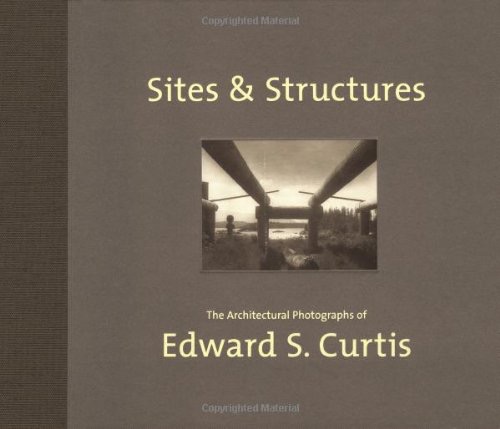
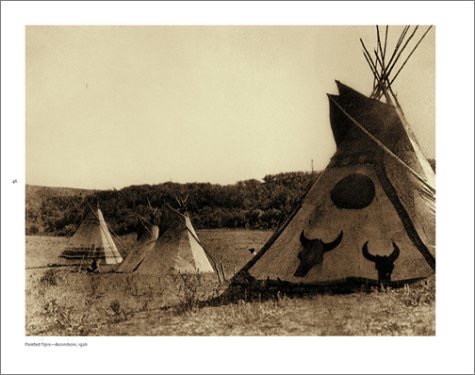
Hardcover. San Francisco, Chronicle Books, 1st, 2000, Book: Very Good, Dust Jacket: None, Hardcover, gray boards with a dark brown cloth spine and a pictorial label on the cover. No dust jacket issued. Legendary for his massive photographic undertaking, The North American Indian, Edward Sheriff Curtis (1868-1952) recorded much more than portraits of Native American tribespeople. Among his huge body of work are numerous images of all manner of native dwellings: tipis, hogans, huts, cliff houses, adobes, and many more that are far less familiar to the public eye. Though people are largely absent from these photographs, each image speaks volumes about the lives and lifestyles of the tribes to which they belonged. Other structures such as tombs, religious buildings, granaries, and totem poles are also featured prominently, further glimpses into ways of life that were in the process of disappearing. Taken from the Dan and Mary Solomon collection,Sites & Structures: The Architectural Photographs of Edward S. Curtis is the first book of Curtis photographs to explore these dwellings and structures, faithfully reproduced from the original prints and gravures.
Hardcover. NY, Simon & Schuster, 1st, 1993, Book: Very Good, Dust Jacket: Very Good, Hardcover in a bright, unclipped dust jacket, 303 pages. Eighty percent of everything ever built in America has been built since the end of World War II. This tragic landscape of highway strips, parking lots, housing tracts, mega-malls, junked cities, and ravaged countryside is not simply an expression of our economic predicament, but in large part a cause. It is the everyday environment where most Americans live and work, and it represents a gathering calamity whose effects we have hardly begun to measure. In The Geography of Nowhere, James Howard Kunstler traces America's evolution from a nation of Main Streets and coherent communities to a land where everyplace is like noplace in particular, where the city is a dead zone and the countryside a wasteland of cars and blacktop. Now that the great suburban build-out is over, Kunstler argues, we are stuck with the consequences: a national living arrangement that destroys civic life while imposing enormous social costs and economic burdens. Kunstler explains how our present zoning laws impoverish the life of our communities, and how all our efforts to make automobiles happy have resulted in making human beings miserable. Name on front fly leaf, otherwise like new.
Hardcover. Baltimore, Johns Hopkins University, 1st, 1968, Book: Very Good, Dust Jacket: Very Good, Hardcover in a lightly worn, unclipped dust jacket, 350 pages, b&w illustrations. This illustrated account of the impact of the English Gothic revival on American church architecture in the mid-nineteenth century finds that this fundamentally conservative movement provided the foundation for a new, influential aesthetic. Clean copy.
Softcover. Albany NY, Mount Ida Press, 1st, 2001, Book: Very Good, Dust Jacket: None, Softcover, B&w photos and plans; 11" - 13" tall; 160 pages. Traces the history of Roosevelt?s long-forgotten retreat near Hyde Park? from the president?'s original drawings for the modest, two-bedroom cottage to its recent preservation by the Open Space Institute, the Franklin and Eleanor Roosevelt Institute and the National Park Service. Examines Top Cottage as a symbol of Roosevelt?s love of the Hudson Valley and as one of the country?s first barrier-free buildings. Top Cottage joins Thomas Jefferson?s Monticello and Poplar Forest as the only homes designed by a U. S. President while in office. Clean copy.
Hardcover. New Haven CT, Yale University Press, 1st, 1977, Book: Very Good, Dust Jacket: Very Good, Two volume set. 575 pages, 63 b&w illustrations. Latrobe (1764-1820), English-born architect of the United States Capitol under Jefferson, Madison, and Monroe, set the course for a vast amount of nineteenth-century American architecture with such works as the Capitol, the Bank of Pennsylvania, and the Baltimore Cathedral. A pioneering engineer as well, he designed the nation"s first comprehensive steam-powered waterworks in Philadelphia. Latrobe combined his professional concerns with an astonishing range of other interests and an acutely ob- servant eye. His papers form one of the finest existing literary and pictorial descriptions of the young republic.
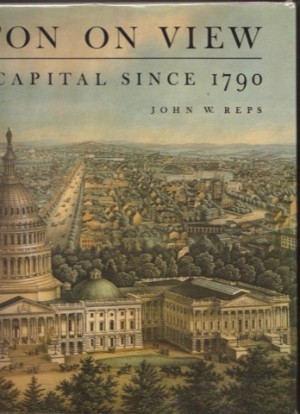
Hardcover. Chapel Hill & London, The University Of North Carolina Press,, 1st, 1991, Book: Very Good, Dust Jacket: Very Good, Hardcover, 297 pages. illustrated throughout in color and b&w. Oblong folio. Light gray cloth with gilt title to spine. Pictorial dust jacket. Minor wear to covers, else like new. The 15x11.5" format accommodates 160 color and 12 b&w illustrations, many of them decidedly horizontal, and accompanying text laid out in two wide (5.5") columns. Before photography, Washington, DC was the subject of numerous engravings, aquatints, and lithographs which were published separately as well as in newspapers and magazines, souvenir booklets, and guidebooks and brochures. A selection of these illustrations depicting buildings or districts, views from public structures, and bird's-eye views is presented along with descriptions of Washington from contemporary published works by journalists, architects, travelers, politicians, and others. Nine chapters review successive periods of growth and identify events that shaped the city's character.
Hardcover. Berkeley, California University Press, 1st, 1996, Book: Very Good, Dust Jacket: Good, 164 pages. Hardcover. Illustrated with full color and black & white photographs. Dust jacket with light wear. Clean tight copy.
Hardcover. New Haven, Connecticut, Yale University Press, 1st, 1974, Book: Near Fine, Dust Jacket: Good, Hardcover. Illustrated history of the Yale's 1969 architectural competition. 117 pages, illustrated fully with black/white photographs and drawings, mostly full-page. Book is cloth bound and in near fine condition, dust jacket is in good condition: bottom of the spine and few edges show wear, small rip on the back at the top edge and small stain on the back as well.

 "Homes of Our Ancestors, Theby: Halsey & Tower, R. T. H. & Elizabeth")
 "Jekyll Island Cottage Colony, Theby: McCash, June Hall")
 "Mary Colter - Builder upon the Red Earthby: Grattan, Virginia L.")
 "Men at Workby: Hine, Lewis W.")
 "Mizner's Florida: American Resort Architectureby: Curl, Donald Walter")
 "Moshe Safdieby: Kohn, Wendy")
 "New New York, Theby: Van Dyke, John C. and Joseph Pennell")
 "Newport Housesby: Mulvagh, Jane , Mark A. Weber")
 "Perspectives in Vernacular Architecture: The Journal of the Vernacular Architecture Forum - Volume 12by: Pamela Simpson (editors) Jennings, Jan (Author)")
 "Pioneer Churchesby: Kalman, John De Visser (photographe), Harold")
 "Racecourse Architectureby: Roberts, Paul")
 "Robert Mills: America's First Architectby: Bryan, John M.")
 "Sites and Structures: The Architectural Photographs of Edward S. Curtis by: Solomon, Mary/Slemmons, Rod")
 "The Geography of Nowhere: The Rise and Decline of America's Man Made Landscape by: Kunstler, James Howard")
 "The Gothic Revival and American Church Architecture: An Episode in Taste, 1840-1856 by: Stanton, Phoebe B.")
 "The President as Architect: Franklin D. Roosevelt's Top Cottage by: John G. Waite Associates, Architects")
 "Virginia Journals of Benjamin Henry Latrobe, The: 1795-1798 (2 Volumes)by: Benjamin Henry Latrobe; Editor-Edward Carter II; Editor-Angeline Polites")
 "Washington On View: The Nation's Capital Since 1790by: Reps, John William")

 "William Faulkner and the Tangible Past - The Architecture of Yoknapatawphaby: Hines, Thomas S.")
 "Yale Mathematics Building Competition, The: Architecture for a Time of Questioningby: Moore & Pyle, Ed., Charles W. & Nicholas")