Hardcover. London, Laurence King Publishers, 1st, 2008, Book: Very Good, Dust Jacket: None, Hardcover, 192 pages. A pictorial tour of unique loos of the world. No dj issued.
Hardcover. Hatje Cantz, 1st, 2019, Book: Very Good, Dust Jacket: None, Hardcover, pictorial boards, 304 pages illustrated in b&w and color. At the first mention of his name, one can easily picture them: light-flooded bungalows that are lavishly composed into nature and that characterize the architectural style of the American West Coast surrounding Los Angeles. But it is sometime overlooked that the career of Richard Neutra (1892-1970) began in Berlin-Zehlendorf. And yet these houses in Zehlendorf represent a fascinating phase in Neutra's work. With their complex color schemes and extravagant interior design, they reveal themselves to be more than just an experimental and radically innovative design. Indeed, these lesser-known aspects already hint at elements that will be taken up again in future projects. The present publication finally provides for a rightful appreciation of Neutra's early works and, alongside historical sources, it collects countless new and unpublished documents about the houses and their first residents. Clean, still in publisher's shrink wrap.
Softcover. Cambridge MA, The MIT Press , 1st, 2021, Book: Very Good, Dust Jacket: None, Softcover, 373 pages. A history of New York subway passengers as they navigated the system's constraints while striving for individuality, or at least a smooth ride. When the subway first opened with much fanfare on October 27, 1904, New York became a city of underground passengers almost overnight. In this book, Stefan Hohne examines how the experiences of subway passengers in New York City were intertwined with cultural changes in urban mass society throughout the twentieth century. Hohne argues that underground transportation--which early passengers found both exhilarating and distressing--changed perceptions, interactions, and the organization of everyday life. Clean copy.
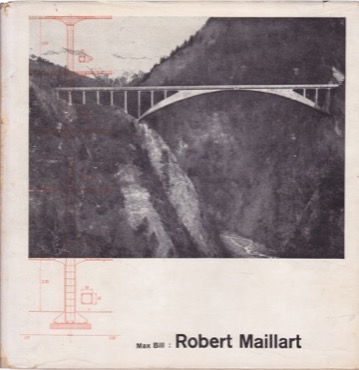
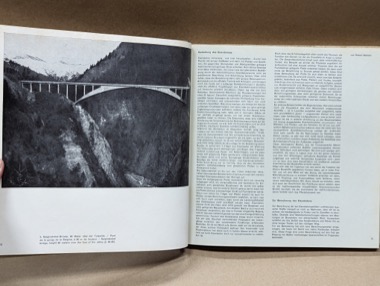
Hardcover. Zurich, Verlag fur Architektur], 1st, 1949, Book: Very Good, Dust Jacket: Fair, Hardcover in a worn, lightly soiled dust jacket with a chunk missing from the rear panel. 180 pages. Text in German, French and English, illustrated in black and white throughout. History of Robert Maillart bridges. Previous owner's signature on inside front cover, otherwise clean.
New York , Princeton Architectural Press, 2001, Book: Very Good, Dust Jacket: Very Good, Hardcover, 330 pages, color, b&w illustrations. Like-new condition. The first architect trained in America, Robert Mills is best known as the designer of many iconic buildings in our nation's capital: the Washington Monument, the Department of Treasury headquarters, the Patent Office Building (now National Portrait Gallery) , and the Post Office Headquarters.Beautifully illustrated with never-before-published watercolors and renderings and new color photography commissioned for the book.
Hardcover. Chicago, American Planning Association, 1994, Book: Very Good, Dust Jacket: None, Hardcover, pictorial boards, 441 pages. Illustrated in b&w and color. Conventional planning techniques just aren't working in many rural and suburbanizing areas. Developments where people merely exist have replaced neighborhoods where people once thrived. Strip malls and checkerboard subdivisions prevail. Randall Arendt argues convincingly that this scenario is not inevitable. In Rural by Design he advocates creative, practical land-use planning techniques to preserve open space and community character. He shows how developments all across America have used these techniques successfully. This book examines a broad spectrum of nitty-gritty design topics in a lively, readable style. Topics range from sewage disposal and farmland preservation to greenway planning for interconnected open space and the design of rural subdivision streets. The book includes numerous case examples of residential, commercial, and mixed-use projects that have used these innovative design techniques. And it takes an in-depth look at the design elements of the traditional town--and how to reinvent those elements in today's communities. Names on front fly leaf, otherwise clean.
Hardcover. Moscow, Sovietsky Khudozhnik, 1st, 1990, Book: Very Good, Dust Jacket: Very Good, 359 pages. Hardcover with dust jacket. Russian text only. Profusely illustrated in full color and black & whiite. A survey of Russia's brief Art Nouveau movement in architecture. Bright, clean copy in a similar dust jacket. In a plain cardboard slipcase.
Softcover. Santa Barbara CA, UCSB Art Museum, 2nd pr., 1979, Book: Very Good, Dust Jacket: None, Softcover, 105 pages illustrated with b&w photos and architectural drawings. Clean, crisp copy of this exhibition catalog.
Softcover. Saratoga Springs NY, Lyrical Ballad Book Store, 1st, 1991, Book: Very Good, Dust Jacket: None, Softcover, 183 pages. Conceiving of the City of Saratoga Springs as a museum in which the exteriors of buildings are the works of art, many key examples of architecture are carefully placed within the context of local and national history and of architectural style. Illustrated with many black and white photos. Clean copy
Softcover. Flammarion, 1st, 1995, Book: Very Good, Softcover, 223 pages, illustrated in color and b&w. Tracing the origins of Americanism back to the late nineteenth century, Scenes of the World to Come focuses on the European discovery of the American city--with its grand hotels, skyscrapers, and massive industrial plants, its new-found sense of efficiency and mobility, and its infatuation with domestic appliances and mechanization. The book analyzes the global structures and thematic strategies according to which American architectural forms and urban models migrated to Europe, bringing the promise of a new architecture and, along with it, the threat of a dissolution of European identity. Clean copy.
Hardcover. Cologne GR, Taschen, 1st, 2007, Book: Very Good, Dust Jacket: Very Good, Hardcover in a bright dust jacket, 245 pages, illustrated in color and b&w. An extensive collection of hand-illustrated shop window designs from 1938 to 1950. These spectacular, often grandiose plans for grocery stores, shoe shops, beauty salons, bakeries, and more are reminders of a time when stores were sacred shrines for the congregation of American shoppers - impressive and even slightly intimidating, just like the future itself.
Hardcover. Cambridge MA, The MIT Press, 1st, 2009, Book: Very Good, Dust Jacket: Very Good, Hardcover in a bright dust jacket, 329 pages. The chapters include: the social economic & political life of sidewalks; construction & evolution of sidewalks; parades festivals & celebrations; disruption & confrontation; the right to the sidewalk; sidewalk as space of dissent; sidewalk as shelter; sidewalk as urban forest. Clean copy.
Softcover. NY, Princeton Architectural Press, 1st, Book: Very Good, Dust Jacket: None, Softcover, 64 pages, b&w photos throughout. A portfolio of the small buildings designed by the author with a handwritten note laid in. Tectonically beautiful and intricate, his work represents some of the finer points of simple thought in architecture. His own commentary and a conclusion by Turner Brooks allow a clear and concise understanding of the projects. Clean, bright copy.
Hardcover. NY, The Monacelli Press, 1st US, 2003, Book: Very Good, Dust Jacket: Very Good, Hardcover in a bright dust jacket, 407 pages. As much a visionary as he is an architect, Paolo Soleri, born in Turin in 1919, worked with Frank Lloyd Wright in the late 1940s and went on to develop his own organically expressive architecture. Since 1935 he has been involved almost exclusively with the design of alternative urban planning models. By 1970 he had designed thirty 'Arcologies,' his term for a series of high-density, fantastically unreal megastructures for up to six million inhabitants. This comprehensive monograph, the first on Soleri to be published in the United States, follows his entire career through a presentation of drawings, sketches, and built work. Over 600 illustrations in color and b/w. Clean copy. DOMESTIC SHIPPING ONLY.
Softcover. New York , Rizzoli, 1st, 1989, Book: Very Good, Dust Jacket: None, 288 pages, softcover edition. Edited by Sarah Mollman Underhill. Introductory Essay by Stanley Tigerman. Afterword by John Hejduk. Illustrated with color and black-and-white drawings, photographs and plans.
Hardcover. London, Smith, Elder and Co., Second Edition, 1858, Book: Very Good, Dust Jacket: None, Three hardcover volumes with blue leather covers featuring marbled endpapers, raised bands along brown spines with red title plates, gilt decoration. Second Edition. Black & white, and some color illustrations in all 3 volumes by John Ruskin. Volume 1 - "The Foundations". 400 pages. Top edge gilt. Light, faint pencil marginalia to a few pages. Minor abrasion to covers. Clean, tight copy. Volume 2 - "The Sea Stories". 394 pages. Top edge gilt. Faint foxing to some pages. a few moderate abrasions to rear cover. Clean, tight copy. Volume 3 - "The Fall". 362 pages. Top edge gilt. Light pencil marginalia scattered throughout. Faint foxing to some pages. Minor abrasions to covers. Clean, tight copy. A nice set.
Softcover. Washington DC, Planners Press, revised ed., 1988, Book: Very Good, Dust Jacket: None, Softcover, This seminal report outlines a street-graphics system that ensures on-premise signs are expressive, appropriate, legible, and compatible with the character of the community. The system is a legally enforceable regulatory framework that makes good design possible. It offers benefits to business owners by eliminating the visual cacophony that often drowns out their messages and to drivers and pedestrians by making it easier and safer for them to find what they're looking for. Clean copy.
Hardcover. NY, McGraw-Hill, 1st, 1996, Book: Very Good, Dust Jacket: Very Good, Hardcover in a bright dust jacket. Clean copy. The topic of streets and street design is of compelling interest today as public officials, developers, and community activists seek to reshape urban patterns to achieve more sustainable forms of growth and development. Streets and the Shaping of Towns and Cities traces ideas about street design and layout back to the early industrial era in London suburbs and then on through their institutionalization in housing and transportation planning in the United States. It critiques the situation we are in and suggests some ways out that are less rigidly controlled, more flexible, and responsive to local conditions.
Hardcover. NY, Oxford University Press, 1st, 1954, Book: Very Good, Dust Jacket: Fair, Hardcover in a lightly worn and chipped dust jacket, 384 pages. Title page and copyright pages state 1954, but no price on flap. Neutra was a city planner and 20th century modern architect. 'He advocates design 'for life' and health, especially mental health. Design must be adapted to actual living processes. It can harm or help them...' Light tape repair to reverse of dj, clean copy.
Hardcover. Santa Monica, CA, Hennessey & Ingalls, 1st, 2001, Book: Very Good, Dust Jacket: Very Good, 162 pages. Hardcover with dust jacket. A very clean, unmarked copy with only minor edgewear to dust jacket. Marston was instrumental in establishing Pasadena as a winter resort and then as a thriving community. He and his firm designed 1000 projects, many of which still survive, including cottages and additions to resort hotels, notable commercial and civic buildings such as the Pacific Asia Museum, and the earliest bungalow court. His residential designs span the range of styles from the Arts and Crafts through English Tudor and Monterey Colonial to, most importantly, Mediterranean Revival. This is an important addition to the literature of California's Golden Age of architecture.
Hardcover. New York, Monacelli Press, Inc., 1st US, 2003, Book: Very Good, Dust Jacket: Good, 276 pages. Hardcover. Illustrated with full color photographs. Dust jacket with fading along spine and edges. Light wear. Clean, tight copy.
Softcover. Philadelphia, Philadelphia Museum of Art, 1st, 1973, Book: Very Good, Dust Jacket: None, Softcover in bright pictorial wrappers, 212 pages. With a catalogue of selected buildings and a checklist of the architecture and projects of Frank Furness. Illustrated with b&w photos and plans. Small ink notation on title apge otherwise clean.
Hardcover. New York, Universe Publishing, 2nd printing, 2009, Book: Very Good, Dust Jacket: None, Non paginated. Hardcover. Six pages of pop-ups in excellent condition, each page has several smaller pop-ups laid in. Bright cover boards & bright illustrations throughout by illustrator, Anton Radevsky. A magnificent journey through the history of architecture. Featuring amazing three-dimensional replications of famous buildings from ancient to modern times, The Architecture Pop-Up Book showcases artwork, photographs, pop-ups, and detailed text of the ancient Egyptian pyramids; the great constructions of Greece and Rome, such as the Parthenon and the Colosseum; majestic Asian wonders, including the Taj Mahal; Gothic and Neoclassical masterpieces, such as Notre Dame and the Florence Duomo; and the work of such important modern architects as Gaudi, Frank Lloyd Wright, and Frank Gehry. From a brilliantly elaborate Gothic cathedral nave to a telescoping Chrysler Building skyscraper, the talent and imagination of architects and builders from all eras and from all over the world are displayed and compared here.Clean, unmarked & tight copy.
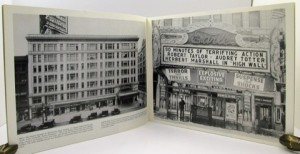
Softcover. Notre Dame IN, Theatre Historical Society, 1st, 1986, Book: Very Good, Dust Jacket: None, Softcover, stapled wrappers, 40 pages. Profusely illustrated in b&w. A visual history of the design and building of the Earle Theatre in Philadelphia. Some of the world's biggest stars performed there in it's heyday. Old price sticker on rear cover, otherwise clean, very good.

 "Restroom: Contemporary Designby: Hudson, Jennifer")
 "Richard Neutra: The Story of the Berlin Houses 1920-1924by: Roth, Harriet")
 "Riding the New York Subway: The Invention of the Modern Passenger by: Hohne, Stefan")
 "Robert Maillartby: Max Bill")
 "Robert Mills: America's First Architectby: Bryan, John M.")
 "Rural by Design: Maintaining Small Town Characterby: Arendt, Randall")
 "Russia's Art Nouveauby: Borisova, Elena and Grigory Sternin")

 "Saratoga Springs: An architectural history, 1790-1990 by: Kettlewell, James K")
 "Scenes of the World to Come: European Architecture and the American Challenge, 1893-1960 by: Jean-Louis Cohen")
![Shop America: Midcentury Storefront Design 1938-1950 by: Heimann, Jim [editor]; Heller, Steven [essay]](javascript:largeIMTop('https://www.browsingisarousing.com/shop/images/Shop-America-Midcentury-Storefront-Design-1938-1950_by_Heimann-Jim-editor-Heller-Steven-essay360856-415894.jpg','https://www.browsingisarousing.com/shop/images/Shop-America-Midcentury-Storefront-Design-1938-1950_by_Heimann-Jim-editor-Heller-Steven-essay360856-415894.jpg',0,'360856',0,'') "Shop America: Midcentury Storefront Design 1938-1950 by: Heimann, Jim [editor]; Heller, Steven [essay]")
 "Sidewalks: Conflict and Negotiation over Public Space by: Loukaitou-Sideris, Anastasia; Ehrenfeucht, Renia")
 "Small Buildings: Pamphlet Architecture 17by: Cadwell, Mike")
 "Soleri: Architecture as Human Ecologyby: Antonietta Iolanda Lima")
 "Stanley Tigerman - Buildings and Projects 1966-1989by: Underhill, Sarah Mollman")
 "Stones of Venice, The - 3 Volumesby: Ruskin, John")
 "Street Graphics and the Law by: Mandelker, Daniel R., /Ewald, William R.")
 "Streets and the Shaping of Towns and Cities by: Southworth, Michael/Ben-Joseph, Eran")
 "Survival Through Designby: Richard Neutra")
 "Sylvanus Marston: Master Architect in Pasadena's Golden Ageby: Tuttle, Kathleen")
 "Tadao Ando - Light and Waterby: Frampton, Kenneth/Tadao Ando")
 "The Architecture of Frank Furness by: O'Gorman, James F.; Thomas, George E.")
 "The Architecture Pop Up Bookby: Radevsky, Anton")
 "The EARLE THEATRE, Philadelphia, Penna., Hoffman & Henon, Architects, Opened: March 24, 1924. Theatre Historical Society Annual for 1986by: Irvin R. Glazer")