Hardcover. New York, Harper & Brothers, 1st, 1880, Book: Good, Dust Jacket: None, 331 pages, with gilt top edge and titles. Minor corner and edge wear, light crack along spine but no loose pages, overall, clean and tight copy.
Hardcover. Florida, Brevard County Historical Commission, 1st, 1995, Book: Very Good, Dust Jacket: Good, Hardcover, 271 pages. Extensive b&w photography throughout. Gilt decoration on cover. Gilt titles on spine. Small tear to bottom corner of dust jacket repaired with tape. Light wear to dust jacket. Otherwise clean, tight copy.
Hardcover. New York, Doubleday, Page, and Company, 1st, 1925, Book: Fair, Dust Jacket: None, Volume to accompany the American Wing of the Metropolitan Museum of Art in New York. 302 pp. Features 20 color plates in addition to 217 other black/white illustrations (mostly photographs). Covers beginnings of New England through the Early Days of the Republic. Development of Interior Architecture and House Decoration from craftsmen influenced by old world style and the evolution.Shows significant wear due to age and water damage. Discoloration throughout, though text still entirely legible and color still vivid in the plates. Edges show significant wear as well. Prior owner's name and date (1929) written in ink twice inside the cover.
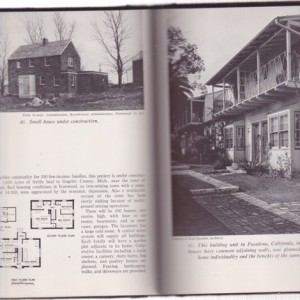
Hardcover. NY, D. Appleton-Century Co,, 1st, 1939, Book: Very Good, Dust Jacket: None, Hardcover, brown cloth with light blue lettering, 420 pages. Many b&w illustrations and photos. A resource for new home owners (circa 1930s) covering all aspects: financing, design, furnishings, improvements, household labor, etc. A nice visual resource for the time period. Name on front fly leaf otherwise clean.
Softcover. Yucatan, Mexico, Dante, 1st, 1997, Book: Very Good, Dust Jacket: None, 164 pages. Softcover with French flaps. B/w illustrations throughout. Touch of agewear to covers, a little foxing to top edge, otherwise clean inside. In very good condition.
Hardcover. Montpelier VT, Friends of the Vermont State House, 1st, 2015, Book: Very Good, Dust Jacket: Very Good, Hardcover in a bright, unclipped dust jacket. Intimate Grandeur is a 120-page celebration of the historic seat of Vermont state government. Illustrated with exquisite photographs and dozens of historic paintings and drawings. Clean copy.
Hardcover. Montpelier VT, Friends of the Vermont State House, 1st, 2015, Book: Very Good, Dust Jacket: Very Good, Hardcover in a bright, unclipped dust jacket. Intimate Grandeur is a 120-page celebration of the historic seat of Vermont state government. Illustrated with exquisite photographs and dozens of historic paintings and drawings. Clean copy.
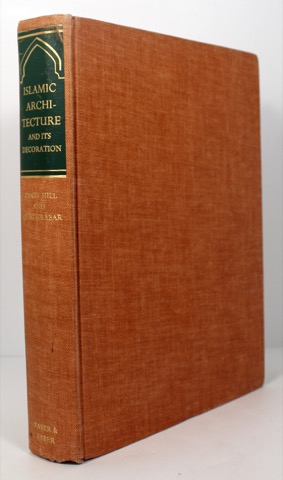
Hardcover. London, Faber and Faber, Reprint, 1967, Book: Very Good, Dust Jacket: None, Hardcover. Orange cloth covers with gilt titles to spine. 93 pages of text followed by 613 monochrome plates, non-paginated. Frontis illustration, Tabriz, Tilework in the Courtyard of the So-called Blue Mosque, A. D. 1465, in full page, full color. Toning to edges. Clean, unmarked. A nice copy.
Hardcover. Athens, University of Georgia, 1st, 1998, Book: Very Good, Dust Jacket: Very Good, Hardcover, 316 pages, b&w photographs. Light rubbing to dust jacket, sticker residue on rear. Else a clean, tight copy. During the Gilded Age, Jekyll Island, Georgia, was one of the most exclusive resort destinations in the United States. Owned by the most elite and inaccessible social club in America, a group whose members included Rockefellers, Pulitzers, Vanderbilts, Goulds, and Morgans, this quiet refuge in the Golden Isles was the perfect winter getaway for the wealthy new industrial class of the snowbound North. In this delightful book, a companion volume to The Jekyll Island Club: Southern Haven for America's Millionaires, June Hall McCash focuses on the social club's members and the "cottages" they built near the clubhouse between 1888 and 1928. Illustrated with hundreds of never-before-published photographs from private family collections, The Jekyll Island Cottage Colony tells the stories of each home, the owners' connections with the island, and their interactions with one another.
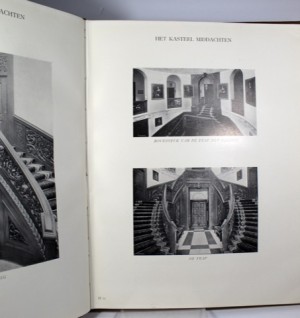
Softcover. Amsterdam, Amsterdam Scheltema en Holkema's Boekhandel, First Edition, 1912, Book: Very Good, Dust Jacket: None, Hardcover, large folio size, in Dutch text. 40 pages text followed by 470 plates in black & white. Brown cloth covered boards with embossed illustration in black & gilt. Moderate rubbing, scuff marks to covers. Fraying to head & heel of spine. Gilt titles to cover & spine. Tender front board with crack to top quarter hinge. Toning to edges throughout. Striking, full page black & white illustrations detailing castles, gardens, mansions, intricate woodwork throughout. Previous owner's signature & stamp to front flyleaf. Otherwise clean & unmarked.
Hardcover. San Francisco, CA, Chronicle Books, 1st, 1997, Book: Very Good, Dust Jacket: Very Good, 298 pages. Dark blue cloth covers, embossed titles to spine, dark blue dust jacket with photographic illustration, profusely illustrated with gorgeous color photographs. Light rubbing to dust jacket, small nick to dust jacket at mid-spine, pages crisp and unmarked, clean boards; a beautiful book in great condition. Author Harvey H. Kaiser spent ten years exploring the historic architecture of the Western National Parks, from the rain forrests of the Olympic Peninsular to the awesome wonder of the Grand Canyon, and from rough-hewn travelers' cabins to Yosemite's spectacular Ahwahnee Hotel and Mount Hood's Timberline Lodge. Organized by region and park, and rich with historic detail.
Hardcover. Chicago, University of Chicago Press, 1st, 1987, Book: Very Good, Dust Jacket: Very Good, Hardcover, 200 pages. The City of Refuge complex--commissioned by the Salvation Army as part of its program to transform social outcasts into spiritually renewed workers--represents a significant confluence of design principles, technological experiments, and attitudes on reform. It also provides rare insights into the work of one of the twentieth century's greatest architects, Le Corbusier. Brian Brace Taylor draws on extensive archival research to reconstruct each step of the architect's attraction to the commission, his design process and technological innovations, the social and philosophical compatibility of the Salvation Army with Le Corbusier's own ideas for urban planning, and finally, the many modifications required, first to eliminate defects and later to accommodate changes in the services the building provided. Throughout, Taylor focuses on Le Corbusier's environmental, technological, and social intentions as opposed to his strictly formal intentions. He shows that the City of Refuge became primarily a laboratory for the architect's own research and not simply a conventional solution to residents' requirements or the Salvation Army's program.
Hardcover. Paris, Editions Albert Morance, 1st, 1953, Book: Very Good, Dust Jacket: Fair, 320 pages. Hardcover. Text in French. Illustrated with black & white photographs and drawings of decorative cast iron. Previous owners name and date written on front interior hinge flap. Dust jacket worn with tape repair, chipping along edges - jacket now protected with clear plastic cover. Clean, tight copy.
Hardcover. Santa Monica CA, Angel City Press, Book: Very Good, Dust Jacket: None, Hardcover, pictorial boards. Gives a lush, visual tour of a Los Angeles that no longer exists--one of elegant office buildings and stately mansions that were razed in the name of "progress" to build the city's famous freeways. Featuring stunning black-and-white photography from Arnold Hylen that captures a lost era, the book contains an original essay by the photographer that provides historical background and context for the time period. This new edition contains additional, never-before-seen photographs from Hylen and newly unearthed information from historian Nathan Marsak on these lost architectural treasures. Arnold Hylen (1908-1987) was a commercial and architectural photographer based in Los Angeles. Between the late 1940s and the late 1960s, Hylen traversed the streets of Los Angeles, photographing it's vanishing landscape. Still in publisher's shrinkwrap.
Hardcover. Germany , Steidl, 1st, 2010, Book: Very Good, Dust Jacket: None, 156 pages. Hardcover with no dust jacket. Very clean, unmarked copy with only minor edgewear. Color photographs throughout. In the early 1970s, the workers at a steel smelting factory east of Havana wrote to Fidel Castro describing their housing needs. Out of this exchange a new city called Alamar was born, conceived by the same workers who would build it and live there. Today it is abandoned; Mauro D'Agati's photographs examine its eccentric spaces.
Hardcover. NY, George Braziller, 1st US, 1970, Book: Very Good, Dust Jacket: Very Good, Hardcover in a bright, unclipped dust jacket. 288 pages. Chapters include Semiology and Architecture by Charles Jencks, Meaning into Architecture by Geoffrey Broadbent and 'La Dimension Amoureuse' in Architecture by George Baird, The Time House or Argument for an Existential Dwelling by Martin Pawley. Packed with black and white reproductions of unusual buildings. Mild edgewear to dust jacket, clean copy.
Hardcover. NY, Harry N. Abrams/Hood Museum of Art, 1st, 1988, Book: Very Good, Dust Jacket: Very Good, Hardcover in a bright, unclipped dust jacket. A beautiful and intimate treatment of the architecture of the early industrialization of New England. 108 pages of color plates. Essays by Noel Perrin & Kenneth Breisch. Clean copy.
Softcover. Tucson, AZ, Arizona University Press , 1st paperback, 1993, Book: Very Good, Dust Jacket: None, Softcover. Black & white photos by George Alexander Grant. Some color fade to edges of cover. The Spanish missions founded by Padre Eusebio Kino in Sonora, Mexico, during the 1690s and early 1700s are historical as well as architectural marvels. Once self-supporting villages with central churches, the missions stand today as monuments to perseverance in the face of a hostile New World. These "Kino Missions" were surveyed in 1935 by the National Park Service to prepare for the restoration of the mission at Tumacacori, Arizona, then a National Historic Monument. That report, which was never published, provided insights into the missions' history and architecture that remain of lasting relevance. Perhaps more important, it documented these structures in photographs and drawings--the latter including floor plans and sketches of architectural detail--that today are of historic as well as aesthetic interest. This volume reproduces that 1935 report in its entirety, focusing on sixteen missions and including two maps, 52 drawings, and 76 photographs. With a new introduction and appendixes that place the original study in context,
Softcover. Englewood Cliffs, Prentice-Hall, Inc., 2nd Ed., 1987, Book: Very Good, Dust Jacket: None, 431 pages. Softcover. Tight copy. Profusely illustrated with black & white photographs & architectural illustrations. One interior section includes full page, full color photographs. Clean, bright copy.
Hardcover. Thomas Jefferson Foundation, reprint, 2006, Book: Very Good, Dust Jacket: Very Good, Hardcover in a bright dust jacket, oblong format, 80 pages. Each year approximately 500,000 people journey up the winding, narrow road from Charlottesville, Virginia, to visit Monticello, the home of Thomas Jefferson. In 1990 a team of architects from the Historic American Buildings Survey (HABS) made this same journey to record Jefferson's residence inside and out. Monticello in Measured Drawings presents HABS' unique set of plan, elevations, sections, and details of the house as it was actually built. They expose many of Monticello's behind-the-scenes mysteries. Seeral reveal the house's complex facade, while others details the relationship of individual floors and the fascinating array of architectural elements found throughout the house.
Hardcover. Thomas Jefferson Foundation, reprint, 2006, Book: Very Good, Dust Jacket: Very Good, Hardcover in a bright dust jacket, oblong format, 80 pages. Each year approximately 500,000 people journey up the winding, narrow road from Charlottesville, Virginia, to visit Monticello, the home of Thomas Jefferson. In 1990 a team of architects from the Historic American Buildings Survey (HABS) made this same journey to record Jefferson's residence inside and out. Monticello in Measured Drawings presents HABS' unique set of plan, elevations, sections, and details of the house as it was actually built. They expose many of Monticello's behind-the-scenes mysteries. Seeral reveal the house's complex facade, while others details the relationship of individual floors and the fascinating array of architectural elements found throughout the house.
hardcover. NY, Macmillan , 1st, 1909, Book: Very Good, Dust Jacket: None, Red cloth hardcover with gilt lettering, 424 pages. 98 Black & white and 25 color illustrations by Joseph Pennell. Color illustrated frontispiece with tissue-guard. Light edgewear to covers. Rear and front hinge cracked.
Hardcover. New York, W. W. Norton & Company, 1st, 2002, Book: Very Good, Dust Jacket: Very Good, 223 pages, illustrated in color and b&w. What Pennsylvania Station was, is, and might be in the future, through knowledgeable text and excellent pictures and drawings. A good read for those who want a detailed look at one of New York City's most famous architectural treasures, how it was lost, and how it might be reborn once again. The section on its rebirth in the Farley Post Office building was written before work was delayed on the project. Clean copy.
Hardcover. Alexandria VA, Cypress Communications, 1st, 2000, Book: Very Good, Dust Jacket: Very Good, Hardcover in a bright dust jacket, 295 pages. The charm and diversity of lighthouses are captured in this elegant pictorial history. W&w photos throughout. Clean copy.

 "Historical Studies of Church-Building in the Middle Ages: Venice, Siena, Florenceby: Norton, Charles Eliot")
 "History of Brevard County, Vol. 1by: Shofner, Jerrell H")
 "Homes of Our Ancestors, Theby: Halsey & Tower, R. T. H. & Elizabeth")
 "Housing and the Homeby: Shultz, Hazel")

 "Iglesias de Yucatan (Spanish Text)by: Miquel A. Bretos")
 "Intimate Grandeur: Vermont's State Houseby: Graff, Nancy Price, Schutz, David")
 "Intimate Grandeur: Vermont's State Houseby: Graff, Nancy Price, Schutz, David")
 "Islamic Architecture and its Decoration - A. D. 800 - 1500by: Hill, Derek")

 "Jekyll Island Cottage Colony, Theby: McCash, June Hall")
 "Kasteelen Buitenplaatsen Tuinen en Parken van Nederland (Dutch Text)by: Jongsma, H.")

 "Landmarks in the Landscapeby: Kaiser, Harvey H.")
 "Le Corbusier: The City of Refuge, Paris 1929/33by: Taylor, Brian Brace")
 "Le Fer Forge - Documents Artistiques de Ferronnerie Ancienne - Du Moyen-Age a la Fin du XVIII Siecleby: Clouzot, Henri")
 "Los Angeles Before the Freeways: Images of an Era 1850-1950by: Arnold Hylen / Nathan Marsak")
 "Mauro D'Agati: Alamarby: D'Agati, Mauro (Photographer)")
 "Meaning in Architecture by: Jencks, Charles & George Baird (Eds.)")
 "Mills and Factories of New England by: Hambourg, Serge/Perrin Noel & Kenneth Breisch (essays)")
 "Missions Of Northern Sonora - A 1935 Field Documentationby: Pickens, Buford")
 "Modern Architecture Since 1900by: Curtis, William J. R.")
 "Monticello in Measured Drawings: Drawings by the Historic American Buildings Survey / Historic American Engineering Record, Nationa Park Service by: William L. Beiswa")
 "Monticello in Measured Drawings: Drawings by the Historic American Buildings Survey / Historic American Engineering Record, Nationa Park Service by: William L. Beiswa")
 "New New York, Theby: Van Dyke, John C. and Joseph Pennell")
 "New York's Pennsylvania Stationsby: Ballon, Hilary")
 "Nineteenth-Century Lights: Historic Images of American Lighthousesby: J. Candace Clifford and Mary Louise Clifford")