Softcover. Chicago, American Planning Association, 1st, 2002, Book: Very Good, Dust Jacket: None, Softcover, oblong format, 210 pages. Color illustrations. Above and Beyond takes an aerial view to conclusively demonstrate how suburban sprawl is forever changing the look of America -- and how that can be avoided. Alex MacLean's photographs -- many of them combined with computer simulations to illustrate how landscapes are transformed over time -- show how traditional development patterns produce more compact cities and towns. In conjunction, the authors introduce communities that have successfully fought sprawl, invigorated their town areas, and overcome the car-culture mentality of sprawl development. The case they make, and the examples they offer, will inspire planners, officials, and concerned citizens everywhere. Clean copy.
Hardcover. NY, Harper & Row, 1st, 1982, Book: Very Good, Dust Jacket: Very Good, Hardcover in a bright dust jacket with light edgewear. 260 pages with b&w illustrations throughout. Covers all aspects of zoning, mapping, urban renewal, planned communities, land-use strategies, standards for street furniture, lighting, signs, community participation, preservation movement, transportation. Clean copy.
Hardcover. Kehrer, 1st, 2012, Book: Very Good, Dust Jacket: Very Good, Hardcover, 120 pages. All across the world a uniform, homogeneous model of development, inspired by Los Angeles style urban sprawl--consisting of massive freeways, parking lots, shopping malls, and large-scale master-planned communities with golf courses--is being stamped onto the earth's topography. This globalized model of architecture does not respect or adapt itself to the natural or cultural environment onto which it is implanted. German American photographer Robert Harding Pittman began working on this project in Los Angeles ten years ago. Since then he has been photographing the spread of "L.A. style development" in Las Vegas, Spain, France, Germany, Greece, Dubai, and South Korea.
NY, Hearst Books International, 1st, 1997, Book: Very Good, Dust Jacket: Very Good, Hardcover in a bright, unclipped dust jacket. Black & white and color photos and illustrations. 191 pages. Light edgewear to dust jacket.
Softcover. NY, W. W. Norton , 1st, 2008, Book: Very Good, Dust Jacket: None, Softcover. Color photos throughout. What do the Bari Pork Store (King of the Sausage), the Los Doctores Tires Shop, the Great Eagle Photo Company, and the St. Jude Religious Articles shops have in common? If you were Paul Lacy, they would be among the hundreds of storefronts you photographed on bicycle trips throughout Brooklyn. Over the years Lacy has managed to capture every conceivable type of shop, decorated with spectacular and wildly varied signs and displays and representing countless ethnic groups. A more colorful array of graphics, both amateur and professional, is unimaginable. Brooklyn's storefronts are a vibrant canvas that reflects the changing trends and distinct character of this dynamic community. You don't have to be from Brooklyn to enjoy this book-playful while documenting a fast-changing scene, it transcends geography to speak to anyone with an interest in urban culture. Clean copy.
Hardcover. NY, Russell Sage Foundation, 1st, 1994, Book: Very Good, Dust Jacket: Very Good, Hardcover, 400 pages, b&w illustrations. Little over a century ago, New York and Budapest were both flourishing cities engaging in spectacular modernization. By 1930, New York had emerged as an innovating cosmopolitan metropolis, while Budapest languished under the conditions that would foster fascism. Budapest and New York explores the increasingly divergent trajectories of these once-similar cities through the perspectives of both Hungarian and American experts in the fields of political, cultural, social and art history. Their original essays illuminate key aspects of urban life that most reveal the turn-of-the-century evolution of New York and Budapest: democratic participation, use of public space, neighborhood ethnicity, and culture high and low. What comes across most strikingly in these essays is New York's cultivation of social and political pluralism, a trend not found in Budapest. Nationalist ideology exerted tremendous pressure on Budapest's ethnic groups to assimilate to a single Hungarian language and culture. In contrast, New York's ethnic diversity was transmitted through a mass culture that celebrated ethnicity while muting distinct ethnic traditions, making them accessible to a national audience. Mild fade to spine of dust jacket, otherwise clean.
Hardcover. NY, Norton, 1st, 2001, Book: Very Good, Dust Jacket: Very Good, Hardcover, 304 pages. Nineteen essays, by a diverse group of historians and others who experience and study Gilbert's buildings in their professional lives, detail the intricate relationship between Gilbert's work and the long-standing tradition of public architecture in America. This volume examines Gilbert's work in five unique categories: the building of a national practice, an evaluation of his Minnesota State Capitol as "a defining moment" in American civic architecture, his New York career, his response to civic ideals in his plans for towns and universities, and his work in the public domain. Illustrations, some in color.
Softcover. Munich, Prestel/Art Institute of Chicago, 1st, 1987, Book: Very Good, Dust Jacket: None, Softcover, 480 pages, b&w and color illustrations. Published in association with the Art Institute of Chicago and in conjunction with an exhibition presented there in the summer of 1988, as well as in Paris and Frankfurt-am-Main in 1987-88. Contributors to the text include Robert Bruegmann, Sally Chappell, Meredith L. Clausen, Joan E. Draper and others.
Softcover. Berkeley CA, University of California Press, 1st, Book: Very Good, Dust Jacket: None, Softcover. 314 pages, b&w illustrations. In 1930 the Olmsted Brothers and Harland Bartholomew & Associates submitted a report, "Parks, Playgrounds, and Beaches for the Los Angeles Region," to the Los Angeles Chamber of Commerce. After a day or two of coverage in the newspapers, the report dropped from sight. The plan set out a system of parks and parkways, children's playgrounds, and public beaches. It is a model of ambitious, intelligent, sensitive planning commissioned at a time when land was available, if only the city planners had had the fortitude and vision to act on its recommendations. "Parks, Playgrounds, and Beaches" has become a highly valued but difficult-to-find document. In this book, Greg Hise and William Deverell examine the reasons it was called for, analyze why it failed, and open a discussion about the future of urban public space. In addition to their introduction and a facsimile reproduction of the report, Eden by Design includes a dialogue between Hise, Deverell, and widely admired landscape architect Laurie Olin that illuminates the significance of the Olmsted-Bartholomew report and situates it in the history of American landscape planning. Clean copy.
Hardcover. NY, Oxford University Press, 1st, 1968, Book: Very Good, Dust Jacket: Good, Hardcover in a lightly worn, chipped dust jacket, 527 pages, illustrated with b&w maps, tables, graphs, charts. Rust red cloth with gilt lettering. Constantinos Apostolou Doxiadis was an architect and urban planner who was extremely successful and influential in his field during the 1960s & 1970s. He was perhaps best known as the lead architect of Islamabad, the new capital of Pakistan. He later was also renowned for his pioneering work in the study of human habitation, which he referred to as ekistics. He was a prolific author, and is still revered by many as the father of modern urban planning. Clean copy. DOMESTIC SHIPPING ONLY.
Hardcover. New York, Fifth Avenue Association, 1st, 1924, Book: Good, Dust Jacket: None, Hardcover, 124 pages of text and illustrations followed by 66 pages of ads. Hinges tender. Green cloth covers with full color pastedown on front. Light rubbing to cover corners. Clean, unmarked copy.
Hardcover. NY, Pantheon, 1st, 2007, Book: Very Good, Dust Jacket: Very Good, Hardcover in a bright, unclipped dust jacket. Grand Avenues tells the riveting story of Pierre Charles L'Enfant and the creation of Washington D.C.--from the seeds of his inspiration to the fulfillment of his extraordinary vision. L'Enfant's story is one of consuming passion, high emotion, artistic genius, and human frailty. As a boy he studied drawing at the most prestigious art institute in the world. As a young man he left his home in Paris to volunteer in the army of the American colonies, where he served under George Washington. There he would also meet many of the people who would have a profound impact on his life, including Alexander Hamilton and James Monroe. And it was Washington himself who, in 1791, entrusted L'Enfant with the planning of the nation's capital--and reluctantly allowed him to be dismissed from the project eleven months later. The plan for the city was published under another name, and for the remainder of his life L'Enfant fought for recognition of his achievement. But he would not live to see that day, and a century would pass before L'Enfant would be given credit for his brilliant design. Scott W. Berg recounts this tale, richly evocative of time and place, with the narrative verve of a novel and with a cast of characters that ranges from Thomas Jefferson and the other Founding Fathers to the surveyor who took credit for L'Enfant's plans, the assistant who spent a week in jail for his loyalty to L'Enfant, and the men who finally restored L'Enfant's reputation at the beginning of the twentienth century.
Hardcover. NY, Whitney Library of Design, 1st, 1990, Book: Very Good, Dust Jacket: Very Good, Hardcover, 175 pages, color plates. A collection of fine color illustrations and text describing conversions of a variety of structures (a barn, firehouse, power station, martello tower...) to residential use. Exciting and refreshingly different homes. Great ideas in a charming book.
Hardcover. Chicago, University Of Chicago Press, 1st, 2013, Book: Very Good, Dust Jacket: Very Good, Hardcover, 364 pages, illustrated throughout in color. Clean, unmarked copy with only minor wear to dust jacket. Wandering the streets of Harlem for the past forty years, Camilo Vergara has noticed and miraculously recorded those moments of great human invention that have been largely overlooked by the official chronicles of architecture and urban history. For this reason, his photographs are unique and indispensable.
Hardcover. Chicago, University of Chicago Press , 1st, 2013, Book: Very Good, Dust Jacket: Very Good, Hardcover, 364 pages, illustrated throughout in color. Clean, unmarked copy with only minor wear to dust jacket. Photographer Camilo Jose Vergara has been chronicling the neighborhood for forty-three years, and Harlem: The Unmaking of a Ghetto is an unprecedented record of urban change. Vergara began his documentation of Harlem in the tradition of such masters as Helen Levitt and Aaron Siskind, and he later turned his focus on the neighborhood's urban fabric, both the buildings that compose it and the life and culture embedded in them. By repeatedly returning to the same locations over the course of decades, Vergara is able to show us a community that is constantly changing--some areas declining, as longtime businesses give way to empty storefronts, graffiti, and garbage, while other areas gentrify, with corporate chain stores coming in to compete with the mom-and-pops. He also captures the ever-present street life of this densely populated neighborhood, from stoop gatherings to graffiti murals memorializing dead rappers to impersonators honoring Michael Jackson in front of the Apollo, as well as the growth of tourism and racial integration. Woven throughout the images is Vergara's own account of his project and his experience of living and working in Harlem. Taken together, his unforgettable words and images tell the story of how Harlem and its residents navigated the segregation, dereliction and slow recovery of the closing years of the twentieth century and the boom and racial integration of the twenty-first century. A deeply personal investigation, Harlem will take its place with the best portrayals of urban life.
Softcover. New York, Syracuse University Press, 1st, 1974, Book: Very Good, Dust Jacket: None, Softcover. 276 pages. Black and white photographs. Foxing on top edge.
Softcover. New Haven CT, Yale School of Architecture/Norton, 1st, 2010, Book: Very Good, Dust Jacket: None, Softcover, 194 pages illustrated in color and b&w. The fifth in a series documenting the Edward P. Bass Visiting Fellowship in Architecture at Yale, this book chronicles the collaboration of Fellow Chuck Atwood, the former vice chairman of Harrah's board of directors, with Davenport Visiting Professor David M. Schwarz, assisted by Brook Denison and Darin Cook. Focusing on Las Vegas's lack of pedestrianism, they asked the students to investigate vital urban sites around the world and then apply theses lessons learned to the automobile-centric Strip. The students met with Las Vegas Mayor Oscar Goodman, Harrah's CEO Gary Loveman, and private-equity managers David Bonderman and Marc Rowman as they devised ways to transform the world's premiere themed playground into a livable and pedestrian-oriented city. Documents the development of plans for a campus of resorts on the Las Vegas Strip by a studio of ten Yale students. Clean copy.
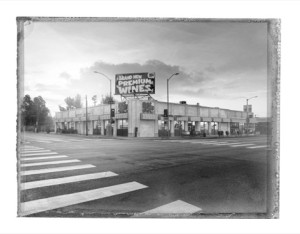
Hardcover. NY, Prestel, 1st, 2017, Book: Very Good, Dust Jacket: None, Hardcover, 160 pages. This photographic homage to Los Angeles presents a timeless depiction of the great city. In his book New York Sleeps, Christopher Thomas traveled the empty streets of New York City shooting dreamy cityscapes with a large-format Polaroid camera. For this new book he focuses his lens on Los Angeles, capturing in duotone images of the iconic buildings and spaces in the city: the Chinese Theatre without tourists, the Griffith Observatory peacefully alone, the Hollywood Boulevard without celebrities or onlookers. Around the city's artdeco buildings and mid-century drive-ins, sidewalks, and parking lots are vacant. Shot in the early morning, with the sun's rays just hinting between buildings, or at dusk, when the light is inchoate and mournful, these pictures are a tender valentine to Los Angeles. Fans of New York Sleeps will be thrilled to encounter another sublime project by Thomas. And residents and lovers of Los Angeles will be awestruck at this new interpretation of the City of Angels.
Softcover. New York, Monacelli Press, 1st, 2004, Book: Very Good, Dust Jacket: None, Softcover, 183 pages, illustrated in color and b&w.Since 1988, New York-based architect Michael Bell has created a series of projects and essays that explore architectural and urban design for California, New York, and Texas -- the three most populous regions of the United States and, coincidentally, the three states in which he has lived and practiced. The first monograph on the architect, Michael Bell: Space Replaces Us; Essays and Projects on the City, includes both design work and writings.Bell has organized and designed two important installations, both of which include his work: "Endspace: Michael Bell and Hans Hofmann," at the University Art Museum, Berkeley, and "16 Houses: Owning a House in the City," at DiverseWorks in Houston, which featured his seminal Glass House @ 2 Degrees. Other projects included are an urban renewal scheme for a huge site in Far Rockaway, New York, and a series of residential projects, including the Ghent House, a modernist glass house currently under construction in upstate New York. Complementing the design projects are three major essays: "Having Heard Mathematics: The Topologies of Boxing," "Eyes in the Heat: RSE," and "New York City."
Hardcover. Ontario CA, Vanwell Publishing St. Catherines, Ontario, 1st, 1996, Book: Very Good, Dust Jacket: Very Good, Hardcover, 344 pages, illustrated throughout in color and b&w. Clean, unmarked copy with only minor wear to dust jacket.
Hardcover. New York, McGraw-Hill Professional Publishing, 1st, 1993, Book: Very Good, Dust Jacket: Very Good, Hardcover, 245 pages, b&w and color photographs and illustrations. Light edgewear to dust jacket. Else a very clean, tight copy. The move to liveable communities--ideal ``small towns'' and neighborhoods where people work, live, play, and walk from place to place--is on. Profit from what a visionary group of architects leading this movement has learned about designing new ``small towns'' in Peter Katz's The New Urbanism. You'll discover the amazing potential for this kind of work as well as case studies, site plans, project analyses, and 180 beautiful photographs. This unique reference also tackles--and answers--the critical issues of crime, health, traffic, environmental degradation, and economic vitality and opens a startling window on the look and feel of future communities.
Hardcover. New York, W. W. Norton & Company, 1st, 2002, Book: Very Good, Dust Jacket: Very Good, 223 pages, illustrated in color and b&w. What Pennsylvania Station was, is, and might be in the future, through knowledgeable text and excellent pictures and drawings. A good read for those who want a detailed look at one of New York City's most famous architectural treasures, how it was lost, and how it might be reborn once again. The section on its rebirth in the Farley Post Office building was written before work was delayed on the project. Clean copy.
1973, Book: Very Good, Color art by Davidson of hundreds of buildings with small patches of greenery. 8 3/4 X 12", very good. PLEASE NOTE: The image shown is a scan of the actual product you are purchasing. What you see is what you get. The sheet may have some imperfections beyond the cropped area shown. You are buying THE COVER ONLY- not the entire magazine. Your order will be placed carefully between stiff paper in clear plastic envelope, then packed in a rigid cardboard sleeve to prevent bending.
1974, Book: Very Good, Color art by Weber of a two-story building squeezed between skyscrapers. 8 3/4 X 12", very good. PLEASE NOTE: The image shown is a scan of the actual product you are purchasing. What you see is what you get. The sheet may have some imperfections beyond the cropped area shown. You are buying THE COVER ONLY- not the entire magazine. Your order will be placed carefully between stiff paper in clear plastic envelope, then packed in a rigid cardboard sleeve to prevent bending.

 "Above And Beyond: Visualizing Change In Small Towns And Rural Areas by: Campoli, Julie; Humstone, Elizabeth; Maclean, Alex")
 "An Introduction to Urban Design by: Barnett, Jonathan")
 "Anonymization: The Global Proliferation of Urban Sprawlby: Pittman, Alison Nordstrom, Bill McKibben, Robert Harding")
 "Architecture of Stations and Terminals, The - Airplane Train, Bus and Subwayby: Cerver, Fransico Asensio")
 "Brooklyn Storefrontsby: Lacy, Paul")
 "Budapest and New York: Studies in Metropolitan Transformation, 1870-1930by: Bender, Thomas, Schorske, Carle E. (Ed.)")
 "Cass Gilbert, Life and Work: Architect of the Public Domainby: Barbara S. Christen, Steven Flanders, et al.")
 "Chicago Architecture 1872-1922 Birth of a Metropolisby: Zukowsky (Ed.), John")
 "Eden by Design: The 1930 Olmsted-Bartholomew Plan for Los Angeles Regionby: Hise, Greg, and Deverell, William F, and Olin, Laurie (Afterword by)")
 "Ekistics: An Introduction to the Science of Human Settlementsby: Constantinos A. Doxiadis")
 "Fifth Avenue - Old and New 1824-1924by: Brown, Henry Collins")
 "Grand Avenues: The Story of the French Visionary Who Designed Washington, D.C.by: Scott W. Berg")
 "Great Adaptations: New Residential Uses for Older Buildingsby: Jill Herbers")
 "Harlem: The Unmaking of a Ghetto (Historical Studies of Urban America)by: Vergara, Camilo Jose")
 "Harlem: The Unmaking of a Ghettoby: Vergara, Camilo Jose")
 "Landmarks of Rochester and Monroe County: A Guide to Neighborhoods and Villagesby: Malo, Paul")
 "Learning in Las Vegas: Charles Atwood/David M. Schwarzby: Nina Rappaport, Brook Denison, Nicholas Hanna,")
 "Lost in L.A.by: Christopher Thomas")

 "Michael Bell: Space Replaces Us - Essays and Projects on the Cityby: Bell, Michael")
 "Moshe Safdieby: Kohn, Wendy")
 "New Urbanism, The by: Katz, Peter")
 "New York's Pennsylvania Stationsby: Ballon, Hilary")
 "ORIGINAL VINTAGE MAGAZINE COVER: New Yorker April 21 1973 - Buildingsby: R. Davidson (Illust.)")
 "ORIGINAL VINTAGE MAGAZINE COVER: New Yorker Oct. 14 1974 - Two-story building squeezedby: Bernard Weber (Illust.)")