Softcover. New Haven CT, Yale School of Architecture/Norton, 1st, 2010, Book: Very Good, Dust Jacket: None, Softcover, 194 pages illustrated in color and b&w. The fifth in a series documenting the Edward P. Bass Visiting Fellowship in Architecture at Yale, this book chronicles the collaboration of Fellow Chuck Atwood, the former vice chairman of Harrah's board of directors, with Davenport Visiting Professor David M. Schwarz, assisted by Brook Denison and Darin Cook. Focusing on Las Vegas's lack of pedestrianism, they asked the students to investigate vital urban sites around the world and then apply theses lessons learned to the automobile-centric Strip. The students met with Las Vegas Mayor Oscar Goodman, Harrah's CEO Gary Loveman, and private-equity managers David Bonderman and Marc Rowman as they devised ways to transform the world's premiere themed playground into a livable and pedestrian-oriented city. Documents the development of plans for a campus of resorts on the Las Vegas Strip by a studio of ten Yale students. Clean copy.
Hardcover. Santa Monica CA, Angel City Press, Book: Very Good, Dust Jacket: None, Hardcover, pictorial boards. Gives a lush, visual tour of a Los Angeles that no longer exists--one of elegant office buildings and stately mansions that were razed in the name of "progress" to build the city's famous freeways. Featuring stunning black-and-white photography from Arnold Hylen that captures a lost era, the book contains an original essay by the photographer that provides historical background and context for the time period. This new edition contains additional, never-before-seen photographs from Hylen and newly unearthed information from historian Nathan Marsak on these lost architectural treasures. Arnold Hylen (1908-1987) was a commercial and architectural photographer based in Los Angeles. Between the late 1940s and the late 1960s, Hylen traversed the streets of Los Angeles, photographing it's vanishing landscape. Still in publisher's shrinkwrap.
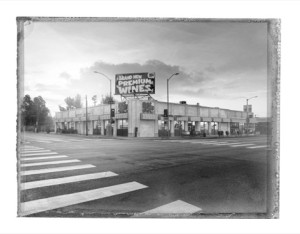
Hardcover. NY, Prestel, 1st, 2017, Book: Very Good, Dust Jacket: None, Hardcover, 160 pages. This photographic homage to Los Angeles presents a timeless depiction of the great city. In his book New York Sleeps, Christopher Thomas traveled the empty streets of New York City shooting dreamy cityscapes with a large-format Polaroid camera. For this new book he focuses his lens on Los Angeles, capturing in duotone images of the iconic buildings and spaces in the city: the Chinese Theatre without tourists, the Griffith Observatory peacefully alone, the Hollywood Boulevard without celebrities or onlookers. Around the city's artdeco buildings and mid-century drive-ins, sidewalks, and parking lots are vacant. Shot in the early morning, with the sun's rays just hinting between buildings, or at dusk, when the light is inchoate and mournful, these pictures are a tender valentine to Los Angeles. Fans of New York Sleeps will be thrilled to encounter another sublime project by Thomas. And residents and lovers of Los Angeles will be awestruck at this new interpretation of the City of Angels.
Softcover. Hanover NH, Dartmouth College, 1st, 1996, Book: Very Good, Dust Jacket: None, Softcover, 24 pages illustrated with color and b&w photos. An overview of recent projects, both small scale and large architectural commissions. Clean, bright copy.
Hardcover. NY, Harry N. Abrams/Hood Museum of Art, 1st, 1988, Book: Very Good, Dust Jacket: Very Good, Hardcover in a bright, unclipped dust jacket. A beautiful and intimate treatment of the architecture of the early industrialization of New England. 108 pages of color plates. Essays by Noel Perrin & Kenneth Breisch. Clean copy.
Softcover. Englewood Cliffs, Prentice-Hall, Inc., 2nd Ed., 1987, Book: Very Good, Dust Jacket: None, 431 pages. Softcover. Tight copy. Profusely illustrated with black & white photographs & architectural illustrations. One interior section includes full page, full color photographs. Clean, bright copy.
Hardcover. New Haven CT, Yale University Press, 1st, 2018, Book: Very Good, Dust Jacket: None, Hardcover, 156 pages, no dj issued. An insightful new look at two renowned photographers, their interconnected legacies, and the vital documents of urban transformation that they created. In this comprehensive study, Kevin Moore examines the relationship between Eugene Atget (1857-1927) and Berenice Abbott (1898-1991) and the nuances of their individual photographic projects. Abbott and Atget met in Man Ray's Paris studio in the early 1920s. Atget, then in his sixties, was obsessively recording the streets, gardens, and courtyards of the 19th-century city--old Paris--as modernization transformed it. Abbott acquired much of Atget's work after his death and was a tireless advocate for its value. She later relocated to New York and emulated Atget in her systematic documentation of that city, culminating in the publication of the project Changing New York.
Hardcover. New Haven CT, Yale University Press, 1st, 2018, Book: Very Good, Dust Jacket: None, Hardcover, 156 pages, no dj issued. An insightful new look at two renowned photographers, their interconnected legacies, and the vital documents of urban transformation that they created. In this comprehensive study, Kevin Moore examines the relationship between Eugene Atget (1857-1927) and Berenice Abbott (1898-1991) and the nuances of their individual photographic projects. Abbott and Atget met in Man Ray's Paris studio in the early 1920s. Atget, then in his sixties, was obsessively recording the streets, gardens, and courtyards of the 19th-century city--old Paris--as modernization transformed it. Abbott acquired much of Atget's work after his death and was a tireless advocate for its value. She later relocated to New York and emulated Atget in her systematic documentation of that city, culminating in the publication of the project Changing New York.
Hardcover. Paris, Editions de Lodi, 1st, 2001, Book: Very Good, Dust Jacket: Very Good, Hardcover, glossy boards in a matching bright dust jacket. Large format, 484 pages, FRENCH TEXT. A collection of over 500 historical photos of old Paris printed in sepia tone. Around 1832 Parisian-born Charles-Francois Bossu (1813-1879) shed his unfortunate last name (bossu means hunchback in French) and adopted the pseudonym Marville. After achieving moderate success as an illustrator of books and magazines, Marville shifted course in 1850 and took up photography, a medium that had been introduced 11 years earlier. His poetic urban views, detailed architectural studies, and picturesque landscapes quickly garnered praise.By the end of the 1850s, Marville had established a reputation as an accomplished and versatile photographer. From 1862, as official photographer for the city of Paris, he documented aspects of the radical modernization program that had been launched by Emperor Napoleon III and his chief urban planner, Baron Georges-Eugene Haussmann. In this capacity, Marville photographed the city's oldest quarters, and especially the narrow, winding streets slated for demolition. Even as he recorded the disappearance of Old Paris, Marville turned his camera on the new city that had begun to emerge. Many of his photographs celebrate its glamour and comforts, while other views of the city's desolate outskirts attest to the unsettling social and physical changes wrought by rapid modernization. Taken as a whole, Marville's photographs of Paris stand as one of the earliest and most powerful explorations of urban transformation on a grand scale. Clean, bright copy.
Hardcover. New York, Henry Holt & Co, 1st, 1991, Book: Very Good, Dust Jacket: Good, Hardcover, 205 pages, illustrated throughout. Minor dust jacket edge wear, otherwise, very clean and tight copy. An examination of rooftop designs for living spaces, conservatories, studios, conference rooms, tea houses, and pool rooms includes floor plans and discusses building and zoning codes
Hardcover. London/NY, Phaidon Press, 1st, 2014, Book: Very Good, Dust Jacket: Very Good, Hardcover in a bright dust jacket, 240 pages. Photography has played an important role in how architecture is communicated and this book examines the critical relationship between the two practices today through the work of fifty international renowned and emerging artists including Annie Liebovitz, James Welling , Thomas Struth, Wolfgang Tillmann's, Walter Niedermayr and many others. Lavishly illustrated with color reproductions of many iconic buildings. Divided into five chapters, the book covers collaborations between photographer and architect, globaL urbanization, alterations to the landscape, reappraised Modernist icons, and imagined environments. Clean copy. DUE TO WEIGHT, DOMESTIC SHIPPING ONLY.
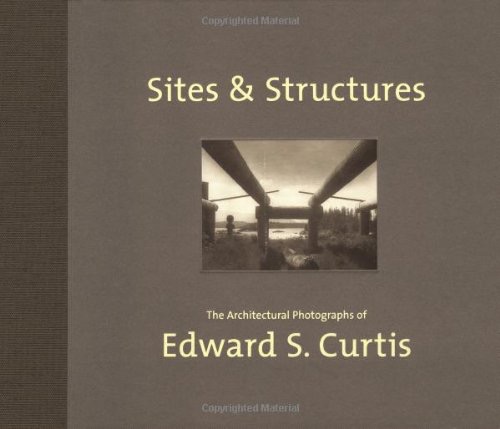
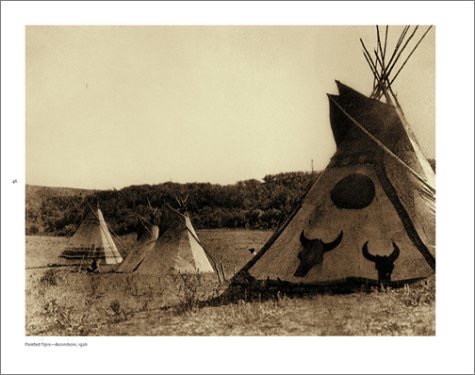
Hardcover. San Francisco, Chronicle Books, 1st, 2000, Book: Very Good, Dust Jacket: None, Hardcover, gray boards with a dark brown cloth spine and a pictorial label on the cover. No dust jacket issued. Legendary for his massive photographic undertaking, The North American Indian, Edward Sheriff Curtis (1868-1952) recorded much more than portraits of Native American tribespeople. Among his huge body of work are numerous images of all manner of native dwellings: tipis, hogans, huts, cliff houses, adobes, and many more that are far less familiar to the public eye. Though people are largely absent from these photographs, each image speaks volumes about the lives and lifestyles of the tribes to which they belonged. Other structures such as tombs, religious buildings, granaries, and totem poles are also featured prominently, further glimpses into ways of life that were in the process of disappearing. Taken from the Dan and Mary Solomon collection,Sites & Structures: The Architectural Photographs of Edward S. Curtis is the first book of Curtis photographs to explore these dwellings and structures, faithfully reproduced from the original prints and gravures.
Hardcover. NY/London, Sotheby's Parke Bernet, Revised Ed., 1985, Book: Very Good, Dust Jacket: Very Good, Hardcover, 376 pages. 26 illustrations in color, and 420 in black and white. Originally published in 1979. John Harris was one of England's leading Architectural Historians at the time this book was written. He was curator of the Drawing Collection for RIBA. (Royal Institute of British Architects). Each section introduces a period such as: the Age of Estate Cartographers and the Garden Converstations, The Country House and Sporting Art: John Wootton, Peter Tillemans and Others, Caneletto and the Architectural Topographers, Gainsborough and the Picturesque, The Art of Turner and Constable. Harris comments on the artists , their style and pictures.
Hardcover. NY, Simon & Schuster, 1st, 1993, Book: Very Good, Dust Jacket: Very Good, Hardcover in a bright, unclipped dust jacket, 303 pages. Eighty percent of everything ever built in America has been built since the end of World War II. This tragic landscape of highway strips, parking lots, housing tracts, mega-malls, junked cities, and ravaged countryside is not simply an expression of our economic predicament, but in large part a cause. It is the everyday environment where most Americans live and work, and it represents a gathering calamity whose effects we have hardly begun to measure. In The Geography of Nowhere, James Howard Kunstler traces America's evolution from a nation of Main Streets and coherent communities to a land where everyplace is like noplace in particular, where the city is a dead zone and the countryside a wasteland of cars and blacktop. Now that the great suburban build-out is over, Kunstler argues, we are stuck with the consequences: a national living arrangement that destroys civic life while imposing enormous social costs and economic burdens. Kunstler explains how our present zoning laws impoverish the life of our communities, and how all our efforts to make automobiles happy have resulted in making human beings miserable. Name on front fly leaf, otherwise like new.
Hardcover. Princeton Architectural Press , 1st, 2004, Book: Very Good, Dust Jacket: Very Good, Hardcover, 144 pages. With photos taken in the mid 1980s the author takes us on a pictorial trip along the former Iron Curtain from the Baltic sea coast at Travemunde (West-East Germany) to the Adriatic sea coast at Trieste (Italy-Yugolsalvia [today Slovenia]); with a separate chapter on the Berlin Wall. They are superb photos full of (sad) atmosphere, poignancy and historical importance.
Hardcover. Baltimore, Johns Hopkins University Press, 1st, 2007, Book: Very Good, Dust Jacket: Very Good, Hardcover in a bright dust jacket. The seventh volume of the Papers of Frederick Law Olmsted presents the record of his last years of residence in New York City. It includes reports on the design of Riverside and Morningside parks and Tompkins Square in Manhattan, as well as his comprehensive plan for the street system and rapid transit routes of the Bronx. It records his continuing work on Central Park and presents his final retrospective statement, The Spoils of the Park. In addition, volume seven contains an annotated version of the journal in which Olmsted recorded instances of political maneuvering and patronage politics in the years before his dismissal from the New York parks department in 1878. Later documents chronicle the early stages of his planning of the Boston park system--the Back Bay Fens, Arnold Arboretum, and Riverway. Other major commissions, each with its own political complications, were the grounds of the U.S. Capitol, the completion of the new state capitol in Albany, the designing of a park on Mount Royal in Montreal, and construction of the park system of Buffalo, New York. The volume also presents Olmsted's commentary on issues of the times including federal Reconstruction policy and civil-service reform.
Hardcover. Seattle, University of Washington Press, 1st, 1990, Book: Very Good, Dust Jacket: Very Good, Hardcover in a bright dust jacket, 113 pages, b&w illustrations. When architects create a landscape or building, when artists depict a landscape, and when poets write of nature, they recreate certain aesthetic elements observed in nature. Jay Appleton asserts in an insightful analysis that these aesthetic values in landscape are not found in an elevated philosophy of aesthetics or in a culturally bound artistic symbolism but in the biological and behavioral needs that we share with other animals. Thus, the aesthetics of landscape may be approached through other areas of human experience and science, especially the natural and behavioral sciences. They are expressed in symbolism drawn from a primal habitat in which all animals seek survival. Clean copy.
Softcover. University of Virginia Press, 2nd pr., 2003, Book: Very Good, Dust Jacket: None, Softcover, 196 pages. Slight wear to wraps, previous owner's signature on front fly leaf, otherwise, clean and tight copy.
Softcover. Cambridge MA, Lincoln Institute of Land Policy, 1st, 2007, Book: Very Good, Dust Jacket: None, Softcover, oblong format, 152 pages illustrated in color. A richly illustrated book by landscape architect Julie Campoli and aerial photographer Alex S. MacLean helps planners, designers, public officials, and citizens better understand how residential density can help save energy, dollars, and the environment. Name on front fly leaf, otherwise clean.

 "Learning in Las Vegas: Charles Atwood/David M. Schwarzby: Nina Rappaport, Brook Denison, Nicholas Hanna,")
 "Los Angeles Before the Freeways: Images of an Era 1850-1950by: Arnold Hylen / Nathan Marsak")
 "Lost in L.A.by: Christopher Thomas")

 "Michael Singer: Artist-in-residence ; recent projectsby: Michael Singer")
 "Mills and Factories of New England by: Hambourg, Serge/Perrin Noel & Kenneth Breisch (essays)")
 "Modern Architecture Since 1900by: Curtis, William J. R.")
 "Old Paris and Changing New York: Photographs by Eugene Atget and Berenice Abbottby: Kevin Moore")
 "Old Paris and Changing New York: Photographs by Eugene Atget and Berenice Abbottby: Kevin Moore")
 "Paris sens dessus-dessous (Marville photographies 1852-1870)by: Mellot, Philippe")
 "Rooftop Architecture: The Art of Going Through the Roofby: Busch, Akiko")
 "Shooting Space: Architecture in Contemporary Photography by: Redstone, Elias/Gadanho, Pedro/ Bush, Kate")
 "Sites and Structures: The Architectural Photographs of Edward S. Curtis by: Solomon, Mary/Slemmons, Rod")
 "The Artist & the Country House: A History of Country House & Garden View Painting 1540-1870by: John Harris")
 "The Geography of Nowhere: The Rise and Decline of America's Man Made Landscape by: Kunstler, James Howard")
 "The Lost Border: The Landscape of the Iron Curtainby: Brian Geoffrey Rose")
 "The Papers of Frederick Law Olmsted: Parks, Politics, and Patronage, 1874?1882 (Volume 7) by: Frederick Law Olmsted; Editor-Charles E. Beveridge")
 "The Symbolism of Habitat: An Interpretation of Landscape in the Artsby: Jay Appleton")
 "Thomas Jefferson, Landscape Architectby: Nichols, Frederick Doveton")
 "Visualizing Densityby: Julie Campoli, Alex S. MacLean")