Hardcover. London, Tate Publishing, 1st, 2012, Book: Very Good, Dust Jacket: Very Good, Hardcover, pictorial boards with an acetate dust wrapper, 304 pages. Warhol brought to the art world a unique awareness of the relationship that art might have with popular consumer culture and tabloid news, with celebrity, and with sexuality. Each of these themes is explored through visual dialogues between warhol and some sixty artists, among them John Baldessari, Vija Celmins, Gilbert & George, Felix Gonzalez-Torres, Robert Gober, Nan Goldin, Damien Hirst, Alfredo Jaar, Deborah Kass, Alex Katz, Jeff Koons, Barbara Kruger, Glenn Ligon, Robert Mapplethorpe, Vik Muniz, Takashi Murakami, Bruce Nauman, Cady Noland, Elizabeth Peyton, Sigmar Polke, Richard Prince, Gerhard Richter, Ed Ruscha, Cindy Sherman and Luc Tuymans. Clean copy. DOMESTIC SHIPPING ONLY.
Hardcover. Cambridge MA, MIT Press, 2nd Pr., 1994, Book: Very Good, Dust Jacket: Very Good, Hardcover, 251 pages, with her photo-illustrated dust jacket. Who speaks? Who is silent? Who is seen? Who is absent? These questions focus on how cultures are constructed through pictures and words, how we are seduced into a world of appearances: into a pose of who we are and aren't. On both an emotional and an economic level, images and texts have the power to make us rich or poor. In these essays and reviews, written over the last decade, Barbara Kruger addresses that power with intelligence and wit, in the hope of engaging both our criticality and our dreams of affirmation. Barbara Kruger is an artist whose pictures and words engage issues of power, sex, money, difference, and death. Her work has appeared throughout America, Europe, and Japan in galleries, newspapers, magazines, and museums and on billboards, matchbooks, TV programs, t-shirts, postcards, and shopping bags. She has written about television, film, and cultures for Artforum, Esquire, the New York Times, and the Village Voice.
Hardcover. New York, Thames and Hudson, 3rd Revised, 1988, Book: Very Good, Dust Jacket: Very Good, 285 pages. Hardcover with dust jacket. Minor yellowing to dust jacket edges and spine. Previous owners inscription in pen to top edge of front flyleaf. An otherwise very clean, unmarked copy with only minor edgewear. 206 photographs, 16 in color. Follows the developments in the art and science of photography from the invention of the wet-collodion process through the evolution of dry plates.
Hardcover. Germany, Steidl, 1st, 2010, Book: Very Good, Dust Jacket: None, 160 pages. Hardcover with no dust jacket. Very clean, unmarked copy still in publishers shrink-wrap. Over 100 black and white photographs. Tight copy.
Hardcover. Germany, Steidl, 1st, 2010, Book: Very Good, Dust Jacket: None, 160 pages. Hardcover with no dust jacket. Very clean, unmarked copy still in publishers shrink-wrap. Over 100 black and white photographs. Tight copy.
Hardcover. New Haven, Yale University Press, 1st, May 11, 2000, Book: Very Good, Dust Jacket: Very Good, Hardcover, 303 pages, illustrated throughout. Very clean and tight copy. Although lumped together with Pop artists such as Roy Liechtenstein and Andy Warhol, and often the movement's spokesperson, Indiana and his paintings actually have an uneasy fit in Pop company, mostly because his work isn't grounded in the commodity-oriented (Campbell Soup) realism of most Pop Art. Instead, his work engages with literature and poetry and with the popular rhetoric of the American dream-all permeated by the particularities of his upbringing and life. Ryan's dual accomplishments are in articulating the dynamics of Indiana's art-especially the connections between the artworks and the sources of imagery and themes in his own biography-and in rendering a sophisticated and judicious roundup of the Pop Art movement.
Hardcover. Cambridge MA, MIT Press, 1st, 2002, Book: Very Good, Dust Jacket: Very Good, Hardcover, 364 pages, 9 color plates plus 80 b&w illustrations. Small remainder stamp to top edge otherwise very good.
Softcover. NY, Fordham University Press, 1st, 2014, Book: Very Good, Dust Jacket: None, Softcover, 476 pages, b&w illustrations. INSCRIBED BY AUTHOR on the front fly leaf. This volume gathers groundbreaking critical essays on Sabato (Simon) Rodia's renowned Watts Towers (Los Angeles, California) from diverse disciplinary perspectives, extensively highlighting his migration context as never before, as well as the Towers in the context of human and community development within the 'Watts Towers Common Ground Initiative. Clean copy.
Softcover. Cambridge MA, MIT Press, 4th pr., 1977, Book: Very Good, Dust Jacket: None, Softcover, 82 pages, b&w illustrations. The collected writings of the "dean of the New York School of Abstract-Expressionist Painting." "The creative process lies not in imitating, but in paralleling nature; translating the impulse received from nature into the medium of expression, thus vitalizing this medium. The picture should be alive, the statue should be alive and every work of art should be alive." Thus Hans Hofmann wrote nearly half a century ago. He left the Old World, Germany, for the New, at the age of 50. In 1948, when the retrospective exhibition was held at the Addison Gallery of American Art, Hofmann was 68; he had been in the United States for 18 years, a citizen for seven years. Yet he was scarcely recognized in Europe or America as an artist of significance and had never had a full-scale retrospective exhibition of his work. Beginning with a group exhibition in Germany in 1909, he had been given 12 one-man shows and had been included in four group exhibitions before the exhibit at Andover. Subsequently, he was to have 33 one-man shows and to be in over 60 group exhibitions, including the 1960 Venice Biennale, in which he was one of the four artists chosen to represent America. Clean copy.
Hardcover. New York, Thames & Hudson, 1st, 2005, Book: Very Good, Dust Jacket: Very Good, 240 pages. Hardcover with dust jacket. Very clean, unmarked copy still in publishers shrink-wrap. This intellectual tour de force draws on interviews with such key artists as Jean-Jacques Lebel, Mimi Parent, and Jean Benoit, and uses primary sources to advance our knowledge of the work of the better-known Surrealists, from Hans Bellmer to Meret Oppenheim. The Second World War, the Algerian War, and May 1968 are related in new ways to surrealism as a major countercultural force throughout this critical period in French history. By documenting the ways in which the Surrealists used sound, lighting, special effects, and performance art to create a living, theatrical environment, Dr. Mahon sheds new light on topics central to understanding art in our time.
Hardcover. London, Frances Lincoln Children's Bks, 1st, 2015, Book: Very Good, Dust Jacket: None, 72 pages. Hardcover with no dust jacket. Clean, unmarked copy with only minor wear to boards. Color and Black and white pictures throughout by Blake.
Hardcover. Boston, New York Graphic Society, 1st, 1984, Book: Very Good, Dust Jacket: Very Good, Hardcover in a bright Surveys the work of 131 contemporary artists, lavishly illustrated. 100 color, and 297 black and white plates. Bibliography, index. Clean, bright copy.
Hardcover. Cambridge MA, Harvard University Press , 1st, 1960, Book: Very Good, Dust Jacket: Very Good, Hardcover in a bright dust jacket, 313 pages. Reprint of the 1864 original. Edited by Benjamin Rowland, Jr. Blue cloth, gilt lettering to spine and front cover. A very crisp, clean and well preserved copy
Hardcover. Chicago, University Of Chicago Press, 1st, 2007, Book: Very Good, Dust Jacket: Very Good, Hardcover in a bright dust jacket, 182 pages. The Reverend Howard Finster was twenty feet tall, suspended in darkness. Or so he appeared in the documentary film that introduced a teenaged Greg Bottoms to the renowned outsider artist whose death would help inspire him, fourteen years later, to travel the country. Beginning in Georgia with a trip to Finster's famous Paradise Gardens, his journey--of which The Colorful Apocalypse is a masterly chronicle--is an unparalleled look into the lives and visionary works of some of Finster's contemporaries: the self-taught evangelical artists whose beliefs and oeuvres occupy the gray area between madness and Christian ecstasy. With his prodigious gift for conversation and quietly observant storytelling, Bottoms draws us into the worlds of such figures as William Thomas Thompson, a handicapped ex-millionaire who painted a 300-foot version of the book of Revelation; Norbert Kox, an ex-member of the Outlaws biker gang who now lives as a recluse in rural Wisconsin and paints apocalyptic visual parables; and Myrtice West, who began painting to express the revelatory visions she had after her daughter was brutally murdered. These artists' works are as wildly varied as their life stories, but without sensationalizing or patronizing them, Bottoms--one of today's finest young writers--gets at the heart of what they have in common: the struggle to make sense, through art, of their difficult personal histories. Clean copy.
Softcover. Seattle, Fantagraphics, 1st, 2008, Book: Very Good, Dust Jacket: None, Softcover, 200 pages. Gary Groth interviews father and son cartoonists Gene and Kim Deitch. Academy-award-winning Gene Deitch, whose wide-ranging career has spanned over 60 years, talks about doing illustrations for The Record Changer, directing cartoons such as Munro and Krazy Kat, and creating his comic strip Terr'ble Thompson. Underground comics pioneer Kim Deitch, touches on his father's influence, reminisces about the New York-based scene and outlines the evolution of Waldo the Cat. Plus: The innovative Grant Morrison fills us in on his X-Men run, All Star Superman, the ambitious Seven Soldiers "maxiseries," and how he became one of the architects of the current DC Comics universe. Finally, the comics gallery presents an historical essay and highlights from the turn-of-the-19th-century work of Puck cartoonist, F. M. Howarth.
Softcover. Seattle, Fantagraphics, 1st, 2009, Book: Very Good, Dust Jacket: None, Softcover, 207 pages. A career-spanning interview with Mort Walker, the creator of Beetle Bailey and Hi & Lois. Jordan Crane discusses The Clouds Above: comics by the famous 17th century caricaturist Thomas K. Rowlandson.
Hardcover. Boston, G. K. Hall & Co., reprint, 1981, Book: Very Good, Dust Jacket: Very Good, Hardcover in a bright, lightly worn dust jacket, 413 pages. This incomparable collection of essays, manifestos, and illustrations was prepared by Robert Motherwell with the collaboration of some of the major Dada figures: Marcel Duchamp, Jean Arp, and Max Ernst among others. Here in their own words and art, the principals of the movement create a composite picture of Dada - its convictions, antics, and spirit. First published in 1951, this treasure trove remains, as Jack Flam states in his foreword to the second edition, "the most comprehensive and important anthology of Dada writings in any language, and a fascinating and very readable book." It contains every major text on the Dada movement, including retrospective studies, personal memoirs, and prime examples. The illustrations range from photos of participants, in characteristic Dadaist attitudes, to facsimiles of their productions. Embossed name stamp on front fly leaf, otherwise clean.
Hardcover. NY, Random House, 1st, 1954, Book: Very Good, Dust Jacket: Good, 403 pages. Hardcover. 65 illustrations, 40 in full color. Price clipped dust jacket worn with tape repairs, fading - jacket now protected with clear plastic cover. "An account of the life and death of an art, of the men who made it and of the lusty age in which they flourished. 65 illustrations, including 40 in full color." Index, glossary, bibliography, appendices, artist biographies, chronology. Clean, tight copy.
Hardcover. Chicago, University of Chicago, 1st, 1921, Book: Very Good, Dust Jacket: None, Hardcover, 315 pages. B&w illustrations throughout.Compilation of lectures given by Pennell in 1920 on the print-making methods and techniques used by artists of the day. Very good in light brown cloth with gilt lettering to front board and spine. Hinge cracked at title page, light wear to cloth at top and bottom of spine. Otherwise a clean, bright copy.
Hardcover. Ithaca NY, Cornell University Press, 1st thus, 1976, Book: Very Good, Dust Jacket: None, Hardcover, tan cloth covers, 250 pages illustrated in color and b&w. Gilt title on spine. Chapters include: The heritage of Apelles; Light, form, and texture in fifteenth-century painting north and south of the Alps; The form of movement in water and air; The grotesque heads; The earliest description of the Triptych; 'As it was in the days of Noe'; From the revival of letters to the reform of the arts: Niccolo Niccoli and Filippo Brunelleschi; The leaven of criticism in Renaissance art: texts and episodes; The pride of Apelles: Vives, Durer and Bruegel. No dust jacket, clean copy.
Hardcover. Chicago, University Of Chicago Press, 1st, 1990, Book: Very Good, Dust Jacket: Very Good, Hardcover in a bright dust jacket, 280 pages. This American art history book explores the early cultural development of the movement in Chicago, pulling from previously unpublished primary sources. 20 color reproductions along with black and white photographs and sketches and a timeline in the back. First study of Modernism in Chicago, examining the struggle between the "old guard's" ideals of traditional 19th century art versus an "avant garde" of painters, illustrators, photographers, and sculptors. Focuses on the cultural context in which art evolved. Clean copy.
Hardcover. Madison WI, University of Wisconsin Press, reprint, 1989, Book: Very Good, Dust Jacket: None, Hardcover, brown cloth with white lettering on spine. 276 pages. Between 1868 and 1897 Henry James wrote a number of short essays and reviews of artists and art collections; these essays were published in magazines such as "Atlantic Monthly" and "Harper's Weekly" and in newspapers such as the "New York Tribune". They included James' comments on Ruskin, Turner, Whistler, Sargent, and the Impressionists, among many others. Thirty of these essays were collected and first published in a modern edition in 1956, accompanied by John Sweeney's introduction which sketched James' interests in the visual arts over a period of years, focusing on the ways in which painting and painters entered his work as subjects. Susan Griffin's new foreword places James' observations in a contemporary context. Some of the novelist's judgements will seem wrong to today's readers: he was very critical of the Impressionists, for example, but all of these essays bear the stamp of James' critical intelligence, and they tell us a great deal about his development as a writer during those years. Bight, clean copy.
Softcover. Ithaca NY, Cornell University Press, 1st pbk, 1996, Book: Very Good, Dust Jacket: None, Softcover, 324 pages. An illustrated history of the theory and practice of perspective, looking at key texts from the Renaissance to the present. Fifty-six b&w plates. Appendix: Mathematics and Perspective. References. Index. Crease to front cover, Clean copy.

 "Regarding Warhol: Sixty Artists Fifty Yearsby: Rosenthal, Mark/ Prather, Marla/Alteveer, Ian /Lowery, Rebecca")
 "Remote Control: Power Cultures and the World of Appearancesby: Kruger, Barbara")
 "Rise of Photography, The: 1850-1880 by: Gernsheim, Helmut")
 "Robert Doisneau: From Craft to Artby: ChEvrier, Jean-FranAois")
 "Robert Doisneau: From Craft to Artby: ChEvrier, Jean-FranAois")
 "Robert Indiana: Figures of Speechby: Ryan, Professor Susan Elizabeth")
 "Robert Smithson: Learning From New Jersey and Elsewhereby: Reynolds, Ann")
 "Sabato Rodia's Towers in Watts: Art, Migrations, Development by: Luisa Del Giudice")
 "Search for the Real and Other Essays by: Hans Hofmann")
 "Sparring with Gil Kane: Debating the History and Aesthetics of Comicsby: Groth (editor), Gary")
 "Surrealism and the Politics of Eros, 1938-1968by: Mahon, Alyce")
 "Tell Me a Pictureby: Blake, Quentin")
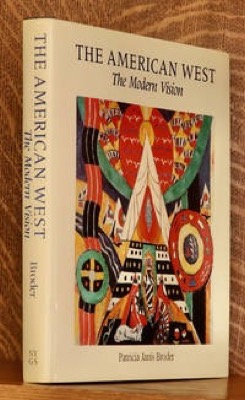
 "The American West: The Modern Vision by: Broder, Patricia Janis")

 "The Art-Ideaby: Jarves, James Jackson")
 "The Colorful Apocalypse: Journeys in Outsider Artby: Greg Bottoms")
 "The Comics Journal #292 (No. 292)by: Gary Groth, Mike Dean & Kristy Valenti (Ed.)")
 "The Comics Journal #297 (No. 297)by: Gary Groth (Ed.)")
 "The Dada Painters and Poets: An Anthology.by: Motherwell, Robert (editor)")
 "The Floating World - The Story of Japanese Printsby: James A. Michener")
 "The Graphic Arts: Modern Men and Modern Methods. The Scammon Lectures for 1920 published for the Art Institute of Chicagoby: Pennell, Joseph")
 "The Heritage of Apelles: Studies in the art of the Renaissance by: Gombrich, E.H.")
 "The Old Guard and The Avant Garde: Modernism In Chicago, 1910-1940by: Prince, Sue Ann (editor)")

 "The Poetics of Perspective by: Elkins, James")