Softcover. Chicago, Playboy Press, 1998, Book: Very Good, Single issue. Soft cover. Very Good. Minor wear. Centerfold intact. Binding tight, pages clean. Pictorial wraps with Baywatch babe Marliece Andrada on cover, also as Centerfold Miss March; Kevin Kline interview; swimsuit issue, playboy style; the real boogie nights - life and death of John Holmes and more.
Softcover. Chicago, Playboy Press, 1998, Book: Very Good, Single issue. Soft cover. Very Good. Minor wear. Centerfold intact. Binding tight, pages clean. Pictorial wraps with Lisa Rinna Melrose Place mom on cover & Pregnant Pictorial; sweet life of Ahmad Rashad; smartest women in porn; Patrick Moynihan inteview; Vanessa Gleason Miss September and more.
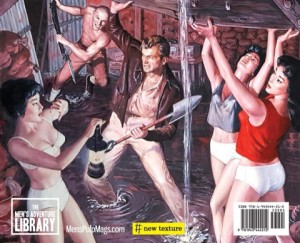
Hardcover. New Texture, 1st, 2022, Book: Very Good, Dust Jacket: None, Hardcover, pictorial boards, 135 pages. A prolific men's action magazine illustrator from the magazines' start in the 1950s until their passing from American newsstands in the 1970s, POLLEN IN PRINT's complete, chronological presentation of Pollen's contributions serves as its own visual history, illuminating both Pollen's growth as an artist, as well as the magazines' (and their readers') shifting focus and changing interests across three decades. Clean copy.
Hardcover. New Texture, 1st, 2018, Book: Very Good, Dust Jacket: None, Hardcover, pictorial boards, 135 pages. A lush visual archive collecting some of artist Samson Pollen's most memorable pieces, selected from the hundreds of jaw-dropping illustrations Pollen provided for men's adventure magazines (MAMs) from the 1950s through the 1970s. Sexy women were a regular component of story illustrations published in the more than 160 MAM titles that flourished from the early 1950s through the mid-1970s, and nobody painted beautiful and dangerous femmes like Pollen. Much of the artist's work--literally, hundreds of pieces--saw print in the Atlas/Diamond group of MAMs from Marvel Comics founder Martin Goodman's Magazine Management Company. Until now, almost none of these illustrations have seen print since their original publication in those latter-day pulps. POLLEN'S WOMEN collects the artist's sexiest and most lethal female portraits in a deluxe hardcover edition, with an autobiographical introduction by the artist.
Hardcover. San Diego, CA, Idea & Design Works, LLC, 1st, 2014, Book: Very Good, Dust Jacket: Very Good, 328 pages. hardcover with dust jacket. Color Illustrations throughout. Clean, unmarked copy with only minor wear to dust jacket. A lavish book devoted to the most important political satire and cartoon magazine in American history. Published from 1877 to 1918, Puck was regularly a major political battleground and is credited with single-handedly thwarting the third-term ambitions of Ulysses Grant in 1880 and electing Grover Cleveland to the presidency in 1884. Puck did it with art-lavish, color, full-page and two-page center-spread cartoons. It was the first American magazine to publish color lithographs on a weekly basis and, for nearly forty years, was a training ground and showcase for some of the country's most talented cartoonists, led by its co-founder, Joseph Keppler. This retrospective contains nearly 300 full-color plates.
Hardcover. Portland OR, Collector's Press, 2nd pr., 2001, Book: Very Good, Dust Jacket: Very Good, 204 pages, illustrated throughout in color. A wonderful collection of pulp and fiction magazine cover art magnificently reproduced here on striking color plates. Here are the Shadow, Black Mask, Fu Manchu, Horatio Hornblower, Doc Savage, the Phantom Detective, and more. Bright, clean hardcover in a very good dust jacket.
Hardcover. NY, Harry N Abrams, 1st, 2022, Book: Very Good, Dust Jacket: Very Good, Hardcover in a bright dust jacket. Pulp Power gives fans a rare glimpse into the pre-war pulp novel decade of the 1930s, a period of bold action and adventure storytelling that ultimately led to the creation of the comic book and the superheroes we know and love today. This period, a pre-Batman, pre-Superman golden era of American creativity and artistic excellence, starred two main characters in leading roles: The Shadow and Doc Savage. In more than 500 novels written between 1930 and 1940, The Shadow, Doc Savage, and the Street & Smith universe of characters captivated a generation of Americans with their heroic exploits and inspired a new generation of writers to create a pantheon of comic book superheroes in their mold. Street & Smith, the renowned publisher of these novels, commissioned leading artists to provide bold and original cover artwork for their publications, and in Pulp Power, hundreds of these eye-catching covers are reproduced as a collection for the first time. Comics legend Dan DiDio provides context for the cover illustrations alongside a narrative discussion of the influence of the Street & Smith superhero universe on legendary creators such as Orson Welles, Truman Capote, Michael Chabon, George Lucas, Agnes Moorehead, James Patterson, Walter Mosley, Dwayne Johnson, Frank Miller, James Bama, Jim Steranko, Jim Lee, Gail Simone, and many more. Bright, clean copy.
Hardcover. Seattle, Fantagraphics Books, 1st, 2016, Book: Very Good, Dust Jacket: None, 159 pages. Hardcover with laminated boards. Clean, tight copy with color illustrations throughout. Inspired by magazines like Mad and traditional superhero comics, Real Deal magazine was a self-published,independent comic book created in the 1990s by Lawrence Hubbard (a.k.a "RawDog") and H.P. McElwee (a.k.a. "R.D. Bone"). Peopled with a cast out of a blaxploitation movie - convicts, hustlers, drug addicts,crack whores, car thieves,and murderers - these cult-classic comics straddle the line between satirizing and showing the harsh realities of urban life.
Hardcover. NY, Abrams, 1st, Book: Very Good, Dust Jacket: Very Good, Hardcover, 272 pages. Reproduces all 728 of the magazine's covers and includes behind-the-scenes stories and excerpts from articles and interviews with the idols of rock and rythym-and-blues.
Softcover. Houston, Art Magazine Publishers, 1979, Book: Very Good, Dust Jacket: None, Softcover. 178 pages, color and b&w illustrations. Articles and art by Joe Beeler, Frank Tenney Johnson, Don Mieduch, others. Clean copy.
Hardcover. NY, Abrams, 1st, 2005, Book: Very Good, Dust Jacket: Very Good, Hardcover, 240 pages. Steinberg's high-concept graphic art--epitomized by his oft-imitated cartoon map in which a Manhattan distended with self-importance shoves the continents of North America and Asia to the margins--is enchantingly showcased in this lavishly illustrated retrospective of his work for the New Yorker. Smith, a curator at the Frances Lehman Loeb Art Center at Vassar and author of Edward Steichen: The Early Years, surveys six decades of Steinberg's pieces, including all 89 New Yorker covers (in full color), cartoons, wartime sketches from overseas, evocative (but never literal-minded) illustrations for articles, and unpublished items from the artist's portfolio. The material is arranged thematically, examining such recurring motifs as cats, pedestals and rubber-stamped figures and documenting the turn to visual metaphor in Steinberg's later work, where symbolic graphic representations of sound, abstract relationships and existential conundrums replace the usual scenario-with-verbal-punch line cartoon setup. Smith's pithy biographical essay situates Steinberg as a self-conscious modernist who helped develop a distinctive New Yorker visual style, one with "a wry, informal wit... attuned to the jittery optimism of the Atomic Age." Steinberg's cartoons usually made readers think before they laughed, and so will this splendid memorial to a 20th-century artistic landmark.
Hardcover. New York , Mark Batty Publisher, 1st, 2003, Book: Very Good, Dust Jacket: Very Good, 286 pages, a comprehensive and inspirational guide to editorial design packed with contemporary examples of sophisticated and effective solutions for virtually any design challenge. Moser's thorough understanding of the process, combined with intriguing juxtapositions of layouts, no-nonsense comments and original insight make for an entertaining and useful book. Chapters range from Grid Systems and Formats to Covers, Logos and Inside Pages, Types of Page and Themes, even a section on the design of magazine spines-illustrated with over 1500 examples from publications around the world, and drawn from the author's personal collection of over one million magazines! A great reference book for all graphic designers, art directors and editorial writers.
Hardcover. NY, Random House, 1st, 1939, Book: Very Good, Dust Jacket: None, Hardcover, hundreds of b&w cartoons from the magazine's golden age. Tan cloth spine with blue boards. No lettering on spine. Clean copy, no dust jacket.
Softcover. Seattle, Fantagraphics, 1st, 2008, Book: Very Good, Dust Jacket: None, Softcover, 200 pages. Gary Groth interviews father and son cartoonists Gene and Kim Deitch. Academy-award-winning Gene Deitch, whose wide-ranging career has spanned over 60 years, talks about doing illustrations for The Record Changer, directing cartoons such as Munro and Krazy Kat, and creating his comic strip Terr'ble Thompson. Underground comics pioneer Kim Deitch, touches on his father's influence, reminisces about the New York-based scene and outlines the evolution of Waldo the Cat. Plus: The innovative Grant Morrison fills us in on his X-Men run, All Star Superman, the ambitious Seven Soldiers "maxiseries," and how he became one of the architects of the current DC Comics universe. Finally, the comics gallery presents an historical essay and highlights from the turn-of-the-19th-century work of Puck cartoonist, F. M. Howarth.
Softcover. Seattle, Fantagraphics, 1st, 2009, Book: Very Good, Dust Jacket: None, Softcover, 207 pages. A career-spanning interview with Mort Walker, the creator of Beetle Bailey and Hi & Lois. Jordan Crane discusses The Clouds Above: comics by the famous 17th century caricaturist Thomas K. Rowlandson.
Softcover. New York, Fantagraphics Books, 1st, 2014, Book: Very Good, Dust Jacket: None, 300 pages. Softcover with light edgewear to paper wrappers. Clean, tight copy. Color and black and white illustrations throughout. The definitive Comics Journal interviews with the cartoonists behind Zap Comix, featuring: Supreme 1960s counterculture/underground artist Robert Crumb on how acid unleashed a flood of Zap characters from his unconscious; Marxist brawler Spain Rodriguez on how he made the transition from the Road Vultures biker gang to the exclusive Zap cartoonists' club; Yale alumnus Victor Moscoso and Christian surfer Rick Griffin on how their poster-art psychedelia formed the backdrop of the 1960s San Francisco music scene; Savage Id-choreographer S. Clay Wilson on how his dreams insist on being drawn; Painter and Juxtapoz-founder Robert Williams on how Zap #4 led to 150 news-dealer arrests; Fabulous, Furry, Freaky Gilbert Shelton on the importance of research; Church of the Subgenius founder Paul Mavrides on getting a contact high during the notorious Zap jam sessions; and much more. In these career-spanning interviews, the Zap contributors open up about how they came to create a seminal, living work of art.
Hardcover. Taschen, 1st, 1013, Book: Very Good, Dust Jacket: Very Good, hardcover, 336 pages. At the height of the Jazz Age, when Prohibition was turning ordinary citizens into criminals and ordinary criminals into celebrities, America's true crime detective magazines were born. True Detective came first in 1924, and by 1934, when the Great Depression had produced colorful outlaws like Machine Gun Kelly, Bonnie and Clyde, Baby Face Nelson, and John Dillinger, the magazines were so popular cops and robbers alike vied to see themselves on the pages. Even FBI boss J. Edgar Hoover wrote regularly for what came to be called the "Dickbooks," referring to a popular slang term for a detective. As the decades rolled on, the magazines went through a curious metamorphosis, however. When liquor was once more legal, the Depression over and all the flashy criminals dead or imprisoned, the "detectives" turned to sin to make sales. Sexy bad girls in tight sweaters, slit skirts, and stiletto heels adorned every cover. Cover lines shouted "I Was a Girl Burglar-For Kicks," "Sex Habits of Women Killers," "Bride of Sin!," "She Played Me for a Sucker," and most succinctly, "Bad Woman."True Crime Detective Magazines follows the evolution and devolution of this distinctly American genre from 1924 to 1969. Hundreds of covers and interior images from dozens of magazine titles tell the story, not just of the "detectives," but also of America's attitudes towards sex, sin, crime, and punishment over five decades. With texts by magazine collector Eric Godtland, George Hagenauer, and True Detective editor Marc Gerald, True Crime Detective Magazines is an informative and entertaining look at one of the strangest publishing niches of all time.
Hardcover. NY, Thames & Hudson;, 1st, 2009, Book: Very Good, Dust Jacket: Very Good, Hardcover in a bright, unclipped dust jacket. The best pages from the sensational photo magazine published in France in the 1920s and 1930s. Established in Paris in 1928, VU combined stunning photography with dynamic layouts and first-rate reporting, creating a revolution in journalism and setting the stage for future photo magazines like Life, Stern, and Paris Match. For a weekly magazine that only published 665 issues (21 March 1928 -- 5 June 1940) VU left behind a remarkable legacy as revealed in these pages. There are eight main chapters: Page layouts; Faces; Photo stories; Photomontages; The rise of Hitler; Sensation and spectacle; Image innovations; Covers and each is crammed with spreads and covers from the magazine and lots of them are big enough to read the stories and captions (assuming you know French). VU was created by publisher Lucien Vogel with editor Carlo Rim and art editor Alexander Liberman (who became US Vogue's art editor and later creative director of Conde Nast) as a general interest picture weekly, some years before Life and Look in the US and Picture Post in Britain. They all took advantage of developing technologies of the day like wire transmission of photos and rotogravure printing. VU was the first though to use photos in a very creative way, especially with cover montages created by Liberman, no doubt influenced by Russian magazines of the twenties designed Rodchenko, Tellingater, Lissitzky and Stepanova.

 "Playboy Magazine, March 1998 (Vol. 45, No. 3)by: Hefner, Hugh M. (Ed.)")
 "Playboy Magazine, September 1998 (Vol. 45, No. 9) by: Hefner, Hugh M. (Ed.)")
 "Pollen In Print: 1955-1959by: Deis, Robert, Doyle, Wyatt")
 "Pollen's Women: The Art of Samson Pollen by: Deis, Robert, Doyle, Wyatt")

 "Puck: What Fools These Mortals Beby: Kahn, Michael; Richard Samual West")
 "Pulp Culture: The Art of Fiction Magazinesby: Robinson, Frank M. and Lawrence Davidson")
 "Pulp Power: The Shadow Doc Savage and the Art of the Street & Smith Universe by: Mcginness, Neil/ Mille, Frank Foreward By/ Didio, Dan Contributor")
 "Real Deal Comixby: Hubbard, Lawrence")
 "Rolling Stone The Complete Covers 1967-1997by: Fred Woodward, Jann S. Wenner , et al.")
 "Southwest Art - October 1979, Vol. 9, No. 5 - Annual Collectors Editionby: Southwest Art")
 "Steinberg at the New Yorkerby: Smith/Saul Steinberg, Joel")
 "Surprise Me: Editorial Designby: Moser, Horst")
 "The 1940 New Yorker Album by: VARIOUS ARTISTS (ADDAMS, ARNO, PETTY, THURBER, ET AL).")
 "The Comics Journal #292 (No. 292)by: Gary Groth, Mike Dean & Kristy Valenti (Ed.)")
 "The Comics Journal #297 (No. 297)by: Gary Groth (Ed.)")
 "The Comics Journal Library Vol. 9: Zap - The Interviewsby: Rosenkranz, Patrick")
 "True Crime Detective Magazines by: Hanson, Dian")
 "Vu: The Story of a Magazineby: C")