Softcover. Washington DC, Smithsonian Institution, 1st, 1990, Book: Very Good, Dust Jacket: None, Softcover, 64 pages, color illustrations. a noted commercial photogrpher shows how he approaches and executes a given job. 30 color plates with commentary. Also a lengthy interview with Maisel by editor Susan Weiley.
Softcover. Washington DC, Smithsonian Institution, 1st, 1990, Book: Very Good, Dust Jacket: None, Softcover, 64 pages, color illustrations. a noted commercial photogrpher shows how he approaches and executes a given job. 30 color plates with commentary. Also a lengthy interview with Maisel by editor Susan Weiley.
Hardcover. Boston, D. Lothrop and Co., 1st, 1879, Book: Very Good, Dust Jacket: None, Hardcover, terra cotta cloth stamped in gilt and black, b&w plates, 335 pages plus publisher's ads in rear. Light shelf wear otherwise clean, very good. A shiphand's account of life in the early merchant marine.
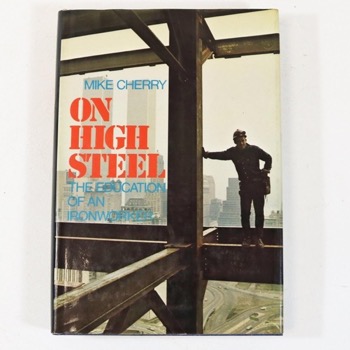
Hardcover. NY, Quadrangle/ NY Times, 1st, 1974, Book: Very Good, Dust Jacket: Very Good, Hardcover in a bright dust jacket, 206 pages. Purple top-stain. An interesting account of what it's like to work erecting multi-story high rise buildings in a city like New York. Clean copy.
Hardcover. NY, G. P. Putnam's Sons, 1st, 2001, Book: Very Good, Dust Jacket: Very Good, Hardcover in a bright, unclipped dust jacket. A 5-year-old Tomie worries over the health of his baby sister, learns to read in one weekend (with a pilfered schoolbook), and helps his father pave the new driveway (to a too-fine polish!). In the spirit of his earlier memoirs, the Newbery Honor-winning 26 Fairmount Avenue and Here We All Are, author Tomie dePaola recounts the (mostly) serene days between the end of kindergarten and the beginning of first grade. Clean copy.
Hardcover. NY, St. Martin's Press, 1st, 1990, Book: Very Good, Dust Jacket: Very Good, Hardcover in a bright dust jacket, 278 pages, b&w illustrations. From the early days in Brooklyn to the champion Los Angeles Dodgers teams of the Sixties, Hall-of-Fame pitcher Don Drysdale's memoir recalls the great moments and players of Dodgers history. Verdi, Chicago Tribune columnist, has given Drysdale his own voice in this nostalgic look at Drysdale's career with the Dodgers organization, and the nature of the changes in the game. Drysdale's colorful anecdotes and opinions make for an informative, enjoyable book, as he describes his teammates (e.g., Gil Hodges, Pee Wee Reese, Duke Snyder), his bosses (Buzzie Bavasi, Walter Alston, Walter O'Malley), his style (including his "mean" nature in protecting the plate and his use of the spitball), and his broadcasting career. Clean copy.
Hardcover. Howell Press, 1st, 1997, Book: Very Good, Dust Jacket: Very Good, Hardcover, 176 pages, b&w illustrations. Between 1917 and 1955, E.L. "Slonnie" Sloniger was a WWI fighter pilot, a barnstormer, a test pilot, a racer, an acrobatic pilot, and a commercial pilot. Here, "Fate is the Hunter's" Old Number One tells the story in his own words, as recorded by his son.
Hardcover. Albany, CA, Rowena Godding Ruggles, 2nd, 1972, Hardcover. SIGNED BY AUTHOR on second front end-paper. 96 pages of text. Includes 213 plates of b&w illustrations of Kewpies. Biography of Rose O'Neill and her work, including the development of the Kewpie dolls. In very good condition. The pages are clean and book neatly and tightly cloth-bound in red covers. dust jacket clean, with minor edge-wear.
Hardcover. Berkeley CA, University of California Press, 1st, 1998, Book: Very Good, Dust Jacket: Very Good, Hardcover in a bright, unclipped dust jacket, 361 pages. During the Cold War years of the 1950s, William F. Knowland was one of the most important figures in American politics. As the Republican leader of the U.S. Senate, the wealthy California newspaper heir was recognized and respected by millions. His influence with President Eisenhower led to Earl Warren's appointment as chief justice, and Knowland set in motion a U.S.-China policy that remains part of our international direction today. Yet he committed suicide in 1974, following a personal decline that included political humiliation, a ruined marriage, and the loss of his family fortune. This is the first full-scale biography of Bill Knowland, written by two journalists who came to know him after he left Washington in 1958. Gayle B. Montgomery was a political editor at the Oakland Tribune, the newspaper owned by Knowland's father, the power-wielding Joseph R. Knowland. James W. Johnson was a Tribune editorial writer. Both men worked with Knowland when he returned to the newspaper after giving up his Senate seat in a failed bid to become governor of California. Knowland lost the governorship race to Edmund G. (Pat) Brown; had he won, many observers felt Knowland would have had a clear shot at the White House. This is a book not only about Mr. Republican, but also one that illuminates the strengths and deficiencies of Republican party politics during the years when the party was at its zenith. In portraying the life of Bill Knowland, the authors cast a glaring light both on the machinations of political power and on the Republican establishment's aspirations in the Warren-Eisenhower era. Clean copy.
Hardcover. NY, Doubleday, 1st, 1960, Book: Very Good, Dust Jacket: None, Hardcover, 288 pages, b&w photo illustrations, black cloth covers, gilt on spine faded. INSCRIBED BY SHAWN and dated Nov. 5 1960 on front fly leaf. No dust jacket. Ted Shawn was an American dancer and choreographer. Considered a pioneer of American modern dance, he created the Denishawn School together with his wife Ruth St. Denis. After their separation he created the all-male company Ted Shawn and His Men Dancers. Covers Shawn's travels and tours: with the army, in the Orient; and his creation of the Denishawn Dancers with the male athletes at Springfield College. Clean copy.
Hardcover. NY, Regan Books, 1st, 2002, Book: Very Good, Dust Jacket: Very Good, Hardcover in a bright dust jacket, 259 pages, b&w photos. There were few figures among America's media-saturated landscape that loomed larger than the National Basketball Association's undeniable superstar Allen Iverson. He was the first overall pick of the 1996 NBA draft, and the spotlight never left him since. Defiantly tattooed, with his hair in cornrows, the six-foot Philadelphia 76ers point guard was been vilified by a sports press still fawning over Michael Jordan's non-threatening, clean-cut visage. From Iverson's rap sheet to his rap album, from his on-court feats to his off-court antics, breathless fans and journalists alike seem determined to track his every move. Part sports star, part antihero, part hip-hop icon, Iverson managed to cross over into the mainstream of American culture -- without compromise. Clean copy.
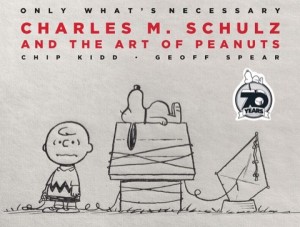
Hardcover. NY, Harry N. Abrams, 1st, 2020, Book: Very Good, Dust Jacket: Very Good, Hardcover in a bright, unclipped dust jacket. Charles M. Schulz believed that the key to cartooning was to take out the extraneous details and leave in only what's necessary. For 50 years, he wrote and illustrated Peanuts, the single most popular and influential comic strip in the world. Renowned designer Chip Kidd was granted unprecedented access to the extraordinary archives of the Charles M. Schulz Museum and Research Center in Santa Rosa, California. Only What's Necessary reproduces the best of the Peanuts newspaper strip, all shot from the original art by award-winning photographer Geoff Spear, and features exclusive, rare, and unpublished original art and developmental work--much of which has never been seen before.
Hardcover. Boston, David R. Godine, 1st, 2016, Book: Very Good, Dust Jacket: Very Good, Hardcover in a bright, unclipped dust jacket, 391 pages. INSCRIBED BY PAYNE on the half-title page and also SIGNED on the title page. In Orion on the Dunes, the first biography of Beston, scholar Daniel Payne-granted unrestricted access to the writer's archives and drawing on interviews with friends and family-has crafted a scrupulously researched narrative; one presenting a masterful portrait that traces the intellectual growth and tumultuous life of a vital American writer whose work and thought have exerted a tremendous pull on poets, naturalists, and novelists alike. This is the story of a life, at once hidden and transparent, that is here finally revealed. Clean copy.
Hardcover. Boston, David R. Godine, 1st, 2016, Book: Very Good, Dust Jacket: Very Good, Hardcover in a bright, unclipped dust jacket. 391 pages, b&w illustrations. INSCRIBED BY PAYNE on half title page and SIGNED again on title page. The first biography of the writer/naturalist, and one of the leading founders of the modern environmental movement, Henry Beston. Scholar Daniel Payne-granted unrestricted access to the writer's archives and drawing on interviews with friends and family-has crafted a scrupulously researched narrative; one presenting a masterful portrait that traces the intellectual growth and tumultuous life of a vital American writer whose work and thought have exerted a tremendous pull on poets, naturalists, and novelists alike. This is the story of a life, at once hidden and transparent, that is here finally revealed. Clean copy.
Hardcover. London, Reaktion Books, 1st, 2020, Book: Very Good, Dust Jacket: Very Good, Hardcover in a bright dust jacket, b&w photos. Ornette Coleman's career encompassed the glory years of jazz and the American avant-garde. Born in segregated Fort Worth, Texas, during the Great Depression, the African-American composer and musician was zeitgeist incarnate. Steeped in the Texas blues tradition, he and jazz grew up together, as the brassy blare of big band swing gave way to bebop--a faster music for a faster, postwar world. At the luminous dawn of the Space Age and New York's 1960s counterculture, Coleman gave voice to the moment. Lauded by some, maligned by many, he forged a breakaway art sometimes called "the new thing" or "free jazz." Featuring previously unpublished photographs of Coleman and his contemporaries, this book tells the compelling story of one of America's most adventurous musicians and the sound of a changing world. Clean copy.
London, Faber & Faber, 1st, 2003, Book: Very Good, Dust Jacket: Very Good, Hardcover in a bright, unclipped dust jacket, 384 pages. Orson Welles was a metamorphic man, a magical shape-changer who made up myths about himself and permitted others to add to their store. On different occasions, he likened himself to Christ--mankind's redeemer--and to Lucifer--the rebel angel who brought about the fall. His persona compounded the roles he played--kings, despots, generals, captains of industry, autocratic film directors--and the more or less fictitious exploits with which he regaled other people or which they attributed to him. Hailed in childhood as a genius, he remained mystified by his own promise, unable to understand or control an intellect that he came to think of as a curse; and he ended his days shilling wine and performing magic tricks on talk shows. At times, he saw the collapse of his early ambitions as a tragedy; in other moods, he viewed his life as a humbling comedy, and settled down--like another favorite character, Shakespeare's Falstaff --to eat, drink and be irresponsibly merry. Rather than producing another conventional biography of Welles, Peter Conrad has set out to investigate the stories Welles told about his life--the myths and secret histories hidden in films both made and unmade, in the books Welles wrote and those he read. The result takes us deep into Welles' imagination, showing how he created, then ultimately destroyed himself. Clean copy.
Hardcover. London, Collins, 1st, 1989, Book: Very Good, Dust Jacket: Very Good, Hardcover in a bright, unclipped dust jacket. Illustrated with numerous photographs and reproductions of Lancaster's cartoons. Remarkable biography of the multi-talented, multi-careered man, who was political diplomat, a satirical cartoonist, an author, an artist, an illustrator, a poet, a stage designer, and more. Lancaster's most famous cartoon characters are Mrs. Rajagojollibarmi, and Maudie Littlehampton.
Hardcover. New York, Cambridge University Press, 1st, 1991, Book: Very Good, Dust Jacket: Very Good, 222 pages, 125 b&w illustrations and 8 plates in full color. The first comprehensive study of Oscar Bluemner's life, art, and intellectual development. Cream cloth boards with gilt lettering to spine. Gray pictorial dust jacket with minor wear to edges, in protective brodart cover. Beautiful copy. Like new.
Hardcover. Oak Knoll Press, 1st, 1999, Book: Very Good, Dust Jacket: Very Good, Hardcover, 244 pages. Ottmar Mergenthaler is considered one of America's greatest inventors. The German immigrant revolutionized the printing and publishing industry with the invention of an automatic typesetting machine which became known as the Linotype. This remarkable machine made it possible to eliminate the laborious hand setting of lead type by allowing one Linotype operator to do the work of a half-dozen typographers.This compelling work chronicles Mergenthaler's struggles to get his invention accepted, and his battles with the typographical unions and with his financiers.
Hardcover. UK, Cambridge University Press, 1st, 1983, Book: Very Good, Dust Jacket: Very Good, Hardcover, 492 pages, b&w photos. In a lightly worn dust jacket, clean copy. Otto Klemperer was one of the great conductors of the century, best known in the last years of his life for his performances and recordings of the classical symphonic repertory from Mozart to Mahler. Volume 1 only.
Hardcover. Boston, Massacusetts, D. Lothrop & Co., 1st, 1879, Book: Very Good, Dust Jacket: None, Unpaginated. Green cloth covers with black titles and gilt illustration, all edges gilt, beveled edges, multiple full page b&w tissue-protected plates, 12 chapters on different American artists. Very light foxing to tissue paper, mild wear to cover edges and spine; overall a very clean, tight copy in great condition.
Hardcover. New Haven CT, Yale University Press , 1st, 2020, Book: Very Good, Dust Jacket: Very Good, Hardcover in a bright dust jacket. 438 pages, profusely illustrated in color and b&w. An intimate glimpse into the professional and romantic relationship between Harriet Pattison and the renowned architect Louis Kahn. On a winter day in 1953, a mysterious man in a sheepskin coat stood out to Harriet Pattison, then a theater student at Yale. She would later learn he was the architect Louis Kahn (1901-1974). This chance encounter served as preamble to a fifteen-year romance, with Pattison becoming the architect's closest confidante, his intellectual partner, and the mother of his only son. Here for the first time, Pattison recounts their passionate and sometimes searing relationship. Married and twenty-seven years her senior, Kahn sent her scores of letters--many from far-flung places--until his untimely death. This book weaves together Pattison's own story with letters, postcards, telegrams, drawings, and photographs that reveal Kahn's inner life and his architectural thought process, including new insight into some of his greatest works, both built and unbuilt. What emerges is at once a poignant love story and a vivid portrait of a young woman striving to raise a family while forging an artistic path in the shadow of her famous partner. Clean copy.

 "Old Jewish Comedians: A BLAB! Storybookby: Friedman, Drew")
 "Old Jewish Comedians: A BLAB! Storybookby: Friedman, Drew")
 "ON ASSIGNMENT (Photographers at Work) by: Maisel, Jay")
 "ON ASSIGNMENT (Photographers at Work) by: Maisel, Jay")
 "On Board The \"Rocket\"by: Adams, Robert C.")
 "On High Steel: The Education of an Ironworkerby: Mike Cherry")

 "On My Way (A 26 Fairmount Avenue Book) by: Tomie DePaola")
 "Once a Bum, Always a Dodger: My Life in Baseball from Brooklyn to Los Angelesby: Don Drysdale / Bob Verdi")
 "One Pilot's Log: The Career of E. L. \"Slonnie\" Slonigerby: Jerrold Sloniger")
 "One Rose, The: Mother of the Immortal Kewpiesby: Ruggles, Rowena Godding")
 "One Step from the White House: The Rise and Fall of Senator William F. Knowlandby: Gayle B. Montgomery , James W. Johnson, et al.")
 "One Thousand and One Night Stands (INSCRIBED)by: Shawn, Ted with Gray Poole")
 "Only the Strong Survive: The Odyssey of Allen Iversonby: Larry Platt")
 "Only What's Necessary 70th Anniversary Edition: Charles M. Schulz and the Art of Peanutsby: Chip Kidd , Geoff Spear, Jean Schulz (Preface), Jeff Kinney (Introduction)")
 "Orion on the Dunes: A Biography of Henry Beston (INSCRIBED COPY)by: Payne, Daniel G.")
 "Orion on the Dunes: A Biography of Henry Beston (SIGNED COPY)by: Daniel G. Payne")
 "Ornette Coleman: The Territory and the Adventureby: Golia, Maria")
 "Orson Welles, The Stories Of His Lifeby: Peter Conrad")
 "Osbert, a Portrait of Osbert Lancaster by: Boston, Richard")
 "Oscar Bluemnerby: Hayes, Jeffrey R.")
 "Ottmar Mergenthaler: The Man and His Machine : A Biographical Appreciation of the Inventor on His Centennialby: Basil Charles Kahan and Basil Bahan")
 "Otto Klemperer: His Life and Times: 1885-1933 (Volume 1)by: Heyworth, Peter")
 "Our American Artistsby: Benjamin, S. G. W.")
 "Our Days Are Like Full Years: A Memoir with Letters from Louis Kahnby: Pattison, Harriet")