Hardcover. Boston, Little, Brown, 1st, 1947, Book: Good, Hardcover, green cloth with black lettering. Frontis portrait. This text is an expansion of the author's 1937 article Black Hamlet : the mind of an African Negro revealed by psychoanalysis. "This is the true story of John Chavafambira. It is a unique, never-before-written account of a native African medicine man, his life experiences and inner conflicts, etched against the background of two worlds-- white and black -- in collision. It is an amazing study of seemingly irreconcilable elements, laid in South Africa where the clash of color is most violent". Clean copy but mild musty odor.
Softcover. Chicago, Arcadia Publishing, 1st, 2000, Book: Very Good, Dust Jacket: None, Softcover, 128 pages with b&w photos. Chronicles the history of the teams and players that spent time in the "Windy City." Has black and white photos of John Henry "Pop" Lloyd, Bruce Petway, Pete Hill, Grant "Home Run" Johnson, Lou Dials, Dave Malarcher, Willie Foster, "Cannonball" Dick Redding, Ted "Double Duty" Radcliffe and many others. Clean copy.
Hardcover. Syracuse NY, Syracuse University Press, 1st, 1973, Book: Very Good, Dust Jacket: Good, Hardcover in a worn dust jacket with fading to spine, 236 pages. This foremost history of the Northern slave system examines its operation from its colonial beginnings to its dissolution. Unlike the South, which used slaves primarily for agricultural labor, the North trained and diversified its slave force to meet the needs of a complicated economy. In the early 19th century the author sees that economic displacement allows an emancipation of blacks that is at least as beneficial to the masters as to the blacks. Name on front fly leaf, otherwise clean.
Hardcover. Columbia, SC, State Company, 2nd, 1922, Book: Good, Dust Jacket: None, 345 pages. Hardcover with black stamped lettering on front. Rear top corner bumped. Light foxing on page block and internal pages. Light fading on edges of cover.
Hardcover. NY, Knopf, 1st, 1991, Book: Very Good, Dust Jacket: Very Good, Hardcover, 237 pages, in a bright, unclipped dust jacket. Memoir of an African-American woman when she was a student at a formerly all white male private prep school.
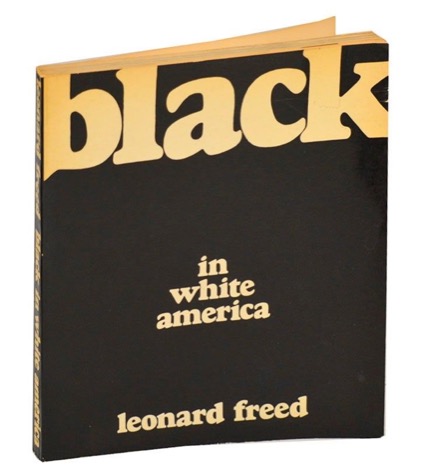
Softcover. NY, Grossman Publishers, 1st, 1967, Book: Very Good, Dust Jacket: None, Softcover, 208 pages. A powerful photographic meditation on life for African-Americans in the U.S. in the 1960s. Includes numerous black and white images. A clean near fine copy in wrappers. with some very minor wear. Small tape repair to bottom of spine, otherwise bright and clean.
Softcover. Los Angeles, J. Paul Getty Museum, 1st, 2010, Book: Good, Dust Jacket: None, 208 pages. Softcover. Black and white photographs. Light edgewear to wrappers, spine shows chips and creases. Reprint of the B&W photo essay first published in 1967-68 examines daily lives of African-Americans during the Civil Rights era. Text adapts Freed's diary entries and interviews. 208 pages.
Softcover. Washington DC, Howard University Press, 1994, Book: Very Good, Dust Jacket: None, Softcover, 365 pages. Maps, illustrations, bibliography, index. A comparative social overview of slavery in Britain, America, and the Caribbean during the colonial period. Walvin carefully examines the external pressures exerted on coastal communities in Africa for slaves, the gradual development of a slave trading system within Africa, and the transport of over twelve million Africans across the seas. Clean copy. Several pages with dog-ear creases.
Softcover. Cambridge MA, Harvard University Press, reprint, 1998, Book: Very Good, Dust Jacket: None, Softcover, 310 pages, b&w illustrations. Few Americans, black or white, recognize the degree to which early African American history is a maritime history. W. Jeffrey Bolster shatters the myth that black seafaring in the age of sail was limited to the Middle Passage. Seafaring was one of the most significant occupations among both enslaved and free black men between 1740 and 1865. Tens of thousands of black seamen sailed on lofty clippers and modest coasters. They sailed in whalers, warships, and privateers. Some were slaves, forced to work at sea, but by 1800 most were free men, seeking liberty and economic opportunity aboard ship.Bolster brings an intimate understanding of the sea to this extraordinary chapter in the formation of black America. Because of their unusual mobility, sailors were the eyes and ears to worlds beyond the limited horizon of black communities ashore. Sometimes helping to smuggle slaves to freedom, they were more often a unique conduit for news and information of concern to blacks.But for all its opportunities, life at sea was difficult. Blacks actively contributed to the Atlantic maritime culture shared by all seamen, but were often outsiders within it. Capturing that tension, Black Jacks examines not only how common experiences drew black and white sailors together-even as deeply internalized prejudices drove them apart-but also how the meaning of race aboard ship changed with time. Bolster traces the story to the end of the Civil War, when emancipated blacks began to be systematically excluded from maritime work. Rescuing African American seamen from obscurity, this stirring account reveals the critical role sailors played in helping forge new identities for black people in America.
Hardcover. San Antonio TX, Wings Press, reprint, 2017, Book: Very Good, Dust Jacket: Very Good, Hardcover in a bright dust jacket, 208 pages, b&w photos. On October 28, 1959, John Howard Griffin underwent a transformation that changed many lives beyond his own he made his skin black and traveled through the segregated Deep South. His odyssey of discovery was captured in journal entries, arguably the single most important documentation of 20th-century American racism ever written. More than 50 years later, this newly edited edition which is based on the original manuscript and includes a new design and added afterword gives fresh life to what is still considered a contemporary book. The story that earned respect from civil rights leaders and death threats from many others endures today as one of the great human and humanitarian documents of the era. Clean copy.
Hardcover. Washington, DC, Associated Publishers, Revised Ed., 1944, Book: Very Good, Dust Jacket: None, Hardcover, 381 pages. Dark green cover with slight wear and white spotting to back. Slight soiling to edges. Binding cracked at page 45. Overall, a clean, tight copy.
Hardcover. Boston, Little, Brown & Company, 1st, 1961, Book: Very Good, Dust Jacket: None, Hardcover, light mauve cloth with white lettering on spine, 311 pages with index. B&w illustrations, maps. Spine with light fading, book is clean, tight copy. Stated First Edition.
Softcover. Middletown CT, Wesleyan University Press, 1st, 1994, Book: Very Good, Dust Jacket: None, Softcover, 237 pages. From its beginnings in hip hop culture, the dense rhythms and aggressive lyrics of rap music have made it a provocative fixture on the American cultural landscape. In Black Noise: Rap Music and Black Culture in Contemporary America, Tricia Rose, described by the New York Times as a "hip hop theorist," takes a comprehensive look at the lyrics, music, cultures, themes, and styles of this highly rhythmic, rhymed storytelling and grapples with the most salient issues and debates that surround it. Clean copy.
Hardcover. NY, Atheneum, 3rd pr., 1999, Book: Very Good, Dust Jacket: Very Good, Hardcover in a bright, unclipped dust jacket. In a clear, straightforward style, Katz describes the settlement of the Ohio and Mississippi Valleys (covering Ohio, Indiana, Illinois, Michigan, Wisconsin, Minnesota, Iowa, Kansas, and Missouri) by African Americans seeking freedom, including biographical sketches of men and women who formed churches, started schools, or were politically active in their region. Some of these settlers were fugitive slaves; several set up stations on the Underground Railroad with the aid of the Quakers; others were farmers, poets, and soldiers. In several states, they helped form black regiments in the Civil War. Chronologically arranged, the book introduces many lesser-known personages not found in most collective biographies and places them in a broader context of U.S. history as a whole.
Hardcover. NY, Atheneum, 3rd pr., 1999, Book: Very Good, Dust Jacket: Very Good, Hardcover in a bright, unclipped dust jacket. In a clear, straightforward style, Katz describes the settlement of the Ohio and Mississippi Valleys (covering Ohio, Indiana, Illinois, Michigan, Wisconsin, Minnesota, Iowa, Kansas, and Missouri) by African Americans seeking freedom, including biographical sketches of men and women who formed churches, started schools, or were politically active in their region. Some of these settlers were fugitive slaves; several set up stations on the Underground Railroad with the aid of the Quakers; others were farmers, poets, and soldiers. In several states, they helped form black regiments in the Civil War. Chronologically arranged, the book introduces many lesser-known personages not found in most collective biographies and places them in a broader context of U.S. history as a whole.
Softcover. Kensington, MD, Published privately, 1st, 1997, Book: Very Good, Dust Jacket: None, 36 pages. Softcover with light wear to edges. Black and white pictures throughout. Clean, tight copy.
Softcover. Hanover NH, Hood Museum of Art, Dartmouth College , 1st, 2008, Book: Very Good, Dust Jacket: None, Softcover, 374 pages illustrated in b&w and color. Issued in connection with an exhibition held March 8 to September 7, 2008, Hood Museum of Art, Dartmouth College. Black Womanhood examines an especially charged icon - the black female body - and contemporary artists' interventions upon historical images of black women as exotic Others, erotic fantasies, and supermaternal Mammies. This book presents icons of the black female body as seen from three separate but intersecting perspectives: the traditional African, the colonial, and the contemporary global. The display and contemplation of such iconic images addresses complex and often competing forces of self-presentation and the representation of others. Clean, like new. DOMESTIC SHIPPING ONLY.
Hardcover. NY, Amistad/HarperCollins, 3rd pr., 2005, Book: Very Good, Dust Jacket: Very Good, Hardcover in a bright, unclipped dust jacket. 540 pages, b&w illustrations, index. An important book of epic scope on America's first racially integrated, religiously-inspired political movement for change-The Underground Railroad, a movement peopled by daring heroes and heroines, and everyday folk For most, the mention of the Underground Railroad evokes images of hidden tunnels, midnight rides, and hairsbreadth escapes. Yet the Underground Railroad's epic story is much more morally complex and politically divisive than even the myths suggest. Against a backdrop of the country's westward expansion,which brought together Easterners who had engaged in slavery primarily in the abstract alongside slaveholding Southerners and their slaves, arose a clash of values that evolved into a fierce fight for nothing less than the country's soul. Beginning six decades before the Civil War, freedom-seeking blacks and pious whites worked together to save tens of thousands of lives, often at the risk of great physical danger to themselves. Not since the American Revolution had the country engaged in an act of such vast and profound civil disobedience that not only subverted federal law but also went against prevailing mores.
Hardcover. US, Atlas & Co, 6th, 2008, 240 pages. Hardcover with dust jacket. Clean, unmarked copy with only minor wear to dust jacket. Black and white pictures throughout.
Softcover. Oxford UK, Clarendon Press, reprint, 1991, Book: Very Good, Dust Jacket: None, Softcover, green paper wraps, 449 pages. A study of the West Indies in the mid-nineteenth century, this book draws together the experiences of more than a dozen different sugar colonies and forms them into a coherent historical account. The first part of the book examines the West Indies on the eve of emancipation in 1830-1865, a key passage in West Indian history. Green presents a clear general picture of the sugar colonies, and places British governmental policy toward the region in the context of Victorian attitudes toward colonial questions.
Softcover. Charlottesville, University of Virginia Press, 1st pbk, 2007, Book: Very Good, Dust Jacket: None, Softcover. Illustrated with black and white photos.; A history of of the racially-charged integration of black players into baseball's southern minor leagues.
Softcover. Syracuse, NY, Willis N Bugbee Co, 1st, 1932, Book: Very Good, Dust Jacket: None, 16 pages. Softcover booklet. Green paper wrappers with softened edges. Light soil to paper wrappers. tight copy. Lightly faded on rear.
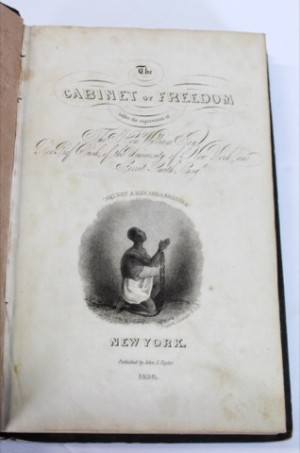
New York, John S. Taylor, 1st, 1836, Book: Good, Hardcover, 296 pages plus 8 pages of publisher's ads in rear. Original black boards with embossed design, gilt lettering and design with number ! on spine. Folding chart/map tipped in at page 196 with short tears. Illustrated title page. The first of three anti-slavery books published by John Taylor, a staunch abolitionist. A few brief notations on prlim pages, otherwise clean.
softcover. New York, Theatre Communications Group, reprint, 2004, Book: Very Good, Dust Jacket: None, 127 pages. Softcover. Clean, unmarked copy with only minor wear to wrappers.

 "Black Angerby: Sachs, Wulf")
 "Black Baseball in Chicagoby: Larry Lester; Sammy J. Miller; Dick Clark")
 "Black Bondage in the Northby: McManus, Edgar J.")
 "Black Border, The: Gullah Stories of the Carolina Coastby: Gonzales, Ambrose E.")
 "Black Iceby: Cary, Lorene")
 "Black in White Americaby: Freed, Leonard")
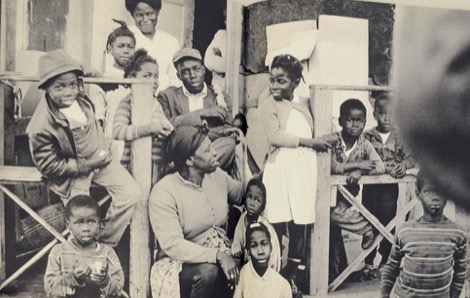
 "Black in White Americaby: Freed, Leonard")
 "Black Ivory; A History of British Slaveryby: Walvin, James")
 "Black Jacks: African American Seamen in the Age of Sailby: W. Jeffrey Bolster")
 "Black Like Me: 50th Anniversary Editionby: Griffin, John Howard")
 "Black Man in White America, Theby: Van Drusen, John O.")
 "Black Mother: The Years of the African Slave Tradeby: Basil Davidson")
 "Black Noise: Rap Music and Black Culture in Contemporary America by: Rose, Tricia")
 "Black Pioneers: An Untold Storyby: William Loren Katz")
 "Black Pioneers: An Untold Storyby: William Loren Katz")
 "Black Sambo's Saga: THe Story of Little Black Sambo Revisited at age 98by: Yoffee, Bill")
 "Black Womanhood: Images Icons and Ideologies of the African Body by: Thompson, Barbara (Edited by)")
 "Bound for Canaan: The Underground Railroad and the War for the Soul of America by: Bordewich, Fergus")
 "Breach of Peace: Portraits of the 1961 Mississippi Freedom Ridersby: Etheridge, Eric")
 "British Slave Emancipation: the Sugar Colonies and the Great Experiment, 1830-1865 by: Green, William A.")
 "Brushing Back Jim Crow: The Integration of Minor-League Baseball in the American Southby: Adelson, Bruce")
 "Bugbee's Minstrel Plays: The Honey Boy Minstrelsby: Giles, Billy")
 "Cabinet of Freedom, The: Volume 1by: Jay, William and others")

 "Caroline, or Change: A Musicalby: Tesori, Jeanine")