Hardcover. New York, G. K. Hall & Company, 1st, 1996, Book: Very Good, Dust Jacket: Very Good, 319 pages. Hardcover with dust jacket. Minor dust jacket edge wear, otherwise, spotless and tight copy.
Hardcover. NY, Albert & Charles Boni, 3rd pr, 1928, Book: Very Good, Dust Jacket: None, Hardcover, pictorial boards with a black cloth spine. 376 pages with illustrations, endpapers, and cover design by Miguel Covarrubias. Frontispiece loose, otherwise a clean copy.
Hardcover. Westport CT, Negro Universities Press , reprint, 1970, Book: Very Good, Dust Jacket: None, Hardcover, brown cloth with gilt lettering on the spine. Originally published in 1852 this is an in depth study of the African people , both in Africa and in America. A great deal of material on slavery and the South, as well as early material on Liberia. Presented in a series of "conversations", this is an in-depth history of the African continent's peoples, the colonization of Africa, and subsequent African American slavery in the United States. Clean copy.
Softcover. Providence RI, John Carter Brown Library, 1st, 1988, Book: Very Good, Dust Jacket: None, Softcover, 62 pages illustrated in b&w. Clean copy.
Softcover. NY, International Publishers, 7th pr., 1968, Book: Very Good, Dust Jacket: None, Softcover, 409 pages. Years ago, the controlling view held that the response of the slaves in the United States to their bondage 'was one of passivity and docility'. That opinion, so decisive a part of the chauvinism afflicting the nation, is shown to be false in this book and in the material accumulated since its initial appearance has further substantiated this thesis; namely, that the African-American people, in slavery, forged a record of discontent and of resistance comparable to that marking the history of any other oppressed people. Name on front fly leaf otherwise clean.
Softcover. Belmont CA, Wadsworth Publishing, 1st, 1971, Book: Very Good, Dust Jacket: None, Softcover, 202 pages. A collection of essays focusing on African American resistance, specifically (from the introduction) "on the nature and extent of the resistance of blacks to slavery in the United States." Name on front fly leaf, otherwise clean.
Softcover. University Park, Pennsylvania State University Press, 2nd pr., 2023, Book: Very Good, Dust Jacket: None, Softcover, 266 pages, b&w illustrations. INSCRIBED BY KELLEY on the title page. Lydia Hamilton Smith (1813-1884) was a prominent African American businesswoman in Lancaster, Pennsylvania, and the longtime housekeeper, life companion, and collaborator of the state's abolitionist congressman Thaddeus Stevens. In his biography of this remarkable woman, Mark Kelley reveals how Smith served the cause of abolition, managed Stevens's household, acquired property, and crossed racialized social boundaries. In the last years of Stevens's life, as his declining health threatened to short-circuit his work, Smith risked her own well-being to keep him alive while he led the drive to end slavery, impeach Andrew Johnson, and push for the ratification of the Thirteenth, Fourteenth, and Fifteenth Amendments. Clean copy.
Softcover. NY, Penguin Books, reprint, Book: Very Good, Dust Jacket: None, Softcover. Thomas Wentworth Higginson, a Unitarian minister, was a fervent member of new England's abolitionist movement, an active participant in the Underground Railroad, and part of a group that supplied material aid to John Brown before his ill-fated raid on Harpers Ferry. When the Civil War broke out, Higginson was commissioned as a colonel of the black troops training in the Sea Islands off the coast of the Carolinas. Shaped by American Romanticism and imbued with Higginson's interest in both man and nature, Army Life in a Black Regiment ranges from detailed reports on daily life to a vivid description of the author's near escape from cannon fire, to sketches that conjure up the beauty and mystery of the Sea Islands. This edition also features a selection of Higginson's essays, including "Nat Turner's Insurrection" and "Emily Dickinson's Letters." Clean copy.
Softcover. NY, Franklin Watts, 1st, 1995, Book: Very Good, Dust Jacket: None, Softcover, 176 pages, b&w photos. The Contents are: Gentleman's Agreement - African Americans and Baseball's Beginning; A Ballplayer from Cooperstown - Post Reconstruction America and the Strange Career of Bud Fowler; False Spring - Fleet Walker and the Grudging Integration of the 1880s; Jim Crow Wins - Cap Anson Gets the Save; War Paint and Feathers - Jim Crow and Chief Tokohama; Second Class Immortals - Satchel Paige and the Black Babe Ruth; The Badge of Martyrdom - The Myth of Rickey and Robinson; and They Never Had It Made - from 1947 to Today; followed by Appendix: Professional Baseball Leagues Chronology; Glossary of Team Names; and an index. Clean copy.
Hardcover. Syracuse NY, Syracuse University Press, 1st, 1973, Book: Very Good, Dust Jacket: Good, Hardcover in a worn dust jacket with fading to spine, 236 pages. This foremost history of the Northern slave system examines its operation from its colonial beginnings to its dissolution. Unlike the South, which used slaves primarily for agricultural labor, the North trained and diversified its slave force to meet the needs of a complicated economy. In the early 19th century the author sees that economic displacement allows an emancipation of blacks that is at least as beneficial to the masters as to the blacks. Name on front fly leaf, otherwise clean.
Softcover. Washington DC, Howard University Press, 1994, Book: Very Good, Dust Jacket: None, Softcover, 365 pages. Maps, illustrations, bibliography, index. A comparative social overview of slavery in Britain, America, and the Caribbean during the colonial period. Walvin carefully examines the external pressures exerted on coastal communities in Africa for slaves, the gradual development of a slave trading system within Africa, and the transport of over twelve million Africans across the seas. Clean copy. Several pages with dog-ear creases.
Softcover. Cambridge MA, Harvard University Press, reprint, 1998, Book: Very Good, Dust Jacket: None, Softcover, 310 pages, b&w illustrations. Few Americans, black or white, recognize the degree to which early African American history is a maritime history. W. Jeffrey Bolster shatters the myth that black seafaring in the age of sail was limited to the Middle Passage. Seafaring was one of the most significant occupations among both enslaved and free black men between 1740 and 1865. Tens of thousands of black seamen sailed on lofty clippers and modest coasters. They sailed in whalers, warships, and privateers. Some were slaves, forced to work at sea, but by 1800 most were free men, seeking liberty and economic opportunity aboard ship.Bolster brings an intimate understanding of the sea to this extraordinary chapter in the formation of black America. Because of their unusual mobility, sailors were the eyes and ears to worlds beyond the limited horizon of black communities ashore. Sometimes helping to smuggle slaves to freedom, they were more often a unique conduit for news and information of concern to blacks.But for all its opportunities, life at sea was difficult. Blacks actively contributed to the Atlantic maritime culture shared by all seamen, but were often outsiders within it. Capturing that tension, Black Jacks examines not only how common experiences drew black and white sailors together-even as deeply internalized prejudices drove them apart-but also how the meaning of race aboard ship changed with time. Bolster traces the story to the end of the Civil War, when emancipated blacks began to be systematically excluded from maritime work. Rescuing African American seamen from obscurity, this stirring account reveals the critical role sailors played in helping forge new identities for black people in America.
Hardcover. Washington, DC, Associated Publishers, Revised Ed., 1944, Book: Very Good, Dust Jacket: None, Hardcover, 381 pages. Dark green cover with slight wear and white spotting to back. Slight soiling to edges. Binding cracked at page 45. Overall, a clean, tight copy.
Hardcover. Boston, Little, Brown & Company, 1st, 1961, Book: Very Good, Dust Jacket: None, Hardcover, light mauve cloth with white lettering on spine, 311 pages with index. B&w illustrations, maps. Spine with light fading, book is clean, tight copy. Stated First Edition.
Hardcover. NY, Atheneum, 3rd pr., 1999, Book: Very Good, Dust Jacket: Very Good, Hardcover in a bright, unclipped dust jacket. In a clear, straightforward style, Katz describes the settlement of the Ohio and Mississippi Valleys (covering Ohio, Indiana, Illinois, Michigan, Wisconsin, Minnesota, Iowa, Kansas, and Missouri) by African Americans seeking freedom, including biographical sketches of men and women who formed churches, started schools, or were politically active in their region. Some of these settlers were fugitive slaves; several set up stations on the Underground Railroad with the aid of the Quakers; others were farmers, poets, and soldiers. In several states, they helped form black regiments in the Civil War. Chronologically arranged, the book introduces many lesser-known personages not found in most collective biographies and places them in a broader context of U.S. history as a whole.
Hardcover. NY, Atheneum, 3rd pr., 1999, Book: Very Good, Dust Jacket: Very Good, Hardcover in a bright, unclipped dust jacket. In a clear, straightforward style, Katz describes the settlement of the Ohio and Mississippi Valleys (covering Ohio, Indiana, Illinois, Michigan, Wisconsin, Minnesota, Iowa, Kansas, and Missouri) by African Americans seeking freedom, including biographical sketches of men and women who formed churches, started schools, or were politically active in their region. Some of these settlers were fugitive slaves; several set up stations on the Underground Railroad with the aid of the Quakers; others were farmers, poets, and soldiers. In several states, they helped form black regiments in the Civil War. Chronologically arranged, the book introduces many lesser-known personages not found in most collective biographies and places them in a broader context of U.S. history as a whole.
Hardcover. NY, Amistad/HarperCollins, 3rd pr., 2005, Book: Very Good, Dust Jacket: Very Good, Hardcover in a bright, unclipped dust jacket. 540 pages, b&w illustrations, index. An important book of epic scope on America's first racially integrated, religiously-inspired political movement for change-The Underground Railroad, a movement peopled by daring heroes and heroines, and everyday folk For most, the mention of the Underground Railroad evokes images of hidden tunnels, midnight rides, and hairsbreadth escapes. Yet the Underground Railroad's epic story is much more morally complex and politically divisive than even the myths suggest. Against a backdrop of the country's westward expansion,which brought together Easterners who had engaged in slavery primarily in the abstract alongside slaveholding Southerners and their slaves, arose a clash of values that evolved into a fierce fight for nothing less than the country's soul. Beginning six decades before the Civil War, freedom-seeking blacks and pious whites worked together to save tens of thousands of lives, often at the risk of great physical danger to themselves. Not since the American Revolution had the country engaged in an act of such vast and profound civil disobedience that not only subverted federal law but also went against prevailing mores.
Hardcover. US, Atlas & Co, 6th, 2008, 240 pages. Hardcover with dust jacket. Clean, unmarked copy with only minor wear to dust jacket. Black and white pictures throughout.
Softcover. Oxford UK, Clarendon Press, reprint, 1991, Book: Very Good, Dust Jacket: None, Softcover, green paper wraps, 449 pages. A study of the West Indies in the mid-nineteenth century, this book draws together the experiences of more than a dozen different sugar colonies and forms them into a coherent historical account. The first part of the book examines the West Indies on the eve of emancipation in 1830-1865, a key passage in West Indian history. Green presents a clear general picture of the sugar colonies, and places British governmental policy toward the region in the context of Victorian attitudes toward colonial questions.
Softcover. Charlottesville, University of Virginia Press, 1st pbk, 2007, Book: Very Good, Dust Jacket: None, Softcover. Illustrated with black and white photos.; A history of of the racially-charged integration of black players into baseball's southern minor leagues.
Softcover. Syracuse, NY, Willis N Bugbee Co, 1st, 1932, Book: Very Good, Dust Jacket: None, 16 pages. Softcover booklet. Green paper wrappers with softened edges. Light soil to paper wrappers. tight copy. Lightly faded on rear.
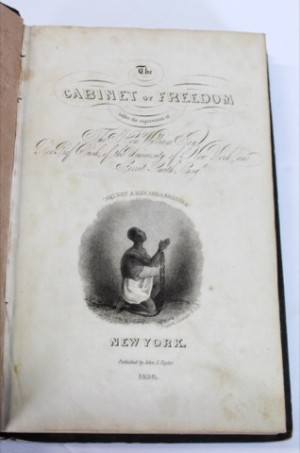
New York, John S. Taylor, 1st, 1836, Book: Good, Hardcover, 296 pages plus 8 pages of publisher's ads in rear. Original black boards with embossed design, gilt lettering and design with number ! on spine. Folding chart/map tipped in at page 196 with short tears. Illustrated title page. The first of three anti-slavery books published by John Taylor, a staunch abolitionist. A few brief notations on prlim pages, otherwise clean.
Softcover. San Francisco, Backbeat Books, 1st, 1998, Book: Very Good, Dust Jacket: None, Softcover, 271 pages, b&w illustrations. Chasin' That Devil Music has the feel of a documentary about the making of a thrilling motion picture. The main focus is on the Delta blues singers of the early 20th century--artists such as Charley Patton, Tommy Johnson, Son House, and Blind Lemon Jefferson who've achieved near-mythic status in blues circles. In addition, many of the articles gathered in this splendidly illustrated volume capture the process and people involved in tracking long-lost recordings nearly as elusive as the performers who made them. Here, for example, is the story of author/blues scholar Gayle Dean Wardlow's three-year hunt for the death certificate of Robert Johnson, the celebrated Mississippi bluesman and a figure whose legend has grown greater with each year since his much-debated death in 1938. The text here is nearly as raw in spots as the music that sparked it, but, as with those sounds (which can be heard on a terrific CD sampler included with the book), enthusiasts will find Chasin' That Devil Music riveting. Clean, bright copy.

 "A Narrative of the Negro: Missing Pages in American History : Revealing the Services of Negros in the Early Wars in the United States of America 1641-1815by: Wilkes,")
 "Adventures Of An African Slaver Being A True Account Of The Life Of Trader In Gold, Ivory & Slave On Coast Of Guinea; Own Story As Told In 1854 To Brantz Mayerby: Can")
 "Africa's Redemption. The Salvation of Our Countryby: Freeman, Rev. F.")
 "Africans in the New World, 1493-1834by: Brown, Larissa V.")
 "American Negro Slave Revolts by: Aptheker, Herbert")
 "American Slavery: The Question of Resistance by: John H. Bracey Jr.; August Meier; Elliot Rudwick")
 "An Uncommon Woman: The Life of Lydia Hamilton Smith (INSCRIBED COPY)by: Kelley, Mark")
 "Army Life in a Black Regiment: and Other Writingsby: Higginson, Thomas Wentworth")
 "Baseball and the Color Lineby: Gilbert, Tom")
 "Bells of Christmas, Theby: Hamilton, Virginia")
 "Black Bondage in the Northby: McManus, Edgar J.")
 "Black Ivory; A History of British Slaveryby: Walvin, James")
 "Black Jacks: African American Seamen in the Age of Sailby: W. Jeffrey Bolster")
 "Black Man in White America, Theby: Van Drusen, John O.")
 "Black Mother: The Years of the African Slave Tradeby: Basil Davidson")
 "Black Pioneers: An Untold Storyby: William Loren Katz")
 "Black Pioneers: An Untold Storyby: William Loren Katz")
 "Bound for Canaan: The Underground Railroad and the War for the Soul of America by: Bordewich, Fergus")
 "Breach of Peace: Portraits of the 1961 Mississippi Freedom Ridersby: Etheridge, Eric")
 "British Slave Emancipation: the Sugar Colonies and the Great Experiment, 1830-1865 by: Green, William A.")
 "Brushing Back Jim Crow: The Integration of Minor-League Baseball in the American Southby: Adelson, Bruce")
 "Bugbee's Minstrel Plays: The Honey Boy Minstrelsby: Giles, Billy")
 "Cabinet of Freedom, The: Volume 1by: Jay, William and others")

 "Chasin' That Devil's Music,: Searching for the Blues (with CD)by: Gayle Dean Wardlow")