Hardcover. Seattle, University of Washington Press, 1st, 1966, Book: Very Good, Dust Jacket: Good, Hardcover, black cloth stamped in gilt, 204 pages. Dust jacket with partial fading, edgewear. Clean copy. The author's last work, a study of the Dahomean Kingdom, it's history and the part gold, colonialism and the slave trade played in it's fortunes. Scarce title.
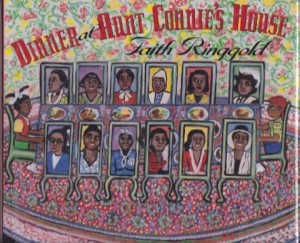
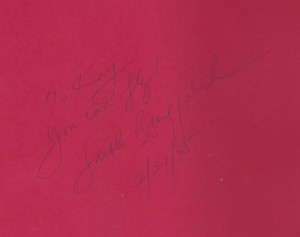
Hardcover. New York, Hyperion Books for Children, 1st, 1993, Book: Very Good, Dust Jacket: Very Good, Unpaginated. Hardcover with matching dust jacket. SIGNED AND INSCRIBED BY AUTHOR ON FRONT FLY LEAF. Clean, tight copy.
Softcover. Charleston, SC, Arcadia Publishing, 1st, 2004, Book: Very Good, Dust Jacket: None, Softcover, 128 pages, b&w photos throughout. At the foot of the Huachuca Mountains, the U.S. Army founded one of the most crucial military posts for American expansion into the southwest frontier. Soldiers had been stationed in the region for decades, but in 1877 Fort Huachuca became the symbolic cornerstone of America's western domain. The Native American word huachuca, meaning "place of thunder," described the sporadic but marvelous electrical storms in the area, but the skies would not be the only thing booming. During the tumultuous campaigns to resolve American and Indian disputes, the U.S. infantry and famed Buffalo Soldiers faced off with Geronimo and his Apache nation in both tense negotiations and bitter combat. As time marched on, the fort developed into a permanent installation with barracks, modern training grounds, and other facilities to accommodate troop rotations and eventually became the innovative Center for Military Intelligence. Clean copy.
Softcover. NY, Oxford University Press, reprint, 2010, Book: Very Good, Dust Jacket: None, Softcover, 402 pages, b&w illustrations. An insightful examination of the impact of the Civil Rights Movement and African Independence on jazz in the 1950s and 60s, Freedom Sounds traces the complex relationships among music, politics, aesthetics, and activism through the lens of the hot button racial and economic issues of the time. Ingrid Monson illustrates how the contentious and soul-searching debates in the Civil Rights, African Independence, and Black Power movements shaped aesthetic debates and exerted a moral pressure on musicians to take action. Throughout, her arguments show how jazz musicians' quest for self-determination as artists and human beings also led to fascinating and far reaching musical explorations and a lasting ethos of social critique and transcendence. Clean copy.
Hardcover. Baton Rouge, Louisiana State University , 1st, 1979, Book: Very Good, Dust Jacket: Very Good, Hardcover in a bright dust jacket, 173 pages. This work is a brief look at worldwide slave revolts in the 17th through 19th centuries, emphasizing their interrelations with European power struggles, which gave rebels hope of finding weak spots in the defenses of the slave powers. The French Revolution also had an influence on slave revolts, but the canny European powers used indigenous peoples to suppress slave revolts (e.g., native Americans) and took advantage of African ethnic divisions as well. American slaves stood little chance of revolt and were under constant surveillance from Southerners, who coward in fear after the successful rebellions in the Caribbean, particularly in Hispaniola, and after Nat Turner and John Brown's efforts. Genovese also brings up religion's double-edged sword: one side used to pacify slaves and the other side to inspire them to break their chains. In short, this scholarly treatise is thought-provoking as well as informative and ends with an inspirational quote from one of Frederick Douglass's lectures. Name on front fly leaf, otherwise a clean copy.
Hardcover. Boston, American Unitarian Association, 1st, 1905, Book: Very Good, Dust Jacket: None, Hardcover, black cloth with white lettering, 232 pages. Collection of six essays, including "Atlanta University" by Professor W. E. Burghardt Du Bois in which the author discusses the significance of Atlanta University. Other institutions and authors include: Howard University by Prof. Kelly Miller; Berea College, by President William G. Frost; Tuskegee Institute by Prof. Roscoe Conkling Bruce; Hampton Institute by Principal H. B. Frissell; and Fisk University by President James G. Merrill. From a church library with label on spine, bookplate and stamp on front endpapers. Otherwise a sharp copy with no other markings or residue. Scarce in original edition.
Hardcover. NY, G.P. Putnam's Sons, 1st, 1874, Book: Very Good, Dust Jacket: None, Hardcover, 256 pages. Fold-out frontis, b&w Illustrations, very nice, clean copy. Written by "two of its teachers." Includes "Fifty Cabin and Plantation Songs" arranged by Thomas P. Fenner. Illustrated with a four-fold engraved frontispiece, depicting several of the school's buildings as seen from the water, and many other engravings. An interesting account of the school, including a brief history of Virginia and of slavery and its aftermath in that state, and one of the earliest publications of slave music.
Hardcover. NY, Random House, BC Ed., 1968, Book: Very Good, Dust Jacket: Very Good, Hardcover in a bright dust jacket. Copyright page states first printing, but no price on flap, probably a book club edition. Colorfully illustrated boards with black cloth spine, with gilt lettering; white DJ with red and orange illustration and lettering; 255 pages, profusely illustrated. Long before Harlem became one of the trendiest neighborhoods in the red-hot real estate market of Manhattan, it was a metaphor for African American culture at its richest. Allon Schoener's celebrated Harlem on My Mind is the classic record of Harlem life during some of the most exciting and turbulent years of its history, a beautiful and poignant reminder of a powerful moment in African America history. Including the work of some of Harlem's most treasured photographers, among them James Van Der Zee and Gordon Parks, there are photographs of Harlem's literary lights Langston Hughes, Countee Cullen, and Richard Wright; its politicians Marcus Garvey, Malcolm X, and Adam Clayton Powell Jr.; and its musicians Ethel Waters, Duke Ellington, and Billie Holiday. The book also includes the photographs of the everyday folk who gave life to this legendary community. Clean copy.
Hardcover. Naperville IL, Sourcebooks MediaFusion, 1st, 2006, Book: Very Good, Dust Jacket: Very Good, Hardcover in a bright dust jacket. 502 pages, b&w illustrations. For three decades after World War I, Harlem was the site of burgeoning racial and cultural awareness and ambitions among African Americans. In the opening section of this book, Wintz provides the historical context for what became known as the Harlem Renaissance. In separate sections devoted to poetry, music, politics, art, and the phenomenon of the New Negro, contributors profile many of the era's major figures, including Langston Hughes, Zora Neale Hurston, Bessie Smith, Ethel Waters, Josephine Baker, W. E. B. DuBois, Paul Robeson, A. Phillip Randolph, and Marcus Garvey. The essays place the Harlem Renaissance in the broader context of an awakening of black culture throughout the U.S. The book contains references to the accompanying CD, which offers 60 minutes of music, poetry, interviews, performances, and speeches, giving voice to the vibrant life of Harlem. Photographs, drawings, book covers, and posters add to the richness of this collection. A fabulous resource on the Harlem Renaissance.
Hardcover. Washington DC, Brassey's , 1st, 2003, Book: Very Good, Dust Jacket: Very Good, Hardcover in a bright, unclipped dust jacket, b&w illustrations, 293 pages. The 369th became one of the few U.S. units that American commanding general John J. Pershing agreed to let serve under French command. Donning French uniforms and taking up French rifles, the men of the 369th fought valiantly alongside French Moroccans and held one of the widest sectors on the Western Front. The entire regiment was awarded the Croix de Guerre, the French government's highest military honor. Clean copy.
Hardcover. NY, Simon & Schuster, 1st, 1996, Book: Very Good, Dust Jacket: Very Good, Hardcover in a bright, unclipped dust jacket, 254, b&w illustrations. A veteran of seven decades of professional baseball reminisces about his days in the Negro Leagues, offers an intimate portrait of Satchel Paige, and reveals his current work scouting for the Kansas City Royals at age eighty-two. Buck O'Neil was a former all-star player and manager for the Kansas City Monarchs; he also has the distinction of being the first black to hold a coaching position in major league baseball. Clean copy.
Hardcover. NY, Oxford University Press, 1st, 1978, Book: Very Good, Dust Jacket: Good, Hardcover in a worn and chipped dust jacket with a bar code sticker on rear panel. INSCRIBED TO TV TALK SHOW HOST DICK CAVETT BY AUTHOR on front fly leaf: "To Dick Cavett with appreciation for your steady excellence and thoughtful commentary -with regards and highest esteem - A. Leon Higginbotham, Jr./June 30, 1978". Focusing on the actions and attitudes of the courts, legislatures, and public servants in six colonies, Judge Higginbotham shows ways in which the law has contributed to injustices suffered by Black Americans Judge Higginbotham chronicles in unrelenting detail the role of the law in the enslavement and subjugation of black Americans during the colonial period. 512 pages, b&w illustrations. No markings.
Hardcover. New York, Publishers Company, 2nd edition, 1968, Book: Very Good, Dust Jacket: None, 5 volumes: 291, 291, 317, 304, and 306 pages. Light brown cloth covers, with silver and black titles, profusely illustrated with b&w plates. Slight rubbing to covers, small brown stain to spines of Theater and Civil War volumes, previous owner's embossed stamp to all title pages, ex-lib bookplates to all copyright pages, pages very crisp and unmarked, tight binding; overall, volumes are in clean, tight condition. NOTE: DUE TO WEIGHT AND SIZE, DOMESTIC SHIPPING ONLY.
Softcover. Charlottesville VA, University of Virginia Library, 1st, 2000, Book: Very Good, Dust Jacket: None, Softcover, 64 pages, b&w photos throughout. This is a history of African-American public school education in Henrico County, Virginia. Introductory essay by William A. Link. Author documented his work (as a field agent for the General Education Board) being an amateur photographer. Davis' photographs are organized by subject (Events, People, Demonstration Farming, etc.). Limited to 3.000 copies. Clean.
Hardcover. Chicago, Follett Publishing Co., 1st, 1968, Book: Very Good, Dust Jacket: Very Good, Hardcover. B&W illustrations by Paul Giovanopoulos. 192 pages in a nice, price-clipped dust jacket. The saga of the Amistad. Off the Cuban coast, a slave from Sierra Leone took over the ship which drifted and was taken into custody by the US Navy. The return to Sierra Leone after protracted legal battles. Clean copy.
Hardcover. London, Faber & Faber, 1st, 2016, Book: Very Good, Dust Jacket: None, 72 pages. Hardcover with no dust jacket. Very clean, unmarked copy with only minor wear to edges. Black and white illustrations throughout by Mezzo. From 'Crossroads Blues' to 'Sweet Home Chicago', 'Hellhound on My Trail' to 'Come On In My Kitchen', Robert Johnson wrote some of the most enduring and formative songs of the original blues era, songs that would go on to help shape the birth of rock 'n' roll in the 1960s. Beloved of Clapton, Dylan and the Stones, Robert Johnson remains one of the most iconic and mythologized figures in popular music (and the first of many to die at the age of 27). Born in the in the South in Mississippi, Johnson made his way to the urban North as a traveling musician, but it was only when he returned to the South that he recorded the twenty-nine songs, in two sessions, which would create his legacy. Exploring the stories and legends that surround his life and death -- his childhood, his womanizing, his pact with the devil at the crossroads -- Mezzo and DuPont have produced a fittingly creative and beautiful depiction of this most extraordinary life.
Softcover. Chapel Hill, University of North Carolina Press, 1st pbk, 2002, Book: Very Good, Dust Jacket: None, Softcover, 411 pages, b&w illustrations. Tracing the erosion of white elite paternalism in Jim Crow Virginia, Douglas Smith reveals a surprising fluidity in southern racial politics in the decades between World War I and the Supreme Court's 1954 Brown v. Board of Education decision. Smith draws on official records, private correspondence, and letters to newspapers from otherwise anonymous Virginians to capture a wide and varied range of black and white voices. African Americans emerge as central characters in the narrative, as Smith chronicles their efforts to obtain access to public schools and libraries, protection under the law, and the equitable distribution of municipal resources. This acceleration of black resistance to white supremacy in the years before World War II precipitated a crisis of confidence among white Virginians, who, despite their overwhelming electoral dominance, felt increasingly insecure about their ability to manage the color line on their own terms. Exploring the everyday power struggles that accompanied the erosion of white authority in the political, economic, and educational arenas, Smith uncovers the seeds of white Virginians' resistance to civil rights activism in the second half of the twentieth century. Light marking to 10 pages, otherwise clean, very good.
Hardcover. New York, Atria Books, 1st, 2004, Book: Very Good, Dust Jacket: Very Good, Hardcover, 271 pages, b&w photos, very clean, tight copy, like new.
Softcover. Lincoln NE, iUniverse, 1st, 2001, Book: Very Good, Dust Jacket: None, Softcover, 236 pages. "Forward! Double-Quick!" and away we all rushed toward the fort... capturing two brass field pieces, one of which the rebels left loaded." A true account of Vermont men of color in battle during the Civil War. A barely known fact is that the tiny state of Vermont provided over one hundred and fifty African American soldiers to fight for the Union and by doing so, free millions of their own race. This is their story. Derived from historical archives and through their own words. Clean copy. Hastily signed by the author on the half-title page.
Hardcover. Liberty Street, 1st, 2007, Book: Very Good, Dust Jacket: Very Good, Hardcover, 196 pages. A stirring visual tribute to the Civil Rights Movement and the long and difficult battle for racial equality captures in more than 150 extraordinary photographs the leaders and events of the era, with portraits of Sidney Poitier, James Baldwin, Miles Davis, Martin Luther King, Jr., and many other activists, both famous and unknown, who took part in the struggle.
Hardcover. NY, Hill and Wang, BC Ed., 1998, Book: Very Good, Dust Jacket: Very Good, Hardcover, 352 pages, with illustrations. Minor dust jacket edge wear, otherwise, very clean and tight copy. In the middle of a frigid Sunday night in January 1856, a twenty-two-year-old Kentucky slave named Margaret Gamer gathered up her family and raced north, toward Cincinnati and freedom. But Margaret's master followed just hours behind and soon had the fugitives surrounded. Thinking all was lost, Margaret seized a butcher knife and nearly decapitated her two-year-old daughter, crying out that she would rather see her children dead than returned to slavery. She was turning on her other three children when slave catchers burst in and subdued her.Margaret Garner's child-murder electrified the United States, inspiring the longest, most spectacular fugitive-slave trial in history. Abolitionists and slaveholders fought over the meaning of the murder, and the case came to symbolize the ills of the Union in those last dark decades before the Civil War.
Hardcover. Barre MA, Imprint Society, Ltd. Ed., 1971, Book: Very Good, Dust Jacket: None, Hardcovers, 2-volume set with the original slipcase, this is number "CJB" in Limited Edition of 1950 copies and is signed by R. A. J. Van Lier who provides the Notes and Introduction to this edition. The expedition took place from 1772 to 1777 and describes the history, flora and fauna, and people of this land, Illustrated with folding map and numerous plates. Title page printed in red and black. Clean, bright set.
Hardcover. Cambridge MA, Harvard University Press , 1st, 1993, Book: Very Good, Dust Jacket: Very Good, Hardcover in a bright, lightly worn dust jacket. 338 pages. INSCRIBED BY THE AUTHOR on the half-title page. After the triumphs of Montgomery and Selma, Martin Luther King, Jr., rallied his forces and headed north. The law was on his side, the nation seemed to be behind him, the crusade for civil rights was rapidly gathering momentum--and then, in Chicago, heartland of America, the movement stalled. What happened? This book is the first to give us the full story--a vivid account of how the Chicago Freedom Movement of 1965-1967 attempted to combat northern segregation. Northern Protest captures this new kind of campaign for civil rights at a fateful turning point, with effects that pulse through the nation's race relations to the day. James Ralph has written the fullest and most perceptive account yet to appear of the 1966 civil-rights campaign in Chicago, a crucial event in the history of the movement. Clean copy.
Softcover. Durham NC, Duke University Press, 2012, Book: Very Good, Dust Jacket: None, Softcover, 387 pages. Pictures and Progress explores how, during the nineteenth century and the early twentieth, prominent African American intellectuals and activists understood photography's power to shape perceptions about race and employed the new medium in their quest for social and political justice. They sought both to counter widely circulating racist imagery and to use self-representation as a means of empowerment. In this collection of essays, scholars from various disciplines consider figures including Frederick Douglass, Sojourner Truth, Ida B. Wells, Paul Laurence Dunbar, and W. E. B. Du Bois as important and innovative theorists and practitioners of photography. In addition, brief interpretive essays, or "snapshots," highlight and analyze the work of four early African American photographers. Featuring more than seventy images, Pictures and Progress brings to light the wide-ranging practices of early African American photography, as well as the effects of photography on racialized thinking. Still in publisher's shrinkwrap.

 "Dahomey and the Slave Trade: An Analysis of an Archaic Economyby: Karl Polanyi")
 "Dinner at Aunt Connie's House (SIGNED)by: Ringgold, Faith")
 "Fort Huachuca by: Price, Ethel Jackson")
 "Freedom Sounds: Civil Rights Call out to Jazz and Africa by: Ingrid Monson")
 "From Rebellion to Revolution. Afro-American Slave Revolts in the Making of the Modern Worldby: Genovese, Eugene D.")
 "From Servitude to Service, Being the Old South Lectures on the History and Work of Southern Institutions for the Education of the Negroby: Du Bois, W.E.B. and others")
 "Hampton and Its Students by Two of Its Teachers with 50 Cabin and Plantation Songsby: Armstrong, Mrs. M.I. and Helen W. Ludlow")
 "Harlem on My Mind: Cultural Capital of Black America 1900-1968 by: Schoener, Allon (Ed.); Candice Van Ellison (Intro.)")
 "Harlem Speaks: A Living History of the Harlem Renaissance (with CD)by: Cary D. Wintz")
 "Harlem's Hell Fighters: The African-American 369th Infantry in World War I by: Stephen L. Harris")
 "I Was Right on Time by: Buck O'Neil, with Steve Wulf and David Conrads; Foreword by Ken Burns")
 "In the Matter of Color: Race and the American Legal Process the Colonial Period (SIGNED COPY)by: Higginbotham, A. Leon, Jr.")
 "International Library of Negro Life and History, (5 volumes): Historical Negro Biographies, Negro Americans in the Civil War, The History of the Negro in Medicine, The Negro in Music and Art, Anthology of the American Negro in the T")
 "Jackson Davis and the Lost World of Jim Crow Education by: N/A")
 "Long Black Schooner, The: The Voyage of the Amistadby: Sterne, Emma Gelders")
 "Love in Vain: Robert Johnson, 1911-1938 by: DuPont, J. M.")
 "Managing White Supremacy: Race, Politics, and Citizenship in Jim Crow Virginia by: J. Douglas Smith")
 "Meet Me at the Theresa: The Story of Harlem's Most Famous Hotelby: Wilson, Sondra Kathryn")
 "Men of Color, to Arms!: Vermont African-Americans in the Civil Warby: Fuller, James")
 "Mine Eyes Have Seenby: Adelman, Bob")
 "Modern Medea: A Family Story of Slavery and Child-Murder from the Old Southby: Weisenburger, Steven")
 "Narrative of a Five Years' Expedition Against the Revolted Negroes of Surinam in Guiana on the Wild Coast of South America from the Years 1772 to 1777 (Two Volumes in a slipcase)by:")
 "Northern Protest: Martin Luther King Jr., Chicago and the Civil Rights Movement (SIGNED COPY)by: Ralph Jr., James R.")
 "Pictures and Progress: Early Photography and the Making of African American Identity by: Wallace, Maurice O. & Smith, Shawn Michelle (Editors)")