Hardcover. New York, Abbeville Press, 1st, 1985, Dust Jacket: Near Fine, 228 pages. Pink cloth covered hardcover with gray lettering on spine. Square quarto. B/W and color plates. a romantic and nostalgic look back at the fabulous nightclubs and palaces of entertainment that lined the Hollywood hills and spread across California's Southland in the heyday of the film capital, from 1915 to 1945. Clean, bright copy.
Hardcover. Los Angeles, Getty Research Institute, 1st, 2013, Book: Very Good, Dust Jacket: None, Hardcover in pictorial boards. From 1940 to 1990, Los Angeles rapidly evolved into one of the most populous and influential industrial, economic, and creative capitals in the world. During this era, the region was transformed into a laboratory for cutting-edge architecture. Overdrive: L. A. Constructs the Future, 1940 - 1990 examines these experiments and their impact on modern design, reframes the perceptions of Los Angeles's dynamic built environment, and amplifies the exploration of the city's vibrant architectural legacy. The drawings, models, and images highlighted in the Overdrive exhibition and catalogue reveal the complex and often under-appreciated facets of Los Angeles and illustrate how the metropolis became an internationally recognized destination with a unique design vocabulary, canonical landmarks, and a coveted lifestyle. Clean copy. In publisher's shrinkwrap.
Hardcover. New York, Oxford University Press, 1st, 1999, Book: Near Fine, Dust Jacket: Near Fine, Hardcover, 242 pages. B&w and color prints. Lavishly illustrated catalog presenting a fascinating cultural history of an idyllic vision of California that still figures prominently in the American imagination. Red cloth, gilt lettering to spine. Pictorial dust jacket. Copy in mint condition, looks brand new.
Hardcover. US, Getty Publications, 1st, 2011, Book: Very Good, Dust Jacket: None, 352 pages. Hardcover with dust jacket. Clean, unmarked copy with only minor wear to dust jacket. Like new in publisher's shrink-wrap. Documents the burgeoning Southern Californian post-war art scene, with several essays following a more or less chronological order, and hundreds of illustrations of artworks, but also of art people (a wonderful 1963 photograph of Marcel Duchamp playing chess with a naked Eve Babitz in front of a replica of his Large Glass in Pasadena, photographs of artists working in their studios, etc). Some names are well known, others less so, but it is the versatility, the creativity and, above all, the richness and depth of this LA art scene that strike the reader-viewer through these richly illustrated pages. The birth of a genuine pop art in California (thanks to some of the most gifted artdealers in the US), of conceptual art, the creation of a new way of making sculpture, all those aspects are tackled in an informative and erudite (sometimes too erudite, though...)text that makes this book a more than valuable addition to the literature on post-war American art.
Softcover. New York, E.P. Dutton, 1st, 1978, Book: Very Good, Dust Jacket: None, 80 pages. Softcover. Color illustrations throughout. In excellent condition. Covers still very shiny, like new. Very clean inside and out. Photographs of the colorful and eccentric Victorian architecture of San Francisco.
Softcover. New York, E.P. Dutton, 1st, 1978, Book: Very Good, Dust Jacket: None, 80 pages. Softcover. Color illustrations throughout. In excellent condition. Covers still very shiny, like new. Front cover has a bit of price tag residue on it. Very clean inside and out. Photographs of the colorful and eccentric Victorian architecture of San Francisco.
Hardcover. New York , Rizzoli, 1st, 2007, Book: Very Good, Dust Jacket: Very Good, Hardcover, 224 pages, color illustrations. Like new in publisher's shrink-wrap. Drawing from a rich and influential heritage that spans the 20th century, design in Palm Springs runs the gamut from Spanish hacienda-style architecture and interiors to classic mid-century constructions and contemporary experimentations. Its recent rediscovery by trend-setters like Tom Ford, Jonathan Adler, and Bruce Weber has made Palm Springs superhot again-as a destination and for design inspiration. This desert laboratory of avant-garde architecture, interior decorating, and freewheeling experimentation is now a focus for design and fashion fanatics around the world. Palm Springs Living showcases the inspiring, diverse range of exteriors and interiors in Palm Springs. Included are intimate peeks into the private homes of celebrity residents and brand-new photography of the legendary Modernist houses by Richard Neutra, Albert Frey, and many others.
Hardcover. New York, Aperture , 1st, 2001, Book: Very Good , Dust Jacket: Very Good, Hardcover, 144 pages, B&W photos. In original shrink wrap. For almost sixty years Pirkle Jones has chronicled the people, politics, and landscape of Northern California-a "promised land" which has long held sway in the American cultural imagination. Within the confines of that locale, he has unearthed a universe of beauty and meaning, photographing everything from flea-market finds to some of the most important American social movements of the second half of the twentieth century. Operating primarily within a social-documentary framework, Jones has made images characterized by sensitivity and acute observation. With uncanny prescience, a sense of urgency, and a sympathetic eye, Jones often plays the dual roles of artist and witness, combining portraiture, landscapes, and architectural photographs to create thorough documents of social structure and upheaval. Among the photo-essays included in Pirkle Jones: California Photographs are a compassionate and controversial piece on the Black Panther Party in the San Francisco Bay Area, Jones's portraits of the Sausalito houseboat community known as Gate 5, and a notable 1956 photo-essay done in collaboration with Dorothea Lange photographing the destruction and dislocation of the Berryessa Valley before it was flooded on completion of the Monticello Dam. Produced as a single issue of Aperture magazine in 1960 under the name "Death of a Valley", this essay remains a powerful testament to the price of progress. The book also includes Jones's work from the last few decades, in which he shifted his focus to an extended series of elegant, contemplative landscapes. A biographical essay by curator Tim B. Wride frames Jones and his work within the context of photographic history, the people he collaborated with-including Ansel Adams as well as Lange-and the great scope of Californian life.
Softcover. Los Angeles, Spurl Editions, 1st, Book: Very Good, Dust Jacket: None, Softcover, Color plates throughout, unpaginated. Limited to 500 copies. Clean. Documents the eerie fragments of existence left behind in one city. John Brian King photographed RIVIERA from 2016 to 2018 in Palm Springs, California, and its surroundings; a full-time resident at the time, he used a cheap instant film camera to give his photographs a unique, washed-out, hazy aesthetic. King depicts a city that is frozen in a visually arresting state of decline.
Hardcover. NY, W. W. Norton, 1st, 2000, Book: Very Good, Dust Jacket: Very Good, Hardcover in a bright dust jacket, 464 pages, b&w illustrations. Johnson's exquisitely researched and beautifully written book starts with the premise that the Southern mines during the early years of the California Gold Rush (1948-1852) were "a grand field for human interaction and connectedness." They were a kind of experiment in human relations, and Johnson points the spot light on the dynamic and flexible quality of race, gender, and sexuality. She argues that the social world of the gold rush - the organization of domestic labor, the leisure pursuits, and gaming activities (both mining and gambling) - reflected a topsy-turvy world not at all comfortable with itself. Johnson tells a story whereby the gold rush, particularly the relationships that developed in the more diverse and less wealthy Southern mines, created a crisis of racial and gender representation that only sorted itself out with the collusion of Anglo miners and the authority of the state. Johnson notes that Anglo miners, "Conflated their daily lives with a project of national expansion and economic growth infused with notions of progress and 'manifest destiny.'" In this way, Johnson explains the messy and not uncontested work of colonization and racial dominance, and she does so with an eye to the function of gender and sexuality. Clean copy.
Hardcover. Cloverdale CA, Buti Publications, 1st, 1996, Book: Very Good, Dust Jacket: Very Good, Hardcover in a bright dust jacket, 355 pages illustrated with b&w drawings, not credited. GENERIC INSCRIPTION & SIGNATURE BY AUTHOR on the front fly leaf. Bruno Buti, (pronounced "booty") born to immigrant Italian parents May 23, 1922, in San Bruno, California, the youngest of three children. Nursed to an age he can still remember, then weaned on wine for lack of a cow, he was raised in an era when milk pails runneth over with fresh made alcohol. Growing up underfoot of tough bootleggers, he spent his childhood experiencing unpleasant run-ins between them and crooked lawmen. Haunted by memories of the involvement that his father, relatives and colleagues had in bucking prohibition, their ups and downs in the struggle to make it in a society hostile to immigrant minorities, the author finally dares to unload the burden he carried for so long. His tale attempts to bring out the characteristics and qualities of this particular group of people by depicting them the way they were during those fabulous Twenties. Clean copy.
Softcover. NY, Fordham University Press, 1st, 2014, Book: Very Good, Dust Jacket: None, Softcover, 476 pages, b&w illustrations. INSCRIBED BY AUTHOR on the front fly leaf. This volume gathers groundbreaking critical essays on Sabato (Simon) Rodia's renowned Watts Towers (Los Angeles, California) from diverse disciplinary perspectives, extensively highlighting his migration context as never before, as well as the Towers in the context of human and community development within the 'Watts Towers Common Ground Initiative. Clean copy.
Hardcover. Albuquerque, University of New Mexico Press, 1st, 1999, Book: Very Good, Dust Jacket: Very Good, Hardcover in a bright dust jacket, 307 pages. In all North America you cannot get much lower than the Imperial Valley of southern California, where one town, 186 feet below sea level, calls itself the Lowest Down City in the Western Hemisphere, and where the waters of the Colorado River sustain a billion-dollar agricultural industry. The consequences of that industry drain from the valley into the accidentally man-made Salton Sea, California's largest lake and a vital stopping place for migratory waterfowl. Today the Salton Sea is in desperate environmental trouble. A second river also ends in the Salton Sea. It is a river of dreams, the remains of which may be seen in the failed real estate developments that sprawl beside the sea. As the ending point of both the real Colorado and this river of dreams, the Salton Sea has become emblematic of much of the history of the American West. Its troubling story is masterfully told here in William deBuys's narrative and Joan Myers's austerely beautiful photographs. Mild wear, ereasure to front fly leaf, otherwise clean.
Softcover. Santa Barbara CA, UCSB Art Museum, 2nd pr., 1979, Book: Very Good, Dust Jacket: None, Softcover, 105 pages illustrated with b&w photos and architectural drawings. Clean, crisp copy of this exhibition catalog.
Hardcover. Stanford CA, Stanford University, 1st, 1945, Book: Very Good, Dust Jacket: None, Hardcover, 156 pages. Illustrated with black & white photographs. Related bulletin from the California Historical Quarterly laid-in. Front endpaper and top edge stamped by 'American Seamen's Friend Society'.
Hardcover. Long Beach CA, Johnston and Howe, 1st, 1962, Book: Very Good, Hardcover, pictorial boards, oblong format, illustrated with b&w photos, tables and maps. Small stamp to title page otherwise clean. The saga of America's most romantic short line. Chronicles the picturesque little YV from its ambitious beginnings in 1902 through its untimely demise in 1945.
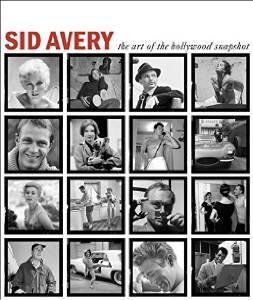
Hardcover. Canada, Reel Art Press, 1st, 2012, Book: Very Good, Dust Jacket: Very Good, Hardcover without dust jacket. Like new in publisher's shrink-wrap. James Dean on the set of Rebel Without a Cause; Audrey Hepburn on her bike with pet dog in tow; Marlon Brando taking out the garbage; Rock Hudson emerging from the shower; Elizabeth Taylor soaking up the sun. These are just a few of the iconic images for which Sid Avery is responsible. This sumptuous volume is a long overdue tribute to his prolific talent. The renowned photographer was one of the greatest names working in Hollywood from the 1940s to the 1960s, and became known for his candid portraits of the stars. He made history as the only photographer to shoot both the original 1960 cast of Ocean's Eleven and the 2001 remake, recreating his iconic group shot around the pool table. Avery was also responsible for establishing Mptvimages: the Motion Picture and Television Photo Archive. Run today by Avery's son, Ron, this publication has been produced together with mptvimages with full access granted to the depths of the archive. This complete anthology of Avery's work includes outtakes and contact sheets, with over half of the material never-before-seen.
Hardcover. Santa Monica, CA, Hennessey & Ingalls, 1st, 2001, Book: Very Good, Dust Jacket: Very Good, 162 pages. Hardcover with dust jacket. A very clean, unmarked copy with only minor edgewear to dust jacket. Marston was instrumental in establishing Pasadena as a winter resort and then as a thriving community. He and his firm designed 1000 projects, many of which still survive, including cottages and additions to resort hotels, notable commercial and civic buildings such as the Pacific Asia Museum, and the earliest bungalow court. His residential designs span the range of styles from the Arts and Crafts through English Tudor and Monterey Colonial to, most importantly, Mediterranean Revival. This is an important addition to the literature of California's Golden Age of architecture.
Hardcover. NY, Doubleday, 1st, 2002, Book: Very Good, Dust Jacket: Very Good, Hardcover in a bright, unclipped dust jacket. The discovery of gold by a team of Mormon mill workers in 1848 sparked a frenzy that shook the world. People swarmed to California from as far as China and Australia. They came from England and France, from Ireland and Chile, leaving behind their families and everything they owned in the hope of making their fortunes in the new world. They came by ship and overland, braving Tierra del Fuego and the pestilences of Panama, lured by the promise of gold. In a spellbinding narrative that spans several continents, Brands brings the fervour and excitement of the gold rush vividly to life. The Age of Gold is narrative history at its best -- the astonishing tale of one of the most extraordinary speculative frenzies in history, told by a master historian. 547 pages, clean copy.
Softcover. NY, Quadrangle, reprint, 1976, Book: Very Good, Dust Jacket: None, Softcover, 344 pages. In this exciting history, Professor Mowry has determined the motives and actions of men who established the Progressive movement in California, and has reconstructed the conditions which opened the way to their ascendancy and fall. The progressive represented, in the author's words, "a pivot on which the democratic process could swing." By examining progressivism in California, its grassroots development and its leaders, Professor Mowry contributes to an understanding of the nature of national progressivism and recent American liberalism. He also illuminates the curious and paradoxical social phenomena of American reform movements - why they begin and why they die. Name on front fly leaf, otherwise clean.
Hardcover. San Francisco, CA, John Howell-Books, 1st, 1971, Book: Very Good, Dust Jacket: Good, Hardcover. Limited to 5000 copies. 130 pages. 6 color illustrations. Color frontispiece. The original narrative, hitherto unpublished by Father Vicente Maria and further details by participants in the first explorations of the Bay's waters. Illustrations by Louis Choris in brush and pencil who was at San Francisco in 1816. Blue dust jacket with wear. Sun-fading to spine. Blue boards with gilt title to spine and front. Previous owner sticker on front flyleaf. Overall, a clean, tight copy.
Softcover. Washington DC, U.S. Department of Interior, 1st, 1975, Book: Good, Dust Jacket: None, Softcover, 180 pages, b&w illustrations. Fading to red on covers, light musty odor. Name on front fly leaf, otherwise clean.

 "Out With the Stars: Hollywood Nightlife in the Golden Eraby: Heimann, Jim")
 "Overdrive: L.A. Constructs the Future 1940-1990 by: Wim de Wit")
 "Pacific Arcadia: Images of California 1600-1915 by: Perry, Claire")
 "Pacific Standard Time : Los Angeles Art, 1945-1980by: Rebecca Peabody , Andrew Perchuk, et al.")
 "Painted Ladies: San Francisco's Resplendent Victoriansby: Baer (photography), Morley, Elizabeth Pomada, Michael Larsen (Text)")
 "Painted Ladies: San Francisco's Resplendent Victoriansby: Baer (photography), Morley, Elizabeth Pomada, Michael Larsen (Text)")
 "Palm Springs Livingby: Saeks, Diane Dorrans")
 "Pirkle Jones - California Photographs 1935-1982by: Jones, Pirkle")
 "Riviera: Photographs of Palm Springs by: King, John Brian")
 "Roaring Camp: The Social World of the California Gold Rushby: Johnson, Susan Lee")
 "Rumbling Wine Barrels (SIGNED COPY)by: Bruno Buti")
 "Sabato Rodia's Towers in Watts: Art, Migrations, Development by: Luisa Del Giudice")
 "Salt Dreams: Land and Water in Low-Down California by: Debuys, William/ Myers, Joan (Photographer)")

 "San Francisco Observedby: Silverman, Ruth")
 "Ships of the Redwood Coastby: McNairn, Jack/Jerry MacMullen")
 "Short Line to Paradise: The Story of the Yosemite Valley Railroad by: Johnston, Hank")
 "Struggle and Success: An Anthology of the Italian Immigrant Experience in California by: Paola A. Sensi-Isolani / Phylis Cancilla Martinelli")
 "Sylvanus Marston: Master Architect in Pasadena's Golden Ageby: Tuttle, Kathleen")
 "The Age of Gold: The California Gold Rush and the New American Dream by: Brands, H.W.")
 "The California Progressivesby: George E. Mowry")
 "The First Spanish Entry into San Francisco Bay 1775by: Galvin, John (ed)")
 "The Giant Sequoia of the Sierra Nevadaby: Hartesveldt, Richard J. and others")