hardcover. Toronto, University of Toronto, 1st , 1978, Book: Very Good, Dust Jacket: Very Good, Hardcover in a bright dust jacket, 203 pages. 79 full-page B&W portraits by Karsh.
Softcover. Musee McCord d'histoire, 1st, d'histoire, Book: Very Good, Dust Jacket: None, Softcover, 143 pages, illustrated throughout in b&w. Text in French and English. Clean, unmarked copy with only minor wear to wrappers.
Hardcover. Montreal, Poirier, Bessette & Co., unk., 1893, Book: Good, Dust Jacket: None, 546 pages, many b&w illustrations including maps and fold-outs. Binding is shaken and both covers loose with cracked hinges, front fly leaf loose. Internally good. Leather spine and corners with pink pebbled cloth covers, marled end papers.
Softcover. Hantsport NS, Lancelot Press, 1st, 1983, Book: Very Good, Dust Jacket: None, Softcover, 159 pages. The appendix is a 15 page list of Loyalists giving their residence in Nova Scotia, their nationality, American residence and their occupation. Includes articles on such subjects as Col. James Delancey, Nathan Pushie , the Black Loyalists, etc., etc. Clean copy.
Softcover. University of Toronto Press, 1st, 1991, Book: Very Good, Dust Jacket: None, Softcover, 264 pages. Two critical discourses central to current Canadian literary theory emerged in the late 1960s and early 1970s: post-colonialism as a political paradigm and postmodernism as a literary practice in Canadian and Quebecois fiction. Sylvia Soderlind considers the current debate about the relationship between these two discourses, and proposes a methodology that makes it possible to identify and distinguish between features pertaining to the two. Clean, bright copy.
Hardcover. Ontario CA, Vanwell Publishing St. Catherines, Ontario, 1st, 1996, Book: Very Good, Dust Jacket: Very Good, Hardcover, 344 pages, illustrated throughout in color and b&w. Clean, unmarked copy with only minor wear to dust jacket.
Softcover. Woodstock VT, Countryman Press, reprint, Book: Very Good, Dust Jacket: None, Softcover, 311 pages, b&w illustrations. Kate Austen was a young Australian nurse looking for adventure in the 1920s. She accepted an assignment working in a mission hospital in Labrador, Canada, and fell in love with the local people and harsh wilderness she found there. She also met and married her husband (the author) during her time in Labrador. Throughout the book, Kate relates in a no-nonsense voice the births, deaths, epidemics, injuries, burns and unusual medical cases she treated. She also tells affectionately of the people she served - trappers, wives, children, native Indians, fishermen, sailors, and various visitors. Some of the stories made me chuckle, and some of them made me hold my breath in suspense. She worked day and night to serve the community living around the hospital, which also served as general store and community center. The weather was dreadful most of the year, and they lived without running water, electricity, telephone, or indoor toilets. Kate reveled in the experience, often traveling hundreds of miles by dog-sled to treat sick people in out-lying homesteads. She loved the snow, ice, wind, and the dangerous ocean, and rarely complained about the primitive conditions or workload. Previous owner's inscription otherwise clean copy.
Hardcover. NY, Harper & Brothers, 1st, 1956, Book: Very Good, Dust Jacket: Good, Hardcover in a chipped, edgeworn dust jacket, B&w drawings by Rita Fava. Collection of 9 French Canadian folk stories, told to told to children at the LeBlanc summer picnic in Vermont to remind them of their ancestors in French Canada; in the beginning they lived near Quebec city and wore long red sashes and later some moved to Montreal where the color was blue. Clean copy.
Softcover. Toronto/Niagara Falls NY, Dundurn Press, 1st, 1993, Book: Very Good, Dust Jacket: None, Softcover, 389 pages, b&w illustrations. The image of the scrum - a beleaguered politican surrounded by jockeying reporters - is central to our perception of Ottawa. The modern scrum began with the arrival of television, but even in Sir John A. Macdonald's day, a century earlier, reporters in the parliamentary press gallery had waited outside the prime minister's office, pen in hand, hoping for a quote for the next edition. The scrum represents the test of wills, the contest of wits, and the battle for control that have characterized the relationship between Canadian prime ministers and journalists for more than 125 years. Scrum Wars chronicles this relationship. It is an anecdotal as well as analytical account, showing how earlier prime ministers like Sir John A. Macdonald and Sir Wilfrid Laurier were able to exercise control over what was written about their administrators, while more recent leaders like John Diefenbaker, Joe Clark, John Turner, and Brian Mulroney often found themselves at the mercy of intense media scrutiny and comment. Clean copy.
Softcover. Ontario CA, ECW Press, 1st, 2024, Book: Very Good, Dust Jacket: None, Softcover/Advanced Reading Copy, 228 pages. A restorative and resonant memoir of a year in the life of an aging shepherd. For 50 years, Barbara McLean has tended a flock of Border Leicester sheep on her small Ontario farm, Lambsquarters. In Shepherd's Sight she shares the crises, pleasures, and challenges of farm life over the course of a year. Now in her 70s, McLean faces a new problem: how much longer she can continue with the physically taxing work that is her central source of meaning and satisfaction. Through her unsentimental gaze, we witness the highs and heartbreaks of delivering and rearing lambs, the shearing and spinning of wool, the wildlife in the woods (and occasionally in the house), and the garden produce moving from seed to harvest to table. Even after half a century on this land, McLean is still making fresh observations, and she shares them in evocative, elegant prose. As she moves through the calendar year, she also reflects on years past, offering a long view on climate, stewardship and agriculture. With its vivid description and absorbing storytelling, Shepherd's Sight offers an unforgettable glimpse of a life lived on the land. Clean copy.
Softcover. Winnipeg MB, Turnstone Press, 1st pbk, 1996, Book: Very Good, Dust Jacket: None, Softcover, 135 pages, b&w illustrations. The trials, tribulations and small victories of professional baseball on the prairies from 1886 to the late 1990s. Stubbs' comprehensive research uncovers Manitoba, Saskatchewan and Alberta's rich history of teams and leagues, as well as regional heroes of the game. Clean copy.
Hardcover. Edmonton CA, Hurtig , 1st, 1973, Book: Very Good, Dust Jacket: Very Good, Hardcover, 221 pages, b&w photographs, map end papers. Edge wear, rubbing, small tears to dust jacket. Else a clean, tight copy.
Softcover. Quebec, Canadian Museum of Civilization, 1st, 2011, Book: Very Good, Dust Jacket: None, Softcover, 415 pages, b&w illustrations. This book presents the first comprehensive account of one of the great sagas of Arctic exploration and discovery, the Canadian Arctic Expedition of 1913-18, led by the ethnologist/ explorer Vilhjalmur Stefansson and the zoologist Dr. Rudolph M. Anderson. Within its pages are details of the Expedition's successes and tragedies, including the discovery of all but one large island north of the Canadian mainland, the accumulation of considerable scientific information and valuable collections, and the personal feud of the Expedition's two leaders.' Illustrated with 64 photos and 20 maps. Clean copy.
Softcover. Windsor, Ontario, Art Gallery of Wisdor, 1st, 1993, Book: Very Good, Dust Jacket: None, 200 pages. Softcover. Minor foxing to textblock edges. An otherwise clean, unmarked copy with only minor edgewear.
Hardcover. Simcoe, Ontario, The Norfolk Historical Society/Fanshawe College, 2nd revised, 1977, Book: Very Good, Dust Jacket: None, Hardcover, tan cloth stamped in black. Unpaginated. 16 full color reproductions of family members in Colonial costumes. Intact and very clean. No dust jacket.
Softcover. McGill-Queen's University Press, reprint, 1987, Book: Very Good, Dust Jacket: None, Softcover, 913 pages, b&w illustrations, maps. Trigger's work integrates insights from archaeology, history, ethnology, linguistics, and geography. This wide knowledge allows him to show that, far from being a static prehistoric society quickly torn apart by European contact and the fur trade, almost every facet of Iroquoian culture had undergone significant change in the centuries preceding European contact. He argues convincingly that the European impact upon native cultures cannot be correctly assessed unless the nature and extent of precontact change is understood. His study not only stands Euro-American stereotypes and fictions on their heads, but forcefully and consistently interprets European and Indian actions, thoughts, and motives from the perspective of the Huron culture. The Children of Aataentsic revises widely accepted interpretations of Indian behaviour and challenges cherished myths about the actions of some celebrated Europeans during the "heroic age" of Canadian history. In a new preface, Trigger describes and evaluates contemporary controversies over the ethnohistory of eastern Canada.
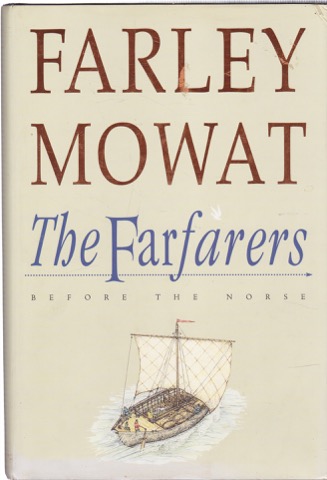
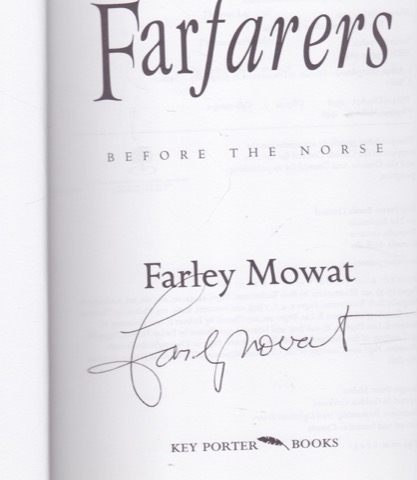
Hardcover. Toronto, Key Porter Books, 2nd pr., 1998, Book: Very Good, Dust Jacket: Very Good, Hardcover in a lightly worn dust jacket, 377 pages. SIGNED BY MOWAT on the title page. Blue endpaper maps, b&w photo illustrations. chronology. notes. After years of research, sparked by his discovery of roofless ruins in Hudson Bay, Farley Mowat presents a speculative history of the first Europeans in North America and a challenge to the presently held notion that the Vikings were the first to inhabit northern Canada. Carbon dating placed these ruins hundreds of years before the Vikings landed in Newfoundland, but the conventional accepted historical theory could offer no explanation for them. Mowat`s search led him to Scotland and the Northern Isles where he discovered ruins that resembled those he had seen on the other side of the Atlantic. He painstakingly researched early historical accounts from Roman and pre-Roman times for answers and was able to reconstruct the story of a forgotten people.
Hardcover. Middlebury VT, Vermont Folklife Center, 1st, 2003, Book: Very Good, Dust Jacket: Very Good, Hardcover in a bright, unclipped dust jacket. In rural Quebec in the 1830s, Jenny is hired to help a family by cooking and cleaning after her predecessor, the beloved Emily, has died, but Jenny is mysteriously prevented from completing one of her chores. Color illustrations by Lydia Dabcovich.
Hardcover. Middlebury VT, Vermont Folklife Center, 1st, 2003, Book: Very Good, Dust Jacket: Very Good, Hardcover in a bright, unclipped dust jacket. In rural Quebec in the 1830s, Jenny is hired to help a family by cooking and cleaning after her predecessor, the beloved Emily, has died, but Jenny is mysteriously prevented from completing one of her chores. Color illustrations by Lydia Dabcovich.
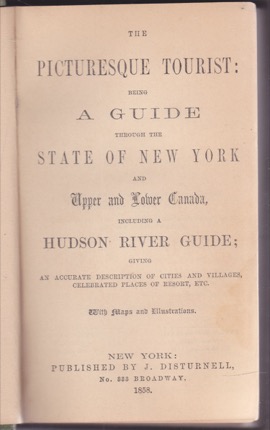
Hardcover. NY, J. Disturnell, Revised Ed., 1858, Book: Very Good, Dust Jacket: None, Hardcover, embossed green cloth with with gilt design and lettering. 298 pages plus 26 pages of ads. Fifteen plates, maps and full-page illustrations, including the fold-out map. Tissue guard at frontis. Covers travel in upstate and western New York, as well as Canada, by steamboat and rail. The maps depict the Hudson River from New York to Troy, and the areas around Lakes Champlain and Ontario. The illustrations at the end are advertisements for hotels, rail and steam lines. A revised edition of this New York and Canada guide, orginally published in 1844. Small embossed stamp on front fly, otherwise clean.
Softcover. Toronto CA, McClelland and Stewart, 1st, 1987, Book: Very Good, Dust Jacket: None, Softcover, 264 pages, 125 color, 135 black & white. Published in conjunction with an exhibition. "A major study of the artistic traditions of Canada's Native peoples and of their place in the cultures and belief systems in which they originated. Here, for the first time, is Native Canadian work from museums and private collections around the world. The works, and the essays that describe their contexts, bring to life the spiritual and aesthetic identity of the craftspeople and their societies. From richly ornamented costumes displaying the wealth of their owners to practical techologies that enabled the peoples to thrive in their environments, these treasures reflect Native life at the time of contact with Europeans." Clean copy.
Softcover. Ontario CA, Firefly Books, 2nd pr., 1998, Book: Very Good, Dust Jacket: None, Softcover, pictorial wrappers. 160 pages with color photos. The authors have not only captured the unique flavor of the people but have recorded hours of conversations as their subjects reminisced about life, work and the changes that have washed over the island since Confederation. Clean copy.

 "Karsh Canadiansby: Karsh, Yousuf")
 "La Famille McCord : une vision passionn")
 "Lake St. Louis Old and New and Cavelier de La Salleby: Girouard (transl.), Disire")
 "Little Anne of Canadaby: Madeline Brandeis")
 "Loyalists in Nova Scotia Biographies of Loyalist Settlers by: Wetmore, Donald & Sellick, Lester B.")
 "Margin/Alias: Language and Colonization in Canadian and Quebecois Fiction (Heritage)by: Soderlind, Sylvia")
 "Moshe Safdieby: Kohn, Wendy")
 "Northern Nurse by: Elliott Merrick")
 "Sashes Red and Blue by: Carlson, Natalie Savage; Fava, Rita (Illus.)")
 "Scrum Wars: The Prime Ministers and the Mediaby: Levine, Allan")
 "Shepherd's Sight: A Farming Lifeby: Barbara McLean")
 "Shoestring Glory: Semi-Pro Ball on the Prairies 1886-1994 by: Stubbs, Lewis St George")
 "Sitting Bull: The Years in Canadaby: MacEwan, Grant")
 "Social Canada in the millennium: Reform imperatives and restructuring principlesby: Courchene, Thomas J")
 "Stefansson, Dr. Anderson and the Canadian Arctic Expedition 1913 - 1918: A Story of Exploration Science and Sovereignty by: Stuart E. Jenness")
 "Talented Intruder, The: Wyndham Lewis in Canada, 1939-1945by: Mastin, Catharine M.")
 "The Cabinet Makers of Norfolk Countyby: Yeager, Ed., William")
 "The Children of Aataentsic; A History of the Huron People to 1660 by: Bruce G. Trigger")
 "The Farfarers: Before the Norse (SIGNED COPY)by: Mowat, Farley")
 "The Ghost on the Hearthby: Susan Milord")
 "The Ghost on the Hearthby: Susan Milord")
 "The Picturesque Tourist: Being a Guide Through the State of New York and Upper and Lower Canada, Including a Hudson River Guide; Giving an Accurate Description of Cities and Villages, Celebrated Place of Escort, Etc")

 "The Spirit Sings Artistic Traditions of Canada's First Peoplesby: Glenbow Museum")
 "This Marvelous Terrible Place: Images of Newfoundland and Labrador by: Momatiuk, Yva/Eastcott, John")