Hardcover. NY, Charles Scribner's Sons, 1st US, 1971, Book: Very Good, Dust Jacket: None, Hardcover in decorated cloth, 32 pages illustrated in color by Mahood. Enjoying the last few days of summer,The Emperor of Japan was about to eat his morning egg when suddenly out jumped a little smiling dragon. He seemed very friendly, so the Emperor decided to call him Hojo and keep him as the Imperial Pet. Hojo soon became a great favorite with everyone by making himself useful around the palace. He made delicious soups, had a very light hand with pastry, and the Emperor loved his pancakes. In addition he was always gay and cheerful, could sing, play chess, enjoy a joke, and his hot breath kept the palace warm, which was a great comfort to the Emperor who suffered from cold feet. Name on front fly leaf, otherwise clean and bright copy.
Hardcover. NY, Stewart Tabori & Chang, 1st, 1990, Book: Very Good, Dust Jacket: Very Good, Hardcover in a bright, unclipped dust jacket. Cream parchment over brown cloth-covered boards, illustrated in color by Gary Kelley, designed by Rita Marshall. Clean copy.
Hardcover. Boston, Houghton Mifflin, reprint, 1923, Book: Very Good, Dust Jacket: None, Hardcover, black cloth with cover illustration paste-down, 435 pages. Numerous illustrations by E. Boyd Smith, including 12 color plates. Clean copy. Gilt spine lettering faded.
Hardcover. NY, Little, Brown Books for Young Readers, 1st, 2009, Book: Very Good, Dust Jacket: Very Good, Hardcover, in a bright, unclipped dust jacket. Award-winning artist Jerry Pinkney's wordless adaptation of one of Aesop's most beloved fables, an unlikely pair learn that no act of kindness is ever wasted. WINNER OF THE 2010 CALDECOTT MEDAL SIGNED BY PINKNEY.
Hardcover. Joliet IL, P. F. Volland Company, 1st, 1920, Book: Good, Dust Jacket: None, Hardcover, color pictorial boards, illustrated throughout including endpapers by Gruelle. No other printings or editions mentioned so assume first printing. One page with a mild smudge, some chipping to top & bottom of spine. A pencilled name on front fly leaf.
Hardcover. NY, Dunreath Publishing, 2nd Ed., 1893, Book: Good, Dust Jacket: None, Hardcover, light blue cloth, lightly soiled, stamped in dark blue with a decorative cover. 80 pages with charming line drawings by George W. Bardwell. The story follows the exploits of a band of elves as they search for the world's most picturesque location. The elves face many difficulties and impediments on their voyage, but they keep going for their goal. They pick up valuable lessons about cooperation, tenacity, and the wonders of nature along the way. Hinge cracked at title page, book a little shaken but holding, clean copy.
Hardcover. NY, Platt & Munk, reprint, Book: Very Good, Dust Jacket: None, Hardcover, yellow cloth covers stamped in black. The kindness and determination of the Little Blue Engine have inspired millions of children around the world since the story was first published in 1930. Cherished by readers for over ninety years, The Little Engine That Could is a classic tale of the little engine that, despite her size, triumphantly pulls a train full of wonderful things to the children waiting on the other side of a mountain. Illustrated in color by George and Doris Hauman. Clean, no dust jacket.
Hardcover. Philadelphia, John C. Winston, 2nd pr., 1945, Book: Good, Dust Jacket: None, Hardcover, green cloth stamped in brown with a prancing colt on the cover. Picture book story of the colt Chip and all the mischief he causes just because he wants a friend and partner to swish at flies like the big horses. Illustrated in color and b&w by Diana Thorne. Inscription on front fly leaf otherwise clea, Binding is a tad loose, light shelfwear.
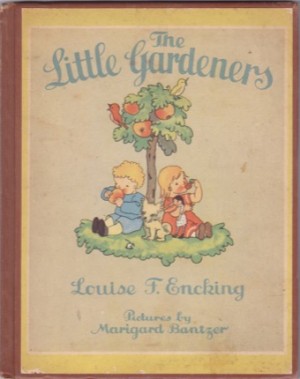
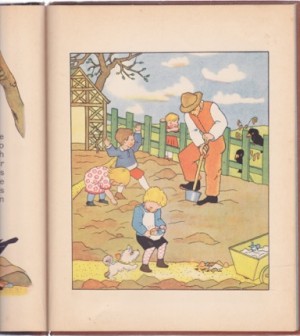
Hardcover. Chicago, Albert Whitman and Co , 1st, 1935, Book: Very Good, Dust Jacket: None, Hardcover, brown boards with a large color label on the front cover. Translated from the German of Elizabeth Morgenstern. Lovely color plates by Marigard Bantzer. Mild soil to covers, inside bright and clean.
Hardcover. Zurich, North-South Books, 1st, 1999, Book: Very Good, Dust Jacket: Very Good, Hardcover in a bright dust jacket. After the hens refuse to help goose, would-be father Mr. Goose decides to take matters into his own hands and sets up a nest for a stray egg, but when it is born, he discovers that it is not a goose, but Mr. Goose is not bothered by the comments of others and remains as proud as ever of his new hatchling. Color illustrations by Alan Marks.
Hardcover. Boston/NY, Houghton Mifflin Harcourt, reprint, 2017, Book: Very Good, Dust Jacket: Very Good, Hardcover in a bright dust jacket. A lovely reprint of the classic and Caldecott Medal winner first published in 1942. This edition comes with window stickers on a rear page. Clean copy.
Hardcover. Boston, Houghton, Mifflin & Co. , 1st, 1925, Book: Very Good, Dust Jacket: None, Hardcover, green cloth covers stamped in red, 226 pages A collection of 12 stories from different countries, illustrated by Harold Cue from drawings by Jenny Nystrom. Clean, bright copy.
Hardcover. NY, Harper & Brothers, reprint, 1877, Book: Good, Dust Jacket: None, Hardcover, green cloth with gilt lettering on cover and spine, 194 pages plus publisher's ads in rear. Illustrated with b&w line plates by Swain. Binding a bit worn. An attractive later printing of the popular English novelist's 1874 bestseller. Previous owner's name on blank pelim page.
Hardcover. NY, JellyBean Press, 1st, 1993, Book: Very Good, Dust Jacket: None, Hardcover, glazed pictorial boards. illustrated in rich color throughout by Charles Santore.
Hardcover. Copenhagen, Jespersen & Pio, 1961, Book: Good, Dust Jacket: Good, Hardcover in a bright dust jacket with light wear, closed tear. 125 pages, color illustrations by Axel Mathiesen. No markings.
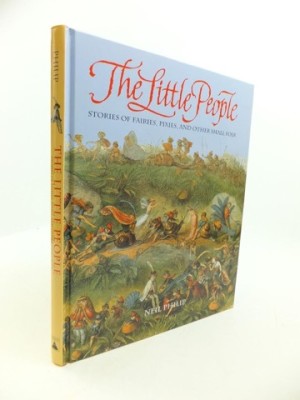
Hardcover. NY, Harry N. Abrams, 1st, 2002, Book: Very Good, Dust Jacket: Very Good, Hardcover in a bright dust jacket. A collection of fairy folklore and folk tales, bibliography, glossary. Color illustrations by Arthur Rackham, Richard Doyle, Edmund Dulac, William Blake, and George Cruikshank. Glossy illustrated boards. Clean copy.
Hardcover. NY, Houghton Mifflin Harcourt, reprint, 2018, Book: Very Good, Dust Jacket: Very Good, Hardcover in a bright dust jacket, 224 pages. Few stories are as widely read and as universally cherished by children and adults alike as The Little Prince. This special edition of Antoine de Saint-Exupery's world-famous classic marks its seventy-fifth anniversary in print. Featuring a beautiful new cover and a special look at its history and making including a biography of Saint-Exupery, sketches, photos, and reviews from the first edition. Clean copy.
Hardcover. London, William Heinemann, 1st UK, 1944, Book: Very Good, Dust Jacket: None, Hardcover, peach-color cloth stamped with a red and blue illustration of the little prince being lifted by his bird kite. This is the First UK Edition, so stated on the copyright page. The US edition was published the year before in 1943. 89 pages illustrated in color by the author. Light fading to red lettering on spine, clean copy.
Hardcover. NY, Viking Press, 1st , 1950, Book: Very Good, Dust Jacket: None, SIGNED BY RUTH SAWYER on half-title page. Hardbound, 108 pages. Illustrated by Jay Hyde Barnum in color and b&w. Previous owner's signature and stamp front fly leaf. Illustrated endpapers. Tan cloth cover, no dust jacket. Pink top edge.
Hardcover. NY, Harcourt Brace & World, BC Ed., nd, Book: Very Good, Dust Jacket: None, Hardcover, pictorial cloth, 32 pages illustrated in 3-colors by William Lipkind and Nicholas Mordbinoff. NOT ex-library. Weekly Reader edition. Clean, bright copy.
Hardcover. NY, G. P. Putnam's Sons, 1st, 1996, Book: Very Good, Dust Jacket: Very Good, Hardcover in a bright, unclipped dust jacket, 64 pages. Yarbrough weaves a beautiful story in picture-book format about the role of music in the lives of Africans and shows how it was transformed on American and Caribbean soil. The tale revolves around a "Roots of Rhythm and Blues" concert attended by a sister and brother and their parents, great grandmother, and elderly neighbor. At the park, the father tells his children about slavery and the "culture baggage" the slaves carried with them from Africa. With a compelling delivery that echoes the rhythmic chanting of the griot, the man speaks about concepts such as spirit power and the tree of life that at first are hard for his young son to grasp. The performance begins with a song of praise for the strength and endurance of a transplanted people. By the end, the youngsters understand more about their heritage and the role spirituals played and continue to play in it. Geter's pencil-and-charcoal illustrations are richly imaginative, evoking images of Africa, slavery, roots, and soaring trees. Clean copy.

 "The Laughing Dragonby: Kenneth Mahood")
 "The Lazy Automobileby: Wadsworth, Wallace")
 "The Legend of Sleepy Hollowby: Irving, Washington / Gary Kelley (Illust.)")
 "The Life and Strange Surprising Adventures of Robinson Crusoeby: DeFoe, Daniel & Smith, E. Boyd (illustrator)")
 "The Lion & the Mouse (SIGNED COPY)by: Pinkney, Jerry")
 "The Little Brown Bear by: Gruelle, Johnny")
 "The Little Elves Seeking The Beautiful World: A Book For Childrenby: Hamilton, Warner Lucy")
 "The Little Engine That Couldby: Watty Piper")
 "The Little Fellowby: Henry, Marguerite/Diana Thorne (Illust.)")
 "The Little Gardeners by: Louise F. Encking / Marigard Bantzer (Illust.)")
 "The Little Green Goose by: Adele Sansone/Alan Marks")
 "The Little House: 75th Anniversary Edition by: Virginia Lee Burton")
 "The Little Lady in Green and Other Tales by: Tappan, Eva March")
 "The Little Lame Prince by: By The Author Of John Halifax (Miss Murlock)")
 "The Little Mermaid by: Hans Christian Andersen, Illustrator: Charles Santore")
 "The Little Mermaid and Other Fairy-Tales by: Hans Andersen")
 "The Little People: Stories of Fairies, Pixies, and Other Small Folkby: Neil Philip")

 "The Little Prince 75th Anniversary Edition: Includes the History and Making of the Classic Storyby: De Saint-Exup?©ry, Antoine")
 "The Little Princeby: Saint-Exupery, Antoine de")
 "The Little Red Hen by: Milo Winter (Illust.)")
 "The Little Red Horse (SIGNED COPY)by: Ruth Sawyer, Jay Hyde Barnum")
 "The Little Tiny Roosterby: Will and Nicolas")
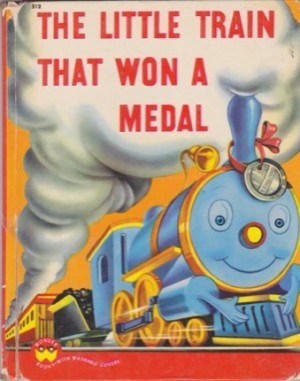
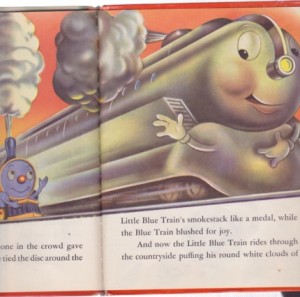
 "The Little Train That Won A Medal by: Darlene Geis / Anton Loeb (Illustrator)")
 "The Little Tree Growin' in the Shade by: Camille Yarbrough /Tyrone Geter")