Hardcover. New York, W. W. Norton & Company, 1st, 2003, Book: Very Good, Dust Jacket: Very Good, 255 pages. Hardcover. Full color and black & white illustrations. Remainder marks on top edge at spine. Light wear. Clean, unmarked copy.
Hardcover. NY, Thames & Hudson, 1st, 2006, Book: Very Good, Dust Jacket: Very Good, Hardcover, 249 pages. Marking the fiftieth anniversary of the October 1956 Hungarian revolt against Soviet domination after World War II, this imposing volume contains powerful black-and-white photographs taken during the years preceding as well as the outbreak and crushing of the uprising by a German member of the international photojournalist cooperative Magnum. Introduced by Lessing's recollections and Hungarian French historian Francois Fejto's precis of the momentous events, the pictures appear in three chapters, "Communist Hungary," "The Revolution," and "The Failure." Hungarian novelist George Konrad's intense impressions of the time, during which he carried a rifle as a revolutionary young intellectual, follow the first chapter, and French political scientist Nicolas Bauquet's assessment of the revolt's impact on Western Europe's Communist parties, the USSR, and subsequent European history follows the third. Views of the cemetery in which the uprising's martyrs are now buried conclude the book elegiacally, and brief last words by Lessing and the director of Hungary's Institute 56 indicate who may forget what happened and why the rest of us should always remember. An extraordinary document.
Hardcover. NY, Aperture, 1st, 1998, Book: Very Good, Dust Jacket: Very Good, Hardcover, 168 pages. A native of Kazakhstan, Ljalja Kuznetsova traversed the expanses of the Central Asian steppe to photograph the gypsies, or Roma people, whose mysterious comings and goings have fascinated her since she was a child. Shaking the Dust of Ages: Gypsies and Wanderers of the Central Asian Steppe is the first book devoted to these pictures, for which Kuznetsova won the Mother Jones Leica Medal of Excellence and the Paris Grand Prix for Photography. Kuznetsova's photographs present rare, intimate portraits of gypsies-- whose freedom from the ties of civilization is reflected in the wild winds and unlimited vistas of the steppe landscape. As Kuznetsova traveled through Kazakhstan, Turkmenistan, Uzbekistan, and the Ukraine, the gypsies continually inspired her. She found in them a people without frontiers, living independent of politics, religious dispute, or social class. Though their presence on the steppe is becoming a thing of the past, Kuznetsova's cast of characters and their world seem timeless in these images.
Softcover. Princeton NJ, Princeton University Press, 1st, 1995, Book: Very Good, Dust Jacket: None, Softcover, 443 pages. In the first political analysis of unemployment in a socialist country, Susan Woodward argues that the bloody conflicts that are destroying Yugoslavia stem not so much from ancient ethnic hatreds as from the political and social divisions created by a failed socialist program to prevent capitalist joblessness. Under Communism the concept of socialist unemployment was considered an oxymoron; when it appeared in postwar Yugoslavia, it was dismissed as illusory or as a transitory consequence of Yugoslavia's unorthodox experiments with worker-managed firms. In Woodward's view, however, it was only a matter of time before countries in the former Soviet bloc caught up with Yugoslavia, confronting the same unintended consequences of economic reforms required to bring socialist states into the world economy. Clean copy.
Softcover. University of Washington Press, 1st pbk., 1977, Book: Very Good, Dust Jacket: None, Softcover, 365 pages. Provides an over-all picture of the least studied and most obscured part of Balkan history, the Ottoman period. The book begins with the early history of the Ottomans and with their establishment in Europe, describing the basic Muslim and Turkish features of the Ottoman state. The author goes on in subsequent sections to show how these features influenced every aspect of life in the European lands administered directly by the Ottomans (the "core" provinces) and left a permanent mark on states that were vassals of or paid tribute to the empire. Clean copy.
Hardcover. Prague, SNDK, 1st, 1958, Book: Very Good, Dust Jacket: None, SIGNED BY WENIG. Czech language. Black & white pen-line drawings in color by Mikolase Alse. Red cloth with gilt decoration.
Softcover. Bloomington IN, iUniverse, 1st, 2007, Book: Very Good, Dust Jacket: None, Softcover, 155 pages including epilogue. This is the story of Checiny, the author's hometown in southern Poland, and of the people who lived there between the two world wars of the 20th Century. Clean copy.
Softcover. Jerusalem, Gefen Publishing House, reprint, Book: Very Good, Dust Jacket: None, Softcover. Masha Greenbaum delivered an excellent history of the Jews of Lithuania, from the earliest years, beginning in the 9th Century through WWII. The author discusses the many kings, their courts, the Church, the various social strata and their relationships with the Jews throughout the centuries. Politics, religion, areas of livelihood and social standing are detailed in each time period. Clean, like new.
Hardcover. NY/Oxford UK, Berghahn Books, 1st, 2003, Book: Very Good, Dust Jacket: None, Hardcover, 232 pages, pictorial boards. Milena Jesenska, born in Prague in 1896, is most famous as one of Franz Kafka's great loves. Although their relationship lasted only a short time, it won the attention of the literary world with the 1952 publication of Kafka's letters to Milena. Her own letters did not survive. Later biographies showed her as a fascinating personality in her own right. In the Czech Republic, she is remembered as one of the most prominent journalists of the interwar period and as a brave one: in 1939 she was arrested for her work in the resistance after the German occupation of Bohemia and Moravia, and died in Ravensbruck concentration camp in 1944. It is estimated that Jesenska wrote well over 1,000 articles but only a handful have been translated into English. In this book her own writings provide a new perspective on her personality, as well as the changes in Central Europe between the two world wars as these were perceived by a woman of letters. The articles in this volume cover a wide range of topics, including her perceptions of Kafka, her understanding of social and cultural changes during this period, the threat of Nazism, and the plight of the Jews in the 1930s. Clean copy.
Hardcover. NY, Riverhead, 1st, 2004, Book: Very Good, Dust Jacket: Very Good, Hardcover in a bright dust jacket, 349 pages. A heartwarming memoir describes growing up in Czechoslovakia during the 1970s as the child of dissidents involved with the failed Prague Spring uprising in a loving family--her mother, the disowned daughter of two Party elite parents; her inventor and cab driver father; her beautiful teenage sister; and her dog, a famed Czech TV star. Clean copy.
Hardcover. New York , Penguin Putnam Inc, 1st, 1993, Book: Very Good, Dust Jacket: Very Good, Hardcover, 158 pages, illustrated throughout with photos in b&w. Clean, unmarked copy with only minor wear to dust jacket. Elie Wiesel provides the preface to a master photographer's record of eastern Europe's Jewish communities in the years just before World War II with 160 photographs that capture the ordinary lives of Jews before the Holocaust.
Softcover. Paris, ACAER/GPC, 1st, 1994, Book: Very Good, Dust Jacket: None, 68 pages. Softcover. Exhibition catalog. French and English text. Black & white photographs. From the introduction: "This catalogue has been re-edited by advanced reading copy wraps en reve architecture centre with the Georges Pompidou Centre, for the presentation in France of the exhibition "Warchitecture-Sarajevo, a wounded city". The exhibition and the catalogue were prepared by the architects of the Sarajevo association, members of the associations of Architects of Bosnia-Herzegovina DAS-SABIH". Light rubbing to cover edges, minor creases at corners. Clean, unmarked text.
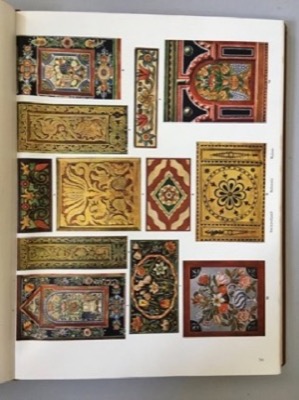
Hardcover. NY, E. Weyhe, 1st US, Book: Very Good, Dust Jacket: None, Hardcover, large folio, ( over 12" - 15" tall ), red cloth stamped in gilt. 56 pages of German text, comprising introduction and detailed catalogue of plates, the origins of objects (textiles, ceramics and wood) which demonstrate the origins and continued use of traditional design in the folk arts of Europe. Followed by 132 color plates of the objects mostly from Eastern Europe, most pasted in. First published in Germany in 1926, this appears to be the first US edition produced the same year. Architect Albert Kahn's copy with his ownership signature in pencil and date of 1926 on the front fly leaf. DOMESTIC SHIPPING ONLY.
Hardcover. New York, Frances Foster Books/Farrar Straus and Giroux, 1st, 2007, Book: Very Good, Dust Jacket: Very Good, Hardcover in a very good dust jacket. Non-paginated. SIGNED WITH DRAWING BY PETER SIS ON COPYRIGHT PAGE. Full color illustrations. Clean, bright copy.
Hardcover. New York , Farrar Straus Giroux , 1st, 2007, Book: Very Good, Dust Jacket: Very Good, Non-paginated. Hardcover with dust jacket. Theft protection sticker on front fly leaf. Clean, tight copy otherwise. Color illustrations by Sis.
Hardcover. Barnsley UK, Pen & Sword Books, 1st, 2012, Book: Very Good, Dust Jacket: Very Good, Hardcover, 155 pages., b/w plates., maps, index, This remarkable account describes the open warfare Polish Underground fighters waged against the Nazi occupiers of their city-with a shortage of arms, ammunition, and medical support-in the expectation of Soviet assistance that came too late to help the precipitous uprising.
Hardcover. NY, Thames & Hudson, 1st, 2015, Book: Very Good, Dust Jacket: None, Hardcover, 208 pages, 174 color plates. Window-Shopping through the Iron Curtain presents a selection of more than 100 images of shop windows shot by David Hlynsky during four trips taken between 1986 and 1990 to Poland, Czechoslovakia, Hungary, Yugoslavia, Bulgaria, East Germany, and Moscow. Using a Hasselblad camera, Hlynsky captured the slow, routine moments of daily life on the streets and in the shop windows of crumbling Communist countries. The resulting images could be still-lifes representing the intersection of a Communist ideology and a consumerist, Capitalist tool-the shop window-with the consumer stuck in the middle. Devoid of overt branding or calculated seduction, the shop windows were typically adorned with traditional yet incongruous symbols of cheer: homey lace curtains, paper flowers, painted butterflies, and pictures of happy children. Some windows were humble in their simple offerings of loaves and tinned fishes; others were zanily artistic, as in the modular display of military shirts in a Moscow storefront; and some illustrated intense professional pride, such as a sign in a Prague beauty salon depicting a pedicurist smiling fiendishly over an imperfect sole. The photographs are accompanied by essays by art historian Martha Langford and cultural studies specialist Jody Berland, as well as Hlynsky's own account of his time as a flaneur in the shopping plazas of the collapsing Soviet empire-"a vast ad-hoc museum of a failing utopia" that in 1989 began to close forever. No dj issued.
Hardcover. NY, Thames & Hudson, 1st, 2015, Book: Very Good, Dust Jacket: None, Hardcover, 208 pages, 174 color plates. Window-Shopping through the Iron Curtain presents a selection of more than 100 images of shop windows shot by David Hlynsky during four trips taken between 1986 and 1990 to Poland, Czechoslovakia, Hungary, Yugoslavia, Bulgaria, East Germany, and Moscow. Using a Hasselblad camera, Hlynsky captured the slow, routine moments of daily life on the streets and in the shop windows of crumbling Communist countries. The resulting images could be still-lifes representing the intersection of a Communist ideology and a consumerist, Capitalist tool-the shop window-with the consumer stuck in the middle. Devoid of overt branding or calculated seduction, the shop windows were typically adorned with traditional yet incongruous symbols of cheer: homey lace curtains, paper flowers, painted butterflies, and pictures of happy children. Some windows were humble in their simple offerings of loaves and tinned fishes; others were zanily artistic, as in the modular display of military shirts in a Moscow storefront; and some illustrated intense professional pride, such as a sign in a Prague beauty salon depicting a pedicurist smiling fiendishly over an imperfect sole. The photographs are accompanied by essays by art historian Martha Langford and cultural studies specialist Jody Berland, as well as Hlynsky's own account of his time as a flaneur in the shopping plazas of the collapsing Soviet empire-"a vast ad-hoc museum of a failing utopia" that in 1989 began to close forever. No dj issued.
Hardcover. NY, Grosset & Dunlap, reprint, 1916, Book: Very Good, Dust Jacket: None, Hardcover, 385 pages, illustrated with b&w photos. Tan cloth stamped in red and dark green on front and spine. No D.J.
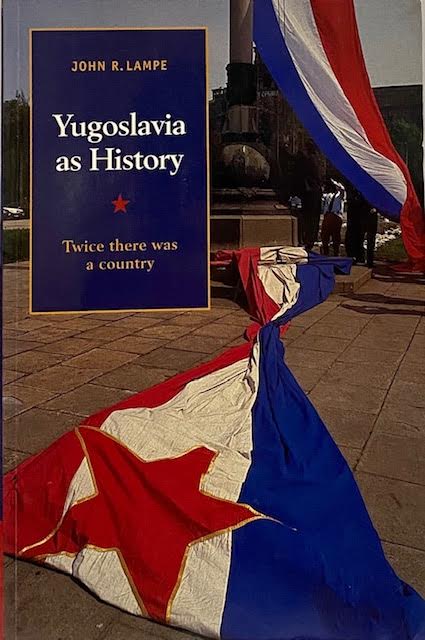
Softcover. Cambridge University Press, 1st paperback, 1996, Book: Very Good, Dust Jacket: None, 421 pages. Softcover. Wrapper very good, no rips or tears. B/w illustrations. Pages and edges have a touch of tanning from age, otherwise clean and unmarked. Binding tight. In very good shape. The first book to examine the bloody demise of the former Yugoslavia in the full light of its history and that of its ethnic mosaic.

 "Regions of the Great Heresy - Bruno Schulz - A Biographical Portraitby: Ficowski, Jerzy")
 "Revolution in Hungary: The 1956 Budapest Uprisingby: Erich Lessing")
 "Shaking the Dust of Ages: Gypsies and Wanderers of the Central Asian Steppeby: Ljalja Kuznetsova , Inge Morath, et al.")
 "Socialist Unemployment: The Political Economy of Yugoslavia, 1945-1990by: Susan L. Woodward")

 "Sztetl: My Life in a Small Polish Town Before the Holocaust by: Kirsten, Rose Fromm")
 "The Hungarian Revolutionby: George Mikes")
 "The Jews of East Central Europe Between the World Wars by: Mendelsohn, Ezra")
 "The Jews of Lithuania: A History of a Remarkable Community 1316-1945by: Greenbaum, Masha")
 "The Journalism of Milena Jesenska: A Critical Voice in Interwar Central Europeby: Kathleen Hayes (Ed.)")
 "The Slavs by: Marija Gimbutas")
 "The Twelve Little Cakes by: Dominika Dery")
 "To Give Them Light: Legacy of Roman Vishniacby: Vishniac, Roman")
 "Urbicide - Sarajevo - Sarajevo, Une Ville Blesseeby: Curic, Borislav/Nedzad Delija/Igor Grozdanic/Nazif Hasanbegovic/Boran Hrelja/Nedzad Hrelja/Aida Kalauzovic-Mandic")
 "Volkskunst in Europa by: Bossert, Helmuth Theodor")
 "Wall, The - Growing Up Behind the Iron Curtain (SIGNED WITH DRAWING)by: Sis, Peter")
 "Wall, The: Growing Up Behind the Iron Curtainby: Sis, Peter")
![Warsaw 1944: An Insurgent's Journal of the Uprisingby: Czajkowski, Zbigniew; Marek Czajkowski [trans.]](javascript:largeIMTop('https://www.browsingisarousing.com/shop/images/Warsaw-1944-An-Insurgents-Journal-of-the-Uprising_by_Czajkowski-Zbigniew-Marek-Czajkowski-trans.370433-385520.jpg','https://www.browsingisarousing.com/shop/images/Warsaw-1944-An-Insurgents-Journal-of-the-Uprising_by_Czajkowski-Zbigniew-Marek-Czajkowski-trans.370433-385520.jpg',0,'370433',0,'') "Warsaw 1944: An Insurgent's Journal of the Uprisingby: Czajkowski, Zbigniew; Marek Czajkowski [trans.]")
 "Window-Shopping through the Iron Curtainby: David Hlynsky , Martha Langford, et al.")


 "Window-Shopping through the Iron Curtainby: David Hlynsky , Martha Langford, et al.")


 "With Serbia Into Exile;:an American's Adventures With the Army That Cannot Dieby: Jones, Fortier")
 "Yugoslavia as History: Twice There was a Countryby: Lampe, John R.")