Hardcover. NY, Metropolitan Museum of Art, 1st, 2001, Book: Very Good, Dust Jacket: Very Good, Hardcover in a bright dust jacket, still sealed in publisher's shrinkwrap. 550 pages. Seventeenth-century Delft has traditionally been viewed as a quaint town whose artists painted scenes of domestic life. This important book revises that image, showing that the small but vibrant Dutch city produced fine examples of all the major arts--including luxury goods and sophisticated paintings for the court at The Hague and for patrician collectors in Delft itself. The book traces the history and culture of Delft from the 1200s through the lifetime of the city's most renowned painter, Johannes Vermeer. The authors discuss at length some ninety major paintings (seventeen by Vermeer), forty drawings, and a choice selection of decorative arts, all of which are reproduced in full color. Among the paintings are state portraits, history pictures, still lifes, views of palaces and church interiors, illusionistic murals, and refined genre pictures by Vermeer and Pieter de Hooch. The rich works on paper encompass exquisite drawings by Delft artists and sketches of the town by visiting artists. Included in the decorative arts are tapestries, bronze statuary, silver, Delftware, and glass. The volume concludes with an essay that takes the reader on a walk through seventeenth-century Delft. It is accompanied by maps of the city's neighborhoods that indicate major monuments and the homes of patrons, art dealers, and painters.
Softcover. New York, Guggenheim Museum, 1st, 1997, Book: Very Good, Dust Jacket: None, 147 pages. Softcover. Full color illustrations. Light bump to top right corner. Clean, unmarked copy.
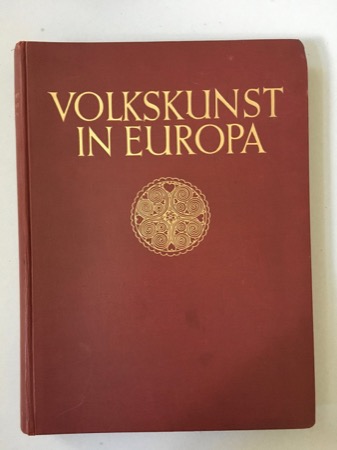
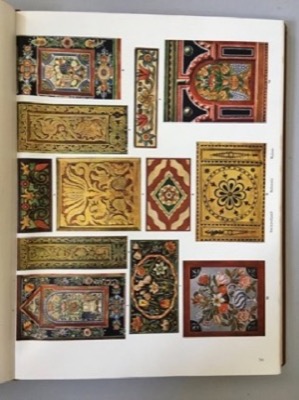
Hardcover. NY, E. Weyhe, 1st US, Book: Very Good, Dust Jacket: None, Hardcover, large folio, ( over 12" - 15" tall ), red cloth stamped in gilt. 56 pages of German text, comprising introduction and detailed catalogue of plates, the origins of objects (textiles, ceramics and wood) which demonstrate the origins and continued use of traditional design in the folk arts of Europe. Followed by 132 color plates of the objects mostly from Eastern Europe, most pasted in. First published in Germany in 1926, this appears to be the first US edition produced the same year. Architect Albert Kahn's copy with his ownership signature in pencil and date of 1926 on the front fly leaf. DOMESTIC SHIPPING ONLY.
Hardcover. NY, Thames & Hudson, 1st, 2015, Book: Very Good, Dust Jacket: None, Hardcover, 208 pages, 174 color plates. Window-Shopping through the Iron Curtain presents a selection of more than 100 images of shop windows shot by David Hlynsky during four trips taken between 1986 and 1990 to Poland, Czechoslovakia, Hungary, Yugoslavia, Bulgaria, East Germany, and Moscow. Using a Hasselblad camera, Hlynsky captured the slow, routine moments of daily life on the streets and in the shop windows of crumbling Communist countries. The resulting images could be still-lifes representing the intersection of a Communist ideology and a consumerist, Capitalist tool-the shop window-with the consumer stuck in the middle. Devoid of overt branding or calculated seduction, the shop windows were typically adorned with traditional yet incongruous symbols of cheer: homey lace curtains, paper flowers, painted butterflies, and pictures of happy children. Some windows were humble in their simple offerings of loaves and tinned fishes; others were zanily artistic, as in the modular display of military shirts in a Moscow storefront; and some illustrated intense professional pride, such as a sign in a Prague beauty salon depicting a pedicurist smiling fiendishly over an imperfect sole. The photographs are accompanied by essays by art historian Martha Langford and cultural studies specialist Jody Berland, as well as Hlynsky's own account of his time as a flaneur in the shopping plazas of the collapsing Soviet empire-"a vast ad-hoc museum of a failing utopia" that in 1989 began to close forever. No dj issued.
Hardcover. NY, Thames & Hudson, 1st, 2015, Book: Very Good, Dust Jacket: None, Hardcover, 208 pages, 174 color plates. Window-Shopping through the Iron Curtain presents a selection of more than 100 images of shop windows shot by David Hlynsky during four trips taken between 1986 and 1990 to Poland, Czechoslovakia, Hungary, Yugoslavia, Bulgaria, East Germany, and Moscow. Using a Hasselblad camera, Hlynsky captured the slow, routine moments of daily life on the streets and in the shop windows of crumbling Communist countries. The resulting images could be still-lifes representing the intersection of a Communist ideology and a consumerist, Capitalist tool-the shop window-with the consumer stuck in the middle. Devoid of overt branding or calculated seduction, the shop windows were typically adorned with traditional yet incongruous symbols of cheer: homey lace curtains, paper flowers, painted butterflies, and pictures of happy children. Some windows were humble in their simple offerings of loaves and tinned fishes; others were zanily artistic, as in the modular display of military shirts in a Moscow storefront; and some illustrated intense professional pride, such as a sign in a Prague beauty salon depicting a pedicurist smiling fiendishly over an imperfect sole. The photographs are accompanied by essays by art historian Martha Langford and cultural studies specialist Jody Berland, as well as Hlynsky's own account of his time as a flaneur in the shopping plazas of the collapsing Soviet empire-"a vast ad-hoc museum of a failing utopia" that in 1989 began to close forever. No dj issued.
Hardcover. London, Sampson Low, Son, and Marston, reprint, undated/c1880, Book: Good, Dust Jacket: None, Hardcover. History of the art of engraving within a European context. Undated, published c1880. Illustrated with 34 black/white reproductions of engravings. Good condition; pages have gilt edges, cloth bound book has some wear to the edges and introductory pages lightly spotted from age.

 "Vermeer and the Delft School by: Walter Liedtke, Michiel C. Plomp, et al.")


 "Visions of Paris - Robert Delaunay's Seriesby: Rosenthal, Mark/Matthew Drutt/Guggenheim Museum")
 "Volkskunst in Europa by: Bossert, Helmuth Theodor")
 "Window-Shopping through the Iron Curtainby: David Hlynsky , Martha Langford, et al.")


 "Window-Shopping through the Iron Curtainby: David Hlynsky , Martha Langford, et al.")


 "Wonders of Engraving, Theby: Duplessis, Georges")