Hardcover. NY, Metropolitan Museum of Art, 1st, 1986, Book: Very Good, Dust Jacket: Very Good, Hardcover, 499 pages, profusely illustrated throughout with 562 plates, including 148 in full color. Previous owner's blind stamp on front end paper. Light shelf-wear to dust jacket, else a clean, tight copy.
Hardcover. New York, Harry N. Abrams, Inc., 1st English, 1972, Book: Very Good, Dust Jacket: Very Good, 527 pages. Hardcover. Previous owners name and brief inscription on front endpaper. Illustrated with black & white photographs. Dust jacket with light wear. Clean, tight copy.
Hardcover. New York, Abbeville Press, 1st, 1992, Book: Very Good, Dust Jacket: Very Good, 496 pages. Hardcover with dust jacket in slipcase. A very clean, unmarked copy with only minor wear to slipcase edges. A tight copy. Color illustrations throughout.
Hardcover. London, Oxford University Press, 1st UK, 1979, Book: Very Good, Dust Jacket: Very Good, Hardcover, 64 pages of text. 638 photographs. Beautifully illustrating the Hungarian folk art and gives insight into the customs and lore of Hungarian peasantry. Folio. Gray cloth, decorated end papers. Small stain to dust jacket spine. Minute crinkling to spine bottom edge. A very clean, attractive and well preserved copy.
Hardcover. Cambridge MA, MIT Press, 1st, 1999, Book: Very Good, Dust Jacket: Very Good, 420 pages, illustrated with mostly b&w plates, 8 color pages. Small remainder stamp on bottom edge. "Tiege was at one and the same time both an agent provocateur and seismograph, at once provoking action and debate and yet simultaneously reacting with the utmost sensitivity to the shifting political spectrum of his time."--from the introduction by Kenneth FramptonKarel Teige (1900-1951), a leading figure of the avant-garde of the 1920s and 1930s, participated in every important argument and controversy of those turbulent years. He edited the most influential avant-garde journals on Czech and international cultural affairs and wrote profoundly original essays and books on the theory and criticism of art and architecture. He also produced paintings, collages, photomontages, film scripts, book covers, and typefaces and participated in theatrical performances.
Hardcover. New York, Harry N. Abrams, 1st, 1984, Book: Very Good, Dust Jacket: Very Good, Hardcover, 256 pages. 330 illustrations, including 150 plates in full color. Black cloth, gilt lettering to spine. Beautiful pictorial dust jacket. A very clean, tight and crisp copy. Like New.
Hardcover. Paris, Editions Albert Morance, 1st, 1953, Book: Very Good, Dust Jacket: Fair, 320 pages. Hardcover. Text in French. Illustrated with black & white photographs and drawings of decorative cast iron. Previous owners name and date written on front interior hinge flap. Dust jacket worn with tape repair, chipping along edges - jacket now protected with clear plastic cover. Clean, tight copy.
Hardcover. London, Allen Lane/Penguin Books, 1st, June 24, 1976, Book: Very Good, Dust Jacket: Very Good, Hardcover, 132 pages, b&w illustrations, fold-out color plate in rear. Light edge wear, rubbing to dust jacket. Previous price sticker inside front cover. Previous owner's signature on half-title page. Pen marking to several pages. Else a very nice, tight copy. Although published almost fifty years ago, Reiff's information and conclusions are fundamental and don't seem to have been superseded by any subsequent study.
Hardcover. Middletown, Connecticut, Wesleyan University Press, reprint, 1982, Book: Very Good, Dust Jacket: Good, Hardcover in a lightly worn dust jacket. Biography and critical analysis of American painter and portraitist Mather Brown. 297 pages illustrated with 9 full-color plates and 160 other black/white reproductions of paintings. Book is in near fine condition, very slight bumping at the ends of the spine. Dust jacket shows some rubbing and edge wear.
Hardcover. Saint Louis, Saint Louis Art Museum/Prestel-Verlag, 1st US, 1984, Book: Very Good, Dust Jacket: Very Good, 482 pages. Hardcover with dust jacket. illustrated throughout with 297 plates in full color and black & white. Light wear. Clean, tight copy.
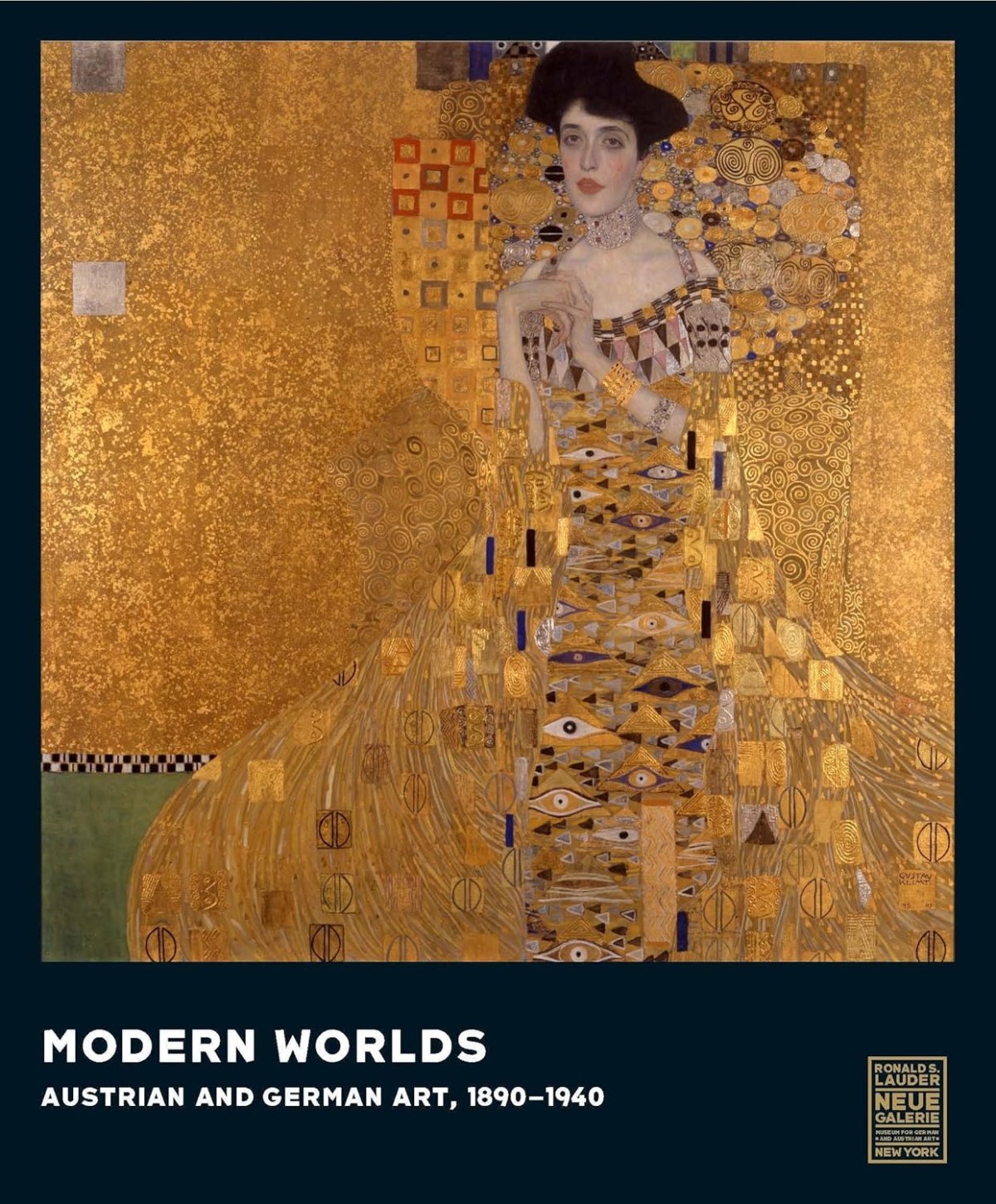
Hardcover. Munch/London/NY, Prestel, 1st, 2022, Book: Very Good, Dust Jacket: Very Good, Hardcover in a bright dust jacket. Still in publisher's shrinkwrap. 656 pages. Published on the twentieth anniversary of the founding of Neue Galerie New York, this stunning volume celebrates the varied achievements of modern art history in the German-speaking world by examining historical developments in Austria and Germany from 1890 to 1940. Illustrated throughout with exquisite reproductions of the museum's holdings, this book considers the influence of Friedrich Nietzsche and his writings on the fine arts and examines the founding of the Secessionist artists' organizations in Germany and Austria. Insightful essays trace the emergence of Expressionism and abstraction, as well as the development of such movements as Dada and New Objectivity. Evolutions in architecture and design are appraised through the legacy of the Arts and Crafts movement, as well as the establishment of the Darmstadt Artists' Colony and the Wiener Werkstatte. The book also examines the role of the German Werkbund and the founding of the Bauhaus school. Finally, the book briefly addresses the horrific impact of the National Socialists' degenerate art campaign, which resulted in incalculable damage and led to the exile and death of artists and designers of the era. From well-known artists such as Otto Dix, Josef Hoffmann, Vasily Kandinsky, Gustav Klimt, and Egon Schiele, to lesser recognized but equally important figures, including Albert Birkle, Alfred Kubin, Felix Nussbaum, and Dagobert Peche, this book offers an authoritative and kaleidoscopic look at a crucial moment in history and a portrait of radical thought that changed forever the way we experience art in our lives. DOMESTIC SHIPPING ONLY.
Softcover. Middlebury, VT, Middlebury College Museum of Art, 1st, 2015, Book: Very Good, Dust Jacket: None, 111 pages. Softcover with paper wrappers. Color pictures throughout. In 1899 Gustav Klimt's painting Nuda Veritas shook up the Austrian public with what many deem to be the painter's most political exploration of the nude female body. Klimt's provocative allegory challenged viewers to consider their own beliefs about the relationship between the nude (female) body and contemporary morality; this "naked truth" was shocking. Transcending accusations of pornography, Klimt's work paved the way for artistic examinations of the nude body as the site through which questions of freedom, desire, beauty, nature, culture, power, and their antonyms could be represented and negotiated. Taking these ideas as one critical point of departure, this volume and the accompanying exhibition feature selected prints, drawings, and watercolors by Klimt, Egon Schiele, Otto Dix, George Grosz, Max Beckmann and Kathe Kollwitz, among others. It explores the conceptions of the human body and the manner of its visualization in the period leading up to and following the First World War, which changed the world's notions of flesh and blood forever.
Softcover. Middletown, CT, Wesleyan University, 1st, 1981, Book: Very Good, Dust Jacket: None, Softcover, 116 pages. Exhibition catalog. Letter from editor laid in. Black-and-white illustrations throughout. Light sun-fade to covers. Previous owner's signature on front flyleaf. A little mark from paper clip on title page. Clean, tight copy.
Hardcover. New York, Pace Wildenstein, 1st, 2007, Book: Very Good, Dust Jacket: Very Good, Hardcover, 188 pages. Illustrated in full color and black & white. Clean, bright copy.
Softcover. New York, Rizzoli, 1st US, 1983, Book: Very Good, Dust Jacket: Very Good, Hardcover, 302 pages. Blue cloth cover with gilt lettering to spine, color illustrated dust jacket, 405 b&w and 80 color illustrations, stapled cardboard slipcase. Bottom right corner of cover slightly bumped. Very light wear to dust jacket edges; a very clean, tight copy. This book is the first to survey the whole i development of porcelain n Europe between the Napoleonic era and the First World War. The nineteenth century was a period of technological change and of artistic innovation: both these strands came together in the development of porcelain, which industrialization brought within the reach of the burgeoning middle classes of industrial Europe. While early in the century Neoclassicism had brought about a new purity of line and decoration, in Germany and in England taste demanded more elaborate styles and resulted in the emergence of the 'new Rococo' and later in the development of revived styles of decoration such as Minton's 'Majolica' and the work of studio potters. This book covers not only the great factories, Sevres, Limoges, Copenhagen, Meissen, but also the smaller producers in Holland, Italy and Spain and extends to the birth of Art Nouveau.
Hardcover. New York, NYUP, 1st, 1970, Book: Very Good, Dust Jacket: Good, 303 pages. Hardcover. 246 black & white illustrations, 6 in color. Light wear to dust jacket at corners, edges. Clean, tight copy. Raphael (The Wrightsman Lectures, Delivered Under the Auspices of the New York University Institute of Fine Arts) [Oct 01, 1979].
Hardcover. Berkeley, CA , University of California Press, 1st, 2002, Book: Very Good, Dust Jacket: Very Good, 283 pages. Hardcover with dust jacket. A very clean, unmarked copy with only minor wear to dust jacket edges. A tight copy. Black and white illustrations throughout. This richly detailed study reconceptualizes a striking but enigmatic moment in Rembrandt's art from the 1650s--one of the artist's most prolific and creative periods. Michael Zell identifies a significant theological shift in Rembrandt's use of religious imagery and interprets this shift in light of the unique religious and social conditions of seventeenth-century Amsterdam. Rembrandt's biblical art has generally been regarded as the embodiment of a Protestant aesthetic. By looking closely at the artist's relationship with his patron Rabbi Menasseh ben Israel and the ideas of a group of "philosemitic" Protestants with whom the rabbi was engaged in an apologetic dialogue, Zell deepens and complicates our understanding of Rembrandt's sacred art from this period.
Softcover. US, Top Shelf Productions, 1st, 2007, Book: Very Good, Dust Jacket: None, Softcover. 285 pages, illustrated throughout in b&w. Clean, unmarked copy with only minor wear to wrappers. As the NATO bombs fell on his hometown of Pancevo in 1999, Serbian cartoonist Aleksandar Zograf used his diary comics and e-mail to reach out to the world and offer a glimpse at the effects of the attacks. Over the weeks and months of the war, Zograf documented not only how the bombings shattered the lives of his friends and neighbors, but also how the routine of daily life remained unchanged. The most recent attacks on Pancevo's oil refinery are contrasted with the latest local soccer matches -- and American propaganda flyers are as likely to fall from the sky as American comics are to arrive in the mail.
Softcover. US, Top Shelf Productions, 1st, 2007, Book: Very Good, Dust Jacket: None, Softcover. 285 pages, illustrated throughout in b&w. Clean, unmarked copy with only minor wear to wrappers. As the NATO bombs fell on his hometown of Pancevo in 1999, Serbian cartoonist Aleksandar Zograf used his diary comics and e-mail to reach out to the world and offer a glimpse at the effects of the attacks. Over the weeks and months of the war, Zograf documented not only how the bombings shattered the lives of his friends and neighbors, but also how the routine of daily life remained unchanged. The most recent attacks on Pancevo's oil refinery are contrasted with the latest local soccer matches -- and American propaganda flyers are as likely to fall from the sky as American comics are to arrive in the mail.
Hardcover. New York, W. W. Norton & Company, 1st, 2003, Book: Very Good, Dust Jacket: Very Good, 255 pages. Hardcover. Full color and black & white illustrations. Remainder marks on top edge at spine. Light wear. Clean, unmarked copy.
Hardcover. New York, Clarkson Potter, 1st, 1986, Book: Very Good, Dust Jacket: Very Good, 682 pages. Hardcover with dust jacket. Features over 750 illustrations, including 300 in full color. Light edgewear to dust jacket, faint foxing to top edge. Clean, tight copy.
Softcover. Flammarion, 1st, 1995, Book: Very Good, Softcover, 223 pages, illustrated in color and b&w. Tracing the origins of Americanism back to the late nineteenth century, Scenes of the World to Come focuses on the European discovery of the American city--with its grand hotels, skyscrapers, and massive industrial plants, its new-found sense of efficiency and mobility, and its infatuation with domestic appliances and mechanization. The book analyzes the global structures and thematic strategies according to which American architectural forms and urban models migrated to Europe, bringing the promise of a new architecture and, along with it, the threat of a dissolution of European identity. Clean copy.

 "Gothic and Renaissance Art in Nuremberg, 1300-1550by: Metropolitan Museum of Art, New York.")
 "Gothic Sculpture in France 1140-1270by: Sauerlander, Willibald/Max Hirmer")
 "History of Decorative Arts, The: Classicism and the Baroque in Europe by: Gruber, Alain (Editor)")
 "Hungarian Folk Artby: Hofer, Tamas")
 "Karel Teige/1900-1951: L'Enfant Terrible of the Czech Modernist Avant-Gardeby: Dluhosch (Ed.), Eric and Rostislav Svacha")
 "Lacquer: An International History and Illustrated Surveyby: Scott, Rosemary, ET AL")
 "Le Fer Forge - Documents Artistiques de Ferronnerie Ancienne - Du Moyen-Age a la Fin du XVIII Siecleby: Clouzot, Henri")
 "Manet's \"Olympia\"by: Reff, Theodore")
 "Mather Brown: Early American Artist in Englandby: Evans, Dorinda")
 "Max Beckmann: A Retrospectiveby: Schulz-Hoffmann , Carla/Judith C. Weiss")
 "Modern Worlds: Austrian and German Art, 1890-1940by: Price, Renee / Lauder, Ronald S./Peters, Olaf/ Staggs, Janis")
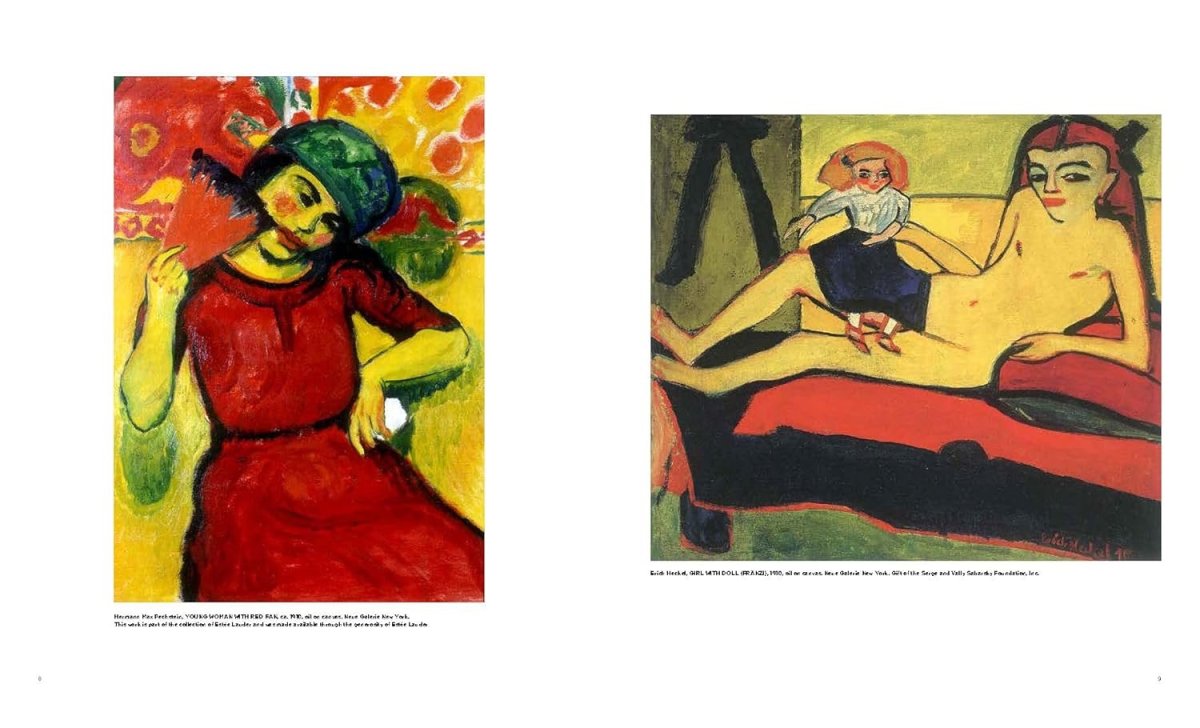
 "Naked Truth: Approachers to the Body in Early-twentieth-Century German-Austrian Artby: Matthias, Bettina")
 "No Title: The Collection of Sol Lewittby: Paoletti (edited and introduced by), John T.")
 "Picasso, Braque and Early Film in Cubism - April 20-June 23, 2007by: Rose, Bernice B./Arne Glimcher/Tom Gunning/Jennifer Wild")
 "Porcelain of the Nineteenth Centuryby: Fay-Halle, Antoinette and Barbara Mundt")
 "Raphael - The Wrightsman Lectures by: Pope-Hennessy, John")
 "Reframing Rembrandt: Jews and the Christian Image in Seventeenth-Century Amsterdamby: Zell, Michael")
 "Regards From Serbiaby: Zograf, Aleksandar")
 "Regards From Serbiaby: Zograf, Aleksandar")
 "Regions of the Great Heresy - Bruno Schulz - A Biographical Portraitby: Ficowski, Jerzy")
 "Rembrandt - The Human Form and Spiritby: Guillaud, Jacqueline/Maurice Guillaud")
 "Scenes of the World to Come: European Architecture and the American Challenge, 1893-1960 by: Jean-Louis Cohen")
 "Sotheby's: Antiquities New York June 13 2002by: Sotheby's")
 "Sotheby's: European Sculpture & Works of Art 900-1900 - London 9 July 2002by: Sotheby's")