Hardcover. NY, Grosset & Dunlap, reprint, 1916, Book: Very Good, Dust Jacket: None, Hardcover, 385 pages, illustrated with b&w photos. Tan cloth stamped in red and dark green on front and spine. No D.J.
Softcover. Bloomington, IN, Indiana University Press, 1st, 2015, Book: Very Good, Dust Jacket: None, 232 pages. Softcover. A very clean, unmarked copy with only minor edgewear. Black and white photographs throughout. The center of the art world before the war, Paris fired the Nazis' greed. The discovery of more than 1,500 prized paintings and drawings in a private Munich residence, as well as a recent movie about Allied attempts to recover European works of art, have brought Nazi plundering back into the headlines, but the thievery was far from being limited to works of art. From 1942 onwards, ordinary Parisian Jews-mostly poor families and recent immigrants from Eastern Europe-were robbed, not of sculptures or paintings, but of toys, saucepans, furniture, and sheets. Witnessing the Robbing of the Jews tells how this vast enterprise of plunder was implemented in the streets of Paris by analyzing images from an album of photographs found in the Federal Archives of Koblenz. Brought from Paris in 1945, the photographs were cataloged by the staff of the Munich Central Collecting Point. Beyond bearing witness to the petty acts of larceny, these images provide crucial information on how the Germans saw their work. They enable us to grasp the "Nazi gaze" and to confront the issue of the relation between greed and mass destruction.
Hardcover. London, Sampson Low, Son, and Marston, reprint, undated/c1880, Book: Good, Dust Jacket: None, Hardcover. History of the art of engraving within a European context. Undated, published c1880. Illustrated with 34 black/white reproductions of engravings. Good condition; pages have gilt edges, cloth bound book has some wear to the edges and introductory pages lightly spotted from age.
Hardcover. London, Cambridge University Press, 1st, 2010, Book: Very Good, Dust Jacket: Very Good, Hardcover in a bright, unclipped dust jacket. This revisionist study of Allied diplomacy from 1941 to 1946 challenges Americocentric views of the period and highlights Europe's neglected role. Fraser J. Harbutt, drawing on international sources, shows that in planning for the future Churchill, Roosevelt, Stalin, and others self-consciously operated into 1945, not on "East/West" lines but within a "Europe/America" political framework characterized by the plausible prospect of Anglo-Russian collaboration and persisting American detachment. Harbutt then explains the destabilizing transformation around the time of the pivotal Yalta conference of February 1945, when a sudden series of provocative initiatives, manipulations, and miscues interacted with events to produce the breakdown of European solidarity and the Anglo-Soviet nexus, an evolving Anglo-American alignment, and new tensions that led finally to the Cold War. This fresh perspective, stressing structural, geopolitical, and traditional impulses and constraints, raises important new questions about the enduringly controversial transition from World War II to a cold war that no statesman wanted. Clean copy.
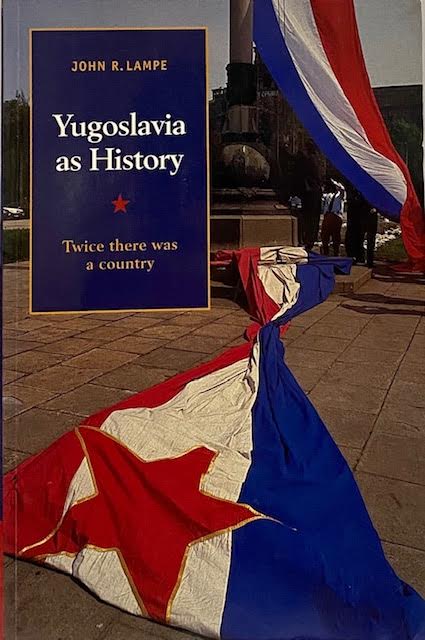
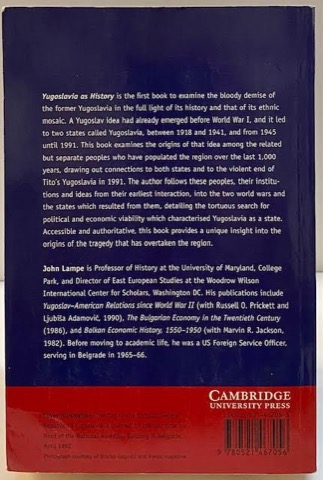
Softcover. Cambridge University Press, 1st paperback, 1996, Book: Very Good, Dust Jacket: None, 421 pages. Softcover. Wrapper very good, no rips or tears. B/w illustrations. Pages and edges have a touch of tanning from age, otherwise clean and unmarked. Binding tight. In very good shape. The first book to examine the bloody demise of the former Yugoslavia in the full light of its history and that of its ethnic mosaic.

 "With Serbia Into Exile;:an American's Adventures With the Army That Cannot Dieby: Jones, Fortier")
 "Witnessing the Robbing of the Jews: A Photographic Album, Paris, 1940-1944by: Gensburger, Sarah")
 "Wonders of Engraving, Theby: Duplessis, Georges")
 "Yalta 1945: Europe and America at the Crossroadsby: Fraser J. Harbutt")
 "Yugoslavia as History: Twice There was a Countryby: Lampe, John R.")