Hardcover. London, A & C Black, 1st, 1931, Book: Very Good, Dust Jacket: Very Good, Hardcover in a lightly worn dust Jacket, 81 pages. 4 color, 8 b&w illustrations. One in the "Peeps at Many Lands" series. Clean copy.
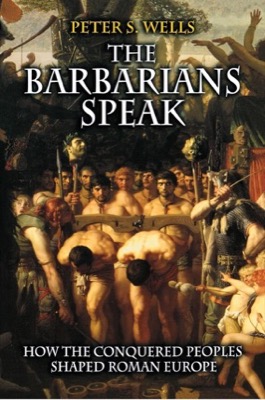
Hardcover. Princeton NJ, Princeton University Press, 1st, 1999, Book: Very Good, Dust Jacket: Very Good, Hardcover in a bright dust jacket, 335 pages. The Barbarians Speak re-creates the story of Europe's indigenous people who were nearly stricken from historical memory even as they adopted and transformed aspects of Roman culture. The Celts and Germans inhabiting temperate Europe before the arrival of the Romans left no written record of their lives and were often dismissed as "barbarians" by the Romans who conquered them. Accounts by Julius Caesar and a handful of other Roman and Greek writers would lead us to think that prior to contact with the Romans, European natives had much simpler political systems, smaller settlements, no evolving social identities, and that they practiced human sacrifice. A more accurate, sophisticated picture of the indigenous people emerges, however, from the archaeological remains of the Iron Age. Here Peter Wells brings together information that has belonged to the realm of specialists and enables the general reader to share in the excitement of rediscovering a "lost people." In so doing, he is the first to marshal material evidence in a broad-scale examination of the response by the Celts and Germans to the Roman presence in their lands.
Softcover. Manchester UK, Manchester University Press, reprint, 2007, Book: Very Good, Dust Jacket: None, Softcover, 364 pages. From 1348 to 1350 Europe was devastated by an epidemic that left between a third and one half of the population dead. This source book traces, through contemporary writings, the calamitous impact of the Black Death in Europe, with a particular emphasis on its spread across England from 1348 to 1349. Rosemary Horrox surveys contemporary attempts to explain the plague, which was universally regarded as an expression of divine vengeance for the sins of humankind. Moralists all had their particular targets for criticism. However, this emphasis on divine chastisement did not preclude attempts to explain the plague in medical or scientific terms. Also, there was a widespread belief that human agencies had been involved, and such scapegoats as foreigners, the poor and Jews were all accused of poisoning wells. The final section of the book charts the social and psychological impact of the plague, and its effect on the late-medieval economy. Bright, clean copy.
Hardcover. NY, Farrar & Rinehart, 1st US, 1939, Book: Good, Hardcover, blue cloth with dark blue lettering, 251 pages. Endpapers tanned and soiled at edges. Name on front fly leaf, otherwise clean.
Hardcover. Belgium, Brepols , 1st, 2012, Book: Very Good, Dust Jacket: None, Hardcover, pictorial boards, 696 pages, 34 b/w illustrations.The rise of modern science and European colonial and imperial expansion are indisputably two defining elements of modern world history. James E. McClellan III and Francois Regourd explore these two world-historical forces and their interactions in this comprehensive and in-depth history of the French case in the Old Regime presented here for the first time. The case is key because no other state matched Old-Regime France as a center for organized science and because contemporary France closely rivaled Britain as a colonial power, as well as leading all other nations in commodity production and participating in the slave trade. Based on extensive archival research and vast primary and secondary literatures and sharply reframing the historiography of the field, this landmark volume traces the development and significance for early-modern history of the Colonial Machine of Old-Regime France, an unparalleled agglomeration of institutions geared to the success of the French colonial enterprise, including the Royal Navy, the Academie Royale des Sciences, the Jardin du Roi, and a host of related specialist institutions working together at home and overseas. Mainly supported by the French state, the Colonial Machine reveals itself through its actions from the time of Colbert and Louis XIV as it grappled with fundamental problems facing contemporary European colonialism. SIGNED LETTER from co-author McClelland laid in. Clean copy.
Hardcover. NY, Alfred A. Knopf, 1st, 1935, Book: Very Good, Dust Jacket: None, Hardcover, maroon cloth with gilt lettering on spine, pages 415-797, plus index. Volume 2 ONLY. No dust jacket. Name on front fly leaf otherwise a clean, bright copy.
Hardcover. NY, Alfred A. Knopf, 1st, 1935, Book: Very Good, Dust Jacket: None, Hardcover, maroon cloth with gilt lettering on spine, 414 pages. Volume 1 ONLY. No dust jacket. Name on front fly leaf otherwise a clean, bright copy.
Softcover. London, Penguin Books , reprint, 2020, Book: Very Good, Dust Jacket: None, Softcover, 553 pages. The Europeans is richly enthralling, panoramic cultural history of nineteenth-century Europe, told through the intertwined lives of three remarkable people: a great singer, Pauline Viardot, a great writer, Ivan Turgenev, and a great connoisseur, Pauline's husband Louis. Their passionate, ambitious lives were bound up with an astonishing array of writers, composers and painters all trying to make their way through the exciting, prosperous and genuinely pan-European culture that came about as a result of huge economic and technological change. This culture - through trains, telegraphs and printing - allowed artists of all kinds to exchange ideas and make a living, shuttling back and forth across the whole continent from the British Isles to Imperial Russia, as they exploited a new cosmopolitan age. Clean copy.
Hardcover. Princeton NJ, Princeton University Press, 4th pr., 2007, Book: Very Good, Dust Jacket: Very Good, Hardcover in a bright dust jacket, 553 pages including index, b&w illustrations. Roughly half the world's population speaks languages derived from a shared linguistic source known as Proto-Indo-European. But who were the early speakers of this ancient mother tongue, and how did they manage to spread it around the globe? Until now their identity has remained a tantalizing mystery to linguists, archaeologists, and even Nazis seeking the roots of the Aryan race. The Horse, the Wheel, and Language lifts the veil that has long shrouded these original Indo-European speakers, and reveals how their domestication of horses and use of the wheel spread language and transformed civilization. Clean, bright copy.
Softcover. Urbana, University of Illinois Press, 1st, 2005, Book: Very Good, Dust Jacket: None, Softcover, 277 pages. Starting in the 1980s, anti-immigrant discourse shifted away from the "color" of immigrants to their religion and culture. It focused in particular on newcomers from Muslim countries--people feared both as terrorists and as products of tribal societies with values opposed to those of secular Western Europe. Leo Lucassen tackles the question of whether the integration process of these recent immigrants will fundamentally differ in the long run (over multiple generations) from the experiences of similar immigrant groups in the past. For comparison, Lucassen focuses on "large and problematic groups" from Western Europe's past (the Irish in the United Kingdom, the Poles in Germany, and the Italians in France) and demonstrates a number of structural similarities in the way migrants and their descendants integrated into these nation states. Lucassen emphasizes that the geographic sources of the "threat" have changed and that contemporaries tend to overemphasize the threat of each successive wave of immigrants, in part because the successfully incorporated immigrants of the past have become invisible in national histories. Clean copy.
Softcover. Jerusalem, Gefen Publishing House, reprint, Book: Very Good, Dust Jacket: None, Softcover. Masha Greenbaum delivered an excellent history of the Jews of Lithuania, from the earliest years, beginning in the 9th Century through WWII. The author discusses the many kings, their courts, the Church, the various social strata and their relationships with the Jews throughout the centuries. Politics, religion, areas of livelihood and social standing are detailed in each time period. Clean, like new.
Hardcover. NY/Oxford UK, Berghahn Books, 1st, 2003, Book: Very Good, Dust Jacket: None, Hardcover, 232 pages, pictorial boards. Milena Jesenska, born in Prague in 1896, is most famous as one of Franz Kafka's great loves. Although their relationship lasted only a short time, it won the attention of the literary world with the 1952 publication of Kafka's letters to Milena. Her own letters did not survive. Later biographies showed her as a fascinating personality in her own right. In the Czech Republic, she is remembered as one of the most prominent journalists of the interwar period and as a brave one: in 1939 she was arrested for her work in the resistance after the German occupation of Bohemia and Moravia, and died in Ravensbruck concentration camp in 1944. It is estimated that Jesenska wrote well over 1,000 articles but only a handful have been translated into English. In this book her own writings provide a new perspective on her personality, as well as the changes in Central Europe between the two world wars as these were perceived by a woman of letters. The articles in this volume cover a wide range of topics, including her perceptions of Kafka, her understanding of social and cultural changes during this period, the threat of Nazism, and the plight of the Jews in the 1930s. Clean copy.
Hardcover. Princeton Architectural Press , 1st, 2004, Book: Very Good, Dust Jacket: Very Good, Hardcover, 144 pages. With photos taken in the mid 1980s the author takes us on a pictorial trip along the former Iron Curtain from the Baltic sea coast at Travemunde (West-East Germany) to the Adriatic sea coast at Trieste (Italy-Yugolsalvia [today Slovenia]); with a separate chapter on the Berlin Wall. They are superb photos full of (sad) atmosphere, poignancy and historical importance.
Hardcover. Cambridge MA, Harvard University Press, 1st, 1956, Book: Very Good, Dust Jacket: Fair, Hardcover in a worn, chipped dust jacket, 408 pages, index. Black and white frontis photo portrait of author. "Moffat served for a protracted period and with notable distinction in the key position of what was then termed Chief of the Division of European affairs; he accompanied me as my chief assistant when FDR sent me to Europe as his personal representative in the spring of 1940; and I was in the closest touch with him during the time he served as American Minister to Canada, a service so tragically terminated by his untimely death in 1943. I know of no man who came up through the ranks of the Foreign Service with whose work I am personally familiar who impressed me as having in his latter years greater knowledge, a wiser and more balanced judgement, or a greater devotion to the highest interests of this country." - Sumner Welles.
Softcover. Cambridge UK, Cambridge University Press, reprint, 1975, Book: Very Good, Dust Jacket: None, Softcover, 532 pages. In a preface written for this paperback edition, Professor Hay examines some of the changes in Renaissance scholarship since the first publication of this volume in 1957. Successive chapters examine the social and economic structure of a continent about to establish trade and colonies in the New World, the intellectual and artistic movements which made up the Renaissance, the position of the Church on the eve of the Reformation, the political inheritance of the Middle Ages, with its rising nation states, and the growth of the Ottoman Empire. Clean copy.
Hardcover. Columbus OH, Ohio State University Press, 1st, 1980, Book: Good, Dust Jacket: None, Hardcover, dark blue cloth, giltlettering on spine.861 pages including index. Pencil underling to a few pages. Name on front fly leaf.
Hardcover. NY, Harper & Row, 1st US, 1972, Book: Very Good, Dust Jacket: Very Good, Hardcover in lightly worn dust jacket, 416 pages including index, bibliography and abbreviations. "The first adequately comprehensive history of the Resistance in Europe during Hitler's war to be published in any language." Name on frontfly leaf, otherwise clean.
Softcover. Cambridge MA, Harvard University Press, reprint, 2011, Book: Very Good, Dust Jacket: None, Softcover, 997 pages, color and b&w illustrations. A deadly continental struggle, the Thirty Years War devastated seventeenth-century Europe, killing nearly a quarter of all Germans and laying waste to towns and countryside alike. Peter Wilson offers the first new history in a generation of a horrifying conflict that transformed the map of the modern world. When defiant Bohemians tossed the Habsburg emperor's envoys from the castle windows in Prague in 1618, the Holy Roman Empire struck back with a vengeance. Bohemia was ravaged by mercenary troops in the first battle of a conflagration that would engulf Europe from Spain to Sweden. The sweeping narrative encompasses dramatic events and unforgettable individuals-the sack of Magdeburg; the Dutch revolt; the Swedish militant king Gustavus Adolphus; the imperial generals, opportunistic Wallenstein and pious Tilly; and crafty diplomat Cardinal Richelieu. In a major reassessment, Wilson argues that religion was not the catalyst, but one element in a lethal stew of political, social, and dynastic forces that fed the conflict. By war's end a recognizably modern Europe had been created, but at what price? The Thirty Years War condemned the Germans to two centuries of internal division and international impotence and became a benchmark of brutality for centuries. As late as the 1960s, Germans placed it ahead of both world wars and the Black Death as their country's greatest disaster. Clean, bright copy.
Hardcover. NY, Riverhead, 1st, 2004, Book: Very Good, Dust Jacket: Very Good, Hardcover in a bright dust jacket, 349 pages. A heartwarming memoir describes growing up in Czechoslovakia during the 1970s as the child of dissidents involved with the failed Prague Spring uprising in a loving family--her mother, the disowned daughter of two Party elite parents; her inventor and cab driver father; her beautiful teenage sister; and her dog, a famed Czech TV star. Clean copy.
Hardcover. Hartford, Joel Barlow, 1st, 1787, Book: Very Good, Dust Jacket: None, 258 pages. Red leather covers with gilt lines along cover edges, and decorations on spine. Covers with light rubbing to edges and at corners. Title on spine in gilt on black. Marbled endpapers. Previous owners name on preliminary page and at top of title page. Includes Dedication to The King of France, and Introduction. All edges gilt.
Hardcover. New Haven CT, Yale University Press, reprint, 1991, Book: Very Good, Dust Jacket: None, Hardcover in a dust jacket with fading to some areas, 338 pages. Margaret Fuller - journalist, critic, radical feminist, and political activist - traveled in Europe between 1846 and 1850 as a foreign correspondent for the New York Tribune. Her letters from England, France, and Italy, which began as engaging travel sketches, soon became moving accounts of the most widespread revolutionary upheaval within modern history. These dispatches are now reproduced in their entirety for the first time. Clean copy.
Hardcover. Washington, D.C., Smithsonian Institution Press, rep, 1993, Book: Very Good, Dust Jacket: Very Good, Catalogue of the works of Thomas Eakins. Includes 49 large color plates with accompanying black/white and color illustrations and notes for each. Also contains reproductions of Eakins's lesser-known black/white photographs and biographical text about the artist. Very good condition; cloth bound book has virtually no flaws, dust jacket has few small tears near the edges.
Hardcover. Baltimore MD, Johns Hopkins University Press , 1st, 1995, Book: Very Good, Dust Jacket: Very Good, Hardcover in a bright dust jacket. 219 pages, endpapers map. Describes Jefferson's European journeys during his time as minister to the court of Louis XVI between 1784 and 1789, and explores the significance of his travels to American culture. Illustrated with some 60 b&w images from the period, and drawing on Jefferson's account books and correspondence, shows how his experiences shaped his intellectual and aesthetic development. Clean copy.
Hardcover. New York , Penguin Putnam Inc, 1st, 1993, Book: Very Good, Dust Jacket: Very Good, Hardcover, 158 pages, illustrated throughout with photos in b&w. Clean, unmarked copy with only minor wear to dust jacket. Elie Wiesel provides the preface to a master photographer's record of eastern Europe's Jewish communities in the years just before World War II with 160 photographs that capture the ordinary lives of Jews before the Holocaust.
Hardcover. New York, Michael Sullivan, 1st, 1886, Book: Good, Dust Jacket: None, Hardcover, 87 pages, in green cloth covers with black and gilt design. A brief first-hand account of a seven week trip to Europe, principally England, Ireland and Scotland. Uncommon. A bit worn with cracked hinges.
Softcover. Chicago, Ludowici-Celadon Co., 1st, 1929-1932, Book: Very Good, Dust Jacket: None, 26 softcover brochures, approx. 24 pages each. Illustrated with b&w photographs and drawings. Issues from 1929 to 1932. Very good condition.
Softcover. Paris, ACAER/GPC, 1st, 1994, Book: Very Good, Dust Jacket: None, 68 pages. Softcover. Exhibition catalog. French and English text. Black & white photographs. From the introduction: "This catalogue has been re-edited by advanced reading copy wraps en reve architecture centre with the Georges Pompidou Centre, for the presentation in France of the exhibition "Warchitecture-Sarajevo, a wounded city". The exhibition and the catalogue were prepared by the architects of the Sarajevo association, members of the associations of Architects of Bosnia-Herzegovina DAS-SABIH". Light rubbing to cover edges, minor creases at corners. Clean, unmarked text.
Hardcover. London, Allen Lane, 1st, 2011, Book: Very Good, Dust Jacket: Very Good, Hardcover in a bright dust jacket, 830 pages. Europe's history is littered with kingdoms, duchies, empires and republics which have now disappeared but which were once fixtures on the map of their age - 'the Empire of Aragon' which once dominated the western Mediterranean; the Grand Duchy of Lithuania, for a time the largest country in Europe; the successive kingdoms (and one duchy) of Burgundy, much of whose history is now half-remembered - or half-forgotten - at best. This book shows the reader how to peer through the cracks of mainstream history writing and listen to the echoes of lost realms across the centuries. Illustrated in color and b&w. Clean copy.
Hardcover. NY, Metropolitan Museum of Art, 1st, 2001, Book: Very Good, Dust Jacket: Very Good, Hardcover in a bright dust jacket, still sealed in publisher's shrinkwrap. 550 pages. Seventeenth-century Delft has traditionally been viewed as a quaint town whose artists painted scenes of domestic life. This important book revises that image, showing that the small but vibrant Dutch city produced fine examples of all the major arts--including luxury goods and sophisticated paintings for the court at The Hague and for patrician collectors in Delft itself. The book traces the history and culture of Delft from the 1200s through the lifetime of the city's most renowned painter, Johannes Vermeer. The authors discuss at length some ninety major paintings (seventeen by Vermeer), forty drawings, and a choice selection of decorative arts, all of which are reproduced in full color. Among the paintings are state portraits, history pictures, still lifes, views of palaces and church interiors, illusionistic murals, and refined genre pictures by Vermeer and Pieter de Hooch. The rich works on paper encompass exquisite drawings by Delft artists and sketches of the town by visiting artists. Included in the decorative arts are tapestries, bronze statuary, silver, Delftware, and glass. The volume concludes with an essay that takes the reader on a walk through seventeenth-century Delft. It is accompanied by maps of the city's neighborhoods that indicate major monuments and the homes of patrons, art dealers, and painters.
Hardcover. New York, Princeton Architectural Press, 1st, 2003, Book: Very Good, Dust Jacket: Very Good, 152 pages. Hardcover with dust jacket. Minor soiling to front cover of dust jacket. An otherwise clean, unmarked copy with only minor wear to dust jacket edges. Color illustrations throughout. A tight copy. "A collection of exquisite large-format pen-and-ink watercolor renderings of all of Palladio's villas."
Softcover. New York, Guggenheim Museum, 1st, 1997, Book: Very Good, Dust Jacket: None, 147 pages. Softcover. Full color illustrations. Light bump to top right corner. Clean, unmarked copy.
Hardcover. New York, Frances Foster Books/Farrar Straus and Giroux, 1st, 2007, Book: Very Good, Dust Jacket: Very Good, Hardcover in a very good dust jacket. Non-paginated. SIGNED WITH DRAWING BY PETER SIS ON COPYRIGHT PAGE. Full color illustrations. Clean, bright copy.
Hardcover. New York , Farrar Straus Giroux , 1st, 2007, Book: Very Good, Dust Jacket: Very Good, Non-paginated. Hardcover with dust jacket. Theft protection sticker on front fly leaf. Clean, tight copy otherwise. Color illustrations by Sis.
Hardcover. Barnsley UK, Pen & Sword Books, 1st, 2012, Book: Very Good, Dust Jacket: Very Good, Hardcover, 155 pages., b/w plates., maps, index, This remarkable account describes the open warfare Polish Underground fighters waged against the Nazi occupiers of their city-with a shortage of arms, ammunition, and medical support-in the expectation of Soviet assistance that came too late to help the precipitous uprising.
Hardcover. Chicago, University Of Chicago Press, 1st, 2006, Book: Very Good, Dust Jacket: Very Good, Hardcover, pages. In When Buildings Speak,Anthony Alofsin explores the rich yet often overlooked architecture of the late Austro-Hungarian Empire and its successor states. He shows that several different styles emerged in this milieu during the late nineteenth and early twentieth centuries. Moreover, he contends that each of these styles communicates to us in a manner resembling language and its particular means of expression. Covering a wide range of buildings--from national theaters to crematoria, apartment buildings to warehouses, and sanatoria to postal savings banks--Alofsin proposes a new way of interpreting this language. He calls on viewers to read buildings in two ways: through their formal elements and through their political, social, and cultural contexts. By looking through Alofsin's eyes, readers can see how myriad nations sought to express their autonomy by tapping into the limitless possibilities of art and architectural styles. And such architecture can still speak very powerfully to us today about the contradictory issues affecting parts of the former Habsburg Empire.
Hardcover. New York, Alfred A. Knopf, 1st, 1956, Book: Very Good, Dust Jacket: Good, Hardcover, 178 pages. Dust jacket slightly worn and with short tears. Some foxing on endpages, top edge stained red.
Hardcover. NY, Thames & Hudson, 1st, 2015, Book: Very Good, Dust Jacket: None, Hardcover, 208 pages, 174 color plates. Window-Shopping through the Iron Curtain presents a selection of more than 100 images of shop windows shot by David Hlynsky during four trips taken between 1986 and 1990 to Poland, Czechoslovakia, Hungary, Yugoslavia, Bulgaria, East Germany, and Moscow. Using a Hasselblad camera, Hlynsky captured the slow, routine moments of daily life on the streets and in the shop windows of crumbling Communist countries. The resulting images could be still-lifes representing the intersection of a Communist ideology and a consumerist, Capitalist tool-the shop window-with the consumer stuck in the middle. Devoid of overt branding or calculated seduction, the shop windows were typically adorned with traditional yet incongruous symbols of cheer: homey lace curtains, paper flowers, painted butterflies, and pictures of happy children. Some windows were humble in their simple offerings of loaves and tinned fishes; others were zanily artistic, as in the modular display of military shirts in a Moscow storefront; and some illustrated intense professional pride, such as a sign in a Prague beauty salon depicting a pedicurist smiling fiendishly over an imperfect sole. The photographs are accompanied by essays by art historian Martha Langford and cultural studies specialist Jody Berland, as well as Hlynsky's own account of his time as a flaneur in the shopping plazas of the collapsing Soviet empire-"a vast ad-hoc museum of a failing utopia" that in 1989 began to close forever. No dj issued.
Hardcover. NY, Thames & Hudson, 1st, 2015, Book: Very Good, Dust Jacket: None, Hardcover, 208 pages, 174 color plates. Window-Shopping through the Iron Curtain presents a selection of more than 100 images of shop windows shot by David Hlynsky during four trips taken between 1986 and 1990 to Poland, Czechoslovakia, Hungary, Yugoslavia, Bulgaria, East Germany, and Moscow. Using a Hasselblad camera, Hlynsky captured the slow, routine moments of daily life on the streets and in the shop windows of crumbling Communist countries. The resulting images could be still-lifes representing the intersection of a Communist ideology and a consumerist, Capitalist tool-the shop window-with the consumer stuck in the middle. Devoid of overt branding or calculated seduction, the shop windows were typically adorned with traditional yet incongruous symbols of cheer: homey lace curtains, paper flowers, painted butterflies, and pictures of happy children. Some windows were humble in their simple offerings of loaves and tinned fishes; others were zanily artistic, as in the modular display of military shirts in a Moscow storefront; and some illustrated intense professional pride, such as a sign in a Prague beauty salon depicting a pedicurist smiling fiendishly over an imperfect sole. The photographs are accompanied by essays by art historian Martha Langford and cultural studies specialist Jody Berland, as well as Hlynsky's own account of his time as a flaneur in the shopping plazas of the collapsing Soviet empire-"a vast ad-hoc museum of a failing utopia" that in 1989 began to close forever. No dj issued.
Hardcover. NY, Grosset & Dunlap, reprint, 1916, Book: Very Good, Dust Jacket: None, Hardcover, 385 pages, illustrated with b&w photos. Tan cloth stamped in red and dark green on front and spine. No D.J.
Softcover. Bloomington, IN, Indiana University Press, 1st, 2015, Book: Very Good, Dust Jacket: None, 232 pages. Softcover. A very clean, unmarked copy with only minor edgewear. Black and white photographs throughout. The center of the art world before the war, Paris fired the Nazis' greed. The discovery of more than 1,500 prized paintings and drawings in a private Munich residence, as well as a recent movie about Allied attempts to recover European works of art, have brought Nazi plundering back into the headlines, but the thievery was far from being limited to works of art. From 1942 onwards, ordinary Parisian Jews-mostly poor families and recent immigrants from Eastern Europe-were robbed, not of sculptures or paintings, but of toys, saucepans, furniture, and sheets. Witnessing the Robbing of the Jews tells how this vast enterprise of plunder was implemented in the streets of Paris by analyzing images from an album of photographs found in the Federal Archives of Koblenz. Brought from Paris in 1945, the photographs were cataloged by the staff of the Munich Central Collecting Point. Beyond bearing witness to the petty acts of larceny, these images provide crucial information on how the Germans saw their work. They enable us to grasp the "Nazi gaze" and to confront the issue of the relation between greed and mass destruction.
Hardcover. London, Sampson Low, Son, and Marston, reprint, undated/c1880, Book: Good, Dust Jacket: None, Hardcover. History of the art of engraving within a European context. Undated, published c1880. Illustrated with 34 black/white reproductions of engravings. Good condition; pages have gilt edges, cloth bound book has some wear to the edges and introductory pages lightly spotted from age.
Hardcover. London, Cambridge University Press, 1st, 2010, Book: Very Good, Dust Jacket: Very Good, Hardcover in a bright, unclipped dust jacket. This revisionist study of Allied diplomacy from 1941 to 1946 challenges Americocentric views of the period and highlights Europe's neglected role. Fraser J. Harbutt, drawing on international sources, shows that in planning for the future Churchill, Roosevelt, Stalin, and others self-consciously operated into 1945, not on "East/West" lines but within a "Europe/America" political framework characterized by the plausible prospect of Anglo-Russian collaboration and persisting American detachment. Harbutt then explains the destabilizing transformation around the time of the pivotal Yalta conference of February 1945, when a sudden series of provocative initiatives, manipulations, and miscues interacted with events to produce the breakdown of European solidarity and the Anglo-Soviet nexus, an evolving Anglo-American alignment, and new tensions that led finally to the Cold War. This fresh perspective, stressing structural, geopolitical, and traditional impulses and constraints, raises important new questions about the enduringly controversial transition from World War II to a cold war that no statesman wanted. Clean copy.
Softcover. Cambridge University Press, 1st paperback, 1996, Book: Very Good, Dust Jacket: None, 421 pages. Softcover. Wrapper very good, no rips or tears. B/w illustrations. Pages and edges have a touch of tanning from age, otherwise clean and unmarked. Binding tight. In very good shape. The first book to examine the bloody demise of the former Yugoslavia in the full light of its history and that of its ethnic mosaic.

 "The Baltic States: Latvia, Lithuania and Estoniaby: Hebe Spaull")
 "The Black Death (Manchester Medieval Sources)by: Rosemary Horrox")












 "The Thirty Years War: Europe")




 "To Give Them Light: Legacy of Roman Vishniacby: Vishniac, Roman")



 "Vermeer and the Delft School by: Walter Liedtke, Michiel C. Plomp, et al.")


 "Wall, The: Growing Up Behind the Iron Curtainby: Sis, Peter")
![Warsaw 1944: An Insurgent's Journal of the Uprisingby: Czajkowski, Zbigniew; Marek Czajkowski [trans.]](javascript:largeIMTop('https://www.browsingisarousing.com/shop/images/Warsaw-1944-An-Insurgents-Journal-of-the-Uprising_by_Czajkowski-Zbigniew-Marek-Czajkowski-trans.370433-385520.jpg','https://www.browsingisarousing.com/shop/images/Warsaw-1944-An-Insurgents-Journal-of-the-Uprising_by_Czajkowski-Zbigniew-Marek-Czajkowski-trans.370433-385520.jpg',0,'370433',0,'') "Warsaw 1944: An Insurgent's Journal of the Uprisingby: Czajkowski, Zbigniew; Marek Czajkowski [trans.]")
 "When Buildings Speak: Architecture as Language in the Habsburg Empire and Its Aftermath, 1867-1933by: Alofsin, Anthony")

 "Window-Shopping through the Iron Curtainby: David Hlynsky , Martha Langford, et al.")


 "Window-Shopping through the Iron Curtainby: David Hlynsky , Martha Langford, et al.")


 "With Serbia Into Exile;:an American's Adventures With the Army That Cannot Dieby: Jones, Fortier")

 "Wonders of Engraving, Theby: Duplessis, Georges")

 "Yugoslavia as History: Twice There was a Countryby: Lampe, John R.")

