Hardcover. London, W.H. Allen, 1st, 1963, Book: Very Good, Dust Jacket: Very Good, Hardcover, 303 pages, b&w photos. Previous owner's signature on fly leaf otherwise very good in a similar dust jacket. The filmmaker of Nanook of the North.
Softcover. Baltimore, Johns Hopkins University, 1st, 1998, Book: Very Good, Dust Jacket: None, Softcover, 327 pages, b&w illustrations. At least three of director Jacques Tourneur's films--Cat People, I Walked with a Zombie and The Leopard Man--are recognized as horror classics. Yet his contributions to these films are often minimized by scholars, with most of the credit going to the films' producer, Val Lewton. A detailed examination of the director's full body of work reveals that those elements most evident in the Tourneur-Lewton collaborations--the lack of monsters and the stylized use of suggested violence--are equally apparent in Tourneur's films before and after his work with Lewton. Mystery and sensuality were hallmarks of his style, and he possessed a highly artistic visual and aural style. This insightful critical study examines each of Tourneur's films, as well as his extensive work on MGM shorts (1936-1942) and in television. What emerges is evidence of a highly coherent directorial style that runs throughout Tourneur's works. Clean copy.
Softcover. Philadelphia, Ratpac/Running Press, 1st US, 2016, Book: Very Good, Dust Jacket: None, Softcover, 942 pages, b&w photos. Clean, bright copy. Renoir made more than forty films from the silent era to the late '60s and today he is revered by filmmakers and seen by many as one of the greatest of all time. Previously unknown information including Renoir's close affiliation with Communism in the '30s is detailed in this definitive biography.
Hardcover. Los Angeles, Sherbourne Press, 1st, 1965, Book: Very Good, Dust Jacket: Very Good, Hardcover in a bright dust jacket. Biography of the controversial and award-winning director, covering the entire span of his career. Illustrated with photographs. Two appendixes: The Projects of John Huston: Films and Plays 1931-1965, and A Huston Bibliography. 247 pages.
Hardcover. Scranton PA, Newmarket, 1st, 1999, Book: Very Good, Dust Jacket: Very Good, Hardcover in a bright dust jacket. Illustrated with 72 photos and 19 posters. Based on interviews conducted over a period of 18 months. Fascinating and instructive comments by Kazan on his casting decisions, directorial techniques and perceptions, etc. All 19 of Kazan's films are discussed, including: A Tree Grows in Brooklyn (1947), Gentleman's Agreement (1947), A Streetcar Named Desire (1951), On the Waterfront (1954), East of Eden (1955), etc. Also recounted here are his role in the McCarthy era, his controversial testimony before the House Un-American Activities Committee in 1952, his thoughts about the blacklist, and involvement with the Communist Party. Filmography. Credits. Bibliography. Index. Clean copy.
Softcover. UK, Abacus, reprint, 2008, Book: Very Good, Dust Jacket: None, Softcover, 468 pages, b&w illustrations. Presents a revealing biography, based on primary sources, of the life and works of Riefenstahl and her role as photographer and filmmaker in Germany and during the Nazi regime. Bright, clean copy.
Hardcover. New Rochelle NY, Arlington House, 1st, 1973, Book: Very Good, Dust Jacket: Fair, Hardcover in a worn, chipped dust jackrt. 347 pages including index, 92 b&w photos. Introduction by Frank Capra. Memoirs by the director of "The Postman Always Rings Twice". Clean copy.
Softcover. Los Angeles, CA, Taschen, 1st, 2005, Book: Very Good, Dust Jacket: None, 192 pages. Softcover. Very clean, unmarked copy still in publishers shrink-wrap. Luis Bunuel, one of the most brilliant representatives of the surrealist movement, chose to make films and was able to make them with unflagging fidelity to his principles for fifty years. After an audacious Parisian showing of Un Chien Andalou in 1929 (Bunuel carried stones in his pockets in case he needed them to fend off the audience), Bunuel's subsequent career in Spain (Las Hurdes), Hollywood and Mexico (Los Olvidados, Robinson Crusoe, El, Nazarin) before returning to France (Diary of a Chambermaid, Belle de jour, The Discreet Charm of the Bourgeoisie, That Obscure Object of Desire), showed that the only subjects he cared to make films about were the three that are never supposed to be discussed in polite society: sex, religion, and politics.
Hardcover. London, Faber and Faber, 1st, 1993, Book: Very Good, Dust Jacket: Good, Hardcover in a lightly worn dust jacket. 240 pages, b&w illustrations. "For 35 years Louis Malle has pursued a varied and successful career in cinema. In this book, he discusses his development as an artist and the controversies aroused by his films dealing with subjects like child prostitution, incest and wartime collaboration." Clean copy.
Hardcover. Lexington KY, University Press of Kentucky, 1st, 2013, Book: Very Good, Dust Jacket: Very Good, Hardcover in a bright dust jacket. An Armenian national raised in Russia, Rouben Mamoulian (1897--1987) studied in the influential Stanislavski studio, renowned as the source of the "method" acting technique. Shortly after immigrating to New York in 1926, he created a sensation with an all-black production of Porgy (1927). He then went on to direct the debut Broadway productions of three of the most popular shows in the history of American musical theater: Porgy and Bess (1935), Oklahoma! (1943), and Carousel (1945). Mamoulian began working in film just as the sound revolution was dramatically changing the technical capabilities of the medium, and he quickly established himself as an innovator. Not only did many of his unusual camera techniques become standard, but he also invented a device that eliminated the background noises created by cameras and dollies. Seen as a rebel earlier in his career, Mamoulian gradually gained respect in Hollywood, and the Directors Guild of America awarded him the prestigious D. W. Griffith Award for Lifetime Achievement in 1983. In this meticulously researched biography, David Luhrssen paints the influential director as a socially conscious artist who sought to successfully combine art and commercial entertainment. Luhrssen not only reveals the fascinating personal story of an important yet neglected figure, but he also offers a tantalizing glimpse into the extraordinarily vibrant American film and theater industries during the twenties, thirties, and forties.
Hardcover. Swan Isle Press, 1st, 2008, Book: Very Good, Dust Jacket: Very Good, Hardcover, 180 pages. Spanish filmmaker Luis Bunuel (1900-83), known for his surrealist themes and unflinching social criticism, was an artist defined by intellectual ambition and controversy. An exile who produced some of his most famous work in Mexico and France during Franco's dictatorship, he left a complicated imprint on the creative landscape of the twentieth century and on generations of younger filmmakers--including his Mexican friend Claudio Isaac. Drawn from Isaac's personal papers, Midday with Bunuel: Memories and Sketches, 1973-1983 is an intimate and unconventional portrait of this cinematic icon--and memoir of Isaac's own artistic development.The text includes sketches, vignettes, and anecdotes from Isaac's notebooks, revealing his perspective first as a precocious boy and then as a young man. Isaac reflects on Bunuel's presence among a community of exiles, artists, actors, writers, and intellectuals in Mexico City. These are at once touching, perceptive, and critical glimpses into Bunuel's roles as husband and father, friend and colleague, surrealist, philosopher, and iconoclast during his last years. Throughout, Isaac's words reveal his deep admiration and affection for an older friend full of contradictions. Intimate photographs from the Isaac family archive complement the writing, and Bryan Thomas Scoular's careful translation makes this text available for the first time in English.
Hardcover. NY, St Martin's Press, 1st, 2024, Book: Very Good, Dust Jacket: Very Good, Hardcover in a bright, unclipped dust jacket. The riveting biography of comedian, director, actor and writer Elaine May, one of America's greatest comic geniuses. May began her career as one-half of the legendary comedy team known as Nichols and May, the duo that revolutionized the comedy sketch. After performing their Broadway smash An Evening with Mike Nichols and Elaine May, Elaine set out on her own. She toiled unsuccessfully on Broadway for a while, but then headed to Hollywood where she became the director of A New Leaf, The Heartbreak Kid, Mikey and Nicky, and the legendary Ishtar. She was hired as a script doctor on countless films like Heaven Can Wait, Reds, Tootsie, and The Birdcage. In 2019, she returned to Broadway where she won the Tony Award for Best Leading Actress in The Waverly Gallery. Besides her considerable talent, May is well known for her reclusiveness. On one of the albums she made with Mike Nichols, her bio is this: "Miss May does not exist." Until now. Carrie Courogen has uncovered the Elaine May who does exist. Conducting countless interviews, she has filled in the blanks May has forcibly kept blank for years, creating a fascinating portrait of the way women were mistreated and held back in Hollywood. Miss May Does Not Exist is a remarkable love story about a prickly genius who was never easy to work with, not always easy to love and frequently often punished for those things, despite revolutionizing the way we think about comedy, acting, and what a film or play can be. Remainder dot to top edge. otherwise like new.
NY, St. Martins, 1st, 2000, Book: Very Good, Dust Jacket: Very Good, Hardcover, black & white illustrations. 442 pages. The story of the popular Rocky and Bullwinkle show. The legendary Jay Ward and Bill Scott produced the gleeful wonder and cumulative joy that transcended the crude drawings and occasionally muddy sound. Jay Ward was the magnificent visionary, the outrageous showman, while Bill Scott was the genial, brilliant head writer, coproducer, and all-purpose creative whirlwind. With exclusive interviews, original scripts, artwork, story notes, letters and memos, Keith Scott has written the definitive history of Jay Ward Productions.
Softcover. NY, Vintage, reprint, 1984, Book: Very Good, Dust Jacket: None, Softcover, 256 pages, b&w photos. Clean copy. A provocative memoir from Luis Bunuel, the Academy Award winning creator of some of modern cinema's most important films, from Un Chien Andalou to The Discreet Charm of the Bourgeoisie. Luis Bunuel's films have the power to shock, inspire, and reinvent our world. Now, in a memoir that carries all the surrealism and subversion of his cinema, Bunuel turns his artistic gaze inward. In swift and generous prose, Bunuel traces the surprising contours of his life, from the Good Friday drumbeats of his childhood to the dreams that inspired his most famous films to his turbulent friendships with Federico Garcia Lorca and Salvador Dali. His personal narratives also encompass the pressing political issues of his time, many of which still haunt us today--the specter of fascism, the culture wars, the nuclear bomb. Filled with film trivia, framed by Bunuel's intellect and wit, this is essential reading for fans of cinema and for anyone who has ever wanted to see the world through a surrealist's eyes.
Hardcover. NY, Henry Holt, 1st, 2013, Book: Very Good, Dust Jacket: Very Good, Hardcover in a bright, unclipped dust jacket, 306 pages. There have long been rumors of a lost cache of tapes containing private conversations between Orson Welles and his friend the director Henry Jaglom, recorded over regular lunches in the years before Welles died. The tapes, gathering dust in a garage, did indeed exist, and this book reveals for the first time what they contain. Here is Welles as he has never been seen before: talking intimately, disclosing personal secrets, reflecting on the highs and lows of his astonishing career, the people he knew-FDR, Winston Churchill, Charlie Chaplin, Marlene Dietrich, Laurence Olivier, David Selznick, Rita Hayworth, and more-and the many disappointments of his last years. This is the great director unplugged, free to be irreverent and worse-sexist, homophobic, racist, or none of the above- because he was nothing if not a fabulator and provocateur. Ranging from politics to literature to the shortcomings of his friends and the many films he was still eager to launch, Welles is at once cynical and romantic, sentimental and raunchy, but never boring and always wickedly funny.
Hardcover. New York , Simon & Schuster , 1st, 2002, Book: Very Good, Dust Jacket: Very Good, Hardcover with dust jacket. B&w photos, 352 pages. Remainder line to bottom edge.
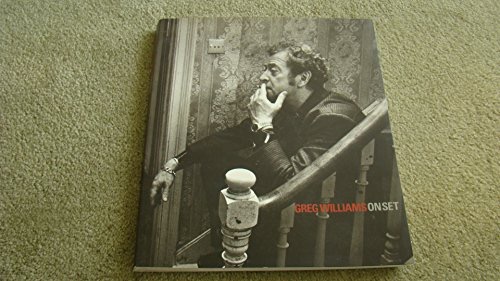
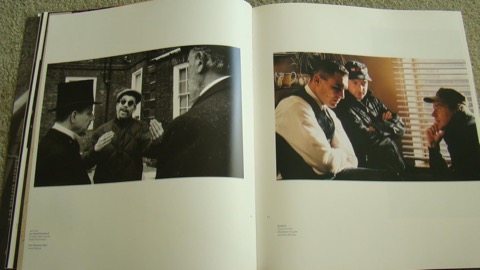
Softcover. London, Vision On Publishing, 1st, 2000, Book: Very Good, Dust Jacket: None, Softcover, 224 pages, color and b&w photos by Greg Qilliams. "As a photographer and film enthusiast, I wanted to revive the genre of the Life Magazine set reports of the 1950s and 60s," says Williams. "For a variety of reasons, the past 30 years have seen photographic access to the film industry severely restricted, limited mainly to portrait shots. I wanted to re-establish reportage as a respected form of film photography." Planned as an editorial project exploring the film-making process in its entirety, On Set grew into a three-years-in-the-making report on British cinema as it once again blossomed with movies like The Talented Mr. Ripley, Lock Stock and Two Smoking Barrels and Elizabeth. Gaining unprecedented access to sets, Williams was able to frame stars, directors and crew in their element and tell a complete, naturalistic story. Starting with Terry Gilliam's hands at the storyboarding stage and ending with Hugh Grant lip-syncing in post-production, On Set's fascinating insider's tale captures the leading lights of British and American film as they've rarely seen: Jude Law practices his dance moves; Matt Damon prepares for his close up; Renee Zellweger relaxes between takes. Clean copy.
London, Faber & Faber, 1st, 2003, Book: Very Good, Dust Jacket: Very Good, Hardcover in a bright, unclipped dust jacket, 384 pages. Orson Welles was a metamorphic man, a magical shape-changer who made up myths about himself and permitted others to add to their store. On different occasions, he likened himself to Christ--mankind's redeemer--and to Lucifer--the rebel angel who brought about the fall. His persona compounded the roles he played--kings, despots, generals, captains of industry, autocratic film directors--and the more or less fictitious exploits with which he regaled other people or which they attributed to him. Hailed in childhood as a genius, he remained mystified by his own promise, unable to understand or control an intellect that he came to think of as a curse; and he ended his days shilling wine and performing magic tricks on talk shows. At times, he saw the collapse of his early ambitions as a tragedy; in other moods, he viewed his life as a humbling comedy, and settled down--like another favorite character, Shakespeare's Falstaff --to eat, drink and be irresponsibly merry. Rather than producing another conventional biography of Welles, Peter Conrad has set out to investigate the stories Welles told about his life--the myths and secret histories hidden in films both made and unmade, in the books Welles wrote and those he read. The result takes us deep into Welles' imagination, showing how he created, then ultimately destroyed himself. Clean copy.
Softcover. Austin TX, University of Texas Press, reprint, 1982, Book: Very Good, Dust Jacket: None, Softcover, 260 pages, b&w photos. There have been very few directors in the history of Hollywood who have ever had as hard a time as Sam Peckinpah did. In a career that lasted only from 1961 to his death near the end of 1984, the man known (rather errantly) as Bloody Sam made only fourteen films--not exactly a large volume work. Despite this, however, and despite (or perhaps because of) his penchant for raising hell with studio heads and producers, Peckinpah was a never-a-dull-moment director. And when he wasn't doing that, he made himself a target for critics, both inside and outside of Hollywood, with his graphic and complex approaches to violence (his 1969 Western epic THE WILD BUNCH), while at the same time also numbering among his films two, largely non-violent gems in THE BALLAD OF CABLE HOGUE and JUNIOR BONNER that prove that the man was able to show sides of the human experience that didn't involve bullets or bloodshed.
Hardcover. Urbana IL, University of Illinois Press, 1st revised, 1997, Book: Very Good, Dust Jacket: Very Good, Hardcover in a bright dust jacket, 410 pages. The book that re-established Peckinpah's reputation--now thoroughly revised and updated! When critics hailed the 1995 re-release of Sam Peckinpah's masterpiece, The Wild Bunch, it was a recognition of Paul Seydor's earlier claim that this was a milestone in American film, perhaps the most important since Citizen Kane. Peckinpah: The Western Films first appeared in 1980, when the director's reputation was at low ebb. The book helped lead a generation of readers and filmgoers to a full and enduring appreciation of Peckinpah's landmark films, locating his work in the central tradition of American art that goes all the way back to Emerson, Hawthorne, and Melville. In addition to a new section on the personal significance of The Wild Bunch to Peckinpah, Seydor has added to this expanded, revised edition a complete account of the successful, but troubled, efforts to get a fully authorized director's cut released. He describes how an initial NC-17 rating of the film by the Motion Picture Association of America's ratings board nearly aborted the entire project. He also adds a great wealth of newly discovered biographical detail that has surfaced since the director's death and includes a new chapter on Noon Wine, credited with bringing Peckinpah's television work to a fitting resolution and preparing his way for The Wild Bunch. This edition stands alone in offering full treatment of all versions of Peckinpah's Westerns. It also includes discussion of all fourteen episodes of Peckinpah's television series, The Westerner, and a full description of the versions of Pat Garrett and Billy the Kid now (or formerly) in circulation, including an argument that the label "director's cut" on the version in release by Turner is misleading. Additionally, the book's final chapter has been substantially rewritten and now includes new information about Peckinpah's background and sources.
Hardcover. NY, Pantheon, 1st, 1997, Book: Very Good, Dust Jacket: Very Good, Hardcover in a bright, unclipped dust jacket, 470 pages. An unfinished novel by the murdered Italian author and filmmaker focuses on Carlo, a left-wing Italian Catholic working for the state-controlled oil company, a man who becomes obsessed with satisfying his perverse, insatiable sexual passions. Small remainder dot to bottom edge otherwise a clean copy of this now scarce book.
Hardcover. Chicago, Chicago Review Press, 1st, 2007, Book: Very Good, Dust Jacket: Very Good, Hardcover in a bright, unclipped dust jacket. 378 pages, b&w illustrations. Lanza looks at the life and work of director Ken Russell, detailing the wild ideas, surreal moments, personal faith, and the cavalcade of colorful personalities surrounding this eccentric filmaker, on and off the set. Clean copy.

 "Innocent Eye, The: The Life of Robert J. Flahertyby: Calder-Marshall, Arthur")
 "Jacques Tourneur: The Cinema of Nightfallby:")
 "Jean Renoir: A Biographyby: Merigeau, Pascal")
 "John Huston - King Rebelby: Nolan, William F.")
 "Kazan: The Master Director Discusses His Films-Interviews with Elia Kazan by: Young, Jeff")
 "Last Days of Alfred Hitchcock, The by: Freeman, David")
 "Leni: The Life and Work of Leni Riefenstahlby: Steven Bach")
 "Light Your Torches and Pull Up Your Tights by: Tay Garnett; Fredda Dudley Balling")
 "Luis Bunuel: Chimera 1900-1983 (Directors)by: Krohn, Bill (Editor)")
 "Malle on Malleby: Malle, Louis; French, Philip, Editor")
 "Mamoulian: Life on Stage and Screenby: David Luhrssen")
 "Midday with Bunuel: Memories and Sketches, 1973-1983by: Claudio Isaac , Bryan T. Scoular, et al.")
 "Miss May Does Not Exist: The Life and Work of Elaine May, Hollywood's Hidden Genius by: Carrie Courogen")
 "Moose That Roared, The - The Story of Jay Ward, Bill Scott, a Flying Squirrel and a Talking Mooseby: Scott, Keith")
 "My Last Sigh: The Autobiography of Luis Bunuel by: Bunuel, Luis")
 "My Lunches with Orson: Conversations between Henry Jaglom and Orson Wellesby: Peter Biskind (Ed.)")
 "Nobody's Perfect - Billy Wilder - A Personal Biographyby: Chandler, Charlotte")
 "On Set by: Greg Williams")
 "ORIGINAL VINTAGE MAGAZINE AD FOR A MOVIE: Alexander Korda presents Four Feathersby: Alexander Korda")
 "Orson Welles, The Stories Of His Lifeby: Peter Conrad")
 "Peckinpah: A Portrait in Montageby: Garner Simmons")
 "Peckinpah: THE WESTERN FILMS - A RECONSIDERATIONby: Paul Seydor")
 "Petrolioby: Pier Paolo Pasolini")
 "Phallic Frenzy: Ken Russell and His Filmsby: Joseph Lanza")