Hardcover. Paris, Editions de Lodi, 1st, 2001, Book: Very Good, Dust Jacket: Very Good, Hardcover, glossy boards in a matching bright dust jacket. Large format, 484 pages, FRENCH TEXT. A collection of over 500 historical photos of old Paris printed in sepia tone. Around 1832 Parisian-born Charles-Francois Bossu (1813-1879) shed his unfortunate last name (bossu means hunchback in French) and adopted the pseudonym Marville. After achieving moderate success as an illustrator of books and magazines, Marville shifted course in 1850 and took up photography, a medium that had been introduced 11 years earlier. His poetic urban views, detailed architectural studies, and picturesque landscapes quickly garnered praise.By the end of the 1850s, Marville had established a reputation as an accomplished and versatile photographer. From 1862, as official photographer for the city of Paris, he documented aspects of the radical modernization program that had been launched by Emperor Napoleon III and his chief urban planner, Baron Georges-Eugene Haussmann. In this capacity, Marville photographed the city's oldest quarters, and especially the narrow, winding streets slated for demolition. Even as he recorded the disappearance of Old Paris, Marville turned his camera on the new city that had begun to emerge. Many of his photographs celebrate its glamour and comforts, while other views of the city's desolate outskirts attest to the unsettling social and physical changes wrought by rapid modernization. Taken as a whole, Marville's photographs of Paris stand as one of the earliest and most powerful explorations of urban transformation on a grand scale. Clean, bright copy.
Hardcover. NY, Vendome Press, 1st, 1989, Book: Very Good, Dust Jacket: Very Good, Hardcover in a bright dust jacket, 208 pages. Best-selling French author Perrault provides moving personal reminiscences of his childhood in occupied Paris. The brief but eloquent narrative is accompanied by hundreds of previously unpublished photos from French and German archives, collected and cataloged by Parisian art historian Azema. Together, text and photos present a graphic portrait of everyday life, recording daily human struggles to find food and fuel, the psychological warfare waged by the occupiers, and the methods of German economic exploitation. As artists, the authors place special emphasis on the arts under the occupation and document the heroism of the writers' resistance. In sum, they show how Paris "kept alive a sense of the enemy."
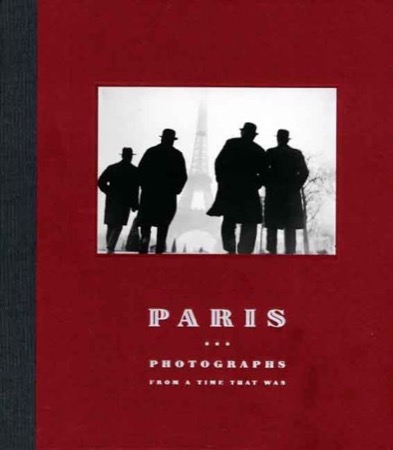
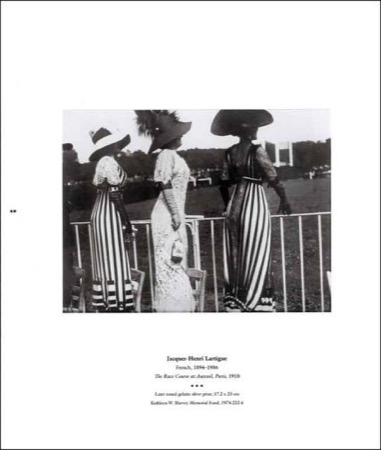
Hardcover. Chicago, Art Institute of Chicago, 1st, 2005, Book: Very Good, Dust Jacket: None, Hardcover, 100 pages. No dust jacket issued. Eugene Atget, Jacques Henri Lartigue, Andre Kertesz, Brassai, Henri Cartier- Bresson, Robert Doisneau? -some of the greatest photographers of Paris? were relatively unknown when they began their most innovative work. Not yet burdened with conventional career expectations, they found the city the perfect environment in which to invent and develop an entirely new approach to conceiving the photographic image. In the 1920s and 1930s, the generation of photographers after Atget responded not only to the physical city itself but also to a new sensibility of time as a spontaneous act. Masterworks by these now-famous visionaries of the medium are featured in this elegant book of photographs of Paris from the 1850s to the 1950s, drawn from the remarkable collection of the Art Institute of Chicago. Clean copy.
Hardcover. Paris, Maison Alred Mame, 1st thus, 1929, Book: Very Good, Dust Jacket: None, 160 pages, illustrated in color and b&w by JOB, featuring 16 gorgeous color plates. Blue cloth spine, color illustrated boards. French text. Previous owner's signature on front fly leaf, otherwise clean, very good.
Hardcover. Oxford, Clarendon Press, 1st , 1982, Book: Good, Dust Jacket: Good, Hardcover, 284 pages. Previous owner's signature on front fly leaf. Slight foxing to top edge. Dust jacket has price clipped from front flap. Dust jacket also shows minor shelf wear and fading to spine. Otherwise, tight clean copy.
Softcover. Paris, Musee de la Vie Romantique, 1st, 2001, Book: Very Good, Dust Jacket: None, 143 pages. Softcover. A very clean, unmarked copy with only minor edgewear. Black and white photographs throughout. French text.
Hardcover. NY, Farrar Straus & Giroux, 1st US, 2023, Book: Very Good, Dust Jacket: Very Good, Hardcover in a bright, unclipped dust jacket, 588 pages, several color plates. Before Picasso became Picasso-the iconic artist now celebrated as one of France's leading figures-he was constantly surveilled by the French police. Amid political tensions in the spring of 1901, he was flagged as an anarchist by the security services-the first of many entries in an extensive case file. Though he soon emerged as the leader of the cubist avant-garde, and became increasingly wealthy as his reputation grew worldwide, Picasso's art was largely excluded from public collections in France for the next four decades. The genius who conceived Guernica in 1937 as a visceral statement against fascism was even denied French citizenship three years later, on the eve of the Nazi occupation. In a country where the police and the conservative Academie des Beaux-Arts represented two major pillars of the establishment at the time, Picasso faced a triple stigma-as a foreigner, a political radical, and an avant-garde artist. Picasso the Foreigner approaches the artist's career and art from an entirely new angle, making extensive use of fascinating and long-overlooked archival sources. In this groundbreaking narrative, Picasso emerges as an artist ahead of his time not only aesthetically but politically, one who ignored national modes in favor of contemporary cosmopolitan forms. Remainder dot to top edge, otherwise a bright, clean copy.
Hardcover. NY, Macmillan Company, 1st US, 1969, Book: Very Good, Dust Jacket: Very Good, Hardcover in a bright, unclipped dust jacket, 461 pages. Laval began his career as a socialist, but over time drifted far to the right. Following France's defeat and armistice with Germany in 1940, he served in prominent roles in Philippe Petain's Vichy Regime, first as the vice-president of the Council of Ministers from 11 July 1940 to 13 December 1940, and later as the head of government from 18 April 1942 to 20 August 1944. After the liberation of France in 1944, Laval was arrested by the French government under General Charles de Gaulle. In what was widely regarded as a flawed trial, Laval was found guilty of plotting against the security of the State and collaboration with the enemy, and after a thwarted suicide attempt, he was executed by firing squad. His manifold political activities left a complicated and controversial legacy, resulting in more than a dozen conflicting biographies of him. Name on front fly leaf, otherwise a bright, clean copy.
Softcover. Paris, Les Editions De L'illustration, 1st, 1946, Book: Very Good, Dust Jacket: None, Softcover, oblong, 112 tipped-in color illustrations, tall 4to, printed tan boards. French art from the Middle Ages to the the 1940's. PLEASE NOTE: DUE TO WEIGHT, DOMESTIC SHIPPING ONLY.
Softcover. Oxford UK, Blackwell, reprint, 1998, Book: Very Good, Dust Jacket: None, Softcover, 630 pages. This is an account of 110 years of turbulence and change. At the offset there were not one, but two revolutions: by intent the first was egalitarian, the second - Bonaparte's - authoritarian. The tension between the two characterized the period and shaped the Republic that in the end emerged from the ruins of the Ancien Regime. Clean copy.
Hardcover. New York, Harry N. Abrams, 1st, 2012, Book: Very Good, Dust Jacket: Very Good, Like new in publishers shrink-wrap. Hardcover in the dust jacket , 263 page book with color and black & white photo illustrations. Written in collaboration with Bernard Matussiere. Translated from the French by Nicholas Elliot. Focuses on Capa's Paris studio, which he used as a global platform for his work; and explores both his professional and personal adventures.
Hardcover. New York, Harry N. Abrams, 1st, 2012, Book: Very Good, Dust Jacket: Very Good, Like new in publishers shrink-wrap. Hardcover in the dust jacket , 263 page book with color and black & white photo illustrations. Written in collaboration with Bernard Matussiere. Translated from the French by Nicholas Elliot. Focuses on Capa's Paris studio, which he used as a global platform for his work; and explores both his professional and personal adventures.
Paperback. Albany, NY, Education Department, Albany Institute of History and Art., revised, 1984, Book: Very Good, Dust Jacket: None, Softcover, 201 pages. Very little wear to cover. Inside is bright and clean with many b&w illustrations throughout.
Softcover. New York , Random House, 1st, 2011, Book: Very Good, Dust Jacket: None, Softcover, 279 pages, b&w photos. Clean, unmarked copy with only minor wear to wrappers. This book exposes Chanel's anti-Semitism and her long affair with 'Spatz' Baron von Dincklage, a Nazi spy who ran an intelligence ring and reported to Goebbels. It explains how she became a German intelligence operative, how she lived in exile, how Winston Churchill supported her and how she reinvented herself in the early 1950s.
Softcover. London, Frank Cass, reprint, 2006, Book: Very Good, Dust Jacket: None, Softcover, 526 pages, b&w illustrations. An Account of the Work of the British Special Operations Executive in France 1940-1944. Maps, appends., sources, index, Updated edition of the HMSO Official History Volume. Originally withdrawn shortly after publication due to threats of legal action by Peter Churchill, then re-released with emendations, Clean copy.
Hardcover. Harrisburg, Stackpole Company, 1st, 1961, Book: Good, Dust Jacket: None, 322 pages. Hardcover. Features 16 pages of black & white photographs. Notations in red pencil on 2 maps - pages 92 and 97. Light wear to yellow cloth covers. No dust jacket.
Softcover. Paris, S.N.E.P., 1st, 1952, Book: Very Good, Dust Jacket: None, Softcover. very good. 116 tipped-in color plates, folio, printed beige boards. Paris: Editions SNEP, (1952). Very good (+). The evolution of painting in Europe, from the Middle Ages to the 18th century. PLEASE NOTE: DUE TO WEIGHT, DOMESTIC SHIPPING ONLY.
Softcover. NY, W. W. Norton & Company, reprint, 1985, Book: Very Good, Dust Jacket: None, Softcover, 447 pages, b&w illustrations. Sylvia Beach ran a bookshop in Paris in the 1920s and 30s and was at the heart of the literary world there which also included Hemingway, Pound, Flanner, Gide, and of course Joyce whose novel "Ulysses" she published. Clean, bright copy.
Softcover. NY, Vintage, 1st pbk, 2008, Book: Very Good, Dust Jacket: None, Softcover, pages. That Sweet Enemy brings both British wit (Robert Tombs is a British historian) and French panache (Isabelle Tombs is a French historian) to bear on three centuries of the history of Britain and France. From Waterloo to Chirac's slandering of British cooking, the authors chart this cross-channel entanglement and the unparalleled breadth of cultural, economic, and political influence it has wrought on both sides, illuminating the complex and sometimes contradictory aspects of this relationship--rivalry, enmity, and misapprehension mixed with envy, admiration, and genuine affection--and the myriad ways it has shaped the modern world. Clean copy.
Softcover. UK, Faber & Faber, reprint, 1988, Book: Very Good, Dust Jacket: None, Softcover, 271 pages. In the twelfth century, Languedoc, in the far south, was among the most beautiful parts of France, far away from the world of the feudal north. However, it was in this rich region that a heresy of Eastern origin took hold, forcing the Catholic Church to confront a rival whose teachings questioned the foundations of Christian thought. These heretics, called Cathars, held a profoundly pessimistic view of the world that was based on the duality of all things, including good and evil: according to one heretic, "The one, the good God, made the invisible world, while the other, the evil God, made the visible one." Jonathan Sumption's acclaimed history examines the roots of this heresy as well as of the crusade the Church undertook in 1208 to stamp out the infidels, who ultimately were conquered by the Catholic armies. But this book does more than simply describe this terrible war; it reconstructs a lost world of great cultural richness, one that saw the creation in Languedoc of the troubadour tradition as well as the magnificent castles at Cabaret and Carcassonne. Clean copy.
Hardcover. NY/London, Verso, 1st, 2003, Book: Very Good, Dust Jacket: Very Good, Hardcover in a bright, unclipped dustjacket. The violence that has ravaged Algeria has often defied explanation. Regularly invoked in debates about political Islam, transitions to democracy, globalization, and the right of humanitarian interference, Algeria's tragedy has been reduced to a clash of stereotypes: Islamists vs.a secular state, terrorists vs. innocent civilians, or generals vs. a defenseless society. The prevalence of such simplistic representations has disabled public opinion inside as well as outside the country and contributed to the intractability of the conflict. This collection of essays offers a radical corrective to Western misconceptions. Rejecting essentialist and determinist approaches, Hugh Roberts explores the outlook and evolution of the various internal forces as they emerged--the Islamists, the Berberists, the factions within the army, and the regime in general--and he looks at external interests and actors. Clean copy.
Hardcover. Berkeley CA, University of California Press, 1st, 1994, Book: Very Good, Dust Jacket: Very Good, Hardcover in a bright dust jacket, 200 pages, b&w illustrations. Kathleen Kete's wise and witty examination of petkeeping in nineteenth-century Paris provides a unique window through which to view the lives of ordinary French people. She demonstrates how that cliche of modern life, the family dog, reveals the tensions that modernity created for the Parisian bourgeoisie. Kete's study draws on a range of literary and archival sources, from dog-care books to veterinarians's records to Dumas's musings on his cat. The fad for aquariums, attitudes toward vivisection, the dread of rabies, the development of dog breeding-all are shown to reflect the ways middle-class people thought about their lives. Petkeeping, says Kete, was a way to imagine a better, more manageable version of the world-it relieved the pressures of contemporary life and improvised solutions to the intractable mesh that was post-Enlightenment France. Clean copy.

 "Paris sens dessus-dessous (Marville photographies 1852-1870)by: Mellot, Philippe")
 "Paris Under the Occupationby: Gilles Perrault")
 "Paris: Photographs from a Time That Wasby: David Travis")
 "Paris: The Great Sagaby: Didier Busson")
 "Petite Histoire de Franceby: Bainville, Jacques and JOB")
 "Philosophes and Post-Revolutionary France, Theby: Lough, John")
 "Photographies Hongroises: Des Romantismes Aux Avant-Gardesby: Marchessau, Daniel")
 "Picasso the Foreigner: An Artist in France 1900-1973by: Cohen-Solal, Annie/Taylor, Sam (Translator)")
 "Pierre Laval and the Eclipse of France 1931 1945: A Political Biography by: Geoffrey Warner")
 "Pour une Renaissance de la Peinture Francaiseby: Baschet, Jacques")
 "Private Diaries of Stendhal, Theby: Sage, Robert (Ed.)")
 "Revolutionary France 1770-1880 by: Furet, Francois")
 "Robert Capa: The Paris Years 1933-54by: Lefebvre, Michel")
 "Robert Capa: The Paris Years 1933-54by: Lefebvre, Michel")
 "Seventeenth Century Albany: A Dutch Profile.by: Wilcoxen, Charlotte")
 "Sleeping with the Enemy: Coco Chanel, Nazi Agentby: Vaughan, Hal")
 "SOE in France: An Account of the Work of the British Special Operations Executive in France 1940 1944 by: Foot, M.R.D.")
 "Street Without Joy - Indochina at War - 1946-54by: Fall, Bernard B.")
 "Sur l'?©volution de la grande peinture ?©trangereby: Baschet, Roger")
 "Sylvia Beach and the Lost Generation: A History of Literary Paris in the Twenties and Thirties by: Fitch, Noel Riley")
 "That Sweet Enemy: Britain and France: The History of a Love-Hate Relationshipby: Tombs, Robert; Tombs, Isabelle")
 "The Albigensian Crusade by: Jonathan Sumption")
 "The Battlefield: Algeria 1988 2002 Studies in a Broken Polity by: Roberts, Hugh")
 "The Beast in the Boudoir: Petkeeping in Nineteenth-Century Parisby: Kathleen Kete")