Softcover. Oxford UK, Blackwell, reprint, 1998, Book: Very Good, Dust Jacket: None, Softcover, 630 pages. This is an account of 110 years of turbulence and change. At the offset there were not one, but two revolutions: by intent the first was egalitarian, the second - Bonaparte's - authoritarian. The tension between the two characterized the period and shaped the Republic that in the end emerged from the ruins of the Ancien Regime. Clean copy.
Hardcover. New York, Harry N. Abrams, 1st, 2012, Book: Very Good, Dust Jacket: Very Good, Like new in publishers shrink-wrap. Hardcover in the dust jacket , 263 page book with color and black & white photo illustrations. Written in collaboration with Bernard Matussiere. Translated from the French by Nicholas Elliot. Focuses on Capa's Paris studio, which he used as a global platform for his work; and explores both his professional and personal adventures.
Hardcover. New York, Harry N. Abrams, 1st, 2012, Book: Very Good, Dust Jacket: Very Good, Like new in publishers shrink-wrap. Hardcover in the dust jacket , 263 page book with color and black & white photo illustrations. Written in collaboration with Bernard Matussiere. Translated from the French by Nicholas Elliot. Focuses on Capa's Paris studio, which he used as a global platform for his work; and explores both his professional and personal adventures.
Softcover. Racine/Lannoo, 1st, 2017, Book: Very Good, Dust Jacket: None, Softcover, 239 pages, b&w and color plates. Text in English and French. Featuring the most well-known photos from Robert Doisneau since the beginning of his career. This retrospective also gives an insight in the lives of famous artists such as Picasso and Niki de Saint Phalle. The book is themed by three subjects: the main characteristics of his work and his importance for 20th century photography, the notion of the poetry of realism and 164 photos, which are also themed: daily beauty, Palm Springs, artists' studios. Published to accompany an exhibition in Musee Ixelles (Brussels) from 19 October 2017 until 4 February 2018. Clean, bright copy.
Hardcover. Germany, Steidl, 1st, 2010, Book: Very Good, Dust Jacket: None, Hardcover, 224 pages. Like new in publisher's shrink-wrap. Nowhere is the breezy and urbane romance of Paris conjured as memorably as in the photography of Robert Doisneau (1912-1994). A gentle minstrel of visual anecdote, Doisneau interpreted the city's charms in an iconography that both natives and Francophiles instantly recognize: the young hip couple stealing a spontaneous kiss at a busy intersection, the gendarme chatting with a mother while her kid tiptoes along a riverbank bench, the sweetly melancholic abandoned merry-go-round in the rain and the entire pageant of Parisian life mingling at cafes, bus shelters and on the banks of the Seine. Doisneau was possessed of both lightness of touch and spontaneity, as a result of which he has been sometimes championed as a photographer of the "pure" moment. But his ocular touch is even lighter than that suggests-his images are not so much "seized" as "netted." Accompanying the Fondation Cartier-Bresson's exhibition of around 100 prints from the Doisneau estate, From Craft to Art presents these treasures alongside a new version of Jean-Francois Chevrier's classic 1983 essay on the photographer, which describes Doisneau's knack for capturing "the shining melancholy that separates an individual from the crowd.
Softcover. London, Tauris Parke Books, 1st, 1992, Book: Very Good, Dust Jacket: None, Softcover, 126 pages. 107 b&w plates. A retrospective for exhibition at Museum of Modern Art, Oxford. Clean, bright copy.
Hardcover. Paris, Zodiaque, 1st, 1982, Book: Very Good, Dust Jacket: Very Good, Hardcover, 407 pages plus index. Color and b&w gravure plates, plans of medieval churches of France. French text. A clean, tight copy in a bright dust jacket.
Hardcover. Paris, Denoel, reprint, 1977, Book: Very Good, Dust Jacket: None, Hardcover, 123 pages of b&w cartoons by Sempe, originally published in 1964. Green cloth covers with fading to spine. previous owner's signature on front fly leaf. Otherwise clean, very good. French language but most of his cartoons are wordless.
Paperback. Albany, NY, Education Department, Albany Institute of History and Art., revised, 1984, Book: Very Good, Dust Jacket: None, Softcover, 201 pages. Very little wear to cover. Inside is bright and clean with many b&w illustrations throughout.
Hardcover. US, 5 Continents, 1st, 2006, Book: Very Good, Dust Jacket: Very Good, Hardcover, 144 pages. Like new in publisher's shrink-wrap. French photographer Olivier Mriel (b. 1955) has practiced photography for over 26 years. His work focuses on landscapes with a taste for the obscure. The son of a chemist, he lives and works in France in the small seaside town of Saint Aubin-sur-Mer, just as his ancestors did before him. His photographs perfectly capture the feeling of history this region is steeped in. Mriel's landscapes, while dark and moody, ultimately document his search for light. This light is reflected off the land and as surfaces act as mirrors, they exude a subtle glow that seeps into even the darkest corners. A human presence that is felt but not seen subtly leads us to explore and to contemplate the secrets of these magical places and the profound meaning of existence.
Softcover. New York , Random House, 1st, 2011, Book: Very Good, Dust Jacket: None, Softcover, 279 pages, b&w photos. Clean, unmarked copy with only minor wear to wrappers. This book exposes Chanel's anti-Semitism and her long affair with 'Spatz' Baron von Dincklage, a Nazi spy who ran an intelligence ring and reported to Goebbels. It explains how she became a German intelligence operative, how she lived in exile, how Winston Churchill supported her and how she reinvented herself in the early 1950s.
Softcover. London, Frank Cass, reprint, 2006, Book: Very Good, Dust Jacket: None, Softcover, 526 pages, b&w illustrations. An Account of the Work of the British Special Operations Executive in France 1940-1944. Maps, appends., sources, index, Updated edition of the HMSO Official History Volume. Originally withdrawn shortly after publication due to threats of legal action by Peter Churchill, then re-released with emendations, Clean copy.
Hardcover. London, William Pickering, 1st, 1835, Book: Good, Dust Jacket: None, Hardcover, 298 pages. Black leather covers with gilt rules, faded gilt title on ribbed spine. All edges gilt. Covers with edgewear and the top 6th of the spine leather is gone. Marbled endpapers with bookplate inside front cover. Rear flyleaf with a chunk cut out. Interior is very good. Medieval and Renaissance French poetry, translated into English by an acclaimed poet, travel writer, historian, and painter. Louisa Costello (1799-1870), was an accomplished Anglo-Irish artist and prolific poet and author. She was also a fine miniature painter, and her illustrations show her exquisite sensibility. 4 beautifully hand-colored lithograph plates by the author. Not all copies contain these plates.
Softcover. Mancheser, U.K., Manchester University, Reprint, 1995, Book: Very Good, Dust Jacket: Very Good, Softcover, 221 pages. Foreword by George Melly. Highlighting on two pages. B&W photos and illustrations. Street Noises combines the diverse materials of mass culture with literary and archival sources, to produce an innovative and critical re-reading of twentieth-century Paris as the city of the people and of cultural modernity. It concentrates on popular song and opera, cultural theory and records of police surveillance (such as the unpublished archives concerning the sexual mores of sailors in Toulon), sensational weekly magazines (including the weekly Detective Magazine with its remarkable photomontage) and writers of the Academie Goncourt. The author picks out their common realisation of the experience of the city, also showing how the faits divers and the entertainment industries frame the writing of a Benjamin, a Colette or a Genet. Rifkin reworks modern critical theory through these sources, reflecting on its relation to the production of mass cultures.
Hardcover. Harrisburg, Stackpole Company, 1st, 1961, Book: Good, Dust Jacket: None, 322 pages. Hardcover. Features 16 pages of black & white photographs. Notations in red pencil on 2 maps - pages 92 and 97. Light wear to yellow cloth covers. No dust jacket.
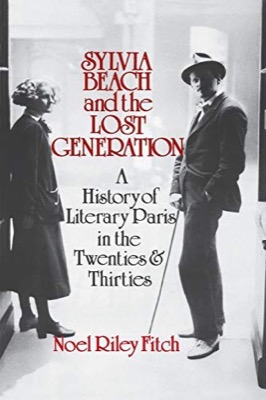
Softcover. NY, W. W. Norton & Company, reprint, 1985, Book: Very Good, Dust Jacket: None, Softcover, 447 pages, b&w illustrations. Sylvia Beach ran a bookshop in Paris in the 1920s and 30s and was at the heart of the literary world there which also included Hemingway, Pound, Flanner, Gide, and of course Joyce whose novel "Ulysses" she published. Clean, bright copy.
Softcover. NY, Vintage, 1st pbk, 2008, Book: Very Good, Dust Jacket: None, Softcover, pages. That Sweet Enemy brings both British wit (Robert Tombs is a British historian) and French panache (Isabelle Tombs is a French historian) to bear on three centuries of the history of Britain and France. From Waterloo to Chirac's slandering of British cooking, the authors chart this cross-channel entanglement and the unparalleled breadth of cultural, economic, and political influence it has wrought on both sides, illuminating the complex and sometimes contradictory aspects of this relationship--rivalry, enmity, and misapprehension mixed with envy, admiration, and genuine affection--and the myriad ways it has shaped the modern world. Clean copy.
Softcover. London, C Hurst & Co, 1st, 1997, Book: Very Good, Dust Jacket: None, Softcover, 176 pages. An analysis of the background to the current crisis in Algeria, placing in perspective the threats to the state posed by Islamic fundamentalism and economic mismanagement. It looks at the role of the National Liberation Front (FLN), international relations, the economy, and more. Clean copy.
Softcover. Durham NC, Duke University Press, 1st, 2013, Book: Very Good, Dust Jacket: None, Softcover, 384 pages. Noel Burch and Genevieve Sellier adopt a sociocultural approach to films made in France before, during, and after World War II, paying particular attention to the Occupation years (1940-44). The authors contend that the films produced from the 1930s until 1956--when the state began to subsidize the movie industry, facilitating the emergence of an "auteur cinema"--are important, both as historical texts and as sources of entertainment. Citing more than 300 films and providing many in-depth interpretations, Burch and Sellier argue that films made in France between 1930 and 1956 created a national imaginary that equated masculinity with French identity. They track the changing representations of masculinity, explaining how the strong patriarch who saved fallen or troubled women from themselves in prewar films gave way to the impotent, unworthy, or incapable father figure of the Occupation. After the Liberation, the patriarch reemerged as protector and provider alongside assertive women who figured as threats not only to themselves but to society as a whole. Still in publisher's shrinkwrap.
Hardcover. NY/London, Verso, 1st, 2003, Book: Very Good, Dust Jacket: Very Good, Hardcover in a bright, unclipped dustjacket. The violence that has ravaged Algeria has often defied explanation. Regularly invoked in debates about political Islam, transitions to democracy, globalization, and the right of humanitarian interference, Algeria's tragedy has been reduced to a clash of stereotypes: Islamists vs.a secular state, terrorists vs. innocent civilians, or generals vs. a defenseless society. The prevalence of such simplistic representations has disabled public opinion inside as well as outside the country and contributed to the intractability of the conflict. This collection of essays offers a radical corrective to Western misconceptions. Rejecting essentialist and determinist approaches, Hugh Roberts explores the outlook and evolution of the various internal forces as they emerged--the Islamists, the Berberists, the factions within the army, and the regime in general--and he looks at external interests and actors. Clean copy.
Hardcover. Belgium, Brepols , 1st, 2012, Book: Very Good, Dust Jacket: None, Hardcover, pictorial boards, 696 pages, 34 b/w illustrations.The rise of modern science and European colonial and imperial expansion are indisputably two defining elements of modern world history. James E. McClellan III and Francois Regourd explore these two world-historical forces and their interactions in this comprehensive and in-depth history of the French case in the Old Regime presented here for the first time. The case is key because no other state matched Old-Regime France as a center for organized science and because contemporary France closely rivaled Britain as a colonial power, as well as leading all other nations in commodity production and participating in the slave trade. Based on extensive archival research and vast primary and secondary literatures and sharply reframing the historiography of the field, this landmark volume traces the development and significance for early-modern history of the Colonial Machine of Old-Regime France, an unparalleled agglomeration of institutions geared to the success of the French colonial enterprise, including the Royal Navy, the Academie Royale des Sciences, the Jardin du Roi, and a host of related specialist institutions working together at home and overseas. Mainly supported by the French state, the Colonial Machine reveals itself through its actions from the time of Colbert and Louis XIV as it grappled with fundamental problems facing contemporary European colonialism. SIGNED LETTER from co-author McClelland laid in. Clean copy.
Softcover. Ithaca NY, Cornell University Press, 1st pbk, 1973, Book: Very Good, Dust Jacket: None, Softcover, 180 pages. The spirit of an event consecrated in anarchist legend is captured in these documents. Eyewitness reports, accounts of participants, and archival documents are used by Dr Edwards to illustrate the many facets of the seventy-three-day Paris Commune of 1871, the largest urban insurrection in modern history. Each section of the book is preceded by an explanatory note, and footnotes clarify contemporary references The introduction to the documents provides a general survey of the origins and events of the Commune. Bright, clean copy.
Hardcover. Delmar NY, Scholars Facsimiles and Reprints, reprint, 1977, Book: Very Good, Dust Jacket: None, Hardcover, blue cloth with gilt lettering on spine, 597 pages. A facsimile reproduction of the 1605 London edition. Du Bartas was extremely popular in early modern England, and was still being read widely in the later seventeenth century even as his reputation in France began to decline. His world-famous La Sepmaine, ou creation du monde (1578), an epic poem on the creation of the world, divided into seven parts, for each of the seven days of creation, was first translated into English in 1598 and published in 1605 and was reprinted six times up until 1641. "No other poem (besides those in the Bible itself) was read as widely as the Semaines were across early modern English and Scottish society. Based on references to Sylvester in print, Snyder believed that 'Clearly everyone in pre-Restoration England who had received a literary education read the 'Weekes' ande almost all.... Admired it'. Clean copy.
Hardcover. NY, Curt Valentin, 1st, 1947, Book: Very Good, Dust Jacket: None, Hardcover, textured beige boards with a green cloth spine. 94 pages of text and 58 black & white plates. Limited to 1,000 copies. Clean copy.
Hardcover. Duke University Press, 1st, 2003, Book: Very Good, Dust Jacket: None, Hardcover, 440 pages. Black cloth, no dust jacket. The Edge of Surrealism is an essential introduction to the writing of French social theorist Roger Caillois. Caillois was part of the Surrealist avant-garde and in the 1930s founded the College of Sociology with Georges Bataille and Michel Leiris. He spent his life exploring issues raised by this famous group and by Surrealism itself. Though his subjects were diverse, Caillois focused on concerns crucial to modern intellectual life, and his essays offer a unique perspective on many of twentieth-century France's most significant intellectual movements and figures. Including a masterful introductory essay by Claudine Frank situating his work in the context of his life and intellectual milieu, this anthology is the first comprehensive introduction to Caillois's work to appear in any language. These thirty-two essays with commentaries strike a balance between Caillois's political and theoretical writings and between his better known works, such as the popular essays on the praying mantis, myth, and mimicry, and his lesser-known pieces. Presenting several new pieces and drawing on interviews and unpublished correspondence, this book reveals Caillois's consistent effort to reconcile intellectual rigor and imaginative adventure. Perhaps most importantly, The Edge of Surrealism provides an overdue look at how Caillois's intellectual project intersected with the work of Georges Bataille and others including Breton, Bachelard, Benjamin, Lacan, and Levi-Strauss.
Softcover. Middletown CT, Wesleyan University Press, 1st, 1974, Book: Very Good, Dust Jacket: None, Softcover, 225 pages. First published in 1930 and untranslated until now, this is one of the minor classics of French historical literature. The author relates the bizarre beginnings of the Third Republic during the presidency of Adolphe Thiers (1871-1873), when an assembly dominated by monarchists groped uncertainly toward the establishment of a republican government.
Hardcover. Boston, Houghton Mifflin Company, 1st, 1925, Book: Good, Dust Jacket: None, Hardcover, purple cloth gilt lettering and decoration on spine, gilt medallion on front cover. 355 pages, color frontispiece. Illustrated with several B&W maps and reproductions. Mild fade to spine. Clean, tight copy.
Hardcover. NY, Pantheon, 1st,, 1973, Book: Very Good, Dust Jacket: Very Good, Hardcover in a bright dust jacket, 234 pages. This major work, graphically describes the panic, paranoia, and social chaos that sparked the Revolution. One of France's great historians analyzes the causes of the mass hysteria that overcame rural France during the summer of 1789, as hungry villagers flocked into towns to look for work or to beg for charity, and as vagrants and beggars choked the rural roads, threatening reprisals against householders who refused to give them shelter or a crust of bread. Name on front fly leaf, otherwise clean.
Softcover. Honolulu HA, University Press of the Pacific, reprint, 2002, Book: Very Good, Dust Jacket: None, Softcover. First published in 1874, 448 pages with index. Clean, bright copy.
Softcover. NY, Oxford University Press, reprint, 1989, Book: Very Good, Dust Jacket: None, Softcover, 310 pages. Jacques Adler (1927-2017) was born in 1927. Jacques brought his experience in the Resistance to the study of history and used it in his pioneering Ph.D. Jacques joined the Jewish underground in Paris and was active throughout the war. During the Liberation, Jacques was involved in the Resistance takeover of the offices of the Union generale des israelites de France (UGIF), the organization which the Vichy regime forced French Jews to create and pay for in order to control the Jewish community. Clean copy.
Hardcover. Boston, Little Brown, 1st, 1930, Book: Very Good, Dust Jacket: Fair, Hardcover, maroon cloth with orange lettering. Two-color plates, b&w endpapers drawing by Leo O'Donnell. Dust jacket worn with major chipping. Book is clean, tight copy. The story of a fatherless youth in thirteenth century, battling his cousin for his ancestral castle and inheritance.
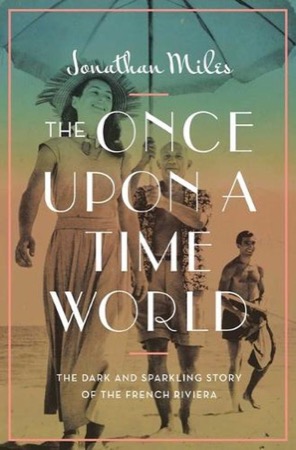
Hardcover. NY, Pegasus Books, 1st, 2023, Book: Very Good, Dust Jacket: Very Good, Hardcover in a bright, unclipped dust jacket. Chronicling two-hundred years of glamour, intrigue, and hedonism, this rich and vivid history of the French Riviera features a vast cast of characters, from Pablo Picasso and Coco Chanel to Andre Matisse and James Baldwin. In 1835, Lord Brougham founded Cannes, introducing bathing and the manicured lawn to the wilds of the Mediterranean coast. Today, much of that shore has become a concrete mass from which escape is an exclusive dream. In the 185 years between, the stretch of seaboard from the red mountains of the Esterel to the Italian border hosted a cultural phenomenon well in excess of its tiny size. A mere handful of towns and resorts created by foreign visitors - notably English, Russian and American - attracted the talented, rich and famous as well as those who wanted to be. For nearly two centuries of creativity, luxury, excess, scandal, war and corruption, the dark and sparkling world of the Riviera was a temptation for everybody who was anybody. Clean copy.
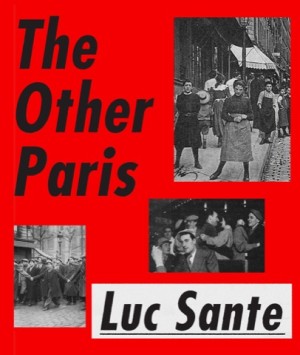
Hardcover. NY, Farrar, Straus and Giroux, 1st, 2015, Book: Very Good, Dust Jacket: Very Good, Hardcover in a bright, unclipped dust jacket. Paris, the City of Light, the city of fine dining and seductive couture and intellectual hauteur, was until fairly recently always accompanied by its shadow: the city of the poor, the outcast, the criminal, the eccentric, the willfully nonconforming. In The Other Paris, Luc Sante gives us a panoramic view of that second metropolis, which has nearly vanished but whose traces are in the bricks and stones of the contemporary city, in the culture of France itself, and, by extension, throughout the world.Drawing on testimony from a great range of witnesses-from Balzac and Hugo to assorted boulevardiers, rabble-rousers, and tramps-Sante, whose thorough research is matched only by the vividness of his narration, takes the reader on a whirlwind tour. Richly illustrated with more than three hundred images, The Other Paris scuttles through the knotted streets of pre-Haussmann Paris, through the improvised accommodations of the original bohemians, through the whorehouses and dance halls and hobo shelters of the old city. A lively survey of labor conditions, prostitution, drinking, crime, and popular entertainment, and of the reporters, realiste singers, pamphleteers, and poets who chronicled their evolution, The Other Paris is a book meant to upend the story of the French capital, to reclaim the city from the bons vivants and the speculators, and to hold a light to the works and lives of those expunged from its center by the forces of profit.
Hardcover. New Haven CT, Yale University Press, 1st, 2007, Book: Very Good, Dust Jacket: Very Good, Hardcover, 288 pages. The meaning of a painted portrait and even its subject may be far more complex than expected, Tamar Garb reveals in this book. She charts for the first time the history of French female portraiture from its heyday in the early nineteenth century to its demise in the early twentieth century, showing how these paintings illuminate evolving social attitudes and aesthetic concerns in France over the course of the century.
Hardcover. New Haven CT, Yale University Press, 1st, 1997, Book: Very Good, Dust Jacket: Very Good, Hardcover in a bright dust jacket, 354 pages, b&w illustrations. An illustrated study brings to life the atmosphere and personalities of pre-revolutionary Paris, traces their influence on the American envoy, and recounts his participation in the life of the city and its intrigues at court. Clean copy.
Hardcover. NY, Knopf, 1st, 1964, Book: Very Good, Dust Jacket: Very Good, Hardcover in a nice, unclipped dust jacket with light tanning to spine. 290 pages plus index. Clean copy. THE ENLIGHTENMENT has long been the victim of uninformed or hostile criticisms. Even so respected a source as the Shorter Oxford English Dictionary defines the Enlightenment as "shallow and pretentious intellectualism, unreasonable contempt for authority and tradition," thus collecting in one sentence most of our current prejudices. In this provocative book--at once a scholarly study and a vigorous polemic--Peter Gay sets out to shatter old myths, to sort out illusion from reality, and to restore the men of the Enlightenment--Voltaire, Rousseau, Diderot--to the esteem they deserve.
Hardcover. NY, Walker & Company, 1st, 2000, Book: Very Good, Dust Jacket: Very Good, Hardcover in a bright, unclipped dust jacket. chronicles the Roman Catholic Church's crusade against--and ultimate annihilation of--the Albigenses, or Cathars, a group of heretical Christians who thrived in what is now the Languedoc region of Southern France. The Cathars held revolutionary beliefs that threatened the authority of the church. The world, they maintained, was not created by a benevolent God. Rather, it was the creation of a force of darkness, immanent in all things. They considered worldly authority a fraud, and authority based on some divine sanction, such as claimed by the church, outright hypocrisy. Innocent III, resolved to eradicate the Cathar threat to church authority, recruited the military powers of France, eager to expand their territory to the south. Together, they systematically exterminated the Cathars and their supporters in a series of crusades between 1209 and 1229. The Dominican-led Inquisition that ensued built upon this momentum of intolerance and tormented Europe for centuries to come. 333 pages, endpapers map.
Hardcover. University AL, University of Alabama Press, 1st, 1981, Book: Very Good, Dust Jacket: Very Good, Hardcover, red cloth covers in a lightly worn dust jacket. Here are the passionate memoirs of the French Communard leader, a hero, saint and martyr to the socialists and anarchists battling the injustices of the Third Republic. 202 pages with a bibliography. Clean copy.
Hardcover. Greenwich CT, New York Graphic Society, 1st, 1972, Book: Very Good, Dust Jacket: Very Good, Hardcover, dark red cloth/dark red DJ. 144 pp. 108 bw plates. All of Falconet's major works and attributions are illustrated in gravure, with many details. Includes a translation from the French of Falconet's Reflections sur la sculpture by Eda Mezer Levitine.
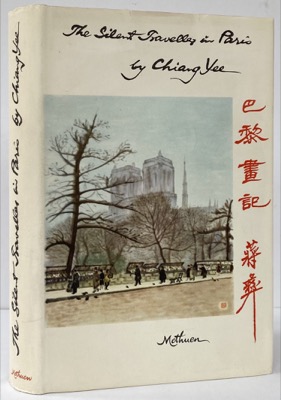
Hardcover. NY, W.W. Norton & Co, , 2nd pr., Book: Very Good, Dust Jacket: Very Good, Hardcover in a bright, unclipped dust jacket, (orig. $7.50 price to front flap), 285 pages. Illustrated by Yee with 12 color plates, 4 monochrome plates and 117 line drawings in the text. Another (#9) in the author's popular series of early-mid-20th-century travel guides from an Asian perspective, this one recounting his forays through Paris, where he "transforms the outwardly familiar into something new." Probable 2nd Ed. as the first had a $5.95 flap price. Clean, bright copy.
Hardcover. NY, Farrar Straus & Giroux, 1st, 2006, Book: Very Good, Dust Jacket: Very Good, Hardcover in a bright, unclipped dust jacket. 441 pages, index, notes, glossary, chronology, b&w illustrations. A dramatic new interpretation of the French Revolution that draws troubling parallels with today's politic and religious fundamentalism.
Hardcover. NY, Random House, 1st, 1964, Book: Very Good, Dust Jacket: Good, Hardcover in a dust jacket with some fading, 461 pages. History of the six-year period between the fall of Robespierre and the rise of Napoleon Bonaparte. Bookplate on inside front cover, otherwise clean.
Hardcover. NY, E. P. Dutton, 2nd pr., 1931, Book: Good, Dust Jacket: None, Hardcover, red cloth covers with gilt lettering (now partially faded). 320 pages, b&w plates. Chapters include: The Scientific detective; Human Monsters; Famous bandits; Crimes of the insane; Political crime; Some famous women criminals; The case of a spy - Mata Hari; The Death Penalty. Spine faded, otherwise, clean copy.
Hardcover. NY, Random House, 1st, 1985, Book: Very Good, Dust Jacket: Very Good, Hardcover in a bright dust jacket, 487 pages, b&w illustrations. Napoleon's colorful but disastrous Russian campaign has been strangely neglected by American publishers. Bridging the gap between popular and scholarly history, historian Cate has written a thoroughly detailed and researched account that should also appeal to the lay reader. His writing is deliberately paced but dramatic and does far more justice to the extremely complex political and military situation of 1812 than Philippe de Segur's Napoleon's Russian Campaign (1965), the only other work available in the United States. Clean copy.
Hardcover. NY, Museum of Modern Art , 1st, 1982, Book: Very Good, Dust Jacket: Good, Hardcover in a bright, price-clipped dust jacket. Volume Two Only. First Edition. Photographs by Eugene Atget. Essay and notes to the plates by Maria Morris Hambourg. Appendixes include Berenice Abbott's typewritten copy of Andre Calmette's handwritten letter to her (late 1928). Maroon cloth with debossed title blind-stamped on cover and in gilt on spine, with dust jacket. 192 pp. with 116 plates and 84 black and white reference illustrations. Printed by The Meriden Gravure Company from halftone negatives made by Richard Benson. Clean, tight copy.
Hardcover. NY, Museum of Modern Art , 1st, 1983, Book: Very Good, Dust Jacket: Good, Hardcover in a bright, price-clipped dust jacket. Volume Three Only. First Edition. 188 pages, 120 plates. Fore-edge of dust jacket has chipping, edgewear. Otherwise a clean, VG copy.
Hardcover. NY, Museum of Modern Art , 1st, 1985, Book: Very Good, Dust Jacket: Good, Hardcover in a bright, price-clipped dust jacket. Volume Four Only. First Edition. Photographs by Eugene Atget. Essay and notes to the plates by Maria Morris Hambourg. 182 pages, 117 bw photographic plates and several text illustrations. A nice, bright copy.
Hardcover. NY, Museum of Modern Art , 1st, 1981, Book: Very Good, Dust Jacket: Very Good, Hardcover in a bright, price-clipped dust jacket. Volume One Only. First Edition. 180 pages,121 plates with 83 b&w photo illustrations, slight edgewear to jacket, else a very nice, clean copy. Atget was a groundbreaking photographer, documenting three decades of rapid urban transition in Paris from the late 19th to early 20th centuries. His works depict the architecture, streets, gardens, and people of the city.
Hardcover. Paris, Garnier, 1911, Book: Very Good, Dust Jacket: None, 625 pages, original blue paper wrappers here bound in half leather and marbled boards, spines with raised ribs and gilt design, floral end papers. Top edge gilt, 4 color plates.


 "Robert Capa: The Paris Years 1933-54by: Lefebvre, Michel")

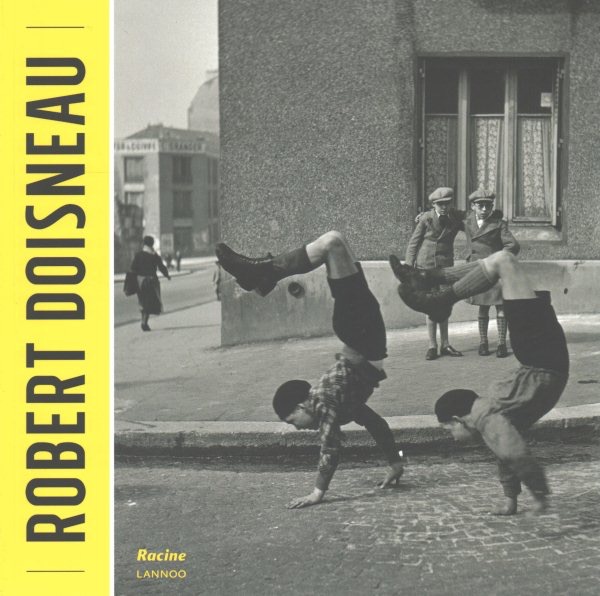
 "Robert Doisneau: From Craft to Artby: Chevrier, Jean-Franaois")
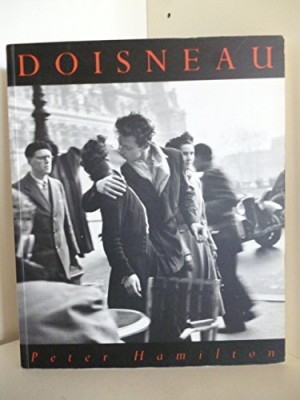



 "Silent Worldsby: Olivier Mriel")
 "Sleeping with the Enemy: Coco Chanel, Nazi Agentby: Vaughan, Hal")
 "SPECIMENS OF THE EARLY POETRY OF FRANCE, from the Time of the Troubadours and Trouveres to the Reign of Henry Quatre by: Costello, Louisa Stuart")













 "The Making of Beaubourg: A Building Biography of the Centre Pompidou, Paris by: Silver, Nathan")





 "The Sculpture of Falconet by: Levitine, George")




![The Work of Atget, Vol. 2: The Art of Old Parisby: [Eugene Atget] Szarkowski, John and Hambourg, Maria](javascript:largeIMTop('https://www.browsingisarousing.com/shop/images/The-Work-of-Atget-Vol.-2-The-Art-of-Old-Paris_by_Eugene-Atget-Szarkowski-John-and-Hambourg-Maria398320-451721.jpg','https://www.browsingisarousing.com/shop/images/The-Work-of-Atget-Vol.-2-The-Art-of-Old-Paris_by_Eugene-Atget-Szarkowski-John-and-Hambourg-Maria398320-451721.jpg',0,'398320',0,'') "The Work of Atget, Vol. 2: The Art of Old Parisby: [Eugene Atget] Szarkowski, John and Hambourg, Maria")
![The Work of Atget, Vol. 3: The Ancien Regime by: [Eugene Atget] Szarkowski, John and Hambourg, Maria](https://www.browsingisarousing.com/shop/images/The-Work-of-Atget-Vol.-3-The-Ancien-Regime_by_Eugene-Atget-Szarkowski-John-and-Hambourg-Maria398319-451855.jpg "The Work of Atget, Vol. 3: The Ancien Regime by: [Eugene Atget] Szarkowski, John and Hambourg, Maria")
![The Work of Atget, Vol. 4: Modern Timesby: [Eugene Atget] Szarkowski, John and Hambourg, Maria](javascript:largeIMTop('https://www.browsingisarousing.com/shop/images/The-Work-of-Atget-Vol.-4-Modern-Times_by_Eugene-Atget-Szarkowski-John-and-Hambourg-Maria398321-451824.jpg','https://www.browsingisarousing.com/shop/images/The-Work-of-Atget-Vol.-4-Modern-Times_by_Eugene-Atget-Szarkowski-John-and-Hambourg-Maria398321-451824.jpg',0,'398321',1,'') "The Work of Atget, Vol. 4: Modern Timesby: [Eugene Atget] Szarkowski, John and Hambourg, Maria")


![The Work of Atget, Vol. I, Old Franceby: [Eugene Atget] Szarkowski, John and Hambourg, Maria](https://www.browsingisarousing.com/shop/images/The-Work-of-Atget-Vol.-I-Old-France_by_Eugene-Atget-Szarkowski-John-and-Hambourg-Maria398317-451719.jpg "The Work of Atget, Vol. I, Old Franceby: [Eugene Atget] Szarkowski, John and Hambourg, Maria")
 "Theatre Complet de J. Racine - Precede de la Vie de L'Auteurby: Racine, J.")