Hardcover. NY, 1st, 2021, Book: Very Good, Dust Jacket: Very Good, Hardcover in a bright, unclipped dust jacket. When the French designer Christian Dior presented his first collection in Paris in 1947, he changed fashion forever. Dior's "New Look" created a striking, romantic vision of femininity, luxury, and grace, making him-and his last name-famous overnight. One woman informed Dior's vision more than any other: his sister, Catherine, a Resistance fighter, concentration camp survivor, and cultivator of rose gardens who inspired Dior's most beloved fragrance, Miss Dior. Yet the story of Catherine's remarkable life-so different from her famous brother's-has never been told, until now. Drawing on the Dior archives and extensive research, Justine Picardie's Miss Dior is the long-overdue restoration of Catherine Dior's life. The siblings' stories are profoundly intertwined: in Occupied France, as Christian honed his couture skills, Catherine dedicated herself to the Resistance, ultimately being captured by the Gestapo and sent to Ravensbruck, the only Nazi camp solely for women. Seeking to trace Catherine's story as well as her influence on her brother, Picardie traveled to the significant places of Catherine's life, including Les Rhumbs, the Dior family villa with its magnificent gardens; the House of Dior in Paris; and La Colle Noire, Christian's chateau that he bequeathed to his sister. Remainder dot top edge.
Softcover. New York, Simon and Schuster, 1st, 1969, Book: Very Good, Dust Jacket: None, 188 pages. Softcover. Illustrated with black & white photographs. Darkening to spine, light wear. Clean, unmarked text.
Hardcover. NY, Harcourt Brace And Company , reprint, nd, Book: Very Good, Dust Jacket: Good, Hardcover in a lightly worn and chipped dust jacket. 424 pages, 10 tipped-in color plates & 48 double-sided b/w plates. index. This book is an attempt to tell the story of modern French painting as developed by the Impressionists and subsequent adventurers in the last hundred years in Paris. No date, most likely early 1950s. Clean copy.
Hardcover. New York , Marie Chardin/privately printed, 1st, 1936, Book: Good, Dust Jacket: Fair, 64 pages illustrated in 2-colors and full color by Bess Bethell. SIGNED BY AUTHOR on title page. Red cloth with black type and drawing of a penguin on front. Fraying to top of spine, previous owner's inscription on front fly leaf. Dust jacket worn, chipped. A children's reader, number and alphabet book, all in French.
Softcover. Paris, Editions Du Chene, 1st wraps, 1953, Book: Good, Dust Jacket: Fair, Stiff paper wraps with dust jacket. 1st 20 pages have scuff, fraying to bottom pages, dog eared. Photograph section is VG condition. FRENCH TEXT. Dust jacket taped together as flaps had separated.
Softcover. Edinburgh, Luath Press Ltd, 1st, 2006, Book: Very Good, Dust Jacket: None, Softcover, 160 pages. Color and b&w illustrations. In 1923 Charles and Margaret Mackintosh escaped Britain for France.Monsieur Mackintosh is the only book available on Mackintosh's years in France. With reproductions of 40 of his French paintings alongside photographs of the actual locations today, and images from the period 1923-1927, this is a comprehensive and pictorial account. Written in close collaboration with experts from Glasgow University, the National Gallery of Modern Art and the Glasgow School of Art, and edited by Professor Pamela Robertson, author and leading expert on Mackintosh, Monsieur Mackintosh includes new research and is written with the French and English translations side-by-side. Published to coincide with and accompany a major exhibition of Mackintosh's work in France Monsieur Mackintosh contains more than 250 images reproduced in full colour throughout.
Hardcover. London, Longman, Brown, Green, Longmans & Roberts, 1st, 1857, Book: Good, Dust Jacket: None, 286 pages. Hardcover with marbled covers and page block decoration, gilt lettering on spine. Previous owner's bookplate on front end paper. Previous owner's name on title page. Ex-Library with usual stamping and embossed seal on preliminary pages.
Hardcover. London, Hodder and Stoughton, 1st, 1916, Book: Fair, Dust Jacket: None, 158 pages. Hardcover. Features 46 tipped-in plates. Foxing throughout. Front hinged cracked. Covers worn with areas of staining, darkening to spine cloth.
Hardcover. New York, Macmillan, 1st US, 1972, Book: Very Good, Dust Jacket: Good, Hardcover, 153 pages, foreward by M.F.K. Fisher. A collection of b&w photos, some color, by Robert Doisneau. Commentary by Chevalier. In a bright dust jacket with light edgewear, soiling to rear panel. Otherwise a clean, tight copy.
Hardcover. Garden City, Doubleday & Company, 1st, 1965, Book: Good, Dust Jacket: Good, 216 pages. Hardcover. Illustrated with 40 pages of black & white photographs. Rear endpaper has been removed. Darkening to top edge. Dust jacket with some areas of light soiling - jacket now protected with clear plastic cover. Clean, unmarked pages.
Hardcover. London, Arthur L Humphreys, 2nd pr., 1900, Book: Very Good, Dust Jacket: None, Hardcover, maroon cloth with gilt staping. 261 pages including index. 261 pages. Written almost 80 years after the Emperor's death, the author attempts to bring together all the contemporary biographies and memoirs relating to the sojourn on St Helena. Mild foxing, otherwise clean.
Hardcover. Washington, D.C., U.S. Government Printing Office, 1st, 1935, Book: Good, Dust Jacket: None, Hardcover, 653 pages. Gilt top edge. Minor spine and cover edge wear. Minor soiling on cover and spine. Otherwise, a clean and tight copy. Foreword by President Roosevelt and a preface by Captain Dudley W. Knox. plus 10 plates including 2 folded maps and the frontispiece. Fp: U.S. Ship of War Delaware. Cloth cover, gilt title on spine.
Hardcover. Washington, D.C., U.S. Government Printing Office, 1st, 1935, Book: Good, Dust Jacket: None, Hardcover, 624 pages. Gilt top edge. Minor spine and cover edge wear. Minor soiling on cover and spine. Otherwise, a clean and tight copy.
Softcover. New York, Oxford University Press, 1st paperback, 1968, Book: Very Good, Dust Jacket: None, 355 pages. Softcover. Light pencil underlining in a few places. Wrapper good, with a touch of agewear, no tears, some slight moisture damage at the bottom of the back cover.
Hardcover. Paris, Garnier Freres, reprint, nd, Book: Very Good, Dust Jacket: None, French text, 589 pages with 4 color gravures by M. E. Bayard bound in 1/2 leather. Calf spine with gilt decorations and title label, raised bands, top edge gilt, marbled boards and end papers.
Softcover. Paris, Hachette Livre, reprint, nd, Book: Very Good, Dust Jacket: None, Softcover, 1084 pages, text in FRENCH. Clean, fresh copy. M. Pierre Bayle was a French philosopher, author, and lexicographer. Voltaire, in the prelude to his Poeme sur le desastre de Lisbonne, calls Bayle "le plus grand dialecticien qui ait jamais ecrit": the greatest dialectician to have ever written.
NY, The Press of the American Institute of Architects., 1st, 1925, Book: Good, Dust Jacket: None, Hardcover. Complete with 24 watercolor prints and 44 plates. Loosely bound in case with cloth ties which has cracking along spine. Interior very good. Number 677 of 1000. Elephant folio 23" tall. "A Series of Historical Examples from Roman Times to the End of the XVIIIth Century." An appreciation of historic French infrastructure that survived WWI. Beautiful large color reproductions of original watercolors of bridges by Pierre Vignal; 35 black and white drawings by Louis C. Rosenberg & Samuel Chamberlain; 44 measured drawings, photographs, diagrams, and maps. DUE TO SIZE & WEIGHT, DOMESTIC SHIPPING ONLY.
Hardcover. New Haven CT, Yale University Press, 1st, 2018, Book: Very Good, Dust Jacket: None, Hardcover, 156 pages, no dj issued. An insightful new look at two renowned photographers, their interconnected legacies, and the vital documents of urban transformation that they created. In this comprehensive study, Kevin Moore examines the relationship between Eugene Atget (1857-1927) and Berenice Abbott (1898-1991) and the nuances of their individual photographic projects. Abbott and Atget met in Man Ray's Paris studio in the early 1920s. Atget, then in his sixties, was obsessively recording the streets, gardens, and courtyards of the 19th-century city--old Paris--as modernization transformed it. Abbott acquired much of Atget's work after his death and was a tireless advocate for its value. She later relocated to New York and emulated Atget in her systematic documentation of that city, culminating in the publication of the project Changing New York.
Hardcover. New Haven CT, Yale University Press, 1st, 2018, Book: Very Good, Dust Jacket: None, Hardcover, 156 pages, no dj issued. An insightful new look at two renowned photographers, their interconnected legacies, and the vital documents of urban transformation that they created. In this comprehensive study, Kevin Moore examines the relationship between Eugene Atget (1857-1927) and Berenice Abbott (1898-1991) and the nuances of their individual photographic projects. Abbott and Atget met in Man Ray's Paris studio in the early 1920s. Atget, then in his sixties, was obsessively recording the streets, gardens, and courtyards of the 19th-century city--old Paris--as modernization transformed it. Abbott acquired much of Atget's work after his death and was a tireless advocate for its value. She later relocated to New York and emulated Atget in her systematic documentation of that city, culminating in the publication of the project Changing New York.
Hardcover. Moscow, Progress Publishers, 1st, 1971, Book: Very Good, Dust Jacket: Very Good, Hardcover in a bright dust jacket, 357 pages. "On March 18, 1871, the workers of Paris expelled the bourgeois rulers of the city and took power into their own hands , a shining achievement never to be forgotten. Ten days later, on March 28, they set up the Paris Commune, the world's first proletarian state. It was of an entirely new type, being governed by the people and for the people, with all its social and political measures taken in the interest of the working people, the working class above all." -from the Preface. First printing of this selection, published for the centenary of the Commune. With ribbon bookmark. Clean copy.
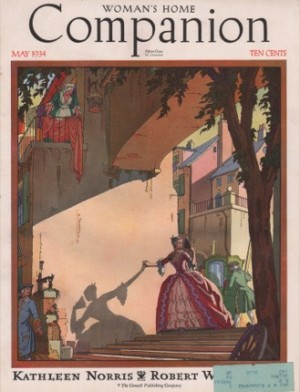
1934, Book: Very Good, Color art of French couple meeting in olden times. Watercolor art by T. M. Cleland. 10 X 13", small label. PLEASE NOTE: The image shown is a scan of the actual product you are purchasing. What you see is what you get. The sheet may have some imperfections beyond the cropped area shown. You are buying THIS PAGE ONLY- not the entire magazine. Your order will be placed carefully between stiff paper and an acetate overlay, then packed in a rigid cardboard sleeve to prevent bending.
Hardcover. Cambridge MA, Harvard University Press, 1st, 2018, Book: Very Good, Dust Jacket: Very Good, Hardcover in a bright dust jacket, 404 pages. The Napoleonic wars did not end with Waterloo. That famous battle was just the beginning of a long, complex transition to peace. After a massive invasion of France by more than a million soldiers from across Europe, the Allied powers insisted on a long-term occupation of the country to guarantee that the defeated nation rebuild itself and pay substantial reparations to its conquerors. Our Friends the Enemies provides the first comprehensive history of the post-Napoleonic occupation of France and its innovative approach to peacemaking. From 1815 to 1818, a multinational force of 150,000 men under the command of the Duke of Wellington occupied northeastern France. From military, political, and cultural perspectives, Christine Haynes reconstructs the experience of the occupiers and the occupied in Paris and across the French countryside. The occupation involved some violence, but it also promoted considerable exchange and reconciliation between the French and their former enemies. Clean copy.
Hardcover. NY, Holt Rinehart & Winston, 1st, 1981, Book: Very Good, Dust Jacket: Very Good, Hardcover in a bright dust jacket with minor edgewear, 294 pages. Depicts the German occupation of Paris during World War II from the perspectives of both the defeated Parisians and the victorius Germans, accompanied by 116 contemporary photographs in b&w, some color. Clean copy.
Hardcover. New York, Flammarion, 1st, 2014, Book: Very Good, Dust Jacket: Very Good, Hardcover, 304 pages. This homage to Paris by the great Magnum photographers reveals a multifaceted portrait of the city's effervescent character in 350 photographs. By documenting the everyday workings of the city, Magnum's photographers capture the essence of Parisian life.
Hardcover. NY, Thames & Hudson, 1st, 2021, Book: Very Good, Dust Jacket: None, Hardcover, pictorial boards, 256 pages. Henri Cartier-Bresson was 'the eye of the 20th century' and one of the world's most acclaimed photographers. Paris was his home, on and off, for most of his life (1908-2004). The photographs he took of the city and its people manage to be both dreamlike and free of affectation. Here are around 160 photographs taken over a more than fifty-year career. Mostly in black and white, this selection reveals the strong influence on Cartier-Bresson of pioneering documentary photographer Eugene Atget (1857-1927), and the clear visual links with Surrealism that infused Cartier-Bresson's early pictures. After an apprenticeship with Cubist painter Andre Lhote, in 1932 Cartier-Bresson bought his first Leica, a small portable camera that allowed him to capture movement and the rhythms of daily life in Paris. Cartier-Bresson observed from close quarters the Liberation in August 1944 and the civil disturbances of May 1968. In between he also succeeded in capturing the faces of Parisians in their natural habitat, celebrated artists and writers and citizens alike. Remainder line to bottom edge, otherwise clean. DUE TO WEIGHT, DOMESTIC SHIPPING ONLY.
Hardcover. Paris, Editions de Lodi, 1st, 2001, Book: Very Good, Dust Jacket: Very Good, Hardcover, glossy boards in a matching bright dust jacket. Large format, 484 pages, FRENCH TEXT. A collection of over 500 historical photos of old Paris printed in sepia tone. Around 1832 Parisian-born Charles-Francois Bossu (1813-1879) shed his unfortunate last name (bossu means hunchback in French) and adopted the pseudonym Marville. After achieving moderate success as an illustrator of books and magazines, Marville shifted course in 1850 and took up photography, a medium that had been introduced 11 years earlier. His poetic urban views, detailed architectural studies, and picturesque landscapes quickly garnered praise.By the end of the 1850s, Marville had established a reputation as an accomplished and versatile photographer. From 1862, as official photographer for the city of Paris, he documented aspects of the radical modernization program that had been launched by Emperor Napoleon III and his chief urban planner, Baron Georges-Eugene Haussmann. In this capacity, Marville photographed the city's oldest quarters, and especially the narrow, winding streets slated for demolition. Even as he recorded the disappearance of Old Paris, Marville turned his camera on the new city that had begun to emerge. Many of his photographs celebrate its glamour and comforts, while other views of the city's desolate outskirts attest to the unsettling social and physical changes wrought by rapid modernization. Taken as a whole, Marville's photographs of Paris stand as one of the earliest and most powerful explorations of urban transformation on a grand scale. Clean, bright copy.
Hardcover. NY, Vendome Press, 1st, 1989, Book: Very Good, Dust Jacket: Very Good, Hardcover in a bright dust jacket, 208 pages. Best-selling French author Perrault provides moving personal reminiscences of his childhood in occupied Paris. The brief but eloquent narrative is accompanied by hundreds of previously unpublished photos from French and German archives, collected and cataloged by Parisian art historian Azema. Together, text and photos present a graphic portrait of everyday life, recording daily human struggles to find food and fuel, the psychological warfare waged by the occupiers, and the methods of German economic exploitation. As artists, the authors place special emphasis on the arts under the occupation and document the heroism of the writers' resistance. In sum, they show how Paris "kept alive a sense of the enemy."
Hardcover. New York , Mark Batty Publisher, 1st, 2005, Book: Very Good, Dust Jacket: Very Good, Hardcover in a bright dust jacket. 192 pages. Color photos of the Paris Metro features signs, graffitti, artworks, architecture. The text is in English.
Softcover. Koln GR, Taschen, reprint, 2004, Book: Very Good, Dust Jacket: None, Softcover, 240 pages, 233 b/w illustrations. This book is a photographers' homage to Paris's dramatic romantic and historic moments as well as everyday scenes. Themes include the street; parks & gardens; loves; bistros; Paisiennes; kids; on the move; insurrectionary Paris; the popular front; occupation - liberation. Clean copy.
Hardcover. Chicago, Art Institute of Chicago, 1st, 2005, Book: Very Good, Dust Jacket: None, Hardcover, 100 pages. No dust jacket issued. Eugene Atget, Jacques Henri Lartigue, Andre Kertesz, Brassai, Henri Cartier- Bresson, Robert Doisneau? -some of the greatest photographers of Paris? were relatively unknown when they began their most innovative work. Not yet burdened with conventional career expectations, they found the city the perfect environment in which to invent and develop an entirely new approach to conceiving the photographic image. In the 1920s and 1930s, the generation of photographers after Atget responded not only to the physical city itself but also to a new sensibility of time as a spontaneous act. Masterworks by these now-famous visionaries of the medium are featured in this elegant book of photographs of Paris from the 1850s to the 1950s, drawn from the remarkable collection of the Art Institute of Chicago. Clean copy.
Softcover. New York, Rizzoli, 1st, 1980, Book: Very Good, Dust Jacket: None, Features 92 full color illustrations. Softcover. Light rubbing, edge wear to covers, else a very clean, tight copy.
Hardcover. NY, Doubleday, 1st, 2019, Book: Very Good, Dust Jacket: Very Good, Hardcover in a bright dust jacket, 347 pages. In 1971 Deirdre Bair was a journalist and recently minted Ph.D. who managed to secure access to Nobel Prize-winning author Samuel Beckett. He agreed that she could be his biographer despite her never having written--or even read--a biography before. The next seven years comprised of intimate conversations, intercontinental research, and peculiar cat-and-mouse games. Battling an elusive Beckett and a string of jealous, misogynistic male writers, Bair persevered. She wrote Samuel Beckett: A Biography, which went on to win the National Book Award and propel Deirdre to her next subject: Simone de Beauvoir. The catch? De Beauvoir and Beckett despised each other--and lived essentially on the same street. Bair learned that what works in terms of process for one biography rarely applies to the next. Her seven-year relationship with the domineering and difficult de Beauvoir required a radical change in approach, yielding another groundbreaking literary profile and influencing Bair's own feminist beliefs. Parisian Lives draws on Bair's extensive notes from the period, including never-before-told anecdotes. This gripping memoir is full of personality and warmth and gives us an entirely new window on the all-too-human side of these legendary thinkers.
Softcover. Monte Carlo, Andre Sauret, 1st wraps, 1954, Book: Very Good, Dust Jacket: None, Softcover, illustrated card covers, French text, 13 color plates, b&w plates. Stamped #724 of 2,000 copies. Previous owner's stamp front end paper. Otherwise clean.
Hardcover. New York , Museum of Modern Art , 1st, 1988, Book: Very Good, Dust Jacket: Very Good, 151 pages, Hardcover with dust jacket. B&w illustrations. Unclipped dust jacket with minor edgewear.
Hardcover. Paris, Tchou, 1st, 1966, Book: Very Good, Dust Jacket: None, 253 pages, b&w cartoon drawings by Copi. White cloth covers with black design. A collection of quotes from writers of the Surrealist movement in France. Long preface by Corvin. INSCRIBED BY BOTH AUTHOR AND ILLUSTRATOR (HIS WITH A SKETCH OF A BIRD) to Roger Shattuck, author and chronicler of the period. Publishers complimentary card laid in. Small tan stain to cloth at top of front cover, otherwise very good.
Hardcover. Paris, Maison Alred Mame, 1st thus, 1929, Book: Very Good, Dust Jacket: None, 160 pages, illustrated in color and b&w by JOB, featuring 16 gorgeous color plates. Blue cloth spine, color illustrated boards. French text. Previous owner's signature on front fly leaf, otherwise clean, very good.
Hardcover. Paris, Dorbon-Aine, 1st, n.d., Book: Very Good, Dust Jacket: None, Oblong hardcover, 66 pages. Color Illustrations by Paul Guignebault. FRENCH TEXT. Circa 1920.
Hardcover. Oxford, Clarendon Press, 1st , 1982, Book: Good, Dust Jacket: Good, Hardcover, 284 pages. Previous owner's signature on front fly leaf. Slight foxing to top edge. Dust jacket has price clipped from front flap. Dust jacket also shows minor shelf wear and fading to spine. Otherwise, tight clean copy.
Softcover. Paris, Musee de la Vie Romantique, 1st, 2001, Book: Very Good, Dust Jacket: None, 143 pages. Softcover. A very clean, unmarked copy with only minor edgewear. Black and white photographs throughout. French text.
Hardcover. New York, Metropolitan Museum of Art, 1st, 1994, Book: Very Good, Dust Jacket: Very Good, 293 pages. Hardcover with dust jacket. Sunfading to spine. Price sticker to rear jacket. A very clean, unmarked copy with only minor edgewear to dust jacket. The photographer Edouard Baldus, a central figure in the early development of French photography and acknowledged in his day as a pioneer in the still-experimental field, was widely acclaimed both for his aesthetic sensitivity and for his technical prowess. Establishing a new mode of representing architecture and describing the emerging modern landscape with magnificent authority, he enjoyed high patronage in the 1850s and 1860s....This book, the first to chronicle the life and career of this important artist, brings his work once more before the public. The superb quality of the reproductions captures the subtle tones and soft matte surfaces of the original prints, many of which are published here for the first time.
Hardcover. NY, Farrar Straus & Giroux, 1st US, 2023, Book: Very Good, Dust Jacket: Very Good, Hardcover in a bright, unclipped dust jacket, 588 pages, several color plates. Before Picasso became Picasso-the iconic artist now celebrated as one of France's leading figures-he was constantly surveilled by the French police. Amid political tensions in the spring of 1901, he was flagged as an anarchist by the security services-the first of many entries in an extensive case file. Though he soon emerged as the leader of the cubist avant-garde, and became increasingly wealthy as his reputation grew worldwide, Picasso's art was largely excluded from public collections in France for the next four decades. The genius who conceived Guernica in 1937 as a visceral statement against fascism was even denied French citizenship three years later, on the eve of the Nazi occupation. In a country where the police and the conservative Academie des Beaux-Arts represented two major pillars of the establishment at the time, Picasso faced a triple stigma-as a foreigner, a political radical, and an avant-garde artist. Picasso the Foreigner approaches the artist's career and art from an entirely new angle, making extensive use of fascinating and long-overlooked archival sources. In this groundbreaking narrative, Picasso emerges as an artist ahead of his time not only aesthetically but politically, one who ignored national modes in favor of contemporary cosmopolitan forms. Remainder dot to top edge, otherwise a bright, clean copy.
Hardcover. Akron, OH, Saalfield, 1st thus, 1926, Book: Very Good, Dust Jacket: None, Non-paginated. Hardcover with no dust jacket. Profusely illustrated in b&w by Frances Brundage. A bright, clean copy.
Hardcover. NY, Macmillan Company, 1st US, 1969, Book: Very Good, Dust Jacket: Very Good, Hardcover in a bright, unclipped dust jacket, 461 pages. Laval began his career as a socialist, but over time drifted far to the right. Following France's defeat and armistice with Germany in 1940, he served in prominent roles in Philippe Petain's Vichy Regime, first as the vice-president of the Council of Ministers from 11 July 1940 to 13 December 1940, and later as the head of government from 18 April 1942 to 20 August 1944. After the liberation of France in 1944, Laval was arrested by the French government under General Charles de Gaulle. In what was widely regarded as a flawed trial, Laval was found guilty of plotting against the security of the State and collaboration with the enemy, and after a thwarted suicide attempt, he was executed by firing squad. His manifold political activities left a complicated and controversial legacy, resulting in more than a dozen conflicting biographies of him. Name on front fly leaf, otherwise a bright, clean copy.
Hardcover. New York, Assouline Publishing, 1st, 2015, Book: Very Good, Dust Jacket: Very Good, 240 pages. Hardcover with dust jacket. Very clean, like new in publishers shrink-wrap. Whenever the rich and famous are in Paris, they head for the city's most beautiful square, the Place Vendome. This evocatively written volume traces the square's history from its beginnings in the time of Louis XIV to its life in the twentieth century as Paris's center of fashion, jewelry, high finance, and art. From designers Chanel and Schiaparelli to European high society, Russian grand dukes, Indian maharajas, and celebrities from Lillie Langtry to Ernest Hemingway, a cast of extraordinary personalities have lent the Place Vendome an ineffable aura.
Hardcover. London, Rupert Hart-Davis, 1st, 1968, Book: Very Good, Dust Jacket: Very Good, Hardcover, 128 pages. Black and white cloth cover, slight wear to edges and corners. Dust jacket has minor edgewear. Previous owner's stamp on top edge. Illustrated by Jim Dine. Translated by Ron Padgett. Many b&w photographs and illustrations throughout. A bright, clean copy.
Hardcover. New York, Guggenheim Museum, 1st, 1998, Book: Very Good, Dust Jacket: None, 544 pages, illustrated in color and b&w. Essays by various scholars on over 100 artists working in France, bibliography. Illustrated boards. In publisher's shrinkwrap.
Softcover. NY, Museum of Modern Art, 1st, 1983, Book: Very Good, Dust Jacket: None, 222 pages. Softcover. B/w illustrations throughout. Wrapper and pages have some tanning due to age, otherwise clean. Front cover has a crease. In very good condition, no rips or tears. Binding tight.
Hardcover. Princeton, Princeton University Press, 1st, 1978, Book: Very Good, Dust Jacket: Very Good, 575 pages. Hardcover. Illustrated with black & white photographs. Fading to dust jacket spine. Clean, tight copy.
Hardcover. Washington DC, National Gallery of Art, 1st, 2007, Book: Very Good, Dust Jacket: Very Good, 296 pages, color plates throughout. Exhibition catalog, five scholarly essays. In publisher's shrinkwrap.


 "Moiby: Chardin, Marie")


 "Mon Parisby: Roth, Sanford and Aldous Huxley")


 "Mr. Poilu - Notes and Sketches with the Fighting French by: Ward, Herbert")



 "Ninth of Thermidor, The: The Fall of Robespierre (Problems in European History: A Documentary Collection)by: Bienvenu, Richard (Editor)")



 "Paris in the Third Reich: A History of the German Occupation, 1940-1944 by: David Pryce-Jones")


 "Paris Under the Occupationby: Gilles Perrault")

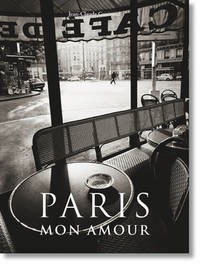
 "Paris: Photographs from a Time That Wasby: David Travis")


 "Parisian Fashion - from the \"Journal Des Dames Et Des Modes\" - Vol. II - 1913-1914by: Nuzzi, Christina")

 "Pascinby: Warnod, Andre")


 "Petite Histoire de Franceby: Bainville, Jacques and JOB")
 "Petites Jacances: Chansons Berceuses Rondes et Jeuxby: Privas, Xavier & Francine Loree-Privas")

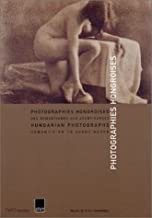
 "Photographs of Edouard Baldus, Theby: Daniel, Malcolm R.")

 "Pied Piper of Hamelin, Theby: Browning, Robert")


 "Poet Assassinated, The.by: Appollinaire, Jim Dine, Guillaume")
 "Premises: Invested Spaces in Visual Arts, Architecture, & Design from France 1958-1998by: Buchloh, Benjamin H.D.")

 "Rediscovering French Filmby: Bandy, Mary Lea (Editor), Raud, Richard (Introduction)")


 "Renoir Landscapes 1865-1883by: Bailey, Colin and Christopher Riopelle")