Hardcover. Paris, Editions de Lodi, 1st, 2001, Book: Very Good, Dust Jacket: Very Good, Hardcover, glossy boards in a matching bright dust jacket. Large format, 484 pages, FRENCH TEXT. A collection of over 500 historical photos of old Paris printed in sepia tone. Around 1832 Parisian-born Charles-Francois Bossu (1813-1879) shed his unfortunate last name (bossu means hunchback in French) and adopted the pseudonym Marville. After achieving moderate success as an illustrator of books and magazines, Marville shifted course in 1850 and took up photography, a medium that had been introduced 11 years earlier. His poetic urban views, detailed architectural studies, and picturesque landscapes quickly garnered praise.By the end of the 1850s, Marville had established a reputation as an accomplished and versatile photographer. From 1862, as official photographer for the city of Paris, he documented aspects of the radical modernization program that had been launched by Emperor Napoleon III and his chief urban planner, Baron Georges-Eugene Haussmann. In this capacity, Marville photographed the city's oldest quarters, and especially the narrow, winding streets slated for demolition. Even as he recorded the disappearance of Old Paris, Marville turned his camera on the new city that had begun to emerge. Many of his photographs celebrate its glamour and comforts, while other views of the city's desolate outskirts attest to the unsettling social and physical changes wrought by rapid modernization. Taken as a whole, Marville's photographs of Paris stand as one of the earliest and most powerful explorations of urban transformation on a grand scale. Clean, bright copy.
Hardcover. NY, Vendome Press, 1st, 1989, Book: Very Good, Dust Jacket: Very Good, Hardcover in a bright dust jacket, 208 pages. Best-selling French author Perrault provides moving personal reminiscences of his childhood in occupied Paris. The brief but eloquent narrative is accompanied by hundreds of previously unpublished photos from French and German archives, collected and cataloged by Parisian art historian Azema. Together, text and photos present a graphic portrait of everyday life, recording daily human struggles to find food and fuel, the psychological warfare waged by the occupiers, and the methods of German economic exploitation. As artists, the authors place special emphasis on the arts under the occupation and document the heroism of the writers' resistance. In sum, they show how Paris "kept alive a sense of the enemy."
Hardcover. New York , Mark Batty Publisher, 1st, 2005, Book: Very Good, Dust Jacket: Very Good, Hardcover in a bright dust jacket. 192 pages. Color photos of the Paris Metro features signs, graffitti, artworks, architecture. The text is in English.
Softcover. Koln GR, Taschen, reprint, 2004, Book: Very Good, Dust Jacket: None, Softcover, 240 pages, 233 b/w illustrations. This book is a photographers' homage to Paris's dramatic romantic and historic moments as well as everyday scenes. Themes include the street; parks & gardens; loves; bistros; Paisiennes; kids; on the move; insurrectionary Paris; the popular front; occupation - liberation. Clean copy.
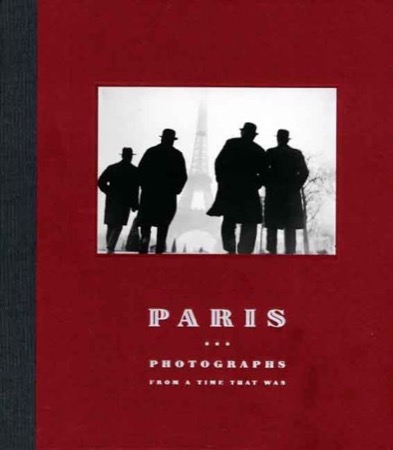
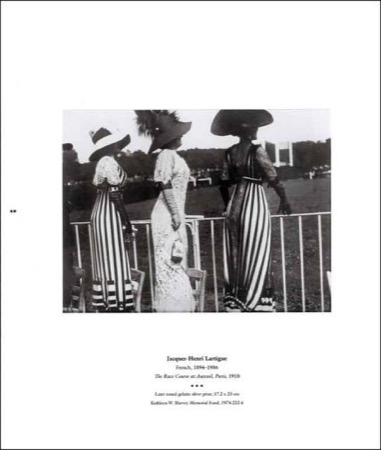
Hardcover. Chicago, Art Institute of Chicago, 1st, 2005, Book: Very Good, Dust Jacket: None, Hardcover, 100 pages. No dust jacket issued. Eugene Atget, Jacques Henri Lartigue, Andre Kertesz, Brassai, Henri Cartier- Bresson, Robert Doisneau? -some of the greatest photographers of Paris? were relatively unknown when they began their most innovative work. Not yet burdened with conventional career expectations, they found the city the perfect environment in which to invent and develop an entirely new approach to conceiving the photographic image. In the 1920s and 1930s, the generation of photographers after Atget responded not only to the physical city itself but also to a new sensibility of time as a spontaneous act. Masterworks by these now-famous visionaries of the medium are featured in this elegant book of photographs of Paris from the 1850s to the 1950s, drawn from the remarkable collection of the Art Institute of Chicago. Clean copy.
Hardcover. NY, Doubleday, 1st, 2019, Book: Very Good, Dust Jacket: Very Good, Hardcover in a bright dust jacket, 347 pages. In 1971 Deirdre Bair was a journalist and recently minted Ph.D. who managed to secure access to Nobel Prize-winning author Samuel Beckett. He agreed that she could be his biographer despite her never having written--or even read--a biography before. The next seven years comprised of intimate conversations, intercontinental research, and peculiar cat-and-mouse games. Battling an elusive Beckett and a string of jealous, misogynistic male writers, Bair persevered. She wrote Samuel Beckett: A Biography, which went on to win the National Book Award and propel Deirdre to her next subject: Simone de Beauvoir. The catch? De Beauvoir and Beckett despised each other--and lived essentially on the same street. Bair learned that what works in terms of process for one biography rarely applies to the next. Her seven-year relationship with the domineering and difficult de Beauvoir required a radical change in approach, yielding another groundbreaking literary profile and influencing Bair's own feminist beliefs. Parisian Lives draws on Bair's extensive notes from the period, including never-before-told anecdotes. This gripping memoir is full of personality and warmth and gives us an entirely new window on the all-too-human side of these legendary thinkers.
Softcover. Monte Carlo, Andre Sauret, 1st wraps, 1954, Book: Very Good, Dust Jacket: None, Softcover, illustrated card covers, French text, 13 color plates, b&w plates. Stamped #724 of 2,000 copies. Previous owner's stamp front end paper. Otherwise clean.
Hardcover. New York , Museum of Modern Art , 1st, 1988, Book: Very Good, Dust Jacket: Very Good, 151 pages, Hardcover with dust jacket. B&w illustrations. Unclipped dust jacket with minor edgewear.
Hardcover. Paris, Tchou, 1st, 1966, Book: Very Good, Dust Jacket: None, 253 pages, b&w cartoon drawings by Copi. White cloth covers with black design. A collection of quotes from writers of the Surrealist movement in France. Long preface by Corvin. INSCRIBED BY BOTH AUTHOR AND ILLUSTRATOR (HIS WITH A SKETCH OF A BIRD) to Roger Shattuck, author and chronicler of the period. Publishers complimentary card laid in. Small tan stain to cloth at top of front cover, otherwise very good.
Hardcover. Paris, Maison Alred Mame, 1st thus, 1929, Book: Very Good, Dust Jacket: None, 160 pages, illustrated in color and b&w by JOB, featuring 16 gorgeous color plates. Blue cloth spine, color illustrated boards. French text. Previous owner's signature on front fly leaf, otherwise clean, very good.
Hardcover. Paris, Dorbon-Aine, 1st, n.d., Book: Very Good, Dust Jacket: None, Oblong hardcover, 66 pages. Color Illustrations by Paul Guignebault. FRENCH TEXT. Circa 1920.
Hardcover. Oxford, Clarendon Press, 1st , 1982, Book: Good, Dust Jacket: Good, Hardcover, 284 pages. Previous owner's signature on front fly leaf. Slight foxing to top edge. Dust jacket has price clipped from front flap. Dust jacket also shows minor shelf wear and fading to spine. Otherwise, tight clean copy.
Softcover. Paris, Musee de la Vie Romantique, 1st, 2001, Book: Very Good, Dust Jacket: None, 143 pages. Softcover. A very clean, unmarked copy with only minor edgewear. Black and white photographs throughout. French text.
Hardcover. NY, Farrar Straus & Giroux, 1st US, 2023, Book: Very Good, Dust Jacket: Very Good, Hardcover in a bright, unclipped dust jacket, 588 pages, several color plates. Before Picasso became Picasso-the iconic artist now celebrated as one of France's leading figures-he was constantly surveilled by the French police. Amid political tensions in the spring of 1901, he was flagged as an anarchist by the security services-the first of many entries in an extensive case file. Though he soon emerged as the leader of the cubist avant-garde, and became increasingly wealthy as his reputation grew worldwide, Picasso's art was largely excluded from public collections in France for the next four decades. The genius who conceived Guernica in 1937 as a visceral statement against fascism was even denied French citizenship three years later, on the eve of the Nazi occupation. In a country where the police and the conservative Academie des Beaux-Arts represented two major pillars of the establishment at the time, Picasso faced a triple stigma-as a foreigner, a political radical, and an avant-garde artist. Picasso the Foreigner approaches the artist's career and art from an entirely new angle, making extensive use of fascinating and long-overlooked archival sources. In this groundbreaking narrative, Picasso emerges as an artist ahead of his time not only aesthetically but politically, one who ignored national modes in favor of contemporary cosmopolitan forms. Remainder dot to top edge, otherwise a bright, clean copy.
Hardcover. Akron, OH, Saalfield, 1st thus, 1926, Book: Very Good, Dust Jacket: None, Non-paginated. Hardcover with no dust jacket. Profusely illustrated in b&w by Frances Brundage. A bright, clean copy.
Hardcover. NY, Macmillan Company, 1st US, 1969, Book: Very Good, Dust Jacket: Very Good, Hardcover in a bright, unclipped dust jacket, 461 pages. Laval began his career as a socialist, but over time drifted far to the right. Following France's defeat and armistice with Germany in 1940, he served in prominent roles in Philippe Petain's Vichy Regime, first as the vice-president of the Council of Ministers from 11 July 1940 to 13 December 1940, and later as the head of government from 18 April 1942 to 20 August 1944. After the liberation of France in 1944, Laval was arrested by the French government under General Charles de Gaulle. In what was widely regarded as a flawed trial, Laval was found guilty of plotting against the security of the State and collaboration with the enemy, and after a thwarted suicide attempt, he was executed by firing squad. His manifold political activities left a complicated and controversial legacy, resulting in more than a dozen conflicting biographies of him. Name on front fly leaf, otherwise a bright, clean copy.
Hardcover. London, Rupert Hart-Davis, 1st, 1968, Book: Very Good, Dust Jacket: Very Good, Hardcover, 128 pages. Black and white cloth cover, slight wear to edges and corners. Dust jacket has minor edgewear. Previous owner's stamp on top edge. Illustrated by Jim Dine. Translated by Ron Padgett. Many b&w photographs and illustrations throughout. A bright, clean copy.
Softcover. Paris, Les Editions De L'illustration, 1st, 1946, Book: Very Good, Dust Jacket: None, Softcover, oblong, 112 tipped-in color illustrations, tall 4to, printed tan boards. French art from the Middle Ages to the the 1940's. PLEASE NOTE: DUE TO WEIGHT, DOMESTIC SHIPPING ONLY.
Hardcover. New York, Guggenheim Museum, 1st, 1998, Book: Very Good, Dust Jacket: None, 544 pages, illustrated in color and b&w. Essays by various scholars on over 100 artists working in France, bibliography. Illustrated boards. In publisher's shrinkwrap.
Softcover. NY, Museum of Modern Art, 1st, 1983, Book: Very Good, Dust Jacket: None, 222 pages. Softcover. B/w illustrations throughout. Wrapper and pages have some tanning due to age, otherwise clean. Front cover has a crease. In very good condition, no rips or tears. Binding tight.
Hardcover. NY, The Modern Library, 1st, 2004, Book: Very Good, Dust Jacket: Very Good, Hardcover in a bright, price-clipped dust jacket. 344 pages. Food articles collected from Gourmet Magazine, dispatched from Paris over the last 60 years and published together in print for the first time. Clean copy.
Hardcover. Washington DC, National Gallery of Art, 1st, 2007, Book: Very Good, Dust Jacket: Very Good, 296 pages, color plates throughout. Exhibition catalog, five scholarly essays. In publisher's shrinkwrap.

 "Paris sens dessus-dessous (Marville photographies 1852-1870)by: Mellot, Philippe")
 "Paris Under the Occupationby: Gilles Perrault")
 "Paris Undergroundby: Archer, Caroline")
 "Paris, Mon Amour by: Jean-Claude Gautrand")
 "Paris: Photographs from a Time That Wasby: David Travis")
 "Paris: The Great Sagaby: Didier Busson")
 "Parisian Lives: Samuel Beckett, Simone de Beauvoir, and Me: A Memoirby: Deirdre Bair")
 "Pascinby: Warnod, Andre")
 "Paul Cezanne: The Basel Sketchbooksby: Gowing, Lawrence")
 "Petite Folie Collectiveby: Corvin, Michel and Copi")
 "Petite Histoire de Franceby: Bainville, Jacques and JOB")
 "Petites Jacances: Chansons Berceuses Rondes et Jeuxby: Privas, Xavier & Francine Loree-Privas")
 "Philosophes and Post-Revolutionary France, Theby: Lough, John")
 "Photographies Hongroises: Des Romantismes Aux Avant-Gardesby: Marchessau, Daniel")
 "Picasso the Foreigner: An Artist in France 1900-1973by: Cohen-Solal, Annie/Taylor, Sam (Translator)")
 "Pied Piper of Hamelin, Theby: Browning, Robert")
 "Pierre Laval and the Eclipse of France 1931 1945: A Political Biography by: Geoffrey Warner")
 "Poet Assassinated, The.by: Appollinaire, Jim Dine, Guillaume")
 "Pour une Renaissance de la Peinture Francaiseby: Baschet, Jacques")
 "Premises: Invested Spaces in Visual Arts, Architecture, & Design from France 1958-1998by: Buchloh, Benjamin H.D.")
 "Private Diaries of Stendhal, Theby: Sage, Robert (Ed.)")
 "Rediscovering French Filmby: Bandy, Mary Lea (Editor), Raud, Richard (Introduction)")

![Remembrance of Things Paris: Sixty Years of Writing from Gourmet by: Reichl, Ruth [Editor]](javascript:largeIMTop('https://www.browsingisarousing.com/shop/images/Remembrance-of-Things-Paris-Sixty-Years-of-Writing-from-Gourmet_by_Reichl-Ruth-Editor-399427-454964.jpg','https://www.browsingisarousing.com/shop/images/Remembrance-of-Things-Paris-Sixty-Years-of-Writing-from-Gourmet_by_Reichl-Ruth-Editor-399427-454964.jpg',0,'399427',0,'') "Remembrance of Things Paris: Sixty Years of Writing from Gourmet by: Reichl, Ruth [Editor]")
 "Renoir Landscapes 1865-1883by: Bailey, Colin and Christopher Riopelle")