Hardcover. Boston, MA, Beacon Press, 1st, 2007, Book: Very Good, Dust Jacket: Very Good, 276 pages. Hardcover with dust jacket. A very clean, unmarked copy with only minor wear to dust jacket edges. A tight copy. Foxing to top edge of dust jacket.
Hardcover. Philadelphia, University of Pennsylvania Press, 1st, 2001, Book: Very Good, Dust Jacket: Very Good, Hardecover in a bright dust jacket, 492 pages. In a letter to Sir Thomas Browne about his proposed magnum opus on gardens, John Evelyn stated his purpose: "to refine upon some particulars, especially concerning the ornaments of Gardens, which I shal endeavor so to handle that persons of all conditions and faculties, which delight in Gardens, may therein encounter something for their owne advantage." In his Elysium Britannicum, or The Royal Gardens, Evelyn indeed produced a rich document, an assemblage of the horticultural knowledge and wisdom of the seventeenth century. An intriguing intellectual whom many have called a virtuoso, Evelyn was a garden designer, a noted author and translator of garden books, and a founding member of the Royal Society in 1660, where experimental science was at the heart of intellectual debate. Interlacing in his work practical, literary, and philosophical approaches to landscape architecture, Evelyn created the first large-scale encyclopedic work on the science and art of gardening. Evelyn never saw his great work published. Until now, the entire Elysium Britannicum, or The Royal Gardens has never appeared in print. In an impressive transcription, John E. Ingram makes the document--of which only a single folio volume remains--accessible to a wide range of scholars. Complete with Evelyn's extensive marginalia, interlineations, and tipped-in addenda, the manuscript is expertly organized by Ingram to preserve the meaningful complexity of Evelyn's original. Clean copy. DUE TO WEIGHT, DOMESTIC SHIPPING ONLY.
Hardcover. NY, Rizzoli, 1st US, 1990, Book: Very Good, Dust Jacket: Very Good, Hardcover in a bright dust jacket, 207 pages. Entertainingly idiosyncratic in its selection of material, this historical compendium of facts and fascinating lore takes off on a visual romp through the history of gardens. Rather than adhere to a conventional narrative format, Vercelloni--an Italian architect, city planner and landscape gardener--arranges his material as though it were a slide show, devoting each page to an image and accompanying text. Beginning with the "landscape" of the Ice Ages, forging ahead to the Renaissance and finally reaching contemporary times, the author presents a captivating grab-bag of information, covering such topics as the significance of flowers in Renaissance painting, the reasoning behind the 17th-century craze for tulips and the role of contemporary urban parks in society. With its strong visual orientation and pungent text, Vercelloni's "historical atlas" looks deftly and light-heartedly at humanity's ongoing love of gardens. Clean copy.
Hardcover. London, Merrell Holberton/Natural History Museum, 1st, 1999, Book: Very Good, Dust Jacket: Very Good, Hardcover, 128 pages, 62 color plates, 33 b&w illustrations. A detailed monograph on this early 19th century natural history artist. In publisher's shrinkwrap.
Hardcover. Princeton NJ, Princeton Architectural Press, 1st, 2001, Book: Very Good, Dust Jacket: Very Good, 326 pages, illustrated with b&w photographs, several color plates and architectural drawings by Vitale. Foreword by Horace Havemeyer III. Ferruccio Vitale is America's forgotten landscape architect. Though his works like Skylands and Longwood Gardens are well known, his name has been eclipsed by his contemporary, Frederick Law Olmsted, Jr. Yet Vitale's influence on the modern direction of landscape design and his promotion of it as a profession is arguably more significant than Olmsted's. His unique designs and philosophy, which challenged the then-dominant pictorial mode of landscape architecture, influenced generations of followers, and is still felt today. Vitale (1875-1933) developed his rationale designs, based on the principles of composition from the fine arts and architecture, in both civic commissions and, most notably, at the country estates of captains of industry and finance. He introduced an idealized and abstracted type of formal design that created beautiful spaces, structured large sites, and reflected informal and relaxed plant compositions. Ferruccio Vitale tours over 40 of his masterworks, photographed by some of the best landscape photographers of the time, including Samuel Gottscho. It recounts the compelling story of a life in the early twentieth century, influenced by immigrant dreams, social clubs, and professional connections, and its culmination in some of the greatest landscapes of the 20th century.
Hardcover. Princeton NJ, Princeton Architectural Press, 1st, 2001, Book: Very Good, Dust Jacket: Very Good, 326 pages, illustrated with b&w photographs, several color plates and architectural drawings by Vitale. Foreword by Horace Havemeyer III. Ferruccio Vitale is America's forgotten landscape architect. Though his works like Skylands and Longwood Gardens are well known, his name has been eclipsed by his contemporary, Frederick Law Olmsted, Jr. Yet Vitale's influence on the modern direction of landscape design and his promotion of it as a profession is arguably more significant than Olmsted's. His unique designs and philosophy, which challenged the then-dominant pictorial mode of landscape architecture, influenced generations of followers, and is still felt today. Vitale (1875-1933) developed his rationale designs, based on the principles of composition from the fine arts and architecture, in both civic commissions and, most notably, at the country estates of captains of industry and finance. He introduced an idealized and abstracted type of formal design that created beautiful spaces, structured large sites, and reflected informal and relaxed plant compositions. Ferruccio Vitale tours over 40 of his masterworks, photographed by some of the best landscape photographers of the time, including Samuel Gottscho. It recounts the compelling story of a life in the early twentieth century, influenced by immigrant dreams, social clubs, and professional connections, and its culmination in some of the greatest landscapes of the 20th century.
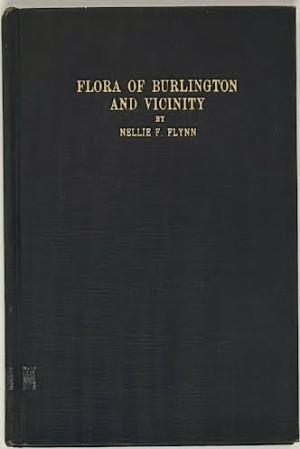
Hardcover. Burlington, VT, Self Published, 2nd Edition, 1935, Book: Very Good, Dust Jacket: None, 130 pages. Hardcover. Contributions to the Botany of Vermont, IX. Inscribed by author's husband. Previous owner's stamp on front endpapers. Ex-library book with some label residue and markings expected. B/w frontispiece (picture of author). Blue cloth cover boards, gilt title on spine and front cover board. Spine straight. Pages clean, slightly tanned with age. Very good copy.
Hardcover. Philadelphia, Lippincott, 1st US, Book: Very Good, Dust Jacket: None, Hardcover, 161 pages, 8 color plates, many b&w drawings by Charles Robinson. Purple cloth with gilt design, blank page in rear has a list in pencil, otherwise clean. Printed from the English sheets.
Hardcover. New York , Random House, 1st US, 1994, Book: Very Good, Dust Jacket: Good, Hardcover, 240 pages. Illustrated with color photos. Lavishly illustrated, THE GARDEN MAKERS profiles more than seventy gardeners, profesional and amateur, from Frederick Law Olmsted to Vita Sackville-West.
Hardcover. Boston, Houghton Mifflin , 1st, 2000, Book: Very Good, Dust Jacket: Very Good, Non-paginated. Illustrated with full color woodcuts by Mary Azarian. SIGNED BY AZARIAN. Clean, tight copy. Revealing the variety of life underground, the bright comfort of a greenhouse on a winter's day, or the anticipation of starting seeds indoors in early spring, this striking alphabet book celebrates the simple joys of gardening. Without neglecting the frustrations--the nibbling critters and the toil--or wry, humorous moments spent in the garden. Mary Azarian's spare words and lovely woodcuts capture the essence of turning a bare plot of ground into fragrant flowers and lush vegetables and trees. Her depictions of insects, manure, and compost piles are as delightful as her fountains, pumpkins, and Queen Anne's lace. Whether we are young or old, our gardens both exhaust and renew us. They are our source of magic and wonder and perhaps our best way to live closer to the land and to the rhythm of the seasons.
Softcover. Minneapolis, University Of Minnesota Press, 1st, 2001, Book: Very Good, Dust Jacket: None, Softcover, 285 pages illustrated in color. Why have home gardeners, professional horticulturists, and landscape preservationists increasingly been attracted to prairie plants? The beauty and hardiness of these flowers, grasses, trees, and shrubs, along with their easy maintenance and environmental friendliness, have spurred a surge of interest in prairie gardens. Whether you are considering adding these plants to a more conventional landscape or intending to "go native" all the way, Gardening with Prairie Plants is the most comprehensive resource and guide available. Clean copy.
Hardcover. NY, Macmillan, 1st, 1999, Book: Very Good, Dust Jacket: Very Good, Hardcover in a bright dust jacket, 212 pages. Stone is an important, though often overlooked, element of creating the perfect garden. Stone can combine with plants and water in an infinite array to bring us landscapes that range from the serene and contemplative to the boisterous and exuberant. While much has been written about plants and water in the garden, only scant attention has been paid to stone. Jan Kowalczewski Whitner finds this an injustice. "Stone is eloquent, and it speaks in many voices," says Whitner. "Some of our most imaginative gardeners have used stone to transform ordinary plots of land into the cumulatively rich and evocative landscapes we all hope to create." With photographer Linda Quartman Younker, Whitner travels across America, exploring some of the most imaginative uses of stone in gardens ranging from orderly formal gardens to relaxed and cozy cottage plots. A good deal of the book is devoted to specific types of stones and stonework, such as using gravel or working with outcrops, with accompanying lists of plants that work well with each. Clean copy.
Hardcover. New York, Kodansha International, Reprint, 1984, Book: Very Good, Dust Jacket: Very Good, 228 pages. Hardcover with dust jacket. A very clean, unmarked copy with only minor wear to dust jacket edges. Black & white and color photographs throughout. A tight copy.
Hardcover. New York, Stewart Tabori & Chang, 1st, 1999, Book: Very Good, Dust Jacket: Very Good, Hardcover, 160 pages. Oversized. Green cloth cover with some bumping to edges and corners. Dust jacket has slight wear to edges. Color and b&w illustrations and photographs throughout. A clean, bright copy.
Hardcover. New York, Charles Scribner's Sons, 1st US, 1924, Book: Very Good, Dust Jacket: Very Good, Folio-size hardcover, two-tone green cloth stamped in gilt. 237 pages, illustrated throughout with the author's b&w designs and sketches for gardens. Translated from French by Helen Morgenthau Fox. Spectacular copy, clean and bright with the original green dust jacket, which has only minor edgewear, small piece gone from the top of the spine and no fading or price-clip (originally $12 in 1924). Scarce thus.
Hardcover. Cambridge, Mass, The MIT Press, 1st, 1974, Book: Very Good, Dust Jacket: Very Good, Hardcover, 208 pages. Illustrated throughout, traces the evolution of greenhouse construction. Minor rubbing and edge wear on dust jacket, otherwise, in very good condition.
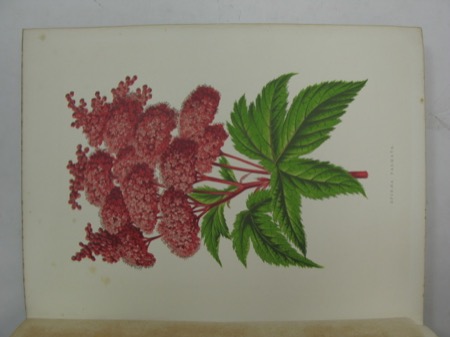
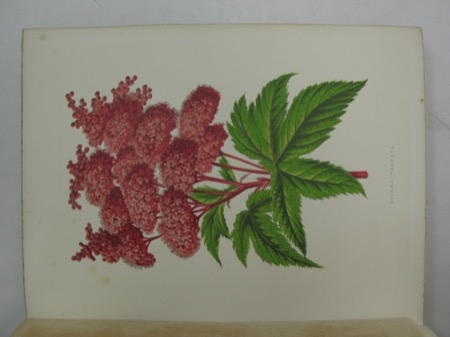
Hardcover. London, J. Davis, 1st, 1791, Book: Very Good, Dust Jacket: None, 22 (of 24) hand-colored plates proceeded by 22 pages of description. Bound in marbled boards with a linen spine and spine label. Missing plates 13 and 19. The flowering plant illustrations, executed by James Sowerby, are all bright and clean. Original blue-gray wrappers bound-in. First issued in 1792 (despite title page date of 1791, preface is dated May 1792). Previous owner's note (tipped onto front fly leaf and dated 1936) states this copy came from the Czar's Hermitage Library. No way to confirm this as there is no label or Double Eagle stamp.
Hardcover. Heidelberg, Germany, Kehrer Verlag, 1st, 2014, Book: Very Good, Dust Jacket: None, 112 pages. Hardcover with no dust jacket. Very clean, unmarked copy still in shrink wrap. Many color photographs of secret marijuana growing communities. Published under the pseudonym "H. Lee" to protect those whom she photographed.
Hardcover. New York, Basic Books, 1st, 1981, Book: Very Good, Dust Jacket: Very Good, 217 pages. Hardcover with dust jacket. A very clean, unmarked copy with only minor wear to dust jacket edges. A tight copy. Price clipping to dust jacket.
Hardcover. London, Groombridge and Sons, NA, NA, Book: Good, Dust Jacket: None, 310 pages. Hardcover. No date. Green cloth covers with gilt titles and decoration, wear along spine hinges, edges. Features 36 tissue guarded full color plates, and many black and white illustrations. Foxing to preliminary pages up to page 2 including full color front and one plate; light foxing scattered throughout book. Interior hinges tender with hinge cloth exposed. Clean, unmarked text.
Hardcover. Richmond VA, James River Garden Club, Revised Ed., 1930, Book: Very Good, Dust Jacket: None, Hardcover, 376 pages, with b&w and 2-color plates. Green cloth covers with bright gilt design on front but lettering faded on spine. Folded map of the Kitchen Garden of Mount Vernon laid in.
Hardcover. Richmond, VA, The William Byrd Press Inc., 1st, 1923, Book: Very Good, Dust Jacket: None, 355 pages, with illustrations, number 365 of 1000 copies. Compiled by the James River Garden Club, gilt title and marbled endpapers. Minor corner and edge wear, otherwise, very clean and tight copy.
Hardcover. NY, The Experiment, 1st, 2018, Book: Very Good, Dust Jacket: None, Hardcover, pictorial boards, 144 pages illustrated in color. Mushrooms are a joy to grow-for food, as a garden feature, or just for fun-and it's easier than you think! How to Grow Mushrooms from Scratch covers 19 varieties, from button (always versatile) to reishi (a medicinal powerhouse). Plus, here are delicious recipes, preserving methods, and more. Experts Magdalena and Herbert Wurth explain every step of cultivation-whether starting from a kit, a culture, or a grown mushroom you'd like to propagate. From protecting mushrooms in extreme weather, to troubleshooting pests, here is expert advice for beginners and experienced growers alike! 190 color photographs. Clean copy.

 "Earth Knows My Name, The: Food, Culture, and Sustainability in the Gardens of Ethnic Americansby: Klindienst, Patricia")
 "Elysium Britannicum, or the Royal Gardens by: Evelyn, John, Editor: Ingram, John E.")
 "European Gardens: An Historical Atlasby: Vercelloni, Virgilio")
 "Ferdinand Bauer: The Nature of Discoveryby: Mabberley, David")
 "Ferruccio Vitale: Landscape Architect of the Country Place Eraby: Schnadelbach, R. Terry")
 "Ferruccio Vitale: Landscape Architect of the Country Place Eraby: Schnadelbach, R. Terry")
 "Flora of Burlington and Vicinity: A List of the Fern and Seed Plants Growing Without Cultivation (INSCRIBED BY AUTHOR'S HUSBAND)by: Flynn, Nellie F.")

 "Four Gardens, Theby: Handasyde and Charles Robinson")
 "Garden Makers, The - The Great Tradition of Garden Design from 1600 to the Present Dayby: Plumptre, George")
 "Gardener's Alphabet, A (SIGNED COPY)by: Azarian, Mary")
 "Gardening With Prairie Plants: How To Create Beautiful Native Landscapesby: Sally Wasowski")
 "Gardening with Stone: Using Stone Features to Add Mystery, Magic, and Meaning to Your Gardenby: Jan Kowalczewski Whitner")
 "Gardens of Japan, The (English and Japanese Edition)by: Itoh, Teiji")
 "Gardens of William Morris, Theby: Hart, Penny")
 "Gardens: A Note-book of Plans and Sketchesby: Forestier, J.C.N.")
 "Glass House, Theby: Hix, John")
 "Gleanings of Botanyby: Smith, James Edward and James Sowerby")
 "Grass Scapes - Gardening with Ornamental Grassesby: Quinn, Martin/Catherine Macleod")
 "Grasslandby: Lee, H.")
 "Green Wisdom: The Inside Story of Plant Lifeby: Galston, Arthur")
 "Greenhouse Favourites - A Description of Choice Greenhouse Plants, with Practical Directions for their Management and Cultivation - Illustrated with Coloured Plates and Wood Engravingsby:")
 "Historic Gardens of Virginiaby: Sale (Ed.), Edith Tunis")

 "How to Grow Mushrooms from Scratch: A Practical Guide to Cultivating Portobellos, Shiitakes, Truffles, and Other Edible Mushroomsby: Wurth, Magdalena/ Wurth, Herbert")