Hardcover. New York , Charles Scribner's Sons, 1st, 1972, Book: Very Good, Dust Jacket: Good, 176 pages, illustrated throughout in b&w. Dust jacket price clipped with slight rubbing, wear, sunning to edges and spine. Internally very good.
Hardcover. Princeton University Press , 1st, 1967, Book: Very Good, Dust Jacket: None, Hardcover, gray cloth-covered boards, gilt titles to spine on black ground, 350 pages., illustrated with tables. The book sets out to "describe the inception, organisation, and administration of the Nazi foreign labor program and the relationship of the program to the Nazi war economy and government". It uses captured documents as well as material published during the war. Spine slightly cocked, clean copy.
Softcover. Providence RI, Berghahn Books, 1st, 1996, Book: Very Good, Dust Jacket: None, Softcover, 256 pages. Known as one of the great producers and promoters of the film industry, Eric Pommer had a life-long commitment to German film - despite his emigration in 1933 - and worked in France and Britian, as well as the United States. As German producer, studio executive, and film politician in the pre-Hitler era Erich (later Eric) Pommer (1889-1966), a native of Germany, was an innovator and pioneer, a vital force in leading German cinema to international acclaim with successes such as The Cabinet of Dr Caligari, The Nibelungen and The Blue Angel. As Motion Picture Control Officer of the US Military Government he undertook , from 1946-49, the difficult task of rebuilding West Germany's film industry from the ashes of the Second World War. He succeeded brilliantly, but not without paying the hefty price of becoming embroiled in the turmoil of postwar German politics which made him many friends, but also many enemies. This book is the first detailed account in English of the remarkable career of Pommer who became a legend in his own lifetime. Clean copy.
Hardcover. Atglen, PA, Schiffer Military History Book, 1st, 2008, Book: Very Good, Dust Jacket: Very Good, 256 pages. Hardcover with dust jacket. Profusely illustrated with b&w photos. Clean, tight copy.
Hardcover. New York , George H. Doran, unknown, ND, Book: Very Good, Dust Jacket: None, Hardcover, red cloth, 249 pages. Faint foxing to edges, Previous owner's inscription on front end paper, else a clean, tight copy.
Hardcover. London, George Allen & Unwin, reprint, 1965, Book: Very Good, Dust Jacket: None, Hardcover, dark blue cloth, gilt lettering on spine. 184 pages, clean, bright copy. No dust jacket.
Hardcover. NY, Liveright, 1st, 2023, Book: Very Good, Dust Jacket: Very Good, Hardcover in a bright, unclipped dust jacket, 432 pages, b&w illustrations. As the great Austrian writer Stefan Zweig confided in his autobiography, written in exile, "I have a pretty thorough knowledge of history, but never, to my recollection, has it produced such madness in such gigantic proportions." He was referring to the situation in Germany in 1923. It was a "year of lunacy," defined by hyperinflation, a political system on the verge of collapse, and separatist movements that threatened Germany's territorial integrity. Most significantly, Adolf Hitler launched his infamous Beer Hall Putsch in Munich-a failed coup that nonetheless drew international attention and demonstrated the Nazis' ruthless determination to seize power. In Germany 1923, award-winning historian Volker Ullrich draws on letters, memoirs, newspaper articles, and other sources from the time to present a captivating new history of those explosive twelve months. Clean copy.
Hardcover. New York, State University of New York Press, 1st, 1991, Book: Very Good, Dust Jacket: Very Good, 233 pages. Hardcover. Dust jacket with light wear. Clean unmarked text.
Hardcover. Woodstock NY, Overlook Press, 1st US, 2003, Book: Very Good, Dust Jacket: Very Good, Hardcover in a bright dust jacket, 456 pages with b&w and color illustrations. In Hitler and the Power of Aesthetics, acclaimed historian Frederic Spotts presents a startling reassessment of Hitler's aims and motivations. Spotts dismisses the traditional biographical view that Hitler was an "unperson," who had no life outside of politics, Spotts shows that Hitler's interest in the arts was as intense as his racism and his argument is punctuated with photographs and illustrations, including reproductions of Hitler's watercolors and drawings from his 1925 sketchbook. The book offers the first full analysis of Hitler's own work as a painter, as well as of his art collection. It also treats the entire range of his personal interests: from architecture, painting, symphony, opera, and sculpture, to the German autobahn system and the development of the Volkswagen. A riveting and highly original work, Hitler and the Power of Aesthetics provides a key to an understanding of the Third Reich which has, until now, been missing from biographies and studies of the arts in the Third Reich, as well as from political and military studies of Hitler. Clean copy.
Hardcover. Wilby UK, Michael Russell Publishing, 1st UK, 1997, Book: Very Good, Dust Jacket: Very Good, Hardcover in a bright dust jacket. 391 pages, b&w illustrations, translated from the German by G.T. Waddington. An insider's account of the turbulent rise and fall of Hitler's "Thousand Year Reich". Clean copy.
Hardcover. Chicago, Henry Regnery Company, 1st, 1950, Book: Very Good, Dust Jacket: Fair, Hardcover in a worn, chipped dust jacket. Map endpapers, 176 pages, b&w photos. The first book by a German general published in America after the war, a German account of the D-Day & Normandy 'invasion' by Allied forces; the author was Rommel's Chief-of-Staff and therefore had an inside view of Rommel's efforts to get Hitler to negotiate a peace in the face of overwhelming Allied superiority. Speidel was a career military officer and trained historian; a German nationalist, he disagreed with racist Nazi policies, was involved in the 20 July plot to kill Hitler, and was important in rebuilding Germany's army after the war. Clean copy.
Softcover. Cambridge MA, Harvard University Press, reprint, 2008, Book: Very Good, Dust Jacket: None, Softcover, 776 pages. "Iron Kingdom, Christopher Clark's stately, authoritative history of Prussia from its humble beginnings to its ignominious end, presents a much more complicated and compelling picture of the German state, which is too often reduced to a caricature of spiked helmets and polished boots. Prussia and its army were inseparable, but Prussia was also renowned for its efficient, incorruptible civil service; its innovative system of social services; its religious tolerance; and its unrivaled education system, a model for the rest of Germany and the world. This too was Prussia-a tormented kingdom that, like a tragic hero, was brought down by the very qualities that raised it up. Mr. Clark, a senior lecturer in modern European history at Cambridge University, does an exemplary job. A lively writer, he organizes masses of material in orderly fashion, clearly establishing his main themes and pausing at crucial junctures to recapitulate and reconsider. Prussia, a self-invented artifact right down to its name, demands the kind of careful demythologizing that it receives from Mr. Clark, who gently but insistently exposes the flaws in most of the received wisdom about his subject. A result is an illuminating, profoundly satisfying work of history, brightened by vivid character sketches of the principals in his drama." Clean copy.
Hardcover. Chapel Hill, University of North Carolina Press., 1st, 1981, Book: Very Good, Dust Jacket: Very Good, Hardcover in a lightly worn dust jacket, 364 pages, b&w illustrations. As the most learned and eminent public lawyer in Germany, a busy administrator, and a prolific writer, Moser (1701-85) lived and breathed the political order. His correspondence, memoranda, and manuscript autobiography reflect the intricate day-to-day operations of the empire, and his fascinating life is a microcosm of the life and style of the empire itself. The biography provided a comprehensive picture of the empire between the Thirty Years War and the revolutionary era. Dust jacket spine faded otherwise very good, clean.
Hardcover. NY, Knopf, 1st, 2007, Book: Very Good, Dust Jacket: Very Good, Hardcover, 400 pages. The definitive biography of Leni Riefenstahl, the woman best known as "Hitler's filmmaker," one of the most fascinating and controversial personalities of the twentieth century. It is the story of huge talent and huger ambition, one that probes the sometimes blurred borders dividing art and beauty from truth and humanity. Relying on new sources--including interviews with her colleagues and intimate friends, as well as on previously unknown recordings of Riefenstahl herself--Bach gives us an exceptional work of historical investigation that untangles the past and is also an objective but unsparing appraisal of a woman of spectacular gifts corrupted by ruthless personal ambition.
Softcover. Zenith Press, reprint, 2004, Book: Very Good, Dust Jacket: None, Softcover, 574 pages, b&w illustrations. Originally published in Germany in 1955, and in England and the United States in 1958, this classic memoir of WWII by a man who was an acknowledged military genius and probably Germany's top WWII general, is now made available again. Field Marshal Erich von Manstein described his book as a personal narrative of a soldier, discussing only those matters that had direct bearing on events in the military field. The essential thing, as he wrote, is to "know how the main personalities thought and reacted to events." This is what he tells us in this book. His account is detailed, yet dispassionate and objective. Clean copy.
Hardcover. NY, Corvin, 1st, 1993, Book: Very Good, Dust Jacket: Very Good, Hardcover in a bright dust jacket, 121 pages. Includes a bibliography and filmography. Lya de Putti's star shone for such a short time. Her star-making role in Variety, with Emil Jannings, happened just six years prior to her death. There's not a lot of information available about her but the authors have put together what they were able to find in a well-written, interesting manner. The turmoil, the films and the foibles are all here for reading purposes. INSCRIBED BY HERZOG on title page. Clean copy.
Softcover. NY, Arco Publishing , reprint, 1964, Book: Very Good, Dust Jacket: None, Softcover, stapled booklet, 52 pages. Famous Aircraft Series. "This book contains: - . a history of airships - . a description of a typical "voyage" in the mighty "Hindenburg" - . 51 photographs - . 16 scale drawings - the actual Flight Handbook issued to German airship commanders". Small notation on copyright page, otherwise clean.
Softcover. London, The Hambledon Press, 1st, 1982, Book: Very Good, Dust Jacket: None, Softcover, 288 pages. The inner workings of early medieval societies cannot be understood without also studying their links - religious, cultural, economic and political - with their neighbours. In this collection Karl Leyser shows how Ottonian and Salian Germany both influenced and was influenced by the societies with which it came into contact. While the author's central interest is in Germany, his work is of value for the study of medieval European society as a whole. Clean copy.
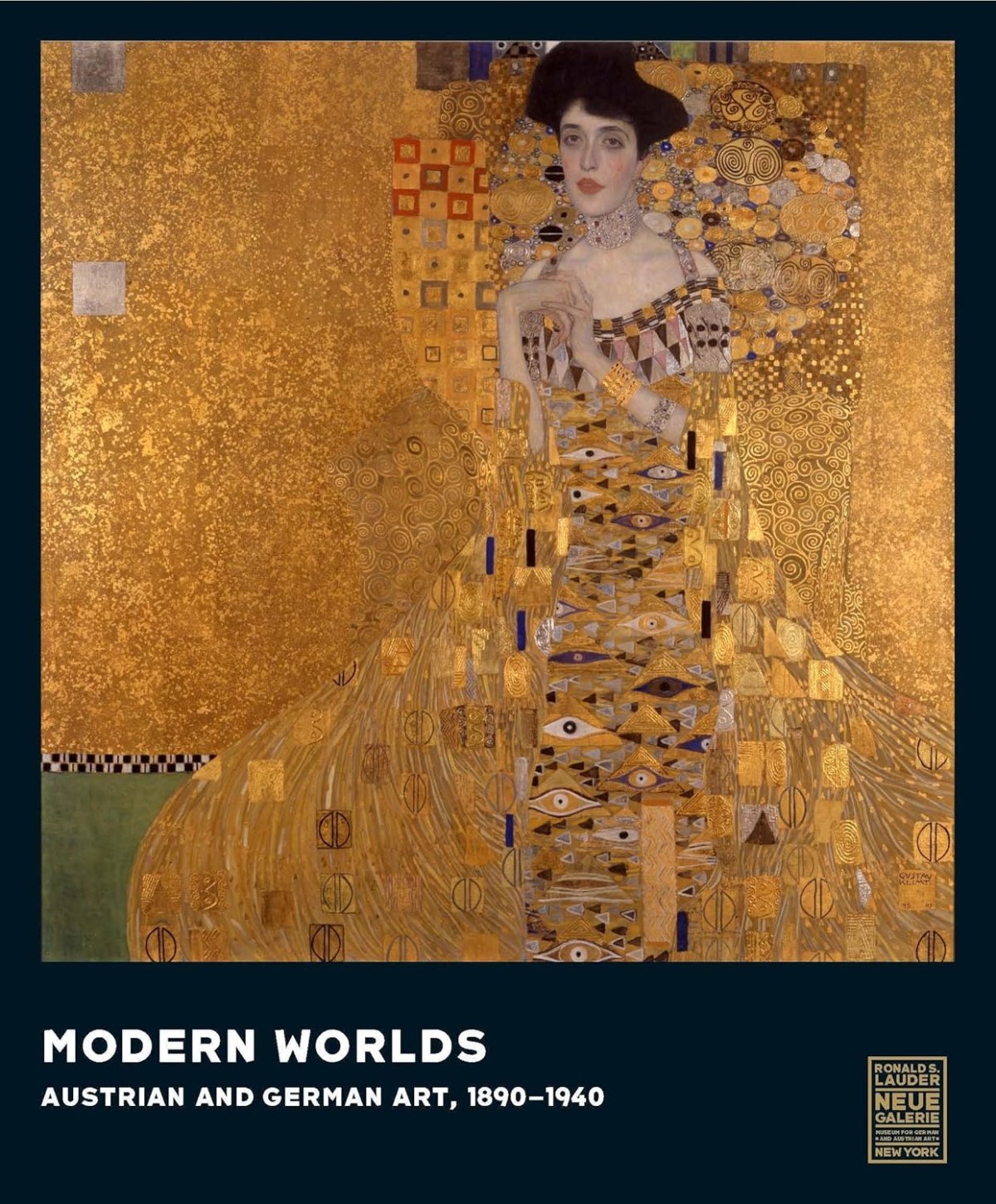
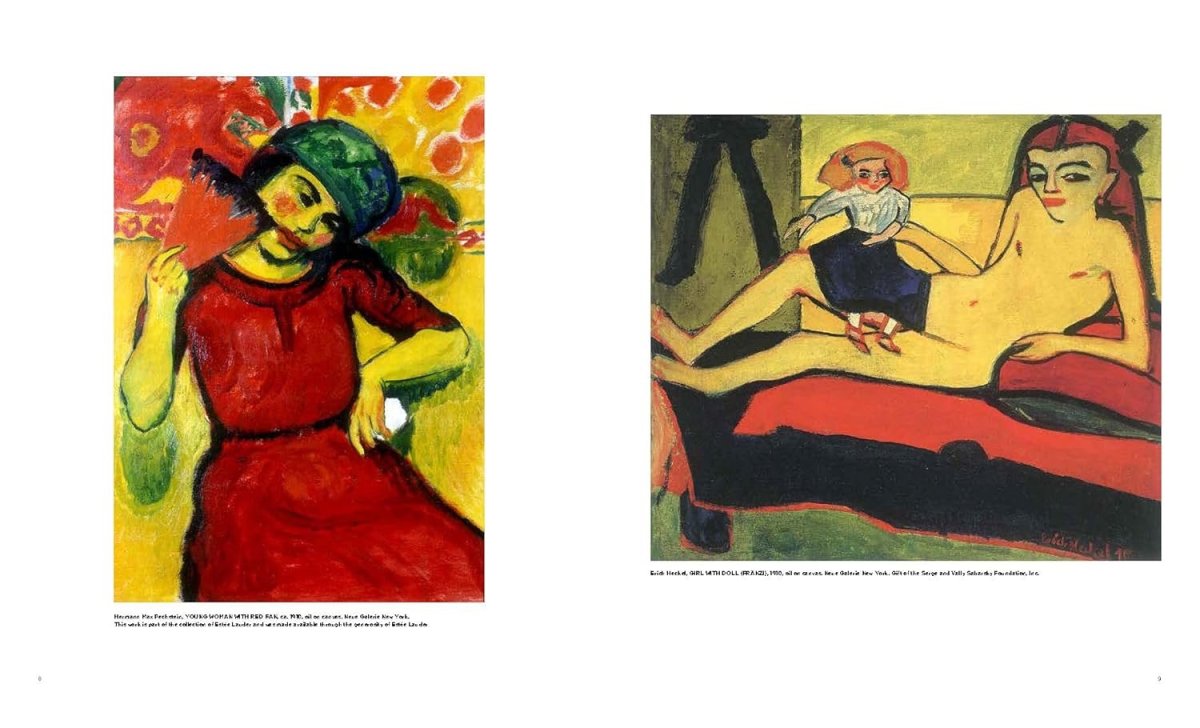
Hardcover. Munch/London/NY, Prestel, 1st, 2022, Book: Very Good, Dust Jacket: Very Good, Hardcover in a bright dust jacket. Still in publisher's shrinkwrap. 656 pages. Published on the twentieth anniversary of the founding of Neue Galerie New York, this stunning volume celebrates the varied achievements of modern art history in the German-speaking world by examining historical developments in Austria and Germany from 1890 to 1940. Illustrated throughout with exquisite reproductions of the museum's holdings, this book considers the influence of Friedrich Nietzsche and his writings on the fine arts and examines the founding of the Secessionist artists' organizations in Germany and Austria. Insightful essays trace the emergence of Expressionism and abstraction, as well as the development of such movements as Dada and New Objectivity. Evolutions in architecture and design are appraised through the legacy of the Arts and Crafts movement, as well as the establishment of the Darmstadt Artists' Colony and the Wiener Werkstatte. The book also examines the role of the German Werkbund and the founding of the Bauhaus school. Finally, the book briefly addresses the horrific impact of the National Socialists' degenerate art campaign, which resulted in incalculable damage and led to the exile and death of artists and designers of the era. From well-known artists such as Otto Dix, Josef Hoffmann, Vasily Kandinsky, Gustav Klimt, and Egon Schiele, to lesser recognized but equally important figures, including Albert Birkle, Alfred Kubin, Felix Nussbaum, and Dagobert Peche, this book offers an authoritative and kaleidoscopic look at a crucial moment in history and a portrait of radical thought that changed forever the way we experience art in our lives. DOMESTIC SHIPPING ONLY.
Hardcover. NY, Harper & Row, 1st, 1982, Book: Very Good, Dust Jacket: Very Good, Hardcover in a bright dust jacket, 385 pages, b&w photos. A fast-moving re-enactment of the thirty hours of Hitler's 1923 Munich beerhall putsch, based on newspaper reports, police documents, trial records, and the personal recollections of participants and eye-witnesses.
Hardcover. NY , Duell, Sloan and Pearce, 1st, 1948, Book: Very Good, Dust Jacket: Poor, Hardcover in a poor dust jacket with chipping, fading, especially to spine. Wheeler-Bennett worked as the director of the Royal Institute of International Affairs' information department. In particular, Wheeler-Bennett lived in Germany in 1927-1934 and witnessed firsthand the rise of Nazi Germany. After the Second World War, Wheeler-Bennett was a critic of Appeasement, and 10 years after the Munich Agreement wrote a book condemning it. Footnotes. Illustrations, Maps. Bibliography. Index. 507 pages, name on front fly leaf, otherwise clean.
Hardcover. New York, St. Martin's Press, 1st, 1987, Book: Very Good, Dust Jacket: Very Good, 272 pages. Hardcover. B/w illustrations throughout. Gilt title on spine. Dust jacket unclipped. Binding tight. Clean inside and out. In very good condition.
Hardcover. Cambridge, Mass., The Belknap Press of Harvard University Press, 1st, 1997, Book: Very Good, Dust Jacket: Very Good, Hardcover in a bright, unclipped dust jacket, 442 pages, b&w illustrations. In the beginning, they rallied behind Hitler in the national interest of Germany; in the end, they sacrificed their lives to assassinate him. A history of German resistance to Hitler in high places, this book offers a glimpse into one of the most intractable mysteries. Why did high-ranking army officers, civil servants, and religious leaders support Hitler? Why did they ultimately turn against him? What transformed these unlikely men, most of them elitist, militaristic, and fiercely nationalistic, into martyrs to a universal ideal?

 "Felix Mendelssohn: His Life, His Family, His Musicby: Kupferberg, Herbert")
 "Flame of Freedom - The German struggle against Hitler, Theby: Zeller, Eberhard")
 "Foreign Labor in Nazi Germany by: Edward L. Homze")
 "From Caligari to California: Eric Pommer's Life in the International Film Warsby: Hardt, Ursula")

 "German Fury in Belgium, Theby: Mokveld, L.")
 "Germany 1923: Hyperinflation, Hitler's Putsch, and Democracy in Crisisby: Volker Ullrich / Jefferson Chase (Translator)")
 "Heidegger and the Project of Fundamental Ontologyby: Taminiaux, Jacques")
 "Hitler and the Power of Aestheticsby: Spotts, Frederic")
 "How We Squandered the Reichby: Spitzy, Reinhard")
 "Invasion 1944: Rommel and the Normandy Campaign by: Hans Speidel")
 "Iron Kingdom: The Rise and Downfall of Prussia, 1600–1947by: Christopher Clark")
 "Johann Jakob Moser and the Holy Roman Empire of the German Nation by: Walker, Mack")
 "Leni: The Life and Work of Leni Riefenstahlby: Bach, Steven")
 "Lost Victories: War Memoirs of Hitlers Most Brilliant General by: Von Manstein, Field Marshal Erich")
 "Lya De Putti: Loving Life and Not Fearing Deathby: Peter Herzog, Romano Tozzi")
 "LZ 129 Hindenburgby: Douglas Robinson")
 "Medieval Germany and its Neighbours: 900-1250by: Leyser, K. J.")
 "Modern Worlds: Austrian and German Art, 1890-1940by: Price, Renee / Lauder, Ronald S./Peters, Olaf/ Staggs, Janis")
 "Munich 1923: The Story of Hitler's First Grab for Power by: John Dornberg")
 "Munich: Prologue to Tragedyby: Wheeler-Bennett, John W.")
 "Norway 1940 by: Kersaudy, Francois")
 "On the Road to the Wolf's Lair: German Resistance to Hitlerby: Hamerow, Theodore S.")