Hardcover. Cambridge MA, Harvard University Press, 1st, 2003, Book: Very Good, Dust Jacket: Very Good, Hardcover in a bright dust jacket, 362 pages. Hitler, Koonz says, understood the German people's need for a sense of coherence in the wake of what many saw as the degeneracy of the Weimar Republic--and 'he promised to rescue old-fashioned values of honor and dignity' by offering a secular faith to replace lost religious certainties. Koonz explores the promotion of these beliefs in German culture and law, and how they led to the catastrophe of the Holocaust, adding much to our understanding of how a civilized society could reach such infamous levels of violence. Clean copy.
Hardcover. NY, Norton, 1st US, 1985, Book: Very Good, Dust Jacket: Very Good, Hardcover in a bright dust jacket, 192 pages. The photos are breathtaking not necessarily for their quality - many are washed out and most of the subject matter is routine day to day military stuff - but for their rarity. While the Germans seem to have been at least as far advanced in the use of color photography as the Americans, there is still a paucity of color photography in the public record. That is being addressed by the various nations who took large amounts of color film in an official capacity, including the US, UK, Germany and Canada. The book's captions are adequate to the task, and there are good historical sections, as well as an introduction by Max Hastings as well as commentary by an actual German war correspondent. The strength of the book is in its ability to bring the participants of the subject campaign - the German invasion of Russia up to and including Stalingrad - to life. The use of a large format allows one to note small details of the photos, and relate to the subject matter on a personal level. Despite the lack of "action" shots, there is much to see in facial expressions, uniform details, and especially geography as the Russian steppe is shown in summer and winter, as well as the famous Russian mud (Rasputitsa) about which so much has been written.
Hardcover. NY, Metropolitan Books, 1st, 2002, Book: Very Good, Dust Jacket: Very Good, Hardcover in a bright, unclipped dust jacket, 446 pages, b&w illustrations. In this important work of historical restoration, Amos Elon shows how a persecuted clan of cattle dealers and wandering peddlers was transformed into a stunningly successful community of writers, philosophers, scientists, tycoons, and activists. In engaging, brilliantly etched portraits of Moses Mendelssohn, Heinrich Heine, Karl Marx, Hannah Arendt, and many others, Elon traces how a small minority came to be perceived as a deadly threat to German national integrity. Clean copy.
Hardcover. NY, Metropolitan Books, 1st, 2002, Book: Very Good, Dust Jacket: Very Good, Hardcover in a bright, unclipped dust jacket, 446 pages. As it's usually told, the story of the German Jews starts at the end, with their tragic demise in Hitler's Third Reich. Now, in this important work of historical restoration, Amos Elon takes us back to the beginning, chronicling a period of achievement and integration that at its peak produced a golden age second only to the Renaissance. Elon traces how this minority - never more than one percent of the population - came to be perceived as a deadly threat to national integrity, and he movingly demonstrates that this devastating outcome was uncertain almost until the end. A collective biography, full of depth and compassion,
Softcover. Cambridge University Press, reprint, 1992, Book: Very Good, Dust Jacket: None, Softcover, 386 pages, b&w illustrations. Between 1933 and 1945 the Nazi regime in Germany tried to restructure a "class" society along racial lines. This book deals with the ideas and institutions that underpinned this mission, and shows how Nazi policy affected various groups of people, both victims and beneficiaries. The book begins with a serious discussion of the origins of Nazi racial ideology, and then demonstrates the way in which this was translated into official policy. It deals with the systematic persecution not only of the Jews, but also with the fate of lesser-known groups such as Sinti and Roma, the mentally handicapped, the "asocial," and homosexuals. Clean copy.
Hardcover. NY, Alliance Book Corporation, 14th pr., 1939, Book: Very Good, Dust Jacket: None, Hardcover, light putty cloth with red lettering on spine, 300 pages. Anti-Nazi book written by ex-Nazi. Translated from German by E.W. Dickes. Front fly leaf with top inch cut out, other wise clean, tight copy.
Hardcover. NY, Free Press, 1st, 1995, Book: Very Good, Dust Jacket: Very Good, Hardcover in a bright, unclipped dust jacket. 368 pages, b&w illustrations. Neufeld, the curator of World War II history at the National Air and Space Museum in Washington, D.C., provides a well-written, comprehensively researched analysis of Nazi Germany's missile program and its antecedents. The German army became interested in rocket technology during the 1930s at the urging of Karl Becker, an engineer who believed a radical new weapon could deliver a psychological blow to an enemy. The construction of Peenemunde in 1936-37 provided a focal point for research and development that made guided missiles a reality despite Germany's limited material and scientific resources. Neufeld shows that while the rocket program was not Nazi in origin, its leaders readily compromised themselves by accepting National Socialism, especially in agreeing to the widespread use of slave labor. A more ambiguous legacy of Peenemunde is its rocket technology, which decisively shaped the second half of the 20th century. Clean copy.
Hardcover. Princeton NJ, Princeton University Press, 1st, 2006, Book: Very Good, Dust Jacket: Very Good, Hardcover in a unclipped dust jacket with fading to spine, 260 pages. This fascinating and unusual book tells the story of an arguably catastrophic German habit - that of valuing cultural achievement above all else and envisioning it as a noble substitute for politics. Lepenies examines how this tendency has affected German history from the late eighteenth century to today. He argues that the German preference for art over politics is essential to understanding the peculiar nature of Nazism, including its aesthetic appeal to many Germans (and others) and the fact that Hitler and many in his circle were failed artists and intellectuals who seem to have practiced their politics as a substitute form of art. Clean copy.
Hardcover. Milwaukee WI, Marquette University, 1st, 1958, Book: Very Good, Dust Jacket: Good, Hardcover in a bright dust jacket with a chip to the top front corner, 248 pages. This book explores the crisis of the German Socialist movement and its growth in intensity from the time of the open split of the Social Democratic Party during World War 1 until its climax in the bloody fighting between the radical left and the socialists during the so-called Spartacist Uprising of January 1919. Clean copy.
Hardcover. NY, Simon & Schuster, 1st, 2017, Book: Very Good, Dust Jacket: Very Good, Hardcover in a bright, unclipped dust jacket. In The Third Reich, Thomas Childers shows how the young Hitler became passionately political and anti-Semitic as he lived on the margins of society. Fueled by outrage at the punitive terms of the Versailles Treaty that ended the Great War, he found his voice and drew a following. As his views developed, Hitler attracted like-minded colleagues who formed the nucleus of the nascent Nazi party. The failed Munich putsch of 1923 and subsequent trial gave Hitler a platform for his views, which he skillfully exploited. Clean copy.
Softcover. Cambridge MA, Harvard University Press, reprint, 2011, Book: Very Good, Dust Jacket: None, Softcover, 997 pages, color and b&w illustrations. A deadly continental struggle, the Thirty Years War devastated seventeenth-century Europe, killing nearly a quarter of all Germans and laying waste to towns and countryside alike. Peter Wilson offers the first new history in a generation of a horrifying conflict that transformed the map of the modern world. When defiant Bohemians tossed the Habsburg emperor's envoys from the castle windows in Prague in 1618, the Holy Roman Empire struck back with a vengeance. Bohemia was ravaged by mercenary troops in the first battle of a conflagration that would engulf Europe from Spain to Sweden. The sweeping narrative encompasses dramatic events and unforgettable individuals-the sack of Magdeburg; the Dutch revolt; the Swedish militant king Gustavus Adolphus; the imperial generals, opportunistic Wallenstein and pious Tilly; and crafty diplomat Cardinal Richelieu. In a major reassessment, Wilson argues that religion was not the catalyst, but one element in a lethal stew of political, social, and dynastic forces that fed the conflict. By war's end a recognizably modern Europe had been created, but at what price? The Thirty Years War condemned the Germans to two centuries of internal division and international impotence and became a benchmark of brutality for centuries. As late as the 1960s, Germans placed it ahead of both world wars and the Black Death as their country's greatest disaster. Clean, bright copy.
Hardcover. NY, E. P. Dutton, reprint, 1977, Book: Very Good, Dust Jacket: Very Good, Hardcover in a bright dust jacket. David Irving's The Trail of the Fox is the best work on Rommel ever written. The circumstances around Rommel's involvement with the attempt on Hitler's life, which is the most speculated aspect of Rommel's life, and how the Gestapo came to believe Rommel was involved, have not been made clear in most of the historiography on Rommel. Irving pieces together what really happened most effectively. There are so many strengths of this book, of which the greatest is probably the fact Irving had access to Rommel's dairy and many of his letters, which he got permission from the family to view. Other items he found in collections in the United States, England, and Germany. Since he worked on this in the 1970's he also was able to interview a number of German officers who were still alive that knew and served with Rommel. The whole work is the way historical research should be done; totally reliant on primary source material, and ignores secondary sources that often use conjecture or just repeat incorrect narratives from earlier books. Every source is from people who fought the war; Germans, Italians, British, French and American officers who were in these campaigns and had either first hand observation of Rommel or were major participants like Eisenhower, Churchill, Goebbels, etc. Clean copy.
Hardcover. Gutersloh GR, C. Bertelsmann,, 1st, 1955, Book: Very Good, Dust Jacket: Good, Hardcover, 438 pages, chipped dust jacket. GERMAN TEXT. JULIA CHILD'S COPY with her signature, address and 1956 on the front fly leaf.
Hardcover. New York , Little Brown & Co, 1st, 1994, Book: Very Good, Dust Jacket: Very Good, Hardcover. Non-Paginated. Illustrations in full color by Moser. Light wear to pictoial dust jacket. Clean, tight copy.
Hardcover. Berlin, Argon, 1st, 1991, Book: Very Good, Dust Jacket: Very Good, Hardcover in a bright dust jacket, 136 pages, historical images of Linden, Germany. Many from the late 1800s, mostly landmarks and buildings. Endpapers map of the city. Essay by Dieter Hildebrandt, introduction by Hans-Werner Klunner. GERMAN TEXT.
Hardcover. GR, DZA Verlag fur Kultur und Wissenschaft, 1st, 1994, Book: Very Good, Dust Jacket: None, Hardcover, 161 pages, no dust jacket, pictorial boards. A collection of essays and photographs on the city of Dresden, ending in it's destruction at the end of WWII. Foreward by Herbert Wagner.
Softcover. New York, Abbeville Press, 1st US, 1984, Book: Very Good, Dust Jacket: None, 160 pages, illustrated throughout in b&w. Previous owner's sticker on front end paper, light edgewear and soil to wrappers. Clean, tight copy. The pictures assembled here show how this artistic culture originated in the aftermath of the First World War and the unsettled early years of the Weimar Republic, uneasily balanced between revolutionary pretensions and the desire for order. The montage of images--photographs, paintings, drawings, collages, books, and film stills--evokes the period with shocking vividness.
Hardcover. Chicago, University Of Chicago Press, 1st, 2006, Book: Very Good, Dust Jacket: Very Good, Hardcover, pages. In When Buildings Speak,Anthony Alofsin explores the rich yet often overlooked architecture of the late Austro-Hungarian Empire and its successor states. He shows that several different styles emerged in this milieu during the late nineteenth and early twentieth centuries. Moreover, he contends that each of these styles communicates to us in a manner resembling language and its particular means of expression. Covering a wide range of buildings--from national theaters to crematoria, apartment buildings to warehouses, and sanatoria to postal savings banks--Alofsin proposes a new way of interpreting this language. He calls on viewers to read buildings in two ways: through their formal elements and through their political, social, and cultural contexts. By looking through Alofsin's eyes, readers can see how myriad nations sought to express their autonomy by tapping into the limitless possibilities of art and architectural styles. And such architecture can still speak very powerfully to us today about the contradictory issues affecting parts of the former Habsburg Empire.
Hardcover. Munich, Fr. Bassermann, 1st, Book: Very Good, Dust Jacket: Very Good, Hardcover, beige cloth with red-stamped spine and cover titles. 356 pages with b&w cartoon illustrations by the German artist's works. GERMAN TEXT. His picture stories are regarded as one of the main precursors of the modern comic strip. His celebrated best-seller, Max and Moritz, was an inspiration for the Katzenjammer Kids. Clean copy. DOMESTIC SHIPPING ONLY.
Hardcover. Annapolis, Naval Institute Press, 1st, 1997, Book: Very Good, Dust Jacket: Very Good, 249 pages. Hardcover. Brick cloth boards with gilt titles to spine. Illustrated with photos in b/w. Dust jacket with light wear. Clean, unmarked copy.
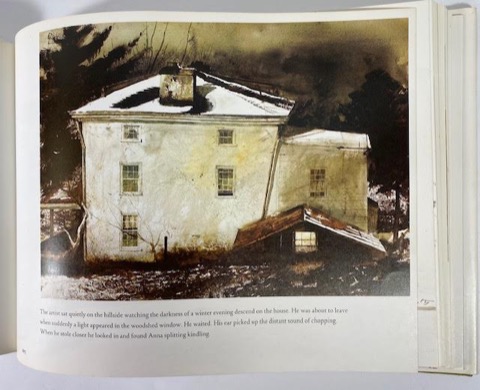
Hardcover. Boston, MA, Houghton Mifflin Company, 1st, 1976, Book: Very Good, Dust Jacket: Very Good, 324 pages. Hardcover. Color and b/w illustrations throughout. Cover boards bound in green cloth, gilt title stamped on spine and decoration on front cover. Black endpapers. Binding tight, spine straight. Dust jacket unclipped, has a touch of tanning from age, but still in excellent condition. Pages' outer edges are very slightly tanned, but otherwise clean. This is a beautiful volume that examines an artist's technique, while also telling a story through word and paint brush, about the German immigrants with whom he was living.
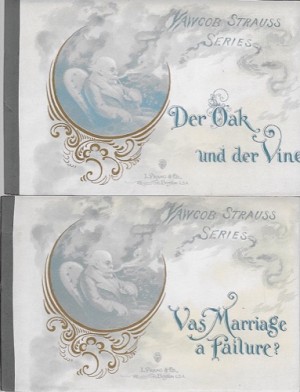
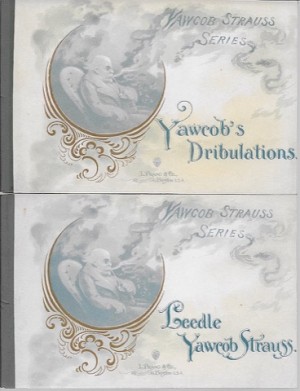
Softcover. Boston, L. Prang & Co, 1st, 1894, Book: Near Fine, Dust Jacket: None, 4 volumes, stiff light-green covers with color illustration, b&w frontispiece in each. Leedle Yawcob Strauss: 14 pages, 5 color plates. Yawcob's Dribulations: 17 pages, 7 color plates. Der Oak une der Vine: 15 pages, 5 color plates. Vas Marriage a Failure?: 14 pages, 5 color plates. Slight rubbing to covers; volumes in excellent condition.
Hardcover. Munchen GR, Hugendubel, reprint, 1997, Book: Very Good, Dust Jacket: Very Good, Hardcover, 256 pages, Over 250 historical photos featuring public buildings, storefronts, cafes and other gathering spaces in the city. GERMAN TEXT. Clean, bright copy in a similar dust jacket. Appears to be a reprint of a book first published in 1990.

 "The Nazi Conscience by: Claudia Koonz")
 "The Onslaught: The German Drive to Stalingrad : Documented in 150 Unpublished Colour Photographs by: Heinrich Von Einsiedel")
 "The Pity of It All: A History of Jews in Germany, 1743-1933by: Amos Elon")
 "The Pity of It All: A History of the Jews in Germany, 1743-1933 by: Elon, Amos")
 "The Racial State: Germany 1933–1945by: Michael Burleigh/ Wolfgang Wippermann")
 "The Revolution of Nihilism: Warning to the West by: Rauschning, Hermann")
 "The Rocket and the Reich: Peenemunde and the Coming of the Ballistic Missile Eraby: Michael J. Neufeld")
 "The Seduction of Culture in German Historyby: Lepenies, Wolf")
 "The Spartacist Uprising of 1919by: Eric Waldman")
 "The Third Reich: A History of Nazi Germany by: Childers, Thomas")
 "The Thirty Years War: Europe")
 "The Trail of the Fox: The Search for the True Field Marshal Rommel by: David Irving")


 "Till Eulenspiegel (Julia Child's copy)by: Hauptmamm / Julia Child, Gerhart")
 "Tucker Pfeffercorn: An Old Story Retoldby: Moser, Barry")
 "Unter den Linden: Photographien (German Edition)by: Hildebrandt, Dieter")
 "Verbrannt bis zur Unkenntlichkeit - die Zerstorung Dresdens 1945 (German Edition)by: N/A")
 "Weimar Years, The : A Culture Cut Shortby: Willett, John")
 "When Buildings Speak: Architecture as Language in the Habsburg Empire and Its Aftermath, 1867-1933by: Alofsin, Anthony")
 "Wilhelm Busch Album: Humoristischer Hausschatz mit 1500 Bildern by: Busch, Wilhelm")
 "Wolf U-Boat Commanders In World War IIby: Jordan Vause")
 "Wyeth at Kuernersby: Wyeth, Betsy James")

 "Yawcob Strauss Series (4 volumes): Leedle Yawcob Strauss, Yawcob's Dribulations, Der Oak und der Vine, and Vas Marriage a Failure?by: Strauss, Leedle Yawcob (Charles")
 "Zu Gast im alten Berlin (German Edition)by: Taubrich, Hans-Christian")