Softcover. Lockport NY, Niagara County Historical Society, 1st, 1966, Book: Very Good, Dust Jacket: None, Softcover, blue wrappers, 377 pages, black & white line drawings. Minor wear to covers, clean copy.
Hardcover. Auburn NY, Auburn Publishing Company, 1st, 1863, Book: Very Good, Dust Jacket: None, Hardcover, original brown cloth with gilt design on front and rear covers and spine. Marbled edges, 552 pages, 4 pages of publisher's ads in rear. Frontispiece, many b&w engravings and 7 folding maps are included, all very good. First edition of Storke's history of the American Civil War, Volume 1 only. (... with Biographical Sketches and Portraits of its Principal Actors and Thrilling Incidents of Land and Naval Heroes - Volume 1) (The second volume was published in 1865.) Rear hinge tender but holding. Clean copy, no stamps or marking. Spine gilt with some fading, covers with mild edgewear.
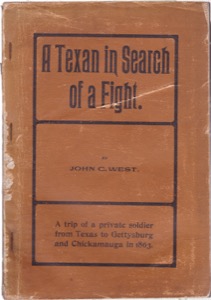
Softcover. Waco TX, J. S. Hill & Co., 1st, 1901, Book: Fair, Dust Jacket: None, Softcover, brown paper wraps, stapled binding, 189 pages. Covers worn and chipped, last 50 pages with top corner chipped or chewed away, not affecting text. West served in Company E., 4th Texas Regiment. "A diary kept by West from April 12 to June 13, 1863, and February 28 to April 20, 1864." Subtitled on cover: A trip of a private soldier from Texas to Gettysburg and Chickamauga in 1863. Paper tanned and fragile.
Hardcover. NY, Free Press , 1st, 1997, Book: Very Good, Dust Jacket: Very Good, Hardcover in a bright, unclipped dust jacket. 464 pages, b&w illustrations. A great but frequently overlooked figure in America during the early decades of the 19th century now gets his due. Military historian Eisenhower (son of the late president) describes a natural leader of imposing stature, overweening pride, exceptional courage, and wide learning, who possessed considerable organizational and diplomatic skills along with outstanding martial instincts. As the nation's youngest general, Scott distinguished himself in the War of 1812, and he was a hero of the Mexican War in the 1840s. After a brilliant campaign fought entirely on foreign soil, he stormed and captured Mexico City despite considerable political maneuvering on the battlefield and the homefront by a variety of influential enemies. In peacetime, he served successfully as a diplomat to the Canadians, the British, the Seminoles, and the Cherokees. Clean copy.
Hardcover. NY, St Martins Press, 1st, 1998, Book: Very Good, Dust Jacket: Very Good, Hardcover in a bright, unclipped dust jacket. 707 pages, b&w illustrations. Born in poverty, and self-educated while working in a print shop, William Lloyd Garrison was one of the United States' greatest crusading editors, putting out a weekly anti-slavery newspaper, The Liberator, for 35 years, beginning in 1831. A product of the rough and tumble political journalism of the day, Garrison wrote with extreme passion and from an uncompromising point of view. Yet the man who emerges from the pages of All on Fire is a deeply thoughtful person who, despite barely escaping lynch mobs himself, had a great sense of humor and a very polite demeanor. Historians have tended to minimize Garrison's impact on America, and some consider him a fringe character. But Henry Meyer, in this hefty biography, places Garrison at the center of his century, noting that Garrison's thought and tactics influenced not only the country's changing view of slavery, but also inspired the incipient feminist movement. The Lincoln administration noted Garrison's influence by inviting him to help raise the flag over the recaptured Fort Sumter. All on Fire goes into great detail on Garrison's life and work, providing the close and copious examination this activist's life fully deserves. Clean copy.
Hardcover. Pasadena MD, Minerva Center, 1st, 1994, Book: Very Good, Dust Jacket: Very Good, Hardcover in a bright dust jacket, 110 pages, b&w illustrations. As the debate on the role of women in the military continues, an interesting historical footnote has been brought forth: the publication of the only known surviving set of letters of one of the estimated 400 women who disguised themselves as men to fight as soldiers in the Civil War. Born on a farm in New York in 1843, Wakeman was the oldest of nine children. Few details of her family life are known, nor what exactly precipitated her flight into the army, but glimpses of this strong-minded woman are provided throughout: "I am as independent as a hog on the ice. If it is God's will for me to fall in the field of battle, it is my will to go and never return home." Private Wakeman did not return home: she is buried under her masculine pseudonym. How many more women were buried as men? Civil War historian Burgess provides an intriguing introduction to what is sure to become an area of growing interest. Name on front fly leaf, otherwise clean.
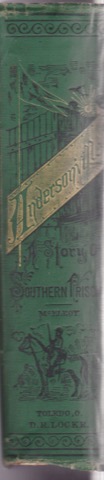
Hardcover. Toledo OH, D.R. Locke, 1st, 1879, Book: Very Good, Dust Jacket: None, Hardcover, green cloth with black and gilt decoration to front cover and spine. 655 pages. 'Andersonville' is a rare, post-Civil War work that describes the horrors of prison life during the Civil War. McElroy describes prison conditions, battles and prolonged military struggles, accounts of prisoner struggles, plantation slaves, and soldier depression. Also included are depictions of various jails including those in Atlanta, Richmond, Savannah, Blackshear, and Florence. Illustrated with over 150 views of trial scenes, prisons, portraits, and battle scenes! According to Nevins,"Well written, gripping, and very detailed; but reliance on memory and bitterness." Mild wear to top and bottom of spine, Name on first blank white page, otherwise clean.
Hardcover. NY, Time Life, reprint, 1982, Book: Very Good, Dust Jacket: None, 296 pages. Hardcover with no dust jacket. Dark blue leather bound with gilt titles to front cover and spine. Embossed decoration on front cover. Gilt text block edges, red ribbon marker. Clean, tight copy. Thomas Wentworth Higginson, a Unitarian minister, was a fervent member of New England's abolitionist movement, an active participant in the Underground Railroad, and part of a group that supplied material aid to John Brown before his ill-fated raid on Harpers Ferry. When the Civil War broke out, Higginson was commissioned as a colonel of the black troops training in the Sea Islands off the coast of the Carolinas.
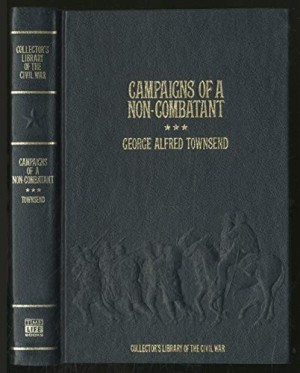
Hardcover. NY, Time Life, reprint, 1984, Book: Very Good, Dust Jacket: None, 233 pages. Hardcover with no dust jacket. Dark blue leather bound with gilt titles to front cover and spine. Embossed decoration on front cover. Gilt text block edges, red ribbon marker. Clean, tight copy.
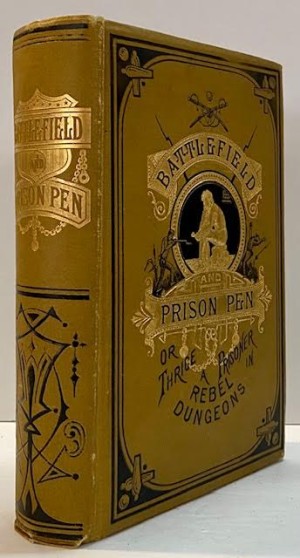
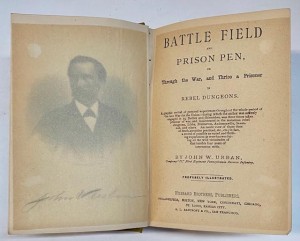
Hardcover. Philadelphia, PA, Hubbard Brothers, 1st Edition, 1882, Book: Very Good, Dust Jacket: None, 488 pages. Hardcover. B/w illustrations (including frontispiece with tissue guard--see image). Decorated endpapers. Previous owner's stamp of ownership on two preliminary pages. Cover boards bound in brown mustard cloth, gilt title and decorations on spine and front cover board (see image). Cover boards have a touch of age wear. Pages and edges have some tanning from age. Loose gutter at top of title page (see image), otherwise binding tight. "A graphic recital of personal experiences throughout the whole period of the late war for the Union--during which the author was actively engaged in 25 Battles and Skirmishes, was three times taken prisoner..."
Hardcover. NY, Alfred A. Knopf, 1st, 1966, Book: Very Good, Dust Jacket: None, Hardcover, dark blue cloth with gilt lettering on spine, 371 pages plus index. B&w illustrations. A study of the Civil War's effects on the "development" of women 1861-65 and how this led to further advances in the women's movement in later years. Name on front fly leaf, page 133 wrinkled. No dust jacket.
Hardcover. Chapel Hill, University of North Carolina, 1st, 1991, Book: Very Good, Dust Jacket: Very Good, Hardcover, 514 pages, b&w illustrations, in a bright dust jacket. Biography of Union general Ambrose Burnside, reassessing his reputation as an "incompetent leader" by viewing his entire career as a soldier during the war: along the Carolina coast, at Antietam, and his capture of Knoxville in East Tennessee, while still recognizing the debacle at Fredericksburg.
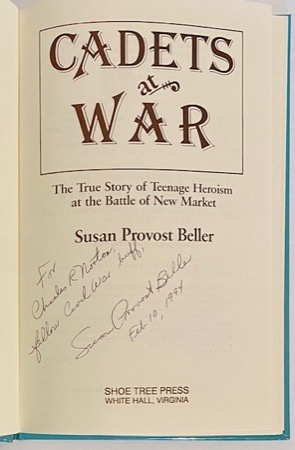
Hardcover. White Hall, VA, Shoe Tree Press, 1st, 1991, Book: Near Fine, Dust Jacket: None, 95 pages. Hardcover. (INSCRIBED BY AUTHOR)B/w illustrations throughout. Decorated cover boards. Pages clean and bright. Spine straight. Binding tight. The excitement in the barracks on the night of May 10, 1864 was electric. At last, the cadets of the Virginia Military Institute were going to war!
Hardcover. NY, Time Life, reprint, 1981, Book: Very Good, Dust Jacket: None, 546 pages. Hardcover with no dust jacket. Dark blue leather bound with gilt titles to front cover and spine. Embossed decoration on front cover. Gilt text block edges, red ribbon marker. Clean, tight copy.In 1863 Horace Porter, then a captain, met Ulysses S. Grant as Grant commenced the campaign that would break the Confederate siege at Chattanooga. After a brief stint in Washington, Porter rejoined Grant, who was now in command of all Union forces, and served with him as a staff aide until the end of the war. Porter was at Appomattox as a brevet brigadier general, and this work, written from notes taken in the field, is his eyewitness account of the great struggle between Lee and Grant that led to the defeat of the Confederacy.
Hardcover. NY, Time Life, reprint, 1982, Book: Very Good, Dust Jacket: None, Hardcover with no dust jacket. Dark blue leather bound with gilt titles to front cover and spine. Embossed decoration on front cover. Gilt text block edges, red ribbon marker. Clean, tight copy. Facsimilie reprint of the 1866 edition.
Hardcover. Urbana IL, University of Illinois Press, 1st, 1958, Book: Very Good, Dust Jacket: Very Good, Hardcover in a lightly worn dust jacket, 262 pages, b&w illustrations. A studied volume by an English military man and on-site witness to many of the events of the American Civil War enhanced with 16 pages of contemporary B&W photographs and drawings. The book was originally published in the 1860s and is one of the finest and most informative of the few records left by outside observers of the Confederacy in its own time. Name on front fly leaf otherwise clean.
Hardcover. NY, Time Life, reprint, 1983, Book: Very Good, Dust Jacket: None, 401 pages. Hardcover with no dust jacket. Dark blue leather bound with gilt titles to front cover and spine. Embossed decoration on front cover. Gilt text block edges, red ribbon marker. Clean, tight copy. This is one of the more impressive (and unfortunately little known) records of the American Civil War. John Beatty was a lawyer from Ohio who joined the Union Army when the South seceded. He started his service in western Virginia under General George B. McClellan. Although McClellan would later become one of the most well-known generals of the war, it was here that he first achieved the prominence that would lead to Lincoln promoting him to head Union forces on two separate occasions. Beatty, however, was clearly not enamored of McClellan. His journal opens with a description of arriving in one of the local railroad communities and subsequent entries describe the minutiae of camp life. Beatty is relatively unique among memoirists in that his book is largely a transcription of his original diary. As a result, his recollections are of recent events and have a degree of candor not present in many post-bellum narratives.
Softcover. Freetown MA, Freetown Historical Society, 1st, 2005, Book: Very Good, Dust Jacket: None, Softcover, light gray wrappers, 327 pages. John Milton Deane (January 8, 1840 - September 2, 1914), was an American Civil War Medal of Honor recipient and a major in the United States Army. Deane was born in Assonet, Massachusetts to John and Lydia (Andros) Deane. The diary he kept is here type-written out in chronological order. B&w photo of Deane as a Lieutenant in 1863. Clean, like new.
Hardcover. Knoxville, University of Tennessee Press , 1st, 1980, Book: Very Good, Dust Jacket: Very Good, Hardcover in a bright dust jacket, 149 pages. The chief nurse of the Union Hospital in Washington, D.C., describes life and stress in the hospital and comments on notable persons of power. Her heretofore unpublished diary and letters comprise a fresh, highly significant document concerning the medical history of the Civil War and the contributions of women nurses in the Northern military hospitals. This book is edited, with Introduction and Commentary, by John R. Brumgardt.
Hardcover. Freeport, NY, Books for Libraries Press, reprint, 1970, Book: Very Good, Dust Jacket: None, 165 pages. Blue cloth cover, very light wear to corners and edges, bottom edge slightly bumped. Some foxing and shadowing on front and rear endpages, otherwise inside is bright and clean. Three pages have light markings by previous owner, otherwise inside in unmarked. A nice, tight copy.
Hardcover. NY, Mallard Press, 1st, 1990, Book: Very Good, Dust Jacket: Very Good, Hardcover in a bright dust jacket. 220 pages, color illustrations by Michael Codd.
Hardcover. NY, Fordham University Press, 1st, 1997, Book: Very Good, Dust Jacket: Very Good, Hardcover in a bright dust jacket. 280 pages. The Ninth Massachusetts Infantry, which saw duty with the Army of the Potomac, was composed primarily of Irish immigrants and their descendants who hailed from Boston. One officer, Patrick R. Guiney, eventually rose to command the regiment as a colonel prior to suffering a service-ending wound in 1864. He left a full record of his men's activities in his letters to his wife, Jeannette; the letters also reveal that Guiney's political views, which leaned toward Lincoln and the Republicans, were not shared by most of his fellow officers or men. Editor Samito has provided a rather detailed prolog and annotation for the letters, which tell us as much about Guiney as a husband as they do about matters at the front. Among the numerous collections of Civil War letters that appear in print, these are distinguished for the author's forthright discussion of political and military affairs. Clean copy.

 "100 Years Ago Today: Niagara County in the Civil War As Reported in the Pages of the Niagara Falls Gazetteby: Reed, Richard")
 "A Complete History of the Great American Rebellion Embracing Its Causes Events and Consequences....by: Storke, Elliot G")
 "A Texan in Search of a Fight. Being the Diary and Letters of a Private Soldier in Hood's Texas Brigadeby: John C. West")
 "After the Guns Fell Silent: A Post-Appomattox Narrative April 1865-March 1866by: Hoehling, A.A.")
 "Agent Of Destiny: The Life And Times Of General Winfield Scottby: John Eisenhower")
 "All On Fire: William Lloyd Garrison And The Abolition Of Slaveryby: Mayer, Henry")
 "An Uncommon Soldier:The Civil War Letters of Sarah Rosetta Wakeman, Alias Private Lyons Wakeman, 153rd Regiment, New York State Volunteers by: Burgess, Lauren C. (Ed.")
 "Andersonville: Story of Rebel Military Prisons: Fifteen Months a Guest of the So Called Southern Confederacyby: McElroy, John Co. (L/16th Ill. Cav..)")

 "Army Life in a Black Regiment (Collector's Library of the Civil War)by: Higginson, Thomas Wentworth")
 "Army Memoirs (Collector's Library of the Civil War)by: Barber, Lucius W.")
 "Battle Field and Prison Pen, or Through the War, and Thrice a Prisoner in Rebel Dungeonsby: Urban, John W.")
 "Battle Fields of the South - From Bull Run to Fredericksburgh; With Sketches of Confederate Commanders, and Gossip of the Camps (Collector's Library of the Civil War)by:")
 "Bonnet Brigades by: Massey, Mary Elizabeth")
 "Burnsideby: Marvel, William")
 "Cadets at War: The True story of Teenage Heroism at the Battle of New Market (INSCRIBED BY AUTHOR)by: Beller, Susan Provost")

 "Campaigning with Grant (Collector's Library of the Civil War)by: Porte, Horace")
 "Campaigns of a Non-Combatant, and His Romaunt Abroad During the War (Collector's Library of the Civil War)by: Townsend, George Alfred")

 "Cities and Camps of the Confederate Statesby: Fitzgerald Ross, Editor: Richard Barksdale Harwell")
 "Citizen-Soldier, The; Or, Memoirs of a Volunteer (Collector's Library of the Civil War)by: Beatty, John")
 "Civil War Diaries of Major John M. Deane: 1861-1865by: John Milton Deane")
 "Civil War Nurse: The Diary and Letters of Hannah Ropesby: Hannah Ropes /John R. Brumgardt (Editor)")

 "Combat Uniforms of the Civil Warby: Lloyd, Mark")
 "Commanding Boston's Irish Ninth: The Civil War Letters of Colonel Patrick R. Guiney, Ninth Massachusetts Volunteer Infantryby: Patrick R. Guiney (Author), Christian G")