Softcover. Durham NC, Duke University Press, 1st, 1993, Book: Very Good, Dust Jacket: None, Softcover, 672 pages. Pointing to a glaring blind spot in the basic premises of the study of American culture, leading critics and theorists in cultural studies, history, anthropology, and literature reveal the "denial of empire" at the heart of American Studies. Challenging traditional definitions and periodizations of imperialism, this volume shows how international relations reciprocally shape a dominant imperial culture at home and how imperial relations are enacted and contested within the United States.Drawing on a broad range of interpretive practices, these essays range across American history, from European representations of the New World to the mass media spectacle of the Persian Gulf War. The volume breaks down the boundary between the study of foreign relations and American culture to examine imperialism as an internal process of cultural appropriation and as an external struggle over international power. Clean copy.
Hardcover. NY, Dodd, Mead & Co., 1st, 1976, Book: Very Good, Dust Jacket: Very Good, Hardcover in a bright dust jacket, 466 pages, b&w illustrations. Name on front fly leaf, minor wear to dj. Otherwise a clean, tight copy.
Softcover. Indianapolis/NY, Bobbs Merrill, 2nd pr., 1966, Book: Very Good, Dust Jacket: None, Softcover, 452 pages. This book covers the Massachusetts Convention of 1820-21; New York State Convention of 1821; and the Virginia State Convention of 1829-1830, along with numerous tables. Clean, tight copy.
Softcover. NY, Columbia University Press, reprint, Book: Very Good, Dust Jacket: None, Softcover, 666 pages. Name on front fly leaf, title-page. Otherwise a tight, clean copy.
Hardcover. New York, Coward, McCann & Geoghegan, Inc. , 1st Edition, 1975, Book: Good, Dust Jacket: Fair, 510 pages. Hardcover. Decorated endpapers. Red cover boards, white quarter cloth, gilt title on spine and front cover board, agewear to covers. Dust jacket has edgewear (see image). Binding good. Spine straight. Pages unmarked. A historical narrative about WWI in the United States.
Hardcover. NY/London, Macmillan / Collier Macmillan, 1st, 1975, Book: Very Good, Dust Jacket: Very Good, Hardcover in a bright, unclipped dust jacket, 517 pages, b&w illustrations. Life of the signer of the Declaration of Independence, first US Attorney General, and second Secretary of State. Clean copy.
Hardcover. NY, W. W. Norton, 1st, 1967, Book: Very Good, Dust Jacket: Very Good, Hardcover in a worn, chipped dust jacket, 119 pages, maps, index. As WWII ground to a close, whose forces would be the first to reach Berlin? General Dwight David Eisenhower, supreme commander of the British and American armies, chose to halt at the Elbe River and leave Berlin to the Red Army. Could he have beaten the Russians to Berlin? If so, why didn't he? If he had, would the Berlin question have arisen? Would Germany have been divided as it was? Name on front fly leaf, otherwise clean.
Hardcover. Chicago, Ivan R. Dee, 1st, 2000, Book: Very Good, Dust Jacket: Very Good, Hardcover in a bright, unclipped dust jacket. General Dwight D. Eisenhower's decision to campaign for the presidency in 1952 was a pivotal even in America's cold war years-- it influenced almost a decade of foreign and domestic policy. Based on recently discovered letters and diaries, William Pickett provides the first complete account of Eisenhower's decision to run, with surprising new conclusions. Clean, unread copy.
Hardcover. Lawrence KS, University Press of Kansas, 1st, 2007, Book: Very Good, Dust Jacket: Very Good, Hardcover in a bright dust jacket, 274 pages. With the landmark election of Franklin Delano Roosevelt in 1932, decades of Republican ascendancy gave way to a half century of Democratic dominance. It was nothing less than a major political realignment, as the direction of federal policy shifted from conservative to liberal-and liberalism itself was redefined in the process. Electing FDR is the first book in seventy years to examine in its entirety the 1932 presidential election that ushered in the New Deal. Award-winning historian Donald Ritchie looks at how candidates responded to the nation's economic crisis and how voters evaluated their performance. More important, he explains how the Democratic Party rebuilt itself after three successive Republican landslides: where the major shifts in party affiliation took place, what contingencies contributed to FDR's victory, and why the new coalition persisted as long as it did. Ritchie challenges prevailing assumptions that the Depression made Roosevelt's election inevitable. He shows that FDR came close to losing the nomination to contenders who might have run to the right of Hoover, and discusses the role of newspapers and radio in presenting the candidates to voters. He also analyzes Roosevelt's campaign strategies, recounting his attempts to appeal to disaffected voters of all ideological stripes, often by altering his positions to broaden his popularity. With the advent of the New Deal, Americans came to enjoy a wide federal safety net that provided everything from old age pensions to rural electricity-government innovations so embraced by voters that even later conservative presidents recognized their importance. Ritchie traces this legacy through the Reagan and Bush years, but he relates how FDR in 1932 was often vague about the specifics of his program and questions whether voters really knew what they were in for with the New Deal. Clean copy.
Hardcover. Berkeley CA, University of California Press, 1st, 1974, Book: Very Good, Dust Jacket: Good, Hardcover in a lightly worn dust jacket, 205 pages. Name on front fly leaf otherwise clean. Small hole on dj front.
Hardcover. NY, W. W. Norton & Company, 1st, 1976, Book: Very Good, Dust Jacket: Very Good, Hardcover in a lightly worn dust jacket, 332 pages, b&w illustrations. Clean, tight copy.
Softcover. Berkeley CA, University of California Press, reprint, 1966, Book: Very Good, Dust Jacket: None, Softcover, 151 pages. Deals with the parliamentary group in England which claimed the Whig tradition during the American Revolution. The Americans asserted rights that were essentially Whig, but at the same time repudiated the authority of parliament, the stronghold of Whig tradition. Fading to spine, name on front fly leaf, otherwise clean.
Hardcover. Austin TX, University of Texas Press, 1stt, 1969, Book: Very Good, Dust Jacket: Very Good, Hardcover in a bright dust jacket. Three essays (on the Shelterbelt Project, New Deal critics, and FDR's attempt to expand the Supreme Court) make up the second annual Walter Prescott Webb Memorial Lectures; foreword by C. B. Smith; edited by Harold M. Hollingsworth and William F. Holmes. Bound in bright green cloth-covered boards with silver lettering on the front board and spine.
Hardcover. Urbana IL, University of Illinois Press, 1st, 1990, Book: Very Good, Dust Jacket: Very Good, Hardcover in a bright, unclipped dust jacket. Power was at the heart of FDR's relationship with the media: the power of the nation's chief executive to control his public messages versus the power of the free press to act as an independent watchdog over the president and the government. This compelling study points to Roosevelt's consummate news management as a key to his political artistry and leadership legacy.
Hardcover. NY, NYU Press , 1st, 2014, Book: Very Good, Dust Jacket: None, Hardcover, illustrated boards, no dust jacket issued, 272 pages. Returning Vietnam veterans had every reason to expect that the government would take care of their readjustment needs in the same way it had done for veterans of both World War II and Korea. But the Vietnam generation soon discovered that their G.I. Bills fell well short of what many of them believed they had earned. Mark Boulton's groundbreaking study provides the first analysis of the legislative debates surrounding the education benefits offered under the Vietnam-era G.I. Bills. Specifically, the book explores why legislators from both ends of the political spectrum failed to provide Vietnam veterans the same generous compensation offered to veterans of previous wars. Clean copy.
Softcover. Berkeley CA, University of California Press, 1st, 1997, Book: Very Good, Dust Jacket: None, Softcover, 234 pages. Behind all of the statistics on downsizing, the shrinking of our industrial base, and the folly of short-sighted management is the human drama of working women and men and their unions, struggling for dignity, fairness, and security. In Farewell to the Factory, Ruth Milkman tells us the stories of workers in a New Jersey auto plant. Milkman's scholarship makes a valuable contribution to the national conversation on restoring the American Dream for working families. Clean copy.
Hardcover. NY, Da Capo Press, 1st, 2012, Book: Very Good, Dust Jacket: Very Good, Hardcover in a bright, unclipped dust jacket. When the wartime 1944 presidential election campaign geared up late that spring, Franklin D. Roosevelt had already occupied the White House years longer than any other president. Sensing likely weakness, the Republicans mounted an energetic and expensive campaign, hitting hard at FDR's liberal domestic policies and the war's ongoing cost. Despite gravely deteriorating health, FDR and his feisty running mate, the unexpected Harry Truman, campaigned vigorously against young governor Thomas E. Dewey of New York and old-line Ohio governor John Bricker. Roosevelt's charm and wit, as well as the military successes in Europe and the Pacific, contributed to his sweeping electoral victory. But the hard-fought campaign would soon take its toll on America's only four-term president. Preeminent historian and biographer Stanley Weintraub recaptures FDR's striking "last campaign" and the year's momentous events, from the rainy city streets where Roosevelt, his legs paralyzed by polio since 1922, rode in an open car, to the battlefronts where the commander-in-chief's forces were closing in on Hitler and Hirohito.
Hardcover. NY, Oxford University Press, 2nd pr., 1980, Book: Very Good, Dust Jacket: Very Good, Hardcover in a bright, unclipped dust jacket, 657 pages. Robert Dallek vigorously and convincingly defends Roosevelt's foreign policy. He emphasizes how Roosevelt operated as a master politician in maintaining a national consensus for his foreign policy throughout his presidency and how he brilliantly achieved his policy and military goals. Name on half-title page otherwise a clean copy.
Hardcover. NY, Houghton Mifflin Harcourt, 1st, 2018, Book: Very Good, Dust Jacket: Very Good, Hardcover in a bright, unclipped dust jacket. In 2008, when Michael McFaul was asked to leave his perch at Stanford and join an unlikely presidential campaign, he had no idea that he would find himself at the beating heart of one of today's most contentious and consequential international relationships As President Barack Obama's adviser on Russian affairs, McFaul helped craft the United States' policy known as "reset" that fostered new and unprecedented collaboration between the two countries And then, as US ambassador to Russia from 2012 to 2014, he had a front-row seat when this fleeting, hopeful moment crumbled with Vladimir Putin's return to the presidency This riveting inside account combines history and memoir to tell the full story of US-Russia relations from the fall of the Soviet Union to the new rise of the hostile, paranoid Russian president From the first days of McFaul's ambassadorship, the Kremlin actively sought to discredit and undermine him, hassling him with tactics that included dispatching protesters to his front gates, slandering him on state media, and tightly surveilling him, his staff, and his family. 506 pages, illustrations, clean copy.
Hardcover. Kent OH, Kent State University Press, 1st, 2001, Book: Very Good, Dust Jacket: Very Good, 387 pages, b&w illustrations. Clean, unmarked in a bright dust jacket. The Lincoln images, originally appearing in such publications as Budget of Fun, Comic Monthly, New York Illustrated News, Phunny Phellow, Southern Punch, and Yankee Notions, significantly expand our understanding of the evolution of public opinion toward Lincoln, the complex dynamics of Civil War, popular art and culture, the media, political caricature, and presidential politics. Lincoln, appealed to illustrators because of his distinctive physical features. (One could scarcely conceive of a similar book on James Buchanan, his immediate predecessor.) Despite ever-improving techniques, Lincoln pictorial prominence competed favorably with any succeeding president in the nineteenth century.
Hardcover. NY, William Morrow, 1st, 1982, Book: Very Good, Dust Jacket: Very Good, Hardcover in a bright, unclipped dust jacket, 324 pages. This provocative study touches all the bases, probing the important cases of U.S. involvement in Africa (the Congo, Angola, South Africa), laying out U.S. interests in Africa's minerals and strategic outposts, and depicting the concern of American blacks with Africa since the nineteenth century. Riding his theses rather hard, Jackson argues strongly against an ineluctable U.S. tendency to react in cold-war terms to African crises. Name on front fly lesf, otherwise clean.
Hardcover. New Haven CT, Yale University Press, 1st, 1950, Book: Very Good, Dust Jacket: None, Hardcover. The Chronicles of America Vol. 51. 388 pages, b&w illustrations. Red gilt-decorated cloth, top edge gilt, no dust jacket as issued. A very nice, tight, clean copy in excellent condition.
Hardcover. NY, Hawthorn Books, 1st, 1973, Book: Very Good, Dust Jacket: Good, Hardcover in a worn, lightly soiled dust jacket, 243 pages. Name on front fly leaf, otherwise clean.
Hardcover. Columbia SC, University of South Carolina Press, 1st, 1970, Book: Very Good, Dust Jacket: Very Good, Hardcover in a lightly worn, unclipped dust jacket, 311 pages. To illustrate the changing conception of colonies and the tensions with London, the author selected 50+ revealing documents that explore the economic and political relationships between Great Britain and her American Colonies from 1607 to 1763. Name on front fly leaf, otherwise clean.

 "Cultures of United States Imperialism by: Kaplan, Amy and Donald E Pease (Editors)")
 "Dean Acheson: The State Department Yearsby: McLellan, David S.")
![Democracy Liberty and Property: The State Constitutional Conventions of the 1820's by: Peterson, Merrill D. [Editor]](javascript:largeIMTop('https://www.browsingisarousing.com/shop/images/Democracy-Liberty-and-Property-The-State-Constitutional-Conventions-of-the-1820s_by_Peterson-Merrill397449-449118.jpg','https://www.browsingisarousing.com/shop/images/Democracy-Liberty-and-Property-The-State-Constitutional-Conventions-of-the-1820s_by_Peterson-Merrill397449-449118.jpg',0,'397449',1,'') "Democracy Liberty and Property: The State Constitutional Conventions of the 1820's by: Peterson, Merrill D. [Editor]")
![Democracy Liberty and Property: The State Constitutional Conventions of the 1820's by: Peterson, Merrill D. [Editor]](https://www.browsingisarousing.com/shop/images/Democracy-Liberty-and-Property-The-State-Constitutional-Conventions-of-the-1820s_by_Peterson-Merrill397449-449118.jpg)
![Democracy Liberty and Property: The State Constitutional Conventions of the 1820's by: Peterson, Merrill D. [Editor]](https://www.browsingisarousing.com/shop/images/Democracy-Liberty-and-Property-The-State-Constitutional-Conventions-of-the-1820s_by_Peterson-Merrill397449-449119.jpg)
 "Deterrence in American Foreign Policy: Theory and Practiceby: Alexander George / Richard Smoke")
 "Echoes of Distant Thunder: Life in the United states 1914-1918by: Ellis, Edward Robb")
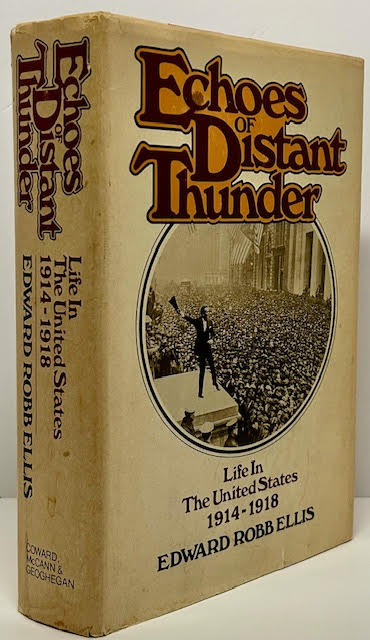
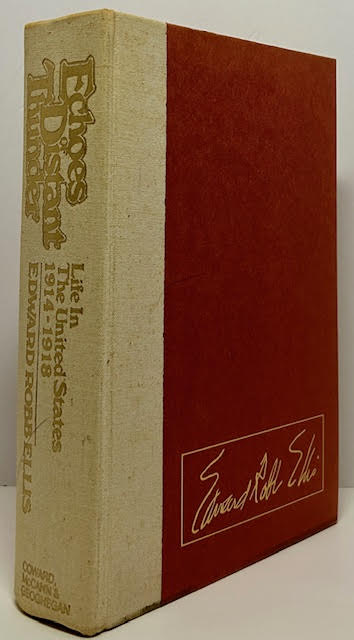
 "Edmund Randolph: A Biography by: John J. Reardon")
 "Eisenhower and Berlin 1945: The Decision to Halt at the Elbeby: Stephen E. Ambrose")
 "Eisenhower Decides to Run: Presidential Politics and Cold War Strategyby: Pickett, William B.")
 "Electing FDR: The New Deal Campaign of 1932by: Donald A. Ritchie")
 "Empire and Liberty: American Resistance to British Authority, 1755-1763by: Alan Rogers")
 "Empire or Independence 1760 1776: A British American Dialogue on the Coming of the American Revolution by: Christie, Ian R., Laraber, Benjamin W.")
 "English Whiggism and the American Revolution by: G. H. Guttridge")
 "Essays on the New Dealby: William E. Leuchtenburg William H. Droze, George Wolfskill")
 "F.D.R. and the News Mediaby: Betty Houchin Winfield")
 "Failing Our Veterans: The G.I. Bill and the Vietnam Generationby: Mark Boulton")
 "Farewell to the Factory: Auto Workers in the Late Twentieth Century by: Ruth Milkman")
 "Final Victory: FDR's Extraordinary World War II Presidential Campaignby: Stanley Weintraub")
 "Franklin D. Roosevelt and American Foreign Policy 1932-1945 by: Dallek, Robert")
 "From Cold War to Hot Peace: An American Ambassador in Putin's Russia by: McFaul, Michael")
 "From Rail-Splitter to Icon: Lincoln's Image in Illustrated Periodicals, 1860-1865by: Bunker, Gary L.")
 "From the Congo to Soweto: U.S. Foreign Policy toward Africa since 1960by: Henry F. Jackson")

 "Great American Rascal: The Turbulent Life of Aaron Burr by: Vail, Philip")
 "Great Britain and the American colonies, 1606-1763by: Jack P. Greene")