Hardcover. NY, Basic Books, 1st, 2004, Book: Very Good, Dust Jacket: Very Good, Hardcover in a bright dust jacket, unclipped. INSCRIBED BY AUTHOR on the title page. Throughout the nineteenth century, swarms of locusts regularly swept across the continent, turning noon into dusk, demolishing farm communities, and bringing trains to a halt as the crushed bodies of insects greased the rails. In 1876, the U.S. Congress declared the locust "the single greatest impediment to the settlement of the country." From the Dakotas to Texas, from California to Iowa, the swarms pushed thousands of settlers to the brink of starvation, prompting the federal government to enlist some of the greatest scientific minds of the day and thereby jumpstarting the fledgling science of entomology. Over the next few decades, the Rocky Mountain locust suddenly--and mysteriously--vanished.A century later, Jeffrey Lockwood set out to discover why. Unconvinced by the reigning theories, he searched for new evidence in musty books, crumbling maps, and crevassed glaciers, eventually piecing together the elusive answer: A group of early settlers unwittingly destroyed the locust's sanctuaries just as the insect was experiencing a natural population crash. Drawing on historical accounts and modern science, Locust brings to life the cultural, economic, and political forces at work in America in the late-nineteenth century, even as it solves one of the greatest ecological mysteries of our time. 294 pages, clean copy.
Softcover. Guilford CT, TwoDot, 1st, 2008, Book: Very Good, Dust Jacket: None, Softcover, 151 pages, b&w illustrations. The massacre at Wickenburg was one of the most notorious crimes committed in the Wild West--a story revealed in this book through a criminal investigation. November 5, 1871. A westbound stagecoach carrying seven men and one woman left Wickenburg in the early morning hours. At 8:00 a.m., six of the passengers were shot dead. One man and the lone woman, severely wounded, escaped into the desert. Debates raged over the identity of the murderous ambushers -- Indians? Mexican bandits? The two survivors? After a massive investigation, the U.S. Army concluded that a band of local Yavapai Indians were responsible, which led to a policy of "removal and concentration" that altered the fate of nearly every Indian in America's Southwest. Clean copy.
Hardcover. NY, Archer House, reprint, 1958, Book: Very Good, Dust Jacket: Good, Hardcover in a lightly worn dust jacket, 110 b/w illustrations. 669 pages. This is a facsimile reprint of edition first published in 1886. Covering 60 years of merciless bloody conflict, it documents in detail every major Indian battle between 1815 and 1876. Dust jacket spine faded, otherwise a clean, very good copy.
Softcover. Helena MT, FarCountry Press, 2nd pr., 2009, Book: Very Good, Dust Jacket: None, Softcover, 295 pages, b&w illustrations. In this remarkable and important book, Sarah Carter introduces us to some of Montana's first women homesteaders through their journals and other writings. By shedding light on these determined nineteenth- and early twentieth-century pioneers, Carter reveals inspiring stories filled with joy, tragedy, and redemption.
Hardcover. New York , Viking, 1st, 2004, Book: Very Good, Dust Jacket: Very Good, Hardcover. SIGNED BY AUTHOR. 434 pages, b&w photographs. Light edge wear to dust jacket; else a very clean, tight copy.
Hardcover. Hartford CT, Hartford Publishing Co., 1st, 1869, Book: Very Good, Dust Jacket: None, Hardcover, brown cloth with gilt lettering and design, embossed rules to covers. 524 pages. Detailed records of travel between the Mississippi River and the Pacific coast on the newly completed transcontinental railroad. Includes much information on the Mormons, Salt Lake City, Indians, gold mining, etc. 12 engraved plates and one map. Bookplate on inside front cover, light fading to spine gilt. Solid, clean copy.
Hardcover. Richmind VA, Dietz Press, 1st, 1959, Book: Good, Dust Jacket: None, Hardcover, 219 pages. Ex-library copy with usual stamps and marks. No dust jacket. Tan cloth covers with gilt stamping.Primarily covers the era of the early American fur trader, as typified by the white trader and the Indian beaver hunter. Clean, tight copy.
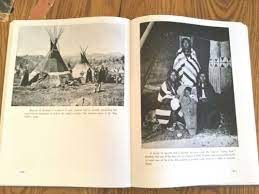
Hardcover. New York, Harry N. Abrams, 1st thus, 1986, Book: Very Good, Dust Jacket: Very Good, 272 pages. Hardcover with dust jacket. Clean, tight copy. Photographs throughout. Spine lightly faded. Photographs portray the actual way of life of the pioneers who settled the American West in the years after the Civil War.
Hardcover. NY, Charles Scribner's Sons, 1st, 1947, Book: Very Good, Dust Jacket: Very Good, Hardcover in a lightly worn, unclipped dust jacket. 308 pages with 393 b&w photographs, endpapers map. As proclaimed on the dust jacket: "This volume, carefully prepared under the direction of the Picture Maker's son, Mr. C. S. Jackson, contains an unrivaled pictorial record which can never be duplicated. It was created by a great artist and photographer who himself played a part in the opening of the frontier country." A truly wonderful work-attractive and informative. "A" On Copyright Page. Light bump to top corner of text block causing a mild crimp to pages at corner. Otherwise very good.
Hardcover. Flagstaff AZ, Northland Press, reprint, 1985, Book: Very Good, Dust Jacket: Very Good, Hardcover in a bright, price-clipped dust jacket with a small chip to rear panel. B&w drawings by Remington. Reprinted from a series of articles published in The Century Magazine in 1888. During the early 1880s, both Remington the artist and Roosevelt the writer were trying their hands at ranching, Remington in Kansas and Roosevelt in Dakota territory. Their respective records of the experience as perhaps the most important to survive of ranching in that era. Contains specific material on the severe winter of 1886-87 which put an end to ranching for many. Clean copy.
Softcover. Ithaca, NY, Cornell University Press, 1st, 1999, Book: Very Good, Dust Jacket: None, 245 pages. Softcover. B/w illustrations throughout. Wrapper has a touch of age wear, top edge has former bookstore stamp. otherwise clean inside and out. In very good condition.
Hardcover. NY, Pantheon Books, 1st, 1985, Book: Very Good, Dust Jacket: Very Good, Hardcover in a bright, price-clipped dust jacket, 402 pages. SIGNED BY THE AUTHOR on the title page. Worster presents a picture of a technological empire based on vast water projects, designed by engineers and controlled by a small managerial elite. This reality, he argues, considerably limited the West's fabled freedom, the claims of promoters, hack writers, and self-serving local historians notwithstanding . this is a major theoretical work, well-argued and generally well-written, a must for any bookshelf that seeks thoroughness in matters western. Chapter five "The Grapes of Wealth," is focused on irrigation in the Central Valley of California and the Central Valley Project. Donald Worster (born 1941) is a prize-winning American academic, one of the founders of, and leading figures in, the field of environmental history. Clean copy.
New York , Putnams, 1st, 1902, Book: Very Good, Dust Jacket: None, Hardcover. Color frontispiece by Thomas Moran. Many B&W photos. 399 pages + ads. previous owner's bookplate front end paper.
Hardcover. Norman OK, University of Oklahoma Press, 1st, 1981, Book: Near Fine, Dust Jacket: Near Fine, Hardcover with dust jacket and plastic covering in near fine condition. 391 pages, appendix of early saddlemakers, glossary of terms, bibliography, index, over 800 photographs and illustrations.
NY, Scribners, 1st, 1937, Book: Good, Dust Jacket: None, Black & white illustrations. Black & white Illustrated frontispiece. Illustrated end papers. Light edgewear and soil to covers.
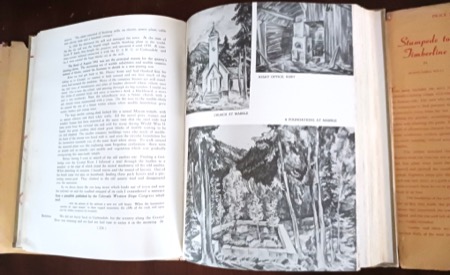
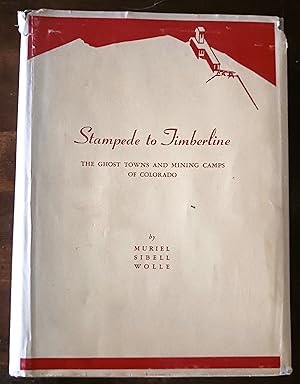
Hardcover. Boulder CO, self-published, reprint, 1957, Book: Good, Dust Jacket: None, Hardcover, beige cloth with red decoration, 544 pages.Comprehensive look at 240 mining camps across the state of Colorado, with black-and-white sketches made from photos & 18 maps drawn by the author. Unfortunately, while the book is in very good condition, it does have a noticeable MUSTY smell.
Hardcover. NY, Doubleday, 1st, 2002, Book: Very Good, Dust Jacket: Very Good, Hardcover in a bright, unclipped dust jacket. The discovery of gold by a team of Mormon mill workers in 1848 sparked a frenzy that shook the world. People swarmed to California from as far as China and Australia. They came from England and France, from Ireland and Chile, leaving behind their families and everything they owned in the hope of making their fortunes in the new world. They came by ship and overland, braving Tierra del Fuego and the pestilences of Panama, lured by the promise of gold. In a spellbinding narrative that spans several continents, Brands brings the fervour and excitement of the gold rush vividly to life. The Age of Gold is narrative history at its best -- the astonishing tale of one of the most extraordinary speculative frenzies in history, told by a master historian. 547 pages, clean copy.
Softcover. Norman OK, University of Oklahoma Press , reprint, 1996, Book: Very Good, Dust Jacket: None, Softcover, 167 pages. After nearly 200,000 African-American soldiers fought in the Civil War, Congress enacted legislation to authorize regiments of cavalry and infantry for service in the West. The Ninth and Tenth cavalries won fame as "buffalo soldiers" in the Indian wars, nearly overshadowing the critical support role of the Twenty-fourth and Twenty-fifth infantries. Now Arlen L. Fowler brings to light the story of African-American infantry service from 1869 to 1891 in Texas, Indian Territory, the Dakotas, Montana, and Arizona.
Hardcover. Norman OK, University of Oklahoma Press, Revised Ed., 2003, Book: Very Good, Dust Jacket: Very Good, Hardcover in a bright dust jacket, 319 pages. B&w illustrations. A well-researched and authoritative study of 'negro' soldiers who wished to remain in the United States Army following the Civil War. They were eventually organized into the Ninth and Tenth Cavalry Regiments their service in controlling Indians on the Great Plains during the next twenty years was as invaluable as it was unpraised. With Bibliography and Index. Clean copy.
Hardcover. NY, Alfred A Knopf, 1960, Book: Very Good, Dust Jacket: Very Good, Hardcover in a lightly worn, unclipped dust jacket, 324 pages plus index. Illustrated with 17 halftone reproductions from various sources and with line drawings by Nick Eggenhofer. A comprehensive history of the slaughter of the buffalo, the battles between the hunters and Indians. Also tells of the buffalo hunting for sport by Washington Irving and the Russian Prince Alexis. Describes Buffalo Bill's killing buffaloes to feed the men who were building a railroad across the plains. Most of the book, however chronicles the hide hunters who swarmed over the ranges in 1871 and reduced the herds of nearly forty million buffaloes to fewer than one-thousand, taking the hides and leaving the meat to rot. Bookplate on inside front cover, otherwise clean.
Hardcover. NY, McGraw Hill, 1st, 1966, Book: Very Good, Dust Jacket: Very Good, Hardcover in a bright, unclipped dust jacket. The American Trails Series, edited by A.B. Guthrie, Jr. 383 pages, includes a two-page map. This book offers an account of the route between Siberia and Alaska that continues southward along the Rockies all the way to Mexico and beyond. Cushman details the stories of the many groups who have traversed parts of the route from prehistoric peoples to Native Americans, Spanish explorers, fur traders, cowboys, and whiskey runners of the Prohibition era. A clean and pristine copy of the first printing,
Hardcover. Boston, Ginn and Company, reprint, Book: Very Good, Dust Jacket: None, Hardcover, black cloth with silver lettering, 525 pages with index. B&w maps, illustrations. A historical interpretation of the semi-arid Short grass Country, the so called Cattle Kingdom. A well written book with a long chapter on the cattle industry. Copyright page states 1931, but titles listed in front date to 1937. Name on front fly leaf, mild musty odor.
Hardcover. NY, Macmillan, 5th pr., 1966, Book: Very Good, Dust Jacket: Good, Hardcover in a edgeworn, price-clipped dust jacket. 371 pages with index. A vivid, swiftly paced account of the dispossession of the Plains Indians during the half century after 1840. Epic in sweep, magnificent in detail - here is the tragedy of the Indians who once roamed and hunted on the Great Plains. Included in this great saga are the names one expects: Red Cloud of the Sioux, Black Kettle of the Cheyennes, Generals Sheridan, Sherman, and Custer, Colonel Miles, Crazy Horse, Sitting Bull, and Chief Joseph of the Nez Perces. No marking.
Hardcover. NY, Atlantic Monthly Press, 1st, 2010, Book: Very Good, Dust Jacket: Very Good, Hardcover in a bright, unclipped dust jacket. 218 pages, b&w illustrations. When gold rush fever gripped the globe in 1849, thousands of Chinese immigrants came through San Francisco on their way to seek their fortunes. They were called sojourners, for they never intended to stay. Polly, a young Chinese concubine, was brought by her owner to a remote mining camp in the highlands of Idaho. There he lost her in a poker game. Polly found her way with her new owner to an isolated ranch on the banks of the Salmon River in central Idaho. As the gold rush receded, it took with it the Chinese miners-or their bones, which were disinterred and shipped back to their homeland in accordance with Chinese custom. But it left behind Polly, who would make headlines. Clean copy.

 "Locust: The Devastating Rise And Mysterious Disappearance Of The Insect That Shaped The American Frontier (SIGNED COPY)by: Jeffrey A. Lockwood")
 "Massacre at Wickenburg: Arizona's Greatest Mysteryby: Wilson, R. Michael")
 "Massacres of the Mountains: A History of the Indian Wars of the Far West, 1815-1875by: J.P. Dunn Jr.")
 "Montana Women Homesteaders: A Field of One's Own by: Sarah Carter (Ed.)")
 "Old Iron Road, The: An Epic of Rails, Roads, and the Urge to Go West (SIGNED COPY)by: Bain, David Haward")
 "Our New West. Records of Travel Between The Mississippi River and the Pacific Ocean. Over the Plains Over the Mountains Through the Great Interior Basin Over the Sierra Nevadas To and Up and Down the Pacific Coast... Including a full")
 "Pelts and Palisades: The Story of Fur and Rivalry for Pelts in Early America by: Nathaniel C. Hale")
 "Photography and the Old Westby: Current, Karen; Current; William R.")
 "Picture Maker of the Old West: William H. Jacksonby: Jackson, Clarence S.")

 "Ranch Life in the Far Westby: Roosevelt, Theodore / Frederic Remington")
 "Ravenswood: The Steelworkers' Victory and the Revival of American Laborby: Juravich, Tom, Kate Bronfenbrenner")
 "Rivers of Empire: Water, Aridity, and the Growth of the American West (SIGNED COPY)by: Donald Worster")
 "Romance of the Colorado River, Theby: Dellenbaugh, Frederick S.")
 "Saddlesby: Beatie, Russel H.")
 "Saga Of The Comstock Lode, The - Boom Days In Virginia Cityby: Lyman, George D.")
 "Stampede to the Timberline: The Ghost Towns and Mining Camps of Coloradoby: Wolle, Muriel Sibell")
 "The Age of Gold: The California Gold Rush and the New American Dream by: Brands, H.W.")
 "The Black Infantry in the West, 1869")
 "THE BUFFALO SOLDIERS: A Narrative of the Black Cavalry in the Westby: Leckie William H. & Leckie Shirley A.")
 "The Great Buffalo Hunt by: Gard, Wayne")
 "The Great North Trail: America's Route of the Ages from Asia Across Alaska Down the Rocky Mountains to the Plains of Texas by: Cushman, Dan")
 "The Great Plains by: Webb, Walter Prescott")
 "The Long Death; The Last Days of the Plains Indianby: Andrist, Ralph K.")
 "The Poker Bride: The First Chinese in the Wild West by: Corbett Christopher")