Softcover. US, Kitchen Sink Press, reprint, 1989, Book: Very Good, Dust Jacket: None, 159 pages. Light edgewear to wrappers. Black and white comics throughout.
Softcover. US, Kitchen Sink Pr (Nrt), reprint, 1989, Book: Very Good, Dust Jacket: None, 159 pages. Light edgewear to wrappers. Black and white comics throughout.
Softcover. US, Kitchen Sink Pr (Nrt), reprint, 1989, Book: Very Good, Dust Jacket: None, 159 pages. Light edgewear to wrappers. Black and white comics throughout.
Softcover. Kitchen Sink Press, 1st, 1989, Book: Very Good, Dust Jacket: None, Softcover, 176 pages, b&w reprints of the early strips. This book contains a complete set of the 1940 daily strips. The first Hollywood adaptation of Li'l Abner was made in 1940. Newspaper columnist Michael Price and the late film historian George Turner provide a fascinating history of this largely forgotten movie, complete with 9 rare stills and lobby cards. The back cover features the very rare Li'l Abner movie poster and another lobby card in full color. Buster Keaton plays Lonesome Polecat in the film but the once hugely popular silent star was in such professional disgrace by 1940 that he was not even listed among the seven acting credits on the film poster! A sidebar provides backgrounds on the producer, director and actors. A second introduction by editor Dave Schreiner provides a political and historical context for the strip itself in 1940. The year begins with Capp's parody of John Steinbeck's The Grapes of Wrath (also made into a movie this year). Dogpatch is wiped out by turnip termites, so our favorite hillbillies are lured to Boston to pick oranges in winter! Li'l Abner also learns how to woo "Dogpatch style" from Adam Lazonga, whom Schreiner speculates is based on controversial philosopher and free thinker Bertrand Russell or possibly playwright George Bernard Shaw. In another episode Mammy and Pappy Yokum get a 100 year-old letter and rush off to the California gold rush. Earthquake McGoon is introduced in the daily strip this year, as is the popular phrase, "As any fool kin plainly see!" Plus the annual Sadie Hawkins Day Race. The cover is drawn by Peter Poplaski.
Softcover. US, Kitchen Sink Press, reprint, 2009, Book: Very Good, Dust Jacket: None, 159 pages. Light edgewear to wrappers. Black and white comics throughout.
Softcover. US, Kitchen Sink Pr (Nrt), reprint, 1990, Book: Very Good, Dust Jacket: None, 159 pages. Light edgewear to wrappers. Black and white comics throughout.
Softcover. Kitchen Sink Press, 5th pr, 2009, Book: Very Good, Dust Jacket: None, Softcover, 184 pages. As World War II came to America, Al Capp moved his comic strip firmly into the realm of social satire. Meet the genial hustler. Available Jones, and Joe Btfsplk, world's worst jinx. Abner goes on a quest and Salomey is kidnapped by the Scraggs. While all this, and more, was going on, Capp found time to contribute artwork and time to the Defense and Treasury Departments, the Red Cross, and military hospitals. See it all in this volume of Al Capp's Li'l Abner.
Hardcover. Kitchen Sink Press, 1st, 1990, Book: Very Good, Dust Jacket: None, Hardcover, 182 pages. Glazed boards. In the 1943 run of Al Capp's Li'l Abner, Madame Lazonga taught Daisy Mae how to woo, and Abner came perilously close to the fate he dreaded most. Sir Cecil Cesspool - 'he's deep, he has a certain air about him' - visited the colonies, and brought a monster with him. And Patricia Hallroom, the girl with the hottest lips in the world, made Sadie Hawkins Day even more dangerous than usual. Includes an introduction by Don Thompson and an article that places Capp's strip in historical context.
Softcover. Kitchen Sink Press, 5th pr, 2009, Book: Very Good, Dust Jacket: None, Softcover, 182 pages. In the 1943 run of Al Capp's Li'l Abner, Madame Lazonga taught Daisy Mae how to woo, and Abner came perilously close to the fate he dreaded most. Sir Cecil Cesspool - 'he's deep, he has a certain air about him' - visited the colonies, and brought a monster with him. And Patricia Hallroom, the girl with the hottest lips in the world, made Sadie Hawkins Day even more dangerous than usual. Includes an introduction by Don Thompson and an article that places Capp's strip in historical context.
Hardcover. NY, Doubleday, 1st, 1951, Book: Very Good, Dust Jacket: Very Good, Hardcover, 48 pages, b&w cartoons by Otto Soglow. Humorous illustrations of Latin phrases.
Hardcover. New York, Farrar, Straus, Giroux, 2nd printing, 1995, Book: Very Good, Dust Jacket: Very Good, Hardcover. Non-paginated. TIPPED-IN BOOKPLATE ON FRONT ENDPAPER SIGNED BY AUTHOR AND ILLUSTRATOR. Clean, bright copy.
Softcover. Kitchen Sink Press, 1st, 1992, Book: Very Good, Dust Jacket: None, Softcover, 176 pages. The most popular of Capp's hundreds of distinctive characters was the Shmoo. This lovable little creature loved mankind so much that it would sacrifice itself and turn into a ham steak, a gallon of milk or a dozen eggs: whatever its owner desired. Its whiskers made nice toothpicks and its eyes could be recycled as buttons. Most important, a Shmoo could reproduce faster than a rabbit. Thus, if you had one Shmoo, you were set. You didn't need to work at all. Thus did the apparent book for mankind become its curse and the powers that be decreed that all Shmoos must be exterminated. Capp's insightful morality tale was so popular that it spawned an unprecedented merchandising bonanza. Two introductions, by David Schreiner and by science fiction writer Harlan Ellison, are illustrated with various Shmoo toys manufactured. The large back cover photograph shows a selection of Shmoo merchandise in color from the Denis Kitchen collection. Also featured in this volume: Flying Sausages (parody of "Flying Saucers," a term first coined a few months earlier; Fearless Fosdick, Nightmare Alice, Salomey, Adam Lazonga, Moonbeam McSwine, Cousin Weak-Eyes and Marryin' Sam. See also our Shmoo Facts Sheet for some amazing statistics about this character's popularity.
Softcover. Kitchen Sink Press, 1st, 1992, Book: Very Good, Dust Jacket: None, Softcover, 176 pages. The most popular of Capp's hundreds of distinctive characters was the Shmoo. This lovable little creature loved mankind so much that it would sacrifice itself and turn into a ham steak, a gallon of milk or a dozen eggs: whatever its owner desired. Its whiskers made nice toothpicks and its eyes could be recycled as buttons. Most important, a Shmoo could reproduce faster than a rabbit. Thus, if you had one Shmoo, you were set. You didn't need to work at all. Thus did the apparent book for mankind become its curse and the powers that be decreed that all Shmoos must be exterminated. Capp's insightful morality tale was so popular that it spawned an unprecedented merchandising bonanza. Two introductions, by David Schreiner and by science fiction writer Harlan Ellison, are illustrated with various Shmoo toys manufactured. The large back cover photograph shows a selection of Shmoo merchandise in color from the Denis Kitchen collection. Also featured in this volume: Flying Sausages (parody of "Flying Saucers," a term first coined a few months earlier; Fearless Fosdick, Nightmare Alice, Salomey, Adam Lazonga, Moonbeam McSwine, Cousin Weak-Eyes and Marryin' Sam.
Hardcover. Athens, Ga., Hill Street Press, LLC, 1st, January 1999, Book: Very Good, Dust Jacket: Very Good, Hardcover, 155 pages. B&w illustrations throughout. Light spotting to top edge. Rubbing and light soiling to dust jacket. Else a nice, clean copy.
Hardcover. Montreal, Drawn & Quarterly, 1st, 2020, Book: Very Good, Dust Jacket: None, Hardcover, 244 pages of color comics plus 30 pages of additional material. Essay on Stanley by Frank Young. Lulu is a strong, assertive young girl who is both entertaining and empowering to girls and women of all ages-even if she sometimes finds herself in hot water. In Little Lulu: The Fuzzythingus Poopi, she outsmarts criminals, sabotages the boys in a masterful snowball fight, and solves the crime of the missing piggy bank! Over the course of these stories, Stanley excels at visual gags, from Lulu winning the soap box derby by turning her frock into a sail, to a lonely cloud almost getting sucked up by a vacuum. This is the second installment in Drawn & Quarterly's landmark reprint series of the classic John Stanley comic strip that was first published by Dell Comics in the 1940s and '50s.
Hardcover. Boston, Little, Brown & Company, First Edition, 2002, Book: Very Good, Dust Jacket: Very Good, 594 pages. Hardcover. Black & white illustrations throughout. Dust jacket with light marginal wear. Features behind the scenes gossip & interviews with a wide variety of stars, writers & guests, too numerous to detail here. Clean, unmarked copy.
Hardcover. Library of American Comics, 1st, 2014, Book: Very Good, Dust Jacket: None, Oblong hardcover, 336 pages. In Alley Oop, Hamlin created a unique concept, marrying his fascination with dinosaurs and prehistoric times to a rollicking style of storytelling and drawing that was simultaneously serious, fantastic, and loaded with slapstick. The series was set in the kingdom of Moo and starred Alley Oop, the club-wielding caveman, his girlfriend Ooola, friends Dinny the dinosaur and Foozy (who speaks in rhyme), plus Oop's rival, King Guz, and Guz's Queen Umpateedle. Yet Hamlin knew that the strip's horizons in Moo were limited. So it was, in early 1939, that Alley Oop and Ooola see a mysterious box and, to the utter amazement of Guz and his minions, promptly fade from view, followed by the caption: "Dear Reader: you must now say goodbye to Moo...if you are to follow Alley Oop in this strangest of many strange adventures. --V. T. Hamlin". Oop and Ooola had entered a time machine and were now living in the modern-day 20th Century! Their host was the inventor of the time machine, Dr. Elbert Wonmug! No change of such magnitude had ever occurred in a continuing newspaper strip, and readers responded enthusiastically. With every time period in history available as a backdrop, Alley Oop became even more popular. This volume features Oop's final Moo adventure, followed by his trips to the 20th Century and ancient Greece, where he and Ooola share adventures with brave Ulysses, the lovely Helen of Troy, and the mighty Hercules. V.T. Hamlin would send his characters everywhere and everywhen--but the classic Alley Oop begins with the stories contained in this volume. The book is introduced by Michael T. Price, who first met V. T. Hamlin in the 1960s and remained friendly with him for the rest of the cartoonist's life. Price also composed the musical score for Hip Pocket Theatre's production, Alley Oop.
Hardcover. NY, Henry Holt, 1st , 1922, Book: Good, Dust Jacket: None, Hardcover, 310 page, illustrated by Gluyas Williams with black & white drawings and two-color illustration on front cloth cover. Benchley's 2nd book. Previous owner's bookplate front end paper. Mild wear.
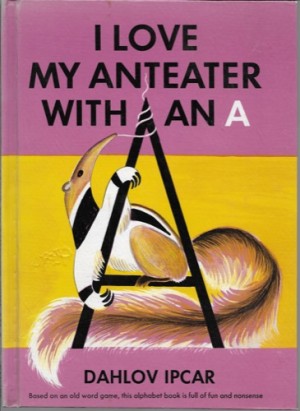
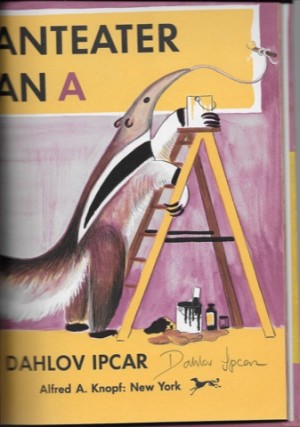
Hardcover. New York, Alfred A. Knopf, 1st, 1964, Book: Very Good, Dust Jacket: None, Non-paginated. Hardcover. SIGNED BY AUTHOR DAHLOV IPCAR ON TITLE PAGE. Color illustrations by Dahlov Ipcar. Degree of fading to spine. Light wear. Clean, unmarked pages.
Hardcover. New York, Macmillan, 1st, 1958, Book: Very Good, Dust Jacket: None, Hardcover, illustrated glazed boards with red cloth spine. 160 pages illustrated with b&w cartoons by the Berenstains that poke fun at the male in the relationship. No dust jacket.

 "Li'l Abner: Dailies, Vol. 3: 1937by: Capp, Al")
 "Li'l Abner: Dailies, Vol. 4: 1938by: Capp, Al")
 "Li'l Abner: Dailies, Vol. 4: 1938by: Capp, Al")
 "Li'l Abner: Dailies, Vol. 5: 1939by: Capp, Al")
 "Li'l Abner: Dailies, Vol. 5: 1939by: Capp, Al")
 "Li'l Abner: Dailies, Vol. 6: 1940by: Capp, Al")
 "Li'l Abner: Dailies, Vol. 6: 1940by: Capp, Al")
 "Li'l Abner: Dailies, Vol. 7: 1941by: Capp, Al")
 "Li'l Abner: Dailies, Vol. 7: 1941by: Capp, Al")
 "Li'l Abner: Dailies, Vol. 8: 1942by: Capp, Al")
 "Li'l Abner: Dailies, Vol. 8: Dailies 1942by: Capp, Al")
 "Li'l Abner: Dailies, Vol. 9: 1943by: Capp, Al")
 "Li'l Abner: Dailies, Vol. 9: Dailies 1943by: Capp, Al")
 "Liberated Latinby: O. Soglow/Dick Shaw")
 "Library, The (SIGNED COPY)by: Stewart, Sarah/David Small")


 "Lil Abner: Meets the Shmoo, 1948, Vol. 14by: Al Capp and Dave Schreiner")
 "Lil Abner: Meets the Shmoo, 1948, Vol. 14by: Capp, Al")
 "Lines Are Drawn: Political Cartoons of Civil Warby: Smith, Kristen M.")
 "Little Lulu: The Fuzzythingus Poopiby: Stanley, John")
 "Live From New York - An Uncensored History of Saturday Night Liveby: Shales, Tom/James Andrew Miller")
 "LOAC Essentials Volume 4: Alley Oop 1939by: Hamlin, V.T.")
 "Love Conquers Allby: Benchley, Robert C.")
 "Love My Anteater with an A, I (SIGNED COPY)by: Ipcar, Dahlov")
 "Lover Boy: The Last Word in Animal Husbandryby: Berenstain, Stanley and Janice")