Softcover. Philadelphia, Jewish Publication Society, 1st, 2013, Book: Very Good, Dust Jacket: None, Softcover, oblong format, 238 pages illustrated in color. Today e-mail, Facebook, and Twitter are sometimes used to spread hateful messages and slurs masking as humor. In the late nineteenth and early twentieth centuries postcards served this purpose. The images collected in this volume make it painfully clear that anti-Semitic propaganda did not simply begin with the Nazis. Nor was it the sole province of politicians, journalists, and rabble-rousers. One of the most virulent forms of anti-Semitism during this time was spread by quite ordinary people through postcards. Of the millions of postcards exchanged during their heyday of 1890 through 1920, a considerable percentage carried the anti-Semitic images that publishers churned out to meet public demand, reflecting deep-seated attitudes of society. Over 250 examples of such postcards, largely from the pre-Holocaust era, are reproduced here for the first time-selected, translated, and historically contextualized by one of the world's foremost postcard collectors. Clean copy.
Hardcover. NY, Jewish Theological Seminary of America, 2nd Ed., 1962, Book: Very Good, Dust Jacket: None, Hardcover, dark green cloth with gilt lettering on spine, 231 pages. (Essays in Judaism series) In this book, master Talmudist and scholar of the Greco-Roman world, the late Professor Saul Lieberman, elucidates words, texts, customs, and practices in either rabbinic or classical literature, often by reference to passages in the other. In Greek in Jewish Palestine, he demonstrates that almost every foreign word and phrase have their raison d'etre in rabbinic literature and that all Greek phrases in rabbinic literature are quotations. Hellenism in Greek Palestine is an inquiry into the spirit of many rabbinic observations and investigations of the facts, incidents, opinions, notions and beliefs to which the Rabbis allude in their statements. Name on front fly leaf, otherwise clean.
Hardcover. NY, Oxford University Press, 1st, 2012, Book: Very Good, Dust Jacket: Very Good, Hardcover in a bright dust jacket, 365 pages. Holy war, sanctioned or even commanded by God, is a common and recurring theme in the Hebrew Bible. Rabbinic Judaism, however, largely avoided discussion of holy war in the Talmud and related literatures for the simple reason that it became dangerous and self-destructive. Reuven Firestone's Holy War in Judaism is the first book to consider how the concept of ''holy war'' disappeared from Jewish thought for almost 2000 years, only to reemerge with renewed vigor in modern times. The revival of the holy war idea occurred with the rise of Zionism. As the necessity of organized Jewish engagement in military actions developed, Orthodox Jews faced a dilemma. There was great need for all to engage in combat for the survival of the infant state of Israel, but the Talmudic rabbis had virtually eliminated divine authorization for Jews to fight in Jewish armies. Once the notion of divinely sanctioned warring was revived, it became available to Jews who considered that the historical context justified more aggressive forms of warring.
Softcover. Urbana IL, University of Illinois Press, 1st pbk, 2006, Book: Very Good, Dust Jacket: None, Softcover, 83 pages. In Humanism of the Other, Emmanuel Levinas argues that it is not only possible but of the highest exigency to understand one's humanity through the humanity of others. In paperback for the first time, Levinas's work here is based in a new appreciation for ethics and takes new distances from phenomenology, idealism, and skepticism to rehabilitate humanism and restore its promises. Painfully aware of the long history of dehumanization that reached its apotheosis in Hitler and Nazism, Levinas does not underestimate the difficulty of reconciling oneself with another. The humanity of the human, Levinas argues, is not discoverable through mathematics, rational metaphysics, or introspection. Rather, it is found in the recognition that the other person comes first, that the suffering and mortality of others are the obligations and morality of the self. Clean copy.
Softcover. Huron OH, Bottom Dog Press, 1st, 2007, Book: Very Good, Dust Jacket: None, Softcover, 130 pages. INSCRIBED BY JACOBSON on the title page. The author tells her story of growing up Jewish in Evanston, Illinois.
Hardcover. New Haven CT, Yale University Press, 1st, 2012, Book: Very Good, Dust Jacket: Very Good, Hardcover in a bright dust jacket, 232 pages. Political theorist Michael Walzer reports his findings after decades of thinking about the politics of the Hebrew Bible. Attentive to nuance while engagingly straightforward, Walzer examines the laws, the histories, the prophecies, and the wisdom of the ancient biblical writers and discusses their views on such central political questions as justice, hierarchy, war, the authority of kings and priests, and the experience of exile. Because there are many biblical writers with differing views, pluralism is a central feature of biblical politics. Yet pluralism, Walzer observes, is never explicitly defended in the Bible; indeed, it couldn't be defended since God's word had to be as singular as God himself. Yet different political regimes are described in the biblical texts, and there are conflicting political arguments--and also a recurrent anti-political argument: if you have faith in God, you have no need for strong institutions, prudent leaders, or reformist policies. At the same time, however, in the books of law and prophecy, the people of Israel are called upon to overcome oppression and "let justice well up like water, righteousness like an unfailing stream." Name on front fly leaf, light pencil marking to pages.
Hardcover. London, England, Oxford University Press, Reprint, 1953, Book: Very Good, Dust Jacket: None, 788 pages. Hardcover. Vol. III & IV only. Previous owner's name stamped on contents page and front endpapers. Green cloth cover boards, gilt title on spine, spine very faded (see image). Pages and edges have a touch of tanning. Edges have a specked design. v. 3. Holiness and its upholders -- v. 4. The renewal and the source of holiness. DOMESTIC SHIPPING ONLY.
Hardcover. Seattle, Fantagraphics Books , 1st, 2012, Book: Very Good, Dust Jacket: Very Good, Hardcover in a bright dust jacket, 424 pages, illustrated in b&w. This scholarly book examines historical depictions of Jewish people in comics. Showcases more than 150 comic strips, comic books and graphic novels from all over the world, stretching over the last five centuries and featuring Jewish characters and Jewish themes. The book is divided into chapters on Anti-Semitism, the Old Testament, the Holocaust, Israel, the Golem and much more, featuring everything from well-known comics like Art Spiegelman's Maus and the work of Will Eisner to much more obscure (and in some cases far less savory) but no less culturally and historically interesting examples of how Jewish culture has been depicted in comics. Each strip, comic, or graphic novel is spotlighted via a short but informative 200-word essay and a representative illustration. Clean copy.
Hardcover. New York, New Press, 1st, 2008, Book: Very Good, Dust Jacket: Very Good, Hardcover, 198 pages, b&w illustrations. Readers have long cherished the work of comic masters such as Will Eisner, Jules Feiffer, and Art Spiegelman, all of whom happen to be Jewish. Few, however, are probably aware that the Jewish role in creating the American comic art form is no less significant than the Jewish influence on Hollywood filmmaking. Filled with the most stunning examples of this vital artistic tradition, Jews and American Comics tells us how the "people of the book" became the people of the comic book. With three brief essays by Paul Buhle, the well-known historian of American Jewish life, Jews and American Comics offers readers a pictorial backstory tracing Jewish involvement in comic art from several little-known strips in Yiddish newspapers of the early twentieth century through the mid-century origins of the modern comic book and finally to contemporary comic art, which has at last found its place in museums, in private collections, and on the bookshelves of both critics and millions of avid readers.
Hardcover. Edinburgh, T and T Clark, 1st, 1998, Book: Very Good, Dust Jacket: Very Good, Hardcover in a bright dust jacket, 342 pages. Jewish-Christian contact and controversy were central to early Christian experience. An understanding of this contact and controversy and its continuation over the centuries is also central to any true understanding of the history of Christianity and of the history of Judaism. The twelve chapters of this book deal especially with the interconnected subjects of polemic and biblical interpretation. Nine are concerned with the ancient world, beginning with post-exilic Jewish writing and the New Testament and going on to later pagan, Jewish and Christian controversies. Three concentrate on medieval and early modern Jewish controversies. Clean copy.
Hardcover. New York, Ktav Pub Inc, 1st, 1982, Book: Very Good, Dust Jacket: Very Good, Hardcover, 226 pages, INSCRIBED BY AUTHOR on title page, with photographs throughout. Minor dust jacket edge wear, otherwise, very clean and tight.
Hardcover. New York, Simon & Schuster, 1st, 1997, Book: Very Good, Dust Jacket: Very Good, Non-paginated. Hardcover. Full color illustrations by Mordicai Gerstein. INSCRIBED WITH SKETCH BY AUTHOR/ILLUSTRATOR OPPOSITE TITLE PAGE. Small surface abrasion to paper at bottom of copyright page and on opposite dedication page. Clean, unmarked pages.
Softcover. Lincoln NE, University Of Nebraska Press , 1st pbk, 1995, Book: Very Good, Dust Jacket: None, Softcover, 432 pages. Collects letters and essays that are published during the 1850s and 1860s. This title highlights the notorious 1850 article "Judaism in Music". It includes prose pieces such as "On the Performing of Tannhauser"; "On Musical Criticism"; and, "Music of the Future". It offers suggestions for the reform of opera houses in Vienna, Paris, and Zurich. Clean copy.
Hardcover. Israel, Yeshivat Kol Yehuda, Reprint, 1970, Book: Very Good, Dust Jacket: Very Good, 264 pages. Hardcover. Black & white illustrations. Dust jacket with light wear along edges. Clean, unmarked pages.
Hardcover. Philadelphia, University of Pennsylvania Press, 1st, 2012, Book: Very Good, Dust Jacket: None, Hardcover, blue cloth with gilt lettering on spine, 266 pages. Ex-lib with a small stamp to title page and top edge, label on spine. Otherwise a clean, bright copy. After Franz Kafka died in 1924, his novels and short stories were published in ways that downplayed both their author's roots in Prague and his engagement with Jewish tradition and language, so as to secure their place in the German literary canon. Now, nearly a century after Kafka began to create his fictions, Germany, Israel, and the Czech Republic lay claim to his legacy. Kafka's Jewish Languages brings Kafka's stature as a specifically Jewish writer into focus. David Suchoff explores the Yiddish and modern Hebrew that inspired Kafka's vision of tradition. Citing the Jewish sources crucial to the development of Kafka's style, the book demonstrates the intimate relationship between the author's Jewish modes of expression and the larger literary significance of his works. No dust jacket.
Hardcover. New York, Greenwillow Books, 1st, 1999, Book: Very Good, Dust Jacket: Very Good, 51 pages. Hardcover with dust jacket. Paintings by Mark Podwal. Clean, tight copy.
Hardcover. West Kennebunk ME, Phoenix Publishing, 1st, 1990, Book: Very Good, Dust Jacket: Very Good, Hardcover in a bright dust jacket. an extraordinary memoir of Maurice that recounts the strange turns and fateful encounters that led him from his newsboyhood to collaborate with some of the world's most important men and to cooperate with some of it's most determined dreamers. Clean copy.
Hardcover. New York , W. W. Norton & Company, 1st, 2007, Book: Very Good, Dust Jacket: Very Good, Hardcover. Like new in publishers shrink-wrap. 352 pages, b&w illustrations. A photographic account of Jewish life in America draws on the archives of the premiere national Jewish newspaper, Forward, in a visual tribute that pairs essays by leading intellectuals, including Leon Weiseltier and Deborah E. Lipstadt, with images of such subjects as a shtetl beauty contest, Lower East Side pushcart markets, and labor rallies.
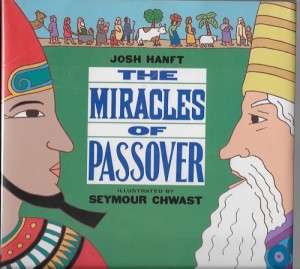
Hardcover. NY, Blue Apple Books, 1st, 2007, Book: Very Good, Dust Jacket: Very Good, Non-paginated. Hardcover with dust jacket. SIGNED BY AUTHOR AND ILLUSTRATOR on title page. Light edgewear to dust jacket, else a clean, tight copy.
Hardcover. NY, Dial Books, 1st, 1994, Book: Very Good, Dust Jacket: Very Good, Hardcover in a bright, unclipped dust jacket. 32 pages illustrated with color collagraphs by Barbara Garrison. Her handsome illustrations set the tone for this elegant introduction to major Jewish holidays as well as the Sabbath. From Rosh Hashanah to Purim, Passover and Shavuot, Silverman (The Glass Menorah) delves into Torah and Jewish tradition, neatly distilling the historical background, spiritual significance and present-day rituals associated with commemorating and celebrating each of these special days. Name and date on title page otherwise clean.
Softcover. New York, John Day Company, 1st Edition, 1933, Book: Very Good, Dust Jacket: None, 32 pages. Softcover pamphlet with French flaps. Tan wrapper with black title on front cover and text on back cover (see image). Staple bound. A couple of stray marks on front cover (see image). Some light tanning throughout from age. In amazing shape for its age.

 "Hatemail: Anti-Semitism on Picture Postcardsby: Salo Aizenberg")
 "Hellenism in Jewish Palestine: Studies in the Literary Transmission Beliefs and Manners of Palestine in the I Century B.C.E.-IV Century C.E. by: Lieberman, Saul")
 "Holy War in Judaism: The Fall and Rise of a Controversial Ideaby: Reuven Firestone")
 "Humanism of the Otherby: Emmanuel Levinas / Nidra Poller (Translator), Richard A. Cohen (Introduction)")
 "Hunger Artist: A Suburban Childhood (SIGNED COPY)by: Joanne Jacobson")
 "In God's Shadow: Politics in the Hebrew Bibleby: Walzer, Michael")
 "Israel: Its Life and Culture Vol III - IVby: Pedersen, Johs.")


 "Jewish Images In The Comics by: Fredrik Stromberg")
 "Jews and American Comics: An Illustrated History of an American Art Formby: Buhle, Paul")
 "Jews and Christians: In Contact and Controversy by: Horbury, William")
 "Jews on Tin Pan Alley: The Jewish Contribution to American Popular Music, 1830-1940 (SIGNED COPY)by: Kanter, Kenneth Aaron")


 "Jonah and the Two Great Fish (SIGNED COPY)by: Gerstein, Mordicai")
 "Judaism in Music and Other Essaysby: Wagner, Richard; Warner, James Conrad (translator)")
 "Kabbalah - The Light of Redemptionby: Krakovsky, Rabbi Levi Isaac")

 "King Solomon and His Magic Ringby: Wiesel, Elie and Mark Podwal")
 "Life Size: An Autobiographyby: Maurice Beck Hexter")
 "Living Lens, A: Photographs of Jewish Life from the Pages of the Forwardby: Newhouse, Alana")
 "Miracles of Passover, The (SIGNED COPY)by: Hanft, Josh and Seymour Chwast")

 "More Old Jewish Comedians: A BLAB! Storybookby: Friedman, Drew")
 "My First Book of Jewish Holidays by: Maida Silverman and Barbara Garrison")
 "Nazi Culture: The Brown Darkness Over Germanyby: Josephson, Matthew")


 "Old Jewish Comedians: A BLAB! Storybookby: Friedman, Drew")
 "Old Jewish Comedians: A BLAB! Storybookby: Friedman, Drew")