Hardcover. London, Ashgate, reprint, 2010, Book: Very Good, Dust Jacket: Very Good, 248 pages. Hardcover with dust jacket. Clean, unmarked copy with only minor wear to dust jacket. Silver gilt on spine. 'Like "the ring" itself, this book is viral: it gathers into itself literature and film, disease and survival, cultural studies and aesthetics, Japan and America, technology and the family. We won't read Suzuki's novels or watch the films in the same way again. A thoroughly readable and teachable text!' Steven Bruhm, Robert and Ruth Lumsden Professor of English, The University of Western Ontario, and author of Reflecting Narcissus: A Queer Aesthetic 'Taking as its point of departure the phenomenon of The Ring in all its manifestations"the Japanese novel, the Japanese film, the American film, and the various sequels"The Scary Screen offers an in-depth and sustained speculation about the anxiety created by the development of communication technologies. The collection introduces startling insights into the relationship between changes in media forms and widespread fears of contagion, while also identifying a new universal form of horror that has emerged in recent decades as the status of reproduction"both technological and biological"has undergone a profound transformation. The essays included here represent a powerful theoretical response to this transformation.' Todd McGowan, University of Vermont, and author of The Impossible David Lynch and The Real Gaze '... The Scary Screen is a useful contribution to studies of The Ring, horror film, and cultural anxieties evoked by technology.' Journal of the Fantastic in the Arts.
Softcover. London, Between the Lines, 1st, 2000, Book: Very Good, Dust Jacket: None, Softcover, 112 pages. A 17,000 word interview, with a career sketch, a comprehensive bibliography, and a representative list of quotations from Heaney's critics and reviewers. Also included is Heaney's poem, 'Known World'. Spine faded, clean copy.
Hardcover. New York, Viking Press, 1st, 1973, Book: Very Good, Dust Jacket: Very Good, 276 pages. Hardcover in a bright dust jacket. Clean, tight copy.
Hardcover. Stanford CA, Stanford University Press, 1st, 1993, Book: Very Good, Dust Jacket: Very Good, Hardcover in a bright dust jacket, 308 pages including index. Friendship between the sexes is notoriously difficult to describe. Seeing Together examines the efforts of some of England's key writers - from poets to propagandists - during a period when 'mere friendship' came to seem intensely important and when discussion of professional relations between men and women came to touch upon a troubling network of sexual, social and political dynamics. Among the authors discussed are John Stuart Mill, Robert Browning, George Eliot, Thomas Hardy, Henry James, Joseph Conrad, D. H. Lawrence and Virginia Woolf. Small name on fly leaf otherwise a bright, clean copy.
Hardcover. New York, Duffield & Company, reprint, 1909, Book: Very Good, Dust Jacket: None, Hardcover, 557 pages, originally compiled by C. M. Ingleby, L. Toulmin Smith and Dr. F. F. Furnivall. Gilt top edge and title on green cloth board. Minor foxing on fore edge, light edge wear and slight spine cock, otherwise, very clean and bright.
Hardcover. New Haven CT, Yale University Press, 1st, 1968, Book: Very Good, Dust Jacket: Fair, Hardcover in a chipped, tape repaired dust jacket. Maroon cloth with gilt lettering on spine. 266 pages. INSCRIBED BY SIPE on the front fly leaf to fellow professor Roger Mitchell. English majors are used to being told that Shakespeare frequently broke the rules of iambic pentameter, and that as he matured artistically, his usage became bolder and freer. Well, it isn't true. Shakespeare's iambics turn out to be extremely orthodox (which just makes all the more impressive the variations he was able to create within the rules). In 1968 Dorothy Sipe went to the remarkable labor of demonstrating this objectively through a painstaking analysis of over 13,000 lines of verse. She also supplied information I've never found anywhere else on the prosodic rules taught by poets to poets in Shakespeare's day. All this said, including a five star rating for the perfect achievement of its goal, the book is definitely not for everyone interested in Shakespeare's verse and methods. It is devoted to proving a highly specific case by means of many, many examples that non-specialists are likely to find tedious. But if you are deeply interested in some subjects -- Shakespeare's iambics, his coinages, and the history of English iambic technique -- it is well worth your time. Dust jacket tanned, otherwise a clean, tight copy.
Hardcover. NY, Simon & Schuster, 1st, Book: Very Good, Dust Jacket: Very Good, Hardcover in a bright dust jacket, A sociological look at the influence of Shakespeare's Shylock on world mythology describes the character's creation and his evolution on the stage, and presents writing about him by Proust, James, T. S. Eliot, and others. Amazingly, Shylock is in only five scenes in the Merchant of Venice. Yet, as pointed out by Gross, the theater critic for the London Sunday Telegraph , his impact and significance transcend his physical presence, so much so that his name and "pound of flesh" idea are almost universally known. In the first part of this character/cultural study, Gross examines the antecedents of Shylock and the play, and his development within the play. The second part considers "interpretations" both theatrical and literary in England and America until World War II; the third part considers Shylock more broadly as a touchstone (e.g., how his "type" is used by the Victorians--Trollope's Lopez, Dickens's Riah, Ruskin's use of him in Munera Pulveris ). Clean copy.
Softcover. Willamette, Willamette Week, 1st wraps, 1990, Book: Very Good, Dust Jacket: None, Softcover. Columns from her early column in the Willamette Week newspaper. SIGNED BY DUNN.
Hardcover. Cambridge MA, Harvard University Press, 1st, 1995, Book: Very Good, Dust Jacket: Very Good, Hardcover in a bright, unclipped dust jacket, 266 pages. In these eloquent essays on recent American, British, and Irish poetry, Helen Vendler shows us contemporary life and culture captured in lyric form by some of our most celebrated poets. An incomparable reader of poetry, Vendler explains its power; it is, she says, more often the voice of the soul than the socially marked self, speaking directly to us through the stylization of verse. 'Souls Says,' the title of a poem by Jorie Graham, is thus the name of this collection. In essays on Seamus Heaney, Donald Davie, Allen Ginsberg, John Ashbery, Rita Dove, Jorie Graham, and others, Vendler makes difficult poetry accessible and explores the force and beauty of contemporary lyric verse. Clean copy.
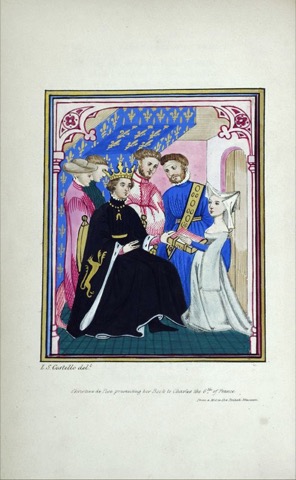
Hardcover. London, William Pickering, 1st, 1835, Book: Good, Dust Jacket: None, Hardcover, 298 pages. Black leather covers with gilt rules, faded gilt title on ribbed spine. All edges gilt. Covers with edgewear and the top 6th of the spine leather is gone. Marbled endpapers with bookplate inside front cover. Rear flyleaf with a chunk cut out. Interior is very good. Medieval and Renaissance French poetry, translated into English by an acclaimed poet, travel writer, historian, and painter. Louisa Costello (1799-1870), was an accomplished Anglo-Irish artist and prolific poet and author. She was also a fine miniature painter, and her illustrations show her exquisite sensibility. 4 beautifully hand-colored lithograph plates by the author. Not all copies contain these plates.
Softcover. Columbus OH, Ohio State University Press, 1st, 2005, Book: Very Good, Dust Jacket: None, Softcover, 189 pages. Looks at the response of American writers to Prohibition with an analysis of fictional portrayals of bootleggers, moonshiners, cabarets, speakeasies, and Prohibition-era characters. Clean copy.
Hardcover. New York, Random House , 1st, 2002, Book: Very Good, Dust Jacket: Very Good, 402 pages. Cloth boards in a bright dust jacket. Clean, tight copy. The subjects of Salman Rushdie's collection of non-fiction range from The Wizard of Oz, U2, India and Indian writing, the death of Princess Diana, and football, to twentieth-century writers including Angela Carter, Arthur Miller, Edward Said, J. M. Coetzee and Arundhati Roy. In a central section, 'Messages from the Plague Years', Rushdie focuses on the fight against the Iranian fatwa, presenting texts both personal and political, which show for the first time how it was to live through those days. Rushdie's columns for the New York Times confront current issues - Kashmir, Northern Ireland, Kosovo, Islam and the West - as well as lighter topics such as reality TV, sport and sleaze. The book ends with the lectures that give it its title - Rushdie's exploration of the theme of frontiers: crossing them, breaking taboos, and - in the light of September 11 - the world of permeable frontiers in which we all live.
Softcover. London, Routledge, 1st, 1989, Book: Very Good, Dust Jacket: None, Softcover, 214 pages. Horror fiction has provided our culture with some of its most enduring themes. In examining the cultural apparatus surrounding it, Grixti argues that such narratives raise important questions about the relationship between fiction and society. Clean copy.
Hardcover. Knoxville, University Of Tennessee Press, 1st, Book: Very Good, Dust Jacket: Very Good, Hardcover in a bright dust jacket, 432 pages. Shields shows how both the myth of Adam and the myth of Aeneas, in crossing over to America from Europe, dynamically intermingled in the thought of the earliest American writers. This rearticulation of the myths of Adam and Aeneas became peculiarly adapted to the demands of the American adventure in freedom. Shields argues that uncovering and acknowledging the classical roots of our culture can allay the American fear of "pastlessness" that the long-standing emphasis on the Adamic myth has generated. The authors probing analysis sheds new light on the works of such seminal figures as Edward Taylor, Cotton Mather, Phillis Wheatley, George Washington, Nathaniel Hawthorne, and Herman Melville.
Hardcover. Cambridge MA, Harvard University Press, 1st, 1940, Book: Very Good, Dust Jacket: Poor, Hardcover, red cloth in a worn and chipped dust jacket with closed tears, 191 pages with index. Dr. Worcester presents a theory of satire, surveying the whole field since Dryden's Discourse of the Origin of Satire and drawing illustrations not only from English but from classical, French, German, and American literature. At the same time he makes a penetrating study of irony and its uses. Name on inside front cover otherwise clean.
Hardcover. Carbondale IL, Southern Illinois University Press, 1st, 1995, Book: Very Good, Dust Jacket: Very Good, Hardcover in a bright dust jacket, 267 pages. In this original contribution to Elizabeth Bishop studies, Marilyn May Lombardi uses previously unpublished materials (letters, diaries, notebooks, and unfinished poems) to shed new light on the poet's published work. She explores the ways Bishop's lesbianism, alcoholism, allergic illnesses, and fear of mental instability affected her poetry--the ways she translated her bodily experiences into poetic form. Clean copy.
Softcover. Chapel Hill, University of North Carolina , 1st, 1984, Book: Good, Dust Jacket: None, Softcover, cream paper covers with red and black titling, 137 pages. There is underlining and notations to text in red ink to about half the pages.
Softcover. Stanford CA, Stanford University Press, reprint, 1969, Softcover, 436 pages. "The best of the many studies of E.M. Forster...It is rich with biographical detail and background data...The one book about Forster his readers need to refer to." Stanley Weintraub. Clean, tight copy.
Hardcover. Princeton NJ, Princeton University Press, 1st, 1971, Book: Very Good, Dust Jacket: Very Good, Hardcover in a lightly worn dust jacket, 435 pages. By a judicious use of psychoanalytic concepts, Richard Onorato interprets the Wordsworth revealed in the poem The Prelude and relates the problems of poetic autobiography to those of personality. Spine of dj darkened. Clean copy.
Hardcover. London, Oxford University Press, 1st, 1927, Book: Very Good, Dust Jacket: None, Hardcover, green cloth with gilt lettering on spine, 274 pages. Nine lectures. Contents: Introductory; What is Meant by Tradition; The Molpe; Drama; Metre; Poetic Diction; Unity and Organic Construction; The Heroic Age; Hamlet and Orestes; Poetry; Index. Clean copy. Top of cloth spine frayed. Remnants of dust jacket laid in.
Hardcover. NY, Grossman Publishers, 1st, 1976, Book: Very Good, Dust Jacket: Very Good, Hardcover in a bright, lightly worn dust jacket, 272 pages. Discussion of Wilkie Collins, Arthur Conan Doyle, G.K. Chesterton, John Buchan, Eric Ambler, Graham Greene, Georges Simenon, Raymond Chandler and Alfred Hitchcock. Clean copy.
Softcover. Minneapolis, University of Minnesota Press , 1st, 1993, Book: Very Good, Dust Jacket: None, Softcover, 305 pages. "In The Dark End of the Street, Maria Damon brings a new sensitivity to modern poetic criticism. She adds an important dimension to cultural theory, revealing the struggles of one group of artists as they address improtant questions about art, social life, and the oppression they encounter. Taking as her premise that the intensity of poetic language is an appropriate venue for representing the 'dark end of the street' of social pain, Damon foregrounds the work and lives of a number of modern American poets in order to argue that the American avant-garde is located in the experimental literary works of social 'outsiders."

 "Scary Screen, The: Media Anxiety in The Ringby: Lacefield (Ed.), Kristin")
 "Seamus Heaney: In Conversation With Karl Millerby: Karl Miller")
 "Seamus Heaneyby: Vendler, Helen")
 "Second Flowering - Works and Days of the Lost Generation, Aby: Cowley, Malcolm")
 "Seeing Together : Friendship Between the Sexes in English Writing from Mill to Woolfby: Luftig, Victor")
 "Shakespeare Allusion Book, The: A Collection of Allusions to Shakespeare from 1591 to 1700 by: Munro (Editor), John")
 "Shakespeare's Metrics (INSCRIBED COPY)by: Sipe, Dorothy L.")
 "Shylock: A Legend and Its Legacyby: John Gross")
 "Slice, The - Information With An Attitude (SIGNED COPY)by: Dunn, Katherine")
 "Soul Says: On Recent Poetry by: Helen Vendler")
 "SPECIMENS OF THE EARLY POETRY OF FRANCE, from the Time of the Troubadours and Trouveres to the Reign of Henry Quatre by: Costello, Louisa Stuart")

 "Spirits of Defiance: National Prohibition & Jazz Age Literature, 1920-1933 by: Kathleen Drowne")
 "Step Across This Line - Collected Nonfiction 1992-2002by: Rushdie, Salman")
 "Terrors of Uncertainty: The Cultural Context of Horror Fictionby: Grixti, Joseph")
 "The American Aeneas: Classical Origins of American Self by: John C. Shields")
 "The Art of Satire by: David Worcester")
 "The Bloomsbury Group: A Collection of Memoirs and Commentary by: S. P. Rosenbaum (Ed.)")
 "The Body and the Song: Elizabeth Bishop's Poeticsby: Lombardi, Marilyn May")
 "The Broken Angel: Myth and Method in Val")
 "The Cave and the Mountain: A Study of E. M. Forster by: Stone, Wilfred")
 "The Character of the Poet: Wordsworth in The Prelude by: Onorato, Richard J.")
 "The Classical Tradition in Poetry: The Charles Eliot Norton Lectures by: Murray, Gilbert")
 "The Dangerous Edge: An Inquiry Into the Lives of Nine Masters of Suspenseby: Lambert, Gavin")
 "The Dark End of the Street: Margins in American Vanguard Poetryby: Maria Damon")