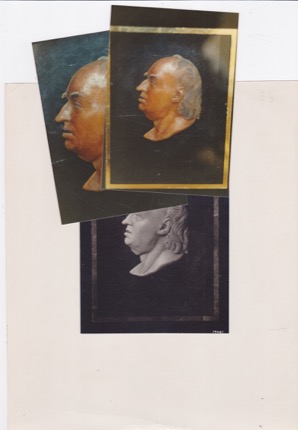
Cambridge MA, Harvard University Press, 1st, 1926, Book: Very Good, Dust Jacket: None, Hardcover, original blue cloth-backed boards. Quarto. 17 pages & 8 plates. From a limited printing of 385 copies under the direction of Bruce Rogers. Also laid in :2 color photos and one b&w photo of the medallion. Clean copy.
Hardcover. San Francisco, Sierra Club Books, 1st, 1986, Book: Very Good, Dust Jacket: Very Good, Hardcover in a lightly worn dust jacket. 51 pages, illustrated with wood engravings by Michael McCurdy. Bly's commentary sheds important new light on the intellectual and spiritual development of a major American literary figure. Mild fade to dj spine. Clean copy.
Hardcover. NY, New Directions Books, 1st, 1941, Book: Good, Dust Jacket: None, Hardcover, red cloth with black title on spine. Collected stories and essays "not for readers who hate to think," Mild shelf wear, clean.
Hardcover. NY, Knopf , 1st, 1976, Book: Very Good, Dust Jacket: Very Good, Hardcover in a bright, price-clipped dust jacket. The author's first book about growing up in Stockton, California with her immigrant parents from a small peasant village in China.
Hardcover. London, Methuen, reprint, 1990, Book: Very Good, Dust Jacket: Very Good, Hardcover in a bright dust jacket. 256 pages illustrated in color and b&w. Ernest Howard Shepard was an English artist and book illustrator, best remembered for his charming illustrations of the beloved anthropomorphic animals in The Wind in the Willows and Winnie-the-Pooh. This fascinating study of Shepard, detailing his childhood, education and artistic development, is richly illustrated throughout with his works. Clean copy.
Hardcover. London, J. And P. Knapton, S. Birt, T. Longman, et al., 1st thus, 1747, Book: Very Good, Dust Jacket: None, Eight volumes, in uniform red calf with ornate gilt decorations to covers, spines. All edges gilt. Prefaces by William Warburton and Alexander Pope. Mild foxing to pages. Vol. 1 with a frontispiece engraving of Shakespeare. An attractive set with light shelf wear, minor soiling. Bindings firm.
Hardcover. Lanham MD, Rowman & Littlefield , 1st, 2021, Book: Very Good, Dust Jacket: None, Hardcover, glossy pictorial boards, 374 pages. This new biography of Ian Fleming presents a fresh and illuminating portrayal of the iconic creator of James Bond. Oliver Buckton provides the first in-depth exploration of the entire process of Ian Fleming's writing--from initial conception, through composition, to his involvement in the innovative publication methods of his books. He also investigates the vital impact of Fleming's work in naval intelligence during World War Two on his later writings, especially the wartime operations he planned and executed and how they drove the plots of the James Bond novels. Buckton considers the vital role of wartime deception, disinformation, and propaganda in shaping Fleming's later techniques and imaginative creations. Offering a radically new view of Fleming's relationships with women, Buckton traces the role of strong, independent, and intelligent women such as Maud Russell, Phyllis Bottome, and his wife, Ann, on Fleming's portrayal of female characters. The book concludes with a thorough analysis of the James Bond films from Eon productions, and their influence in promoting, while also distorting, the public's recognition of Fleming's writing. Clean copy.
Hardcover. NY, Knopf, 1st, 1978, Book: Very Good, Dust Jacket: Very Good, Hardcover in a bright, unclipped dust jacket, 341 pages. This is the first collection of essays in seven years by the author of Omensetter's Luck, In the Heart of the Heart of the Country, and Fiction and the Figures of Life. In it, one of America's most brilliant and eclectic minds examines literature, culture, writers (their lives and works), and the nature and uses of language and the written word. Clean copy.
Hardcover. NY, W.W. Norton & Co., 1st, 2005, Book: Very Good, Dust Jacket: Very Good, Hardcover in a bright, unclipped dust jacket, 299 pages. The author investigate the trauma behind poets Robert Lowell, Elizabeth Bishop, Sylvia Plath, John Berryman, Randall Jarrell, and Delmore Schwartz. They formed one of the great constellations of talent in American literature. In the decades after World War II, they changed American poetry forever by putting themselves at risk in their poems in a new and provocative way. Their daring work helped to inspire the popular style of poetry now known as 'confessional.' But partly as a result of their openness, they have become better known for their tumultuous lives-afflicted by mental illness, alcoholism, and suicide-than for their work. This book reclaims their achievement by offering critical 'biographies of the poetry'-tracing the development of each poet's work, exploring their major themes and techniques, and examining how they transformed life into art. Clean copy.
Hardcover. NY, Farrar Straus Giroux, 1st, 2023, Book: Very Good, Dust Jacket: Very Good, Hardcover in a bright, unclipped dust jacket. 530 pages, b&w illustrations. The dramatic story of W. E. B. Du Bois's reckoning with the betrayal of Black soldiers during World War I-and a new understanding of one of the great twentieth-century writers. When W. E. B. Du Bois, believing in the possibility of full citizenship and democratic change, encouraged African Americans to "close ranks" and support the Allied cause in World War I, he made a decision that would haunt him for the rest of his life. Seeking both intellectual clarity and personal atonement, for more than two decades Du Bois attempted to write the definitive history of Black participation in World War I. His book, however, remained unfinished. In The Wounded World, Chad Williams offers the dramatic account of Du Bois's failed efforts to complete what would have been one of his most significant works. The surprising story of this unpublished book offers new insight into Du Bois's struggles to reckon with both the history and the troubling memory of the war, along with the broader meanings of race and democracy for Black people in the twentieth century. Drawing on a broad range of sources, most notably Du Bois's unpublished manuscript and research materials, Williams tells a sweeping story of hope, betrayal, disillusionment, and transformation, setting into motion a fresh understanding of the life and mind of arguably the most significant scholar-activist in African American history. In uncovering what happened to Du Bois's largely forgotten book, Williams offers a captivating reminder of the importance of World War I, why it mattered to Du Bois, and why it continues to matter today. Remainder mark on top edhge, otherwise clean.
Hardcover. NY, Knopf , 1st, 2002, Book: Very Good, Dust Jacket: Very Good, Hardcover in a bright, unclipped dust jacket, 524 pages. The finest shorter pieces of reflection and reportage by V.S. Naipaul - nearly all of them heretofore out of print - are collected in one volume spanning some forty years of travel and sustained meditations on our world. Clean copy.
Softcover. NY, Seven Stories Press, reprint, 2017, Book: Very Good, Dust Jacket: None, Softcover, 237 pages. On its 2008 publication in France, The Years came as a surprise. Though Ernaux had for years been hailed as a beloved, bestselling and award-winning author, The Years was in many ways a departure: both an intimate memoir "written" by entire generations, and a story of generations telling a very personal story. Like the generation before hers, the narrator eschews the "I" for the "we" (or "they", or "one") as if collective life were inextricably intertwined with a private life that in her parents' generation ceased to exist. She writes of her parents' generation (and could be writing of her own book): "From a common fund of hunger and fear, everything was told in the "we" and impersonal pronouns." Clean, bright copy.
Softcover. NY, Oxford University Press, Book: Very Good, Dust Jacket: None, Softcover, 192 pages. Dr. Seuss's infectious rhymes, fanciful creatures, and roundabout plots not only changed the way children read but imagined the world. And to Think That I Saw It On Mulberry Street, Green Eggs and Ham,The Cat and the Hat, these and other classics have sold hundreds of millions of copies and entertained children and adults for decades. fter graduating from Dartmouth, Theodor Geisel used his talents as an ad-man, political provocateur, and social satirist, gradually but irrevocably turning to children's books. Theodor Geisel tells the unlikely story of this remarkable transformation. In this compact and engrossing biography, Donald Pease reveals the evolution of Dr. Seuss's creative persona while offering an honest appraisal of his life. The book also features many of Dr. Seuss's lesser-known illustrations, including college drawings, insecticide ads, and wartime political cartoons--all of which offer a glimpse of his early artistic style and the visual origins of the more famous creatures that later populated his children's books. As Pease traces the full arc of Dr. Seuss's prolific career, he combines close textual readings of many of Dr. Seuss's works with a unique look at their genesis to shed new light on the enduring legacy of America's favorite children's book author.
Hardcover. New York, Doubleday, 1t, 2017, Book: Very Good, Dust Jacket: Very Good, 256 pages. Hardcover with dust jacket. Very clean, unmarked copy with only minor wear to dust jacket edges. A tight copy. Color illustrations throughout.
Hardcover. New York, Doubleday, 1t, 2017, Book: Very Good, Dust Jacket: Very Good, 256 pages. Hardcover with dust jacket. Very clean, unmarked copy with only minor wear to dust jacket edges. A tight copy. Color illustrations throughout.
Hardcover. New Haven CT, Yale University Press, reprint, 1991, Book: Very Good, Dust Jacket: None, Hardcover in a dust jacket with fading to some areas, 338 pages. Margaret Fuller - journalist, critic, radical feminist, and political activist - traveled in Europe between 1846 and 1850 as a foreign correspondent for the New York Tribune. Her letters from England, France, and Italy, which began as engaging travel sketches, soon became moving accounts of the most widespread revolutionary upheaval within modern history. These dispatches are now reproduced in their entirety for the first time. Clean copy.
Hardcover. New York, Atlantic Monthly Press, 1st, 1988, Book: Very Good, Dust Jacket: Very Good, Hardcover, 288 pages, INSCRIBED BY AUTHOR on title page. Spotless and clean copy.
Hardcover. NY, Random House, 1st, 1982, Book: Very Good, Dust Jacket: Very Good, Hardcover in a bright dust jacket, 305 pages. In an age when much American writing was either glacially noncommittal or heremetically personal, William Styron persisted in addressing great moral issues with incendiary passion. Seriousness and ardor characterize all the essays in This Quiet Dust, the first book of nonfiction by the Pulitzer Prize-winning author of Lie Down in Darkness and Sophie's Choice. Clean copy.
Hardcover. London, George Allen and Unwin Ltd., 1st ed., 1967, Book: Very Good, Dust Jacket: Good, Hardcover, 331 pages. Blue cloth boards with gilt lettering along spine. Dust jacket has sticker on front flap. Dust jacket is also faded along spine with over all shelf wear. Otherwise, tight clean copy.
Hardcover. NY, Penguin Press, 1st, 2007, Book: Very Good, Dust Jacket: Very Good, Hardcover in a bright dust jacket, 512 pages. The novels of Thomas Hardy have a permanent place on every booklover's shelf, yet little is known about the interior life of the man who wrote them. A believer and an unbeliever, a socialist and a snob, an unhappy husband and a desolate widower, Hardy challenged the sexual and religious conventions of his time in his novels and then abandoned fiction to reestablish himself as a great twentieth-century lyric poet. In this acclaimed new biography, Claire Tomalin, one of today's preeminent literary biographers, investigates this beloved writer and reveals a figure as rich and complex as his tremendous legacy. Clean copy.
Hardcover. Concord MA, Albert Lane/Erudite Press, 2nd Ed., 1903, Book: Very Good, Dust Jacket: None, Hardcover, gray-green boards over green cloth spine, 35 pages, frontis. portrait plus 3 halftone plates. First published in 1890, "It is a pious duty to his memory to correct the errors of fact that were ... reported in the first edition of the Glimpse 1890." Jones was part of the rehabilitation of Thoreau's reputation and appreciation. Previous owner's bookmark on inside front cover, Paper label on spine mostly gone, otherwise clean, very good.
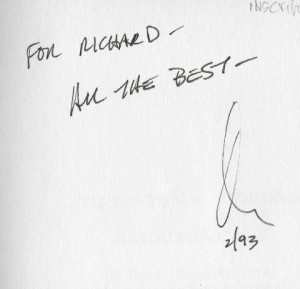
Hardcover. New York, N.Y., Carlton Press, reprint, 1990, Book: Very Good, Dust Jacket: Very Good, 287 pages, b&w illustrations. INSCRIBED BY AUTHOR on front end paper. Light edgewear to dust jacket, else a clean, tight copy.
Hardcover. Cambridge, Cambridge University Press, 1st ed., 1982, Book: Good, Dust Jacket: Good, 220 pages. Purple cloth boards with gilt lettering along spine. Few pages of light pencil underlining. Dust jacket has some foxing, mainly on flaps, and discoloring. Tight copy. The idea of man as an essentially irrational being has preoccupied some of the most influential of Russian thinkers, including the three important Soviet writers considered by Dr Edwards in this book. Since the 1917 Revolution the polemic between rationalists and irrationalists has become directly relevant to the way life is lived in the Soviet Union, and a knowledge of the irrationalist point of view is essential for an understanding of much of Soviet literature and of the foundations of Soviet dissidence. As with other titles in this series, this book is not intended simply for the specialist. The broad speculations arising from the subject will fascinate all those who take a serious interest in the Russian literary tradition; a tradition whose principal figures have been concerned to reject philosophical and political creeds that, in seeking to produce a perfect human being in a perfect society, point in fact towards a vision of hell.

 "The Wedgwood Medallion of Samuel Johnson: A Study in Iconography by: Tinker, Chauncey Brewster")

 "The Winged Life: The Poetic Voice of Henry David Thoreau by: Thoreau, Henry David, Robert Bly (Editor) and Michael McCurdy (Illustrator)")
 "The Wisdom Of The Heart by: Henry Miller")
 "The Woman Warrior: Memoirs of a Girlhood Among Ghostsby: Kingston, Maxine Hong")
 "The Work of E H Shepard by: Knox, Rawle (ed.)")
 "THE WORKS OF SHAKESPEAR (8 Volumes Complete)by: William Shakespeare/ William Warburton")

 "The World Is Not Enough: A Biography of Ian Fleming by: Buckton, Oliver")
 "The World Within The Word: Essays by: Gass, William H.")
 "The Wounded Surgeon: Confessions and Transformations in Six American Poets by: Kirsch, Adam")
 "The Wounded World: W. E. B. Du Bois and the First World Warby: Williams, Chad L.")
 "The Writer and the World: Essays by: Naipaul, V.S.")
 "The Years by: Annie Ernaux")
 "Theodor Geisel by: Pease, Donald E.")
 "There's a Mystery There: The Primal Vision of Maurice Sendakby: Cott, Jonathan")
 "There's a Mystery There: The Primal Vision of Maurice Sendakby: Cott, Jonathan")
 "These Sad but Glorious Days: Dispatches from Europe, 1846-1850 by: Fuller, Margaret")
 "This Boy's Life; a Memoir (SIGNED COPY)by: Wolff, Tobias")
 "This Quiet Dust: And Other Writingsby: William Styron")
 "Thomas Berry: A Biography by: Tucker, Mary Evelyn; Grim, John; Angyal, Andrew")
 "Thomas Garrigue Masaryk: The Spirit of Russiaby: Gibian, George")
 "Thomas Hardyby: Claire Tomalin")
 "Thoreau: A Glimpseby: Jones, Samuel Arthur")
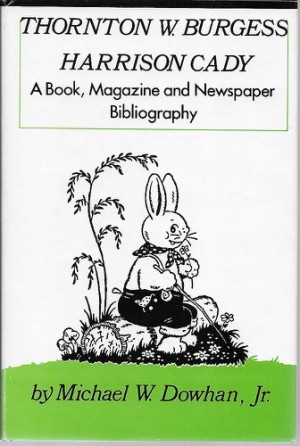
 "Thornton W. Burgess, Harrison Cady : a book, magazine, and newspaper bibliography (SIGNED COPY)by: Dowhan, Michael W.")
 "Three Russian Writers and the Irrational: Zamyatin, Pil'nyak, and Bulgakovby: Edwards, T. R. N.")