Hardcover. London, John Murray, 1st, 1908, Book: Good, Dust Jacket: None, Hardcover, 605 pages, b&w and color diagrams and illustrations. Embossed red cloth covers w/ gilt lettering on spine. A study on heredity and genetics. Sir John Arthur Thomson (1861-1933), Professor of Natural History at the University of Aberdeen, was a follower of August Weismann.Edge wear, light soiling to covers; spine faded. Previous owner's sticker on front fly leaf. Front hinge cracked. Else a nice, clean copy.
Hardcover. New York, Robert M. Mc Bride and Company, 1st, 1938, Book: Very Good, Dust Jacket: None, INSCRIBED BY AUTHOR. Hardcover, 272 pages, b&w illustrations. Old tape marks on end papers, light staining; else a clean, tight copy.
Hardcover. Hanover NH, University Press of New England, 1st, 1998, Book: Very Good, Dust Jacket: Very Good, Hardcover in a bright dust jacket, 362 pages. This is the first full-scale biography of Nathan Smith -- medical pioneer, founder of Dartmouth Medical School and cofounder of three other medical schools (Yale, Vermont, and Bowdoin), and progenitor of a long line of physicians. Smith was a central figure in early American medical education, from 1787 when he began practicing in New Hampshire, to his death in New Haven in 1829. In his day, Smith was probably the nation's leading physician, surgeon, and medical educator, and well ahead of his time in insisting that doctors practice "watchful waiting" and emphasizing patient-centered care. In the process of telling Smith's life and story, authors Hayward and Putnam fill out in new ways the picture of medical treatment and medical education in post-Colonial America.
Hardcover. London, Allen Lane, 1st, 2021, Book: Very Good, Dust Jacket: Very Good, Hardcover in a bright dust jacket, 484 pages. INSCRIBED BY RAJ PATEL on the title page. "Physician Marya, cofounder of the Do No Harm Coalition, and University of Texas research professor Patel (The Value of Nothing) examine the social and environmental causes of ill health in this thought-provoking treatise . . . a persuasive argument for the need to address the systemic problems that plague people's minds and bodies." Clean copy.
Hardcover. New York, John Wiley & Sons, 1st, 1974, Book: Very Good, Dust Jacket: Very Good, 208 pages. Hardcover with dust jacket. Slight fraying at corners of dust jacket and faded spine. Previous owner's name on front fly leaf, otherwise clean, tight copy.
Hardcover. Birmingham, Eng, Royal College of Surgeons, 1st, 1895, Book: Good, Dust Jacket: None, Bradshaw Lecture for 1894: A Study of His [Syme's] Influence and Authority on the Science and Art of Surgery During that Period. Syme was a leading surgeon of his day in Edinburgh's golden age of surgery. He was a master of surgical technique, a rival of Liston, a contemporary of Simpson and father-in-law and mentor of Joseph Lister. Hardcover, 27 pages. Red covers with gold lettering and decoration. Previous owner's signature on half-title page. Light foxing to first and last pages. Light rubbing to corners and edges. Light soiling to rear cover, upper corner.
Hardcover. Barcelona SP, FKG. , reprint, 2010, Book: Very Good, Dust Jacket: Very Good, Facsimile edition. Folio. Cloth binding, 191 pages. In 1834 the leading scholars of the Faculty of Medicine in Paris, led by Professor A.L.G. Bayle, compiled a remarkable atlas of exquisite anatomical drawings. It immediately became a benchmark work in international medical and scientific communities, praised not only for its scientific value but also for the artistry of the color plates. This large facsimile volume features 94 color plates, 11 x 15 inches, labeled in English, German, French, and Dutch.
Softcover. AuthorHouse, reprint, 2004, Book: Very Good, Dust Jacket: None, 240 pages. Softcover. SIGNED BY AUTHOR. B/w illustrations throughout. Wrapper and pages clean. This book is the story of just one newly graduated nurse told in her own words in her letters home saved by her parents and friends. It is one of the few stories of nurses in the Pacific area.
Softcover. London, Vintage, reprint, 1998, Book: Very Good, Dust Jacket: None, Softcover, 468 pages. Traces Klein's theories on childhood development, criminality and childhood psychosis, symbol formation, and the early development of conscience. Clean copy.
Hardcover. London, Trubner & Co., 1st, 1874, Book: Good, Dust Jacket: None, 361 pages. Hardcover. Fold-out diagram attached to title page. Brown cloth covers w/ edge wear, chipping to top of spine. Marking on title page. Foxing to fly leaves. Hinges cracking. Else pages clean and tight.
Hardcover. Kent UK, Winterdown Books, 1st , 1988, Book: Very Good, Dust Jacket: Very Good, Hardcover in a bright dust jacket, 107 pages. Limited to 375 copies. Clean copy.
Hardcover. Folkestone UK, Winterdown Books, reprint, 1987, Book: Very Good, Dust Jacket: Very Good, Hardcover in a bright dust jacket, 248 pages. Sydenham's first book on the treatment of fevers, has been reprinted since the 2nd edition of 1668 and has never been translated as a whole until this book. Text is in both Latin and English. The Latin text of the 1666 and 1668 editions with English translation from R.G. Latham (1848). Introduction, notes and index by G.G. Meynell. Limited to 275 copies. Name on front fly leaf, otherwise clean.
Hardcover. Washington DC, Smithsonian Institution Press , 1st, 1991, Book: Very Good, Dust Jacket: Very Good, Hardcover in a bright dust jacket. 257 pages, index, bibliography, notes, glossary, b&w illustrations. In precolonial Rwandan culture, the body and the organization of the universe were thought of in terms of the flow and blockage of fluids. Operating in a "gift economy," the king and ritual specialists regulated these fluids--milk, honey, rain, blood--thereby ensuring the health of the people and the fertility of their land and cattle. Today, much of same imagery suffuses popular healing, and many sicknesses are depicted as perturbations in the flow of bodily humors. However, not all healers adhere to the precolonial symbolic forms. Identifying a primary image schema in Rwandan popular concepts of the body and cosmology, Milk, Honey, and Money explains how specifically Rwandan forms have been affected by the culture's capitalist transformation. Clean copy.
Hardcover. London, Williams and Norgate, 1st, 1897, Book: Good, Dust Jacket: None, Hardbound edition of the four journals for 1897. 584 pages. Half leather with marbled boards, spine with raised bands, fading. Short closed tear at top of spine. Clean, unmarked pages.
Hardcover. New York, Orange Judd , reprint, 1865, Book: Good, Dust Jacket: None, 432 pages. Hardcover. Extensive b&w illustrations throughout. Gilt titles on spine. Blind stamp decoration on front cover. Small portion of top dust jacket edge missing. Previous owners stamp on front paste down. Water stain to bottom and fore edge, otherwise clean, tight copy.
Hardcover. Santa Fe, Twin Palms, 1st, 1998, Book: Very Good, Dust Jacket: Very Good, Non-paginated. Hardcover. Illustrated with 127 black & white medical photographs. Content focuses on the unusual - not for the timid. Red remainder mark on bottom edge at spine. Dust jacket in clear plastic protective cover. Clean, bright copy.
Softcover. Washington DC, National Geographic Society, 1st, 1919, Book: Very Good, Dust Jacket: None, Softcover, illustrated with b&w photos, maps, advertisements. Original yellow and black wrappers, spine with light wear, good to very good. Articles include: Chicago Today and Tomorrow, The League of Nations, Medicine Fakes and Fakers of All Ages.
Softcover. Ithaca NY, Cornell University Press, reprint, 1991, Book: Very Good, Dust Jacket: None, Softcover, 204 pages. "Not of woman born," "the Fortunate," "the Unborn" - the terms designating those born by Caesarean section in medieval and Renaissance Europe were mysterious and ambiguous. In antiquity, children fortunate enough to have survived a Caesarean birth were believed to be marked for a special destiny. Vividly tracing the evolution of Caesarean birth from the early 1300s (when the operation was performed almost exclusively by midwives) through the Renaissance period (when midwives were considered witches and male surgeons took control), Blumenfeld-Kosinski . . . does more than provide [an] engrossingly accessible, historical account of the now-commonplace procedure--she unveils the roots of a medical misogyny that still prevails today. A richly cross-disciplined study utilizing depictions of Caesarean delivery in art, literature, and medical texts and illuminations (illustrations), [this book] is a captivating and revealing work that will be relished by readers of medical and cultural history, as well as by those who are interested in the subject of male dominance over women. Clean copy.
Hardcover. Hildesheim, Germany, Georg Olms Verlagsbuchhandlung, Reprint, 1967, Book: Very Good, Dust Jacket: None, Volumes 1-2. Hardcovers. Vol. 1: 512 pages. Vol. 2: 455 pages plus index. Green cloth covers, gilt title on black on spine and gilt title on front cover boards. top edge dyed. Key work by British philosopher, explaining his theories on the mind-body connection, including his doctrines of vibrations and associations, the formation and growth of consciousness, etc. Clean copies.
Hardcover. Philadelphia, The Medical World, 2nd Ed., 1886, Book: Very Good, Dust Jacket: None, Hardcover, 272 pages, brown cloth with gilt lettering on front cover. A collection of pharmaceutical mixtures, enlarged from the previous year's edition. Bright, clean copy.

 "Heredityby: J. Arthur Thomson")
 "Honey and Health: A Nutrimental Medicinal and Historical Commentary (SIGNED COPY)by: Beck, M.D., Bodog F.")
 "Humphrey's Manual (Homeopathic Medicine)- On the Care of Ailments Which May Be Alleviated at Homeby: Humphrey, Dr. F.")
 "Improve Perfect & Perpetuate: Dr. Nathan Smith and Early American Medical Education by: Constance E. Putnam/ Oliver S. Hayward")
 "Inflamed: Deep Medicine and the Anatomy of Injustice by: Marya, Rupa / Patel, Raj")
 "Insects and Diseaseby: Snow, Keith R.")
 "James Syme, Regius Professor of Surgery in the University of Edinburgh, 1833-1869by: Pemberton, Oliver")
 "La Medecine Pittoresque: Colored Medicine Platesby: Bayle, A.L.G.")
 "Letters Home: Memoirs of One Army Nurse in the Southwest Pacific in World War II (SIGNED BY AUTHOR)by: Pullman, Sally Hitchcock")


 "Love, Guilt And Reparationby: Melanie Klein")
 "Lux e Tenebris; or, The Testimony of Consciousness by: Giles, Francis")
 "Materials for a Biography of Dr Thomas Sydenham (1624-1689):a new survey of public and private archives by: Meynell, G.C.")
 "Mathematics and Statistics for the Bio-Sciencesby: Eason, G., C.W.Coles and G. Gettinby")
 "Methodus Curandi Febres Propriis Observationibus Superstructuraby: Sydenham, Thomae / Latham, R.G. (trans.) / Meynell, G.G. (intro.)")
 "Milk, Honey and Money: Changing Concepts in Rwandan Healingby: Taylor, Christopher C.")
 "Mind: A Quarterly Review of Psychology and Philosophy - Vol. VI 1897by: Stout, G.F.")
 "Miracle in the Hills: The Lively Personal Story of a Woman Doctor's Forty Year Crusade in the Mountains of North Carolinaby: Mary T. Sloop; Legette Blythe")
 "Modern Horse Doctor, The by: Dadd, George")
 "Morning's Work - Medical Photographs from The Burns Archive & Collection 1843-1939, Aby: Burns, M.D., Stanley B.")
 "National Geographic Magazine - Vol. XXXV No. 1 January 1919by: National Geographic Society")
 "Not of Woman Born: Representations of Caesarean Birth in Medieval and Renaissance Cultureby: Renate Blumenfeld-Kosinski")
 "Observations on Man, His Frame, His Duty, and His Expectations (Volumes 1-2)by: Hartley, David")


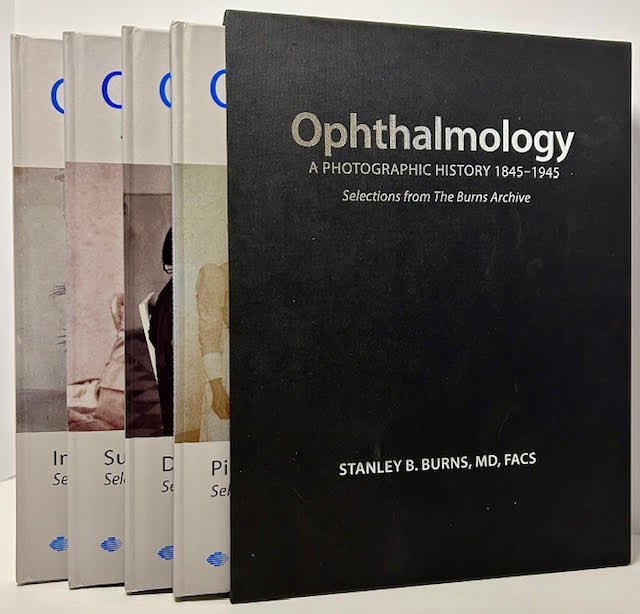
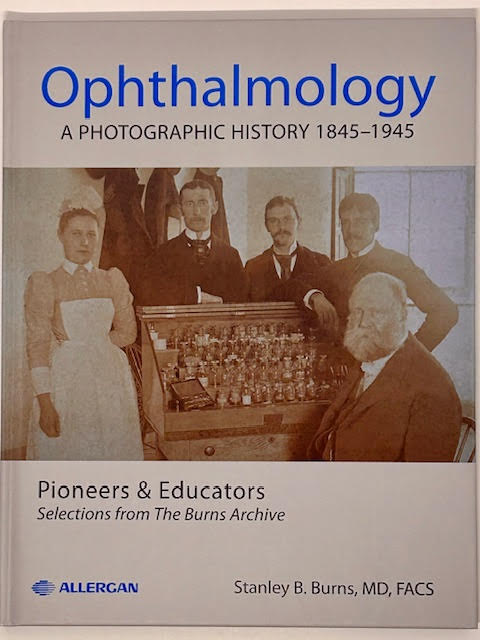
 "Ophthalmology: A Photographic History 1845-1945 (SIGNED)by: Burns MD, FACS, Stanley B.")