Hardcover. NY, William Morrow, 1st, 1972, Book: Very Good, Dust Jacket: Good, Hardcover in a lightly worn dust jacket with light chipping, 180 pages. Ortiz Montaigne Walton was the first African-American member of the Buffalo Philharmonic Orchestra and a prominent figure in African-American studies. He performed in Buffalo for three seasons, before moving on to become the first African-American member of the Boston Symphony Orchestra. Mr. Walton later was principal contrabassist with the Cairo Symphony Orchestra in Egypt and performed a number of acclaimed solo recitals. Dust jacket art is a photo-montage by Romare Bearden.
Hardcover. London , Jazz Book Club/ Andre Deutsch, reprint, 1963, Book: Very Good, Dust Jacket: Very Good, Hardcover, 242 pages, in a very good dust jacket.
Hardcover. NY, Dominic Books, 1st, 2003, Book: Very Good, Dust Jacket: None, Hardcover in pictorial glossy boards. When a jazz-loving kitten named Nicky meets a legendary trumpet player, he learns how to play jazz and word travels fast--soon all the top musicians hear about this jazz cat and want to play with him. This charming story is illustrated with photographs of Nicky with jazz greats Roy Eldridge, Lionel Hampton, Lena Horne, Quincy Jones, Abbey Lincoln, and Gerry Mulligan as they meet and make friends. The colorful graphics and rhyming text--call and response conversation between Nicky and his new musician friends--reflect the humor, rhythm, and spirit of jazz itself. Nicky the Jazz Cat teaches children about the magic of jazz, the value of friends and mentors, and the power of imagination and originality. Children and adults alike will delight in his journey from curious jazz kitten to acclaimed jazz cat. This is the true first edition published 2 years before the poerHouse edition.
Softcover. Paris, Marval, 1st, 1989, Book: Very Good, Dust Jacket: None, Softcover, 79 pages, text by Francis Hofstein IN FRENCH. wonderful photobook devoted to the blues scene in Oakland during the 1980s. Dozens of full-page black & white photographs. Clean copy.
Hardcover. London, Reaktion Books, 1st, 2020, Book: Very Good, Dust Jacket: Very Good, Hardcover in a bright dust jacket, b&w photos. Ornette Coleman's career encompassed the glory years of jazz and the American avant-garde. Born in segregated Fort Worth, Texas, during the Great Depression, the African-American composer and musician was zeitgeist incarnate. Steeped in the Texas blues tradition, he and jazz grew up together, as the brassy blare of big band swing gave way to bebop--a faster music for a faster, postwar world. At the luminous dawn of the Space Age and New York's 1960s counterculture, Coleman gave voice to the moment. Lauded by some, maligned by many, he forged a breakaway art sometimes called "the new thing" or "free jazz." Featuring previously unpublished photographs of Coleman and his contemporaries, this book tells the compelling story of one of America's most adventurous musicians and the sound of a changing world. Clean copy.
Hardcover. San Francisco, Pomegranate, 1st, 1992, Book: Very Good, Dust Jacket: Very Good, 164 pages. Hardcover. Black & white photographs by Jazz musician Milt Hinton. Dust jacket with light wear. Clean, tight copy.
Softcover. Durham NC, Duke University Press , 1st, 2013, Book: Very Good, Dust Jacket: None, Softcover, 312 pages, b&w illustrations. In People Get Ready, musicians, scholars, and journalists write about jazz since 1965, the year that Curtis Mayfield composed the famous civil rights anthem that gives this collection its title. The contributors emphasize how the political consciousness that infused jazz in the 1960s and early 1970s has informed jazz in the years since then. They bring nuance to historical accounts of the avant-garde, the New Thing, Free Jazz, "non-idiomatic" improvisation, fusion, and other forms of jazz that have flourished since the 1960s, and they reveal the contemporary relevance of those musical practices. Many of the participants in the jazz scenes discussed are still active performers. A photographic essay captures some of them in candid moments before performances. Clean copy. like new.
Softcover. Durham NC, Duke University Press , 1st, 2013, Book: Very Good, Dust Jacket: None, Softcover, 312 pages, b&w illustrations. In People Get Ready, musicians, scholars, and journalists write about jazz since 1965, the year that Curtis Mayfield composed the famous civil rights anthem that gives this collection its title. The contributors emphasize how the political consciousness that infused jazz in the 1960s and early 1970s has informed jazz in the years since then. They bring nuance to historical accounts of the avant-garde, the New Thing, Free Jazz, "non-idiomatic" improvisation, fusion, and other forms of jazz that have flourished since the 1960s, and they reveal the contemporary relevance of those musical practices. Many of the participants in the jazz scenes discussed are still active performers. A photographic essay captures some of them in candid moments before performances. Clean copy. like new.
Hardcover. New Haven, CT, Yale University Art Gallery, 1st, 2014, Book: Very Good, Dust Jacket: None, 207 pages. Hardcover with no dust jacket. Very clean, unmarked copy still in shrink wrap. Images of New Orleans and the city's jazz culture, performers, bands, and clubs between 1957 and 1982. Over 200 black and white photographs taken by Friedlander. Tight copy.
Hardcover. New Haven, CT, Yale University Art Gallery, 1st, 2014, Book: Very Good, Dust Jacket: None, 207 pages. Hardcover with no dust jacket. Very clean, unmarked copy still in shrink wrap. Images of New Orleans and the city's jazz culture, performers, bands, and clubs between 1957 and 1982. Over 200 black and white photographs taken by Friedlander. Tight copy.
Hardcover. City Hall Records, 1st, 2009, Book: Very Good, Dust Jacket: Very Good, Hardcover, 128 pages. (Book + CD set) Containing the best, and some of the rarest LP covers produced over the long history of the Prestige label, this deluxe coffee table book also features an insightful introduction by famed jazz documentarian Ira Gitler who wrote liner notes for many of Prestige's earliest and best known records. In addition, the book contains an exclusive 9 track bonus CD featuring music culled from several classic Prestige albums. Tracks: Miles Davis - Bemsha Swing, Stan Getz - Lee, Sonny Rollins - Paradox, Jackie McLean - Contour, Moondog - Organ Rounds, John Coltrane - Theme For Ernie, Mose Allison - The Seventh Son, Eric Dolphy - Serene, Booker Ervin - Stella By Starlight.
Hardcover. City Hall Records, 1st, 2009, Book: Very Good, Dust Jacket: Very Good, Hardcover, 128 pages. (Book + CD set) Containing the best, and some of the rarest LP covers produced over the long history of the Prestige label, this deluxe coffee table book also features an insightful introduction by famed jazz documentarian Ira Gitler who wrote liner notes for many of Prestige's earliest and best known records. In addition, the book contains an exclusive 9 track bonus CD featuring music culled from several classic Prestige albums. Tracks: Miles Davis - Bemsha Swing, Stan Getz - Lee, Sonny Rollins - Paradox, Jackie McLean - Contour, Moondog - Organ Rounds, John Coltrane - Theme For Ernie, Mose Allison - The Seventh Son, Eric Dolphy - Serene, Booker Ervin - Stella By Starlight.
Softcover. NY, Da Capo Press, reprint, 1994, Book: Very Good, Dust Jacket: None, Softcover, 301 pages, b&w photos. Sarah Vaughan possessed the most spectacular voice in jazz history. In Sassy, Leslie Gourse, the acclaimed biographer of Nat King Cole and Joe Williams, defines and celebrates Vaughan's vital musical legacy and offers a detailed portrait of the woman as well as the singer. Revealed here is "The Divine One" as only her closest friends and musical associates knew her. By her early twenties Sarah Vaughan was singining with Dizzy Gillespie, Charlie Parker, and Billy Eckstine, helping them invent bebop. For forty-five years thereafter, she reigned supreme in both pop and jazz, with several million-selling hits (among them "Broken Hearted Melody," "Make Yourself Comfortable," and "Misty"). But life offstage was never smooth for Sarah Vaughan. Her voluptuous voice was matched by her exuberant appetite for excess: three failed marriages, financial difficulties through many changes in management, late-night jam sessions, liquor, and cocaine. Remainder line on bottom edge, otherwise clean.
Softcover. NY, Stein and Day, 2nd pr., 1974, Book: Good, Dust Jacket: None, Softcover, laminated card wraps, 112 pages, b&w illustrations. Ex-library copy with light stamping and bookplate on inside front cover. On the African influences on blues and jazz.
Hardcover. New York, Harry N. Abrams, 1st, 2010, Book: Very Good, Dust Jacket: Very Good, 160 pages. Hardcover with dust jacket. Clean, unmarked copy with only minor wear to dust jacket. A celebration of jazz legend Sonny Rollin's incredibly prolific career. This intimate appreciation in pictures and words combines the images of John Abbott, who was Rollin's photographer of choice for the past twernty years has captured the saxophonist at home and at work, and the essays of Bob Blumenthal, a jazz critic who has chronicled Rollins and his art for nearly four decades.
Hardcover. US, Harry N. Abrams, 1st, 2010, Book: Very Good, Dust Jacket: Very Good, 160 pages. Hardcover with dust jacket. Clean, unmarked copy with only minor wear to dust jacket. a celebration of jazz legend Sonny Rollin's incredibly prolific career. This intimate appreciation in pictures and words combines the images of John Abbott, who was Rollin's photographer of choice for the past twernty years has captured the saxophonist at home and at work, and the essays of Bob Blumenthal, a jazz critic who has chronicled Rollins and his art for nearly four decades.
Softcover. Chicago, University of Chicago Press, 1st, 1997, Book: Very Good, Dust Jacket: None, Softcover, 253 pages. In this work, Ingrid Monson juxtaposes musicians' talk and musical examples to ask how musicians go about "saying something" through music in a way that articulates identity, politics, and race. Clean, bright copy.
Hardcover. Berkeley, University of California Press, 3rd pr., 2018, Book: Very Good, Dust Jacket: Very Good, Hardcover in a bright dust jacket, 279 pages, b&w photos. Sophisticated Giant presents the life and legacy of tenor saxophonist Dexter Gordon (1923-1990), one of the major innovators of modern jazz. In a context of biography, history, and memoir, Maxine Gordon has completed the book that her late husband began, weaving his "solo" turns with her voice and a chorus of voices from past and present. Reading like a jazz composition, the blend of research, anecdote, and a selection of Dexter's personal letters reflects his colorful life and legendary times. It is clear why the celebrated trumpet genius Dizzy Gillespie said to Dexter, "Man, you ought to leave your karma to science." Clean copy.
Softcover. NY, Vintage Books, reprint, 1982, Book: Very Good, Dust Jacket: None, Softcover, pictorial wrappers, 264 pages, b&w illustrations. In this classic work of American music writing, renowned critic Albert Murray argues beautifully and authoritatively that the blues as such are synonymous with low spirits. Not only is its express purpose to make people feel good, which is to say in high spirits, but in the process of doing so it is actually expected to generate a disposition that is both elegantly playful and heroic in its nonchalance. In Stomping the Blues Murray explores its history, influences, development, and meaning as only he can. More than two hundred vintage photographs capture the ambiance Murray evokes in lyrical prose. Only the sounds are missing from this lyrical, sensual tribute to the blues. Originally published in 1976. Name on front fly leaf, otherwise clean with mild shelf wear.
Hardcover. NY, W. W. Norton, 1st, 1993, Book: Very Good, Dust Jacket: Very Good, Hardcover in a bright, unclipped dust jacket. A biography of the jazz clarinetist. Illustrated with photos, 522 pages including index. Clean copy.
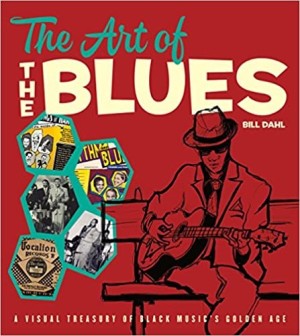
Hardcover. Chicago, University of Chicago Press, 1st, 2016, Hardcover in a bright dust jacket, still in publisher's shrinkwrap. This stunning book charts the rich history of the blues, through the dazzling array of posters, album covers, and advertisements that have shaped its identity over the past hundred years. The blues have been one of the most ubiquitous but diverse elements of American popular music at large, and the visual art associated with this unique sound has been just as varied and dynamic. There is no better guide to this fascinating graphical world than Bill Dahl--a longtime music journalist and historian who has written liner notes for countless reissues of classic blues, soul, R&B, and rock albums. With his deep knowledge and incisive commentary--complementing more than three hundred and fifty lavishly reproduced images--the history of the blues comes musically and visually to life.
Softcover. Baton Rouge, Louisiana State University , Revised Ed., 2002, Book: Very Good, Dust Jacket: None, Softcover, 105 pages. Interviews with the jazz drummer, known for his wild style of drumming, who recounts his life and adventures playing with some of the best known jazz musicians and bands of his time. Includes additional reading and selected recordings. 6 leaves of b&w photo plates. Bright and clean, but with the light odor of a smoker-owned book.
Softcover. NY, Oxford University Press, 1st, 2009, Book: Very Good, Dust Jacket: None, Softcover, 366 pages illustrated in color. The widespread presence of jazz and blues in African American visual art has long been overlooked. The Hearing Eye makes the case for recognizing the music's importance, both as formal template and as explicit subject matter. Moving on from the use of iconic musical figures and motifs in Harlem Renaissance art, this groundbreaking collection explores the more allusive - and elusive - references to jazz and blues in a wide range of mostly contemporary visual artists. There are scholarly essays on the painters Rose Piper (Graham Lock), Norman Lewis (Sara Wood), Bob Thompson (Richard H. King), Romare Bearden (Robert G. O'Meally, Johannes Volz) and Jean-Michel Basquiat (Robert Farris Thompson), as well an account of early blues advertising art (Paul Oliver) and a discussion of the photographs of Roy DeCarava (Richard Ings). These essays are interspersed with a series of in-depth interviews by Graham Lock, who talks to quilter Michael Cummings and painters Sam Middleton, Wadsworth Jarrell, Joe Overstreet and Ellen Banks about their musical inspirations, and also looks at art's reciprocal effect on music in conversation with saxophonists Marty Ehrlich and Jane Ira Bloom. Clean, bright copy

 "Music: Black, White and Blue: A Sociological Survey of the Use and Misuse of Afro-American Musicby: Walton, Ortiz M.")
 "My Life in Jazzby: Kaminsky, Max with V. E. Hughes")
 "Nicky the Jazz Catby: Carol Friedman")

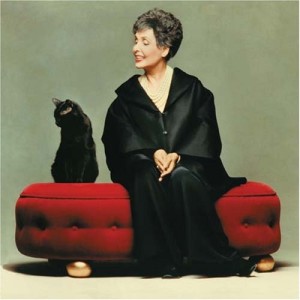
 "Oakland Blues (French Edition)by: Vignes, Michelle")
 "Ornette Coleman: The Territory and the Adventureby: Golia, Maria")
 "Over Time: The Jazz Photographs of Milt Hintonby: Hinton, Milt/David G. Berger/Holly Maxson")
 "People Get Ready ?– The Future of Jazz Is Now! by: Heble, Ajay; Wallace, Rob (Editors)")
 "People Get Ready: ?–The Future of Jazz Is Now! by: Heble, Ajay; Wallace, Rob (Editors)")
 "Playing for the Benefit of the Band: New Orleans Music Cultureby: Friedlander, Lee")
 "Playing for the Benefit of the Band: New Orleans Music Cultureby: Friedlander, Lee")
 "Prestige Records: The Album Cover Collectionby: Geoff Gans and Ira Gitler")
 "Prestige Records: The Album Cover Collectionby: Geoff Gans and Ira Gitler")
 "Sassy: The Life Of Sarah Vaughanby: Leslie Gourse")
 "Savannah Syncopators: African Retentions in the Bluesby: Paul Oliver")
 "Saxophone Colossus: A Portrait of Sonny Rollinsby: Blumenthal, Bob")
 "Saxophone Colossus: A Portrait of Sonny Rollinsby: Blumenthal, Bob")
 "Saying Something: Jazz Improvisation and Interaction by: Monso, Ingrid")
 "Sophisticated Giant: The Life and Legacy of Dexter Gordonby: Gordon, Maxine")
 "Stomping the Blues by: Albert Murray")
 "Sweet Man: The Real Duke Ellington by: George, Don")
 "Swing, Swing, Swing: The Life and Times of Benny Goodmanby: Firestone, Ross")
 "The Art of the Blues: A Visual Treasury of Black Music's Golden Ageby: Bill Dahl")

 "The Baby Dodds Story by: Dodds Baby; As Told to Larry Gara")
 "The Hearing Eye: Jazz & Blues Influences in African American Visual Arts by: Graham Lock; David Murray")