Hardcover. New York, Harper Collins, 1st, 2007, Book: Very Good, Dust Jacket: Very Good, Hardcover in a very good dust jacket. Non-paginated. SIGNED BY ILLUSTRATOR WENDELL MINOR ON TITLE PAGE. Full color illustrations. Clean, bright copy.
Hardcover. Edmonton CA, Hurtig , 1st, 1973, Book: Very Good, Dust Jacket: Very Good, Hardcover, 221 pages, b&w photographs, map end papers. Edge wear, rubbing, small tears to dust jacket. Else a clean, tight copy.
New York, Lothrop, 1st, 1995, Book: Very Good, Dust Jacket: Very Good, Hardcover in a bright, unclipped dust jacket. Color illustrations by Sandra Speidel. Unpaginated. A hymn by the author of Moonsong Lullaby offers a gentle reminder that humankind is not the center of the natural world.
Grand Rapids MI, Eerdmans, 1st, 2002, Book: Very Good, Dust Jacket: Very Good, Hardcover in a bright dust jacket. Color illustrations by Hall. A native Alaskan folktale tells about a raven who punishes humans for destroying nature by blocking out the sun to make Earth cold and dark, but a woman finds a feather from the bird that may have the secret to saving the planet.
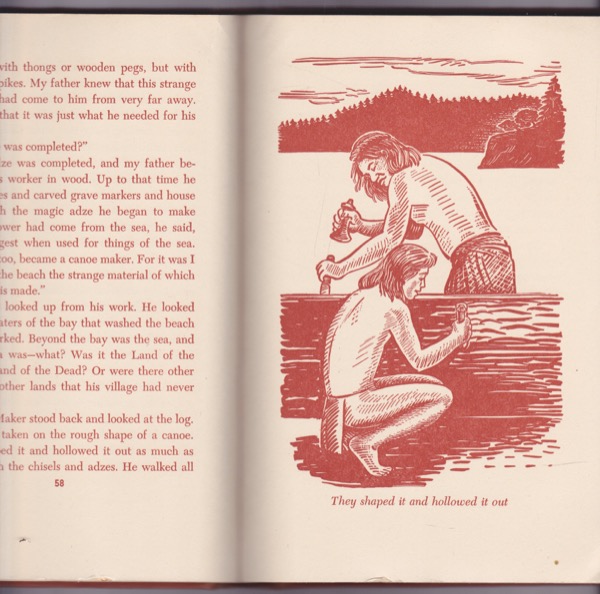
Hardcover. NY, David McKay , 1st, 1952, Book: Very Good, Dust Jacket: None, Hardcover, brown cloth stamped in black. 158 pages, illustrations and text in brown. Dust flap taped to inside front cover. Otherwise a clean copy.
Hardcover. New York, William Morrow & Co, 1st, 1992, Book: Very Good, Dust Jacket: Very Good, 160 pages. Hardcover with dust jacket. Very clean, unmarked copy with some minor shelfwear to dust jacket. This beautiful book is a spectacular overview of McCarthy's exciting Western work, presenting colorful paintings from his fine art career. Color illustrations throughout.
Hardcover. London, Constable, reprint, 1927, Book: Very Good, Dust Jacket: None, Hardcover, tan cloth stamped in black on spine and front cover, 567 pages. Over 500 drawings by author, whose life work is the development or revival of Woodcraft, that is outdoor life in its greatest sense, as a school for manhood. He defends Indians and their traditions, as he sees them as a model for outdoor life. Clean copy.
Softcover. Washington DC, Smithsonian Institution, 1st, 1945, Book: Very Good, Dust Jacket: None, Softcover in gray wrappers, 244 pages, 20 full page photo plates on slick paper. 33 text figures. 1 map. Errata slip tipped in. Owner's small sticker on inside cover otherwise clean.
Softcover. Austin TX, University of Texas Press, 3rd Pr., 1994, Book: Very Good, Dust Jacket: None, Softcover, 264 pages including appendices, bibliography and index. Profusely illustrated with b&w and color photographs. Superb images, portraits of individuals and family groups, and their arts, convey a quality of intimacy and serenity. Scenes of daily activity show many details of the way the Navajos life has been lived. Clean, bright copy. DOMESTIC SHIPPING ONLY.
Hardcover. NY, Printed for I. Riley and Co, 2nd Ed., 1806, Book: Very Good, Dust Jacket: None, The First Settlers of Virginia, an Historical Novel, Exhibiting a View of the Rise and Progress of the Colony at James Town, a Picture of Indian Manners, the Countenance of the Country, and its Natural Productions. Hardcover, Second edition, considerably enlarged. Contemporary calf over boards. Octavo. xii, [13]-284 pages. PLEASE NOTE: No frontispiece engraving of Pocahontas rescuing John Smith. No signs of extraction, so probably never bound in. A reproduction of the frontis laid in. This is one of the earliest American romantic novels about Native Americans. Davis was an English immigrant with literary aspirations who lived in Philadelphia at the beginning of the 19th century. He was acquainted with the likes of Thomas Jefferson and Aaron Burr. He originally adapted this material from his 1803 "Travels of Four Years and a Half in the United States of America" and published it in 1805 as "Captain Smith and Princess Pocahontas: An Indian Tale." This expanded version includes Davis's autobiography, "A Memoir of the Author" (pp. {275]-284). Includes "Errata" on page [274]. Clean, no markings.
Hardcover. Seattle, Fantagraphics, 1st, 2023, Book: Very Good, Dust Jacket: None, Hardcover, pictorial boards, 484 pages illustrated in color. In the 1950s, between his legendary EC work and his celebrated Marvel comics, John Severin joined with Mad artist Will Elder and Two-Fisted Tales writer Colin Dawkins to introduce a new level of historical accuracy to the comic-book Western. While Native Americans had generally been vilified or left in the shadows of gun-slinging cowboy heroes, the American Eagle stories featured in Prize Comics Western were built around action-packed tribal intrigues and a heroic Crow warrior. Collected here for the first time are all of the American Eagle stories drawn by Severin from Prize Comics Western #85-#113. Plus Severin-drawn stories featuring The Fargo Kid, Black Bull and The Lazo Kid. More than 55 exciting, gorgeous, Western tales of bullets vs. arrows, stampedes, tribal warfare, prospectors, buffalo hunters, broken treaties, gun battles, cavalry charges, wagon trains, and warriors on horseback. Thanks to Severin's famously exacting art, you'll be able to smell the leather and gunpowder. With commentary by comics historian Howard Leroy Davis. Clean, bright copy.
Hardcover. NY, Alfred A. Knopf, 1st, 2010, Book: Very Good, Dust Jacket: Very Good, Hardcover in a bright, unclipped dust jacket. He was the greatest Indian warrior of the nineteenth century. His victory over General Custer at the battle of Little Bighorn in 1876 was the worst defeat inflicted on the frontier Army. And the death of Crazy Horse in federal custody has remained a controversy for more than a century. The Killing of Crazy Horse pieces together the many sources of fear and misunderstanding that resulted in an official killing hard to distinguish from a crime. A rich cast of characters, whites and Indians alike, passes through this story, including Red Cloud, the chief who dominated Oglala history for fifty years but saw in Crazy Horse a dangerous rival; No Water and Woman Dress, both of whom hated Crazy Horse and schemed against him; the young interpreter Billy Garnett, son of a fifteen-year-old Oglala woman and a Confederate general killed at Gettysburg; General George Crook, who bitterly resented newspaper reports that he had been whipped by Crazy Horse in battle; Little Big Man, who betrayed Crazy Horse; Lieutenant William Philo Clark, the smart West Point graduate who thought he could "work" Indians to do the Army's bidding; and Fast Thunder, who called Crazy Horse cousin, held him the moment he was stabbed, and then told his grandson thirty years later, "They tricked me! They tricked me!" With the Great Sioux War as background and context, drawing on many new materials as well as documents in libraries and archives, Thomas Powers recounts the final months and days of Crazy Horse's life not to lay blame but to establish what happened.
Softcover. Santa Fe, Museum of New Mexico Press, 1st revised, 2003, Book: Very Good, Dust Jacket: None, Softcover, pages. Maria, the potter of San Ildefonso (1887-1981), is not only the most famous of Pueblo Indian potters but ranks among the best of international potters. Her work Is collected and exhibited around the world, and more than any other artist, Maria Martinez brought "signatures" to Indian art. She and other members of her family revived a dying art form and kindled a renaissance in pottery for all the Pueblos. She raised this regional art to one of international acclaim. This lavishly illustrated book draws from Spivey's 1979 classic work. Featuring entirely new photography and 120 added pots as well as a significantly expanded text, this volume considers the entirety of this artist's immense oeuvre and important works and developments in her collaboration with Julian, and after his death, with her daughter-in-law Santana, son Popovi Da, and grandson Tony Da, bringing the legacy of Maria into the bright future of Pueblo ceramics.
Hardcover. NY, Macmillan, 5th pr., 1966, Book: Very Good, Dust Jacket: Good, Hardcover in a edgeworn, price-clipped dust jacket. 371 pages with index. A vivid, swiftly paced account of the dispossession of the Plains Indians during the half century after 1840. Epic in sweep, magnificent in detail - here is the tragedy of the Indians who once roamed and hunted on the Great Plains. Included in this great saga are the names one expects: Red Cloud of the Sioux, Black Kettle of the Cheyennes, Generals Sheridan, Sherman, and Custer, Colonel Miles, Crazy Horse, Sitting Bull, and Chief Joseph of the Nez Perces. No marking.
Hardcover. Boston, Bradbury Soden & Co., 1st thus, 1844, Book: Good, Dust Jacket: None, Hardcover, 336 pages, frontispiece engraving with tissue guard, extra engraved title page, many b&w text illustrations. Brown cloth with black leather spine stamped in gilt. Pages with tanning to edges, light water stain to bottom corners of most pages, affecting text and images, but not horrible. Covers show mottling, discoloration to foredges, front and rear. Interior clean, binding tight.
Softcover. Indiana Historical Society, 1st, 1996, Book: Very Good, Dust Jacket: None, Softcover in pictorial wraps, 358 pages, 2 maps, b/w photos, appendices, notes, important dates, bibliography, index. Explores the history and culture of the Miami Indians, who have fought for many years to gain tribal status from the U.S. government. Clean copy.
Hardcover. NY, Kraus Reprint, reprint, 1977, Book: Very Good, Dust Jacket: None, Hardcover, brown cloth, 341 pages. A reprint of a book first published in 1856. No dust jacket issued.
Hardcover. Norman OK, University of Oklahoma Press, 8th pr., 1970, Book: Very Good, Dust Jacket: Very Good, Hardcover in a lightly worn dust jacket, 220 pages with black & white illustrations. A thorough study of the art of the Indian silversmiths of the Southwest. Includes the history of the craft as well as names and localities of pioneer artisans. Bookplate on inside front cover, otherwise clean.
Hardcover. NY, Hastings House, 1st, 1941, Book: Good, Dust Jacket: None, Hardcover, gray cloth stamped with dark blue design, 124 pages, sepia tone photos throughout. This work is Gilpin's photographic love letter to the Pueblos of the southwest. Laura Gilpin (1891-1979) attained international recognition as photographer and her images of the Navajo and Pueblo peoples of the four corners area offer an important record of these cultures. She excelled in a field that up to the point, had largely been the purview of men. Cloth covers with edgewear, light soil. Inscription on inside front cover. Covers fair, interior good+.
Softcover. Wellesley MA, Branden Books, 1st, 2014, Book: Very Good, Dust Jacket: None, Softcover, 276 pages, several b&w illustrations. SIGNED BY POTVIN on title page. Clean copy.
Hardcover. Chicago, Childrens Press, revised ed., 1970, Book: Very Good, Dust Jacket: None, Hardcover, pictorial cloth, 48 pages illustrated in b&w and color. Describes in simple text how the Indians of the sea coast, plains, deserts, swamps, and woodlands lived and how their way of life was influenced by the environment. Clean copy.
Softcover. NJ, Rutgers University Press, 1st, 2003, Book: Very Good, Dust Jacket: None, Softcover, 244 pages. The story of westering Americans in the late nineteenth and early twentieth centuries has been told most notably through photographs of American Indians. Unlike this vast archive, produced primarily by male photographers, which depicted American Indians as either vanishing or domesticated, the lesser-known images by the women featured in Trading Gazes provide new ways of seeing the intersecting histories of colonial expansion and indigenous resistance. Four unconventional women-Jane Gay, who documented land allotment to the Nez Perces; Kate Cory, an artist who lived for years in a Hopi community; Grace Nicholson, who purchased cultural items from the Karuk and other northern California tribes; and Mary Schaffer, who traveled among the Stoney and Metis of Alberta, Canada-used cameras to document their cross-cultural encounters. Trading Gazes reconstructs the rich biographical and historical contexts explaining these women's presence in different Native communities of the North American West. Their photographs not only record the unprecedented opportunities available for Euro-American women eager to shed gender restrictions, but also reveal how women's newfound mobility depended on the increasing restrictions placed on Native Americans in this era.
Hardcover. Paterson NJ, St. Anthony Guild Press, 1st, 1956, Book: Very Good, Dust Jacket: None, Hardcover in light tan cloth stamped in brown, 113 pages. Illustrated in 2-colors by Robert Bradbury. A tale of an orphaned American Indian girl who was worthy of sainthood in the eyes of her admirers. Remnants of color dust jacket and related article laid in. Clean copy.

 "Sitting Bull Remembers (SIGNED BY ILLUSTRATOR)by: Turner, Ann/Wendell Minor")
 "Sitting Bull: The Years in Canadaby: MacEwan, Grant")
 "Songs for the Seasonsby: Highwater/Sandra Speidel, Jamake")
 "Stolen Sun, The - A Story of Native Alaskaby: Hall, Amanda")
 "Sunrise Island: A Story of the Northwest Coast Indians Before the Coming of the White Menby: Baker, Charlotte")

 "The Art of Frank C. McCarthyby: Kelton, Elmer")
 "The Book of Woodcraft and Indian Loreby: Ernest Thompson Seton")
 "The Contemporary Culture of The Cahita Indians. Smithsonian Institution, Bureau of American Ethnology, Bulletin 142. by: Beals, Ralph L.")
 "The Enduring Navaho by: Gilpin, Laura")
![The First Settlers of Virginia, an Historical Novel, Exhibiting a View of the Rise and Progress of the Colony at James Town...by: [Davis, John (1774-1854)]](javascript:largeIMTop('https://www.browsingisarousing.com/shop/images/The-First-Settlers-of-Virginia-an-Historical-Novel-Exhibiting-a-View-of-the-Rise-and-Progress-of-the398264-451892.jpg','https://www.browsingisarousing.com/shop/images/The-First-Settlers-of-Virginia-an-Historical-Novel-Exhibiting-a-View-of-the-Rise-and-Progress-of-the398264-451892.jpg',0,'398264',1,'') "The First Settlers of Virginia, an Historical Novel, Exhibiting a View of the Rise and Progress of the Colony at James Town...by: [Davis, John (1774-1854)]")
![The First Settlers of Virginia, an Historical Novel, Exhibiting a View of the Rise and Progress of the Colony at James Town...by: [Davis, John (1774-1854)]](https://www.browsingisarousing.com/shop/images/The-First-Settlers-of-Virginia-an-Historical-Novel-Exhibiting-a-View-of-the-Rise-and-Progress-of-the398264-451892.jpg)
![The First Settlers of Virginia, an Historical Novel, Exhibiting a View of the Rise and Progress of the Colony at James Town...by: [Davis, John (1774-1854)]](https://www.browsingisarousing.com/shop/images/The-First-Settlers-of-Virginia-an-Historical-Novel-Exhibiting-a-View-of-the-Rise-and-Progress-of-the398264-451893.jpg)
 "The John Severin Westerns Featuring American Eagleby: Severin, John")
 "The Killing of Crazy Horse by: Thomas Powers")
 "The Legacy of Maria Poveka Martinezby: Richard L. Spivey , Maria Montoya Martinez, et al.")
 "The Long Death; The Last Days of the Plains Indianby: Andrist, Ralph K.")
 "The manners, customs, and antiquities of the Indians of North and South America (Parley's Cabinet Library)by: Goodrich, Samuel G.")
 "The Miami Indians of Indiana: A Persistent People, 1654-1994by: Stewart Rafert")
 "The Myth of Hiawatha: And other oral legends, mythologic and allegoric, of the North American Indianby: Schoolcraft, Henry")
 "The Navajo and Pueblo Silversmiths by: John Adair")
 "The Pueblos: A Camera Chronicleby: Gilpin, Laura")
 "The Scalp Hunters: Abenaki Ambush at Lovewell Pond 1725by: Kayworth Alfred E; Potvin Raymond G")
 "The True Book of Indians by: Teri Martini")
 "To Image and to See: Crow Indian Photographs by Edward S. Curtis and Richard Throssel 1905-1910 by: Northern Tamara; Brown Wendi Starr")
 "Trading Gazes: Euro-American Women Photographers and Native North Americans, 1880-1940by: Susan Bernardin, Melody Graulich, et al.")
 "Treasure of the Mohawks: The Story of the Indian Maiden Kateri Kekakwitha by: Teri Martini")