Hardcover. London, Longman, Brown, Green and Longmans, reprint, 1849, Book: Good, Dust Jacket: None, Hardcover, 284 pages, illustrated with 24 brilliant color plates including the frontispiece. Original green cloth with gilt decorated front cover, gilt design on spine, top edge gilt. Covers with light edge wear, chipping to top of spine. Title page states New Edition, so assumed a reprint. The plates do not appear to be hand-colored but chromolithographs, all brilliantly colored and except for the frontispiece (which has a touch of foxing) all are clean and unblemished. Previous owner's signature on front fly leaf.
Hardcover. NY, Random House , 1st, 1937, Book: Very Good, Dust Jacket: None, 79 pages. Hardcover with no dust jacket. Laid-in illustration on front cover of mam puma and her kittens. The story of a mother puma and her 2 kittens. Wonderful 2-color animal drawings by Paul Branson. Covers show moderate edgewear and rubbing, but overall good, clean, tight copy.
Hardcover. Boston, L.C. Page, 1st, 1907, Book: Very Good, Dust Jacket: None, First impression. Hardcover, 8vo. in ruled green pictorial cloth with gilt letters. 210 pages. illustrated by Louis Rhead with color plates. Clean, tight copy.
Hardcover. Garden City NY, Natural History Press, 1st, 1966, Book: Very Good, Dust Jacket: Very Good, Hardcover in an unclipped dust jacket with light fading to spine. 240 pages, b&w photos. Deals with the problems of imported wildlife, the pitfalls and successes and how the pitfalls seem to outweight the successes. Clean copy.
Softcover. College Station, Texas A & M University , 6th pr., 2003, Book: Very Good, Dust Jacket: None, Softcover. Illustrations by Joan Walternmire. Seventeen figures and 8 tables. 255 pages, indexed.
Hardcover. NY, Farrar Straus & Giroux, 1st, 2021, Book: Very Good, Dust Jacket: Very Good, Hardcover in a bright, unclipped dust jacket. 16 pages of color illustrations. INSCRIBED BY AUTHOR on the half-title page. Nicknamed the "Real-Life Lorax" by National Geographic, the biologist, botanist, and conservationist Meg Lowman-aka "CanopyMeg"-takes us on an adventure into the "eighth continent" of the world's treetops, along her journey as a tree scientist, and into climate action. A blend of memoir and fieldwork account, The Arbornaut gives us the chance to live among scientists and travel the world-even in a hot-air balloon! It is the engrossing, uplifting story of a nerdy tree climber-the only girl at the science fair-who becomes a giant inspiration, a groundbreaking, ground-defying field biologist, and a hero for trees everywhere. Clean copy.
Hardcover. University Park PA, Penn State University Press, 1st, 2007, Book: Very Good, Dust Jacket: Very Good, Hardcover in a bright dust jacket, 264 pages. Numerous color illustrations. An exploration of Bartram's writings and artwork; all sixty-eight Bartram drawings owned by the Natural History Museum are brought together for the first time. Works by other eighteenth and nineteenth century natural history artists are included. His love of nature led him to explore the environs of the American Southeast between 1773 and 1777. Here he collected plants and seeds, kept a journal of his observations of nature, and made drawings of the plants and animals he encountered. The completed drawings were sent to his patron in London, and these make up the bulk of the collection held at London's Natural History Museum. Still in publisher's shrinkwrap.
Hardcover. Chapel Hill NC, Algonquin Books, 1st, 2014, Book: Very Good, Dust Jacket: Very Good, Hardcover in a bright, unclipped dust jacket, 240 pages. Each morning at first light, Michele Raffin steps outside into the bewitching bird music that heralds another day at Pandemonium Aviaries. A full symphony that swells from the most vocal of more than 350 avian throats representing more than 40 species. "It knocks me out, every day," she says. Pandemonium, the home and bird sanctuary that Raffin shares with some of the world's most remarkable birds, is a conservation organization dedicated to saving and breeding birds at the edge of extinction, with the goal of eventually releasing them into the wild. In The Birds of Pandemonium, she lets us into her world--and theirs. Birds fall in love, mourn, rejoice, and sacrifice; they have a sense of humor, invent, plot, and cope. They can teach us volumes about the interrelationships of humans and animals.
Hardcover. London, Constable, reprint, 1927, Book: Very Good, Dust Jacket: None, Hardcover, tan cloth stamped in black on spine and front cover, 567 pages. Over 500 drawings by author, whose life work is the development or revival of Woodcraft, that is outdoor life in its greatest sense, as a school for manhood. He defends Indians and their traditions, as he sees them as a model for outdoor life. Clean copy.
Softcover. Stanford CA, Stanford University Press;, reprint, 1992, Book: Very Good, Dust Jacket: None, Softcover, 584 pages. The only field guide to cover all North American butterfly species, this monumental work is also a complete natural history, fully describing the biological and ecological world of butterflies in general. It is without question the most important book on butterflies in several decades, and the most complete treatment of a major butterfly faun ever published. The book is written at several levels of detail, most of it accessible to anyone, and employs the minimum of technical terms necessary for ensuring scientific accuracy. Extensive introductory material-a book in itself-stresses butterfly biology and ecology: structure, flight, metamorphosis, hibernation, physiology, roosting, migration, mating, egg laying, intelligence, social behavior, larval and adult foods, enemies, mimicry, variation, evolution, habitats, distribution, and conservation. The main text is arranged in phylogenetic sequence, and characteristics or behavior common to all members of a family, subfamily, or tribe are discussed at those levels. The skippers, a large group often excluded, are treated in full. Several unique features make identification easier and more certain than with any other field guide. First, every species (and many subspecies) of butterfly ever recorded north of Mexico (or in Bermuda or Hawaii) is treated at length and illustrated in color. Over 1,800 butterflies representing all 679 species (males, females, uppersides, undersides, subspecies, etc.) are illustrated on 42 full-page plats. Another 136 color photographs illustrate the various life forms in natural habitat: eggs, larvae, pupae, and the more familiar and more spectacular adults.
Hardcover. Silver City NM, High-Lonesome Books, 1st, 1997, Book: Very Good, Dust Jacket: Very Good, Hardcover in a bright dust jacket, 219 pages, b&w illustrations. There is abundant information in this book about catfishing and other outdoor sports. But there is much more. There is insight into people met along the way on the author's journey around the country, into the author himself and his family, into our society in the nineties and its apparently weakening ties to all things natural. Clean copy.
Hardcover. Cambridge MA, Belknap Press, Harvard, 1st, 1986, Book: Very Good, Dust Jacket: Very Good, Hardcover in a bright dust jacket, 673 pages, b&w and color illustrations. A comprehensive, up-to-date account of the renowned scientist's quarter-century field study of chimpanzees details their distinct personalities, their complex society, and the surprising behavioral findings of the last few years. Clean copy. Due to size and weight, DOMESTIC SHIPPING ONLY.
Hardcover. Minneapolis, University Of Minnesota Press, 2nd pr., 1989, Book: Very Good, Dust Jacket: Very Good, Hardcover in a bright dust jacket, 228 pages, color and b&w illustrations. The haunting cry of the loon has for centuries fascinated people living in or near wilderness in northern parts of the world. The loon's call, its ability to dive, and its distinctive black and white feather pattern appear again and again in the myths and legends of North American Indians. There is included a disc recording of common loon vocalizations. Clean copy.
Hardcover. NY, Macmillan, 2nd pr., Book: Very Good, Dust Jacket: Very Good, Hardcover in a bright, unclipped dust jacket. 127 pages; black and white illustrations. Discusses American birds of prey, such as eagle, hawk, osprey, and falcon, giving technical information as well as anecdotes of the author's experience with them. Clean copy.
Hardcover. NY, Charles Scribner's Son's, 1st, 1967, Book: Very Good, Dust Jacket: Very Good, Hardcover in a bright, unclipped dust jacket. INSCRIBED BY CROWE on the front fly leaf. An account of three extensive journeys undertaken on behalf of the World Wildlife Fund, an international organization working for the protection and conservation of species all over the world. 301 pages with index, b&w photos. Clean copy.
Softcover. UK/Burlington VT, Ashgate Publishing, reprint, 2012, Book: Very Good, Dust Jacket: None, Softcover, 187 pages. First published in hardcover in 2008, this is the expanded Second Edition. It must be noted, no illustrations. Clean, bright copy.
Hardcover. London, Routledge and Kegan Paul, 1st, 1951, Book: Very Good, Dust Jacket: Good, Hardcover in a lightly worn dust jacket that has been price-clipped. Miniature studies of bird and animal life with lovely wood engravings by Brian Hope-Taylor. Translated from the Russian by W.L. Goodman. Clean copy.
Hardcover. San Francisco, Chronicle Books, 1st, Book: Very Good, Dust Jacket: Very Good, Hardcover in a bright, unclipped dust jacket, 200 pages, large format. Profusley illustrated with color photographs of trees. Trees are vital- without them we simply wouldn't be here. Not only essential, they have been an inspiration throughout our history. In breathtaking photographs and stories we are taken on a journey from the boreal forest at the edge of the Arctic to the rainforests girdling the planet; from ancient bristlecones to fresh-leaved seedlings; from the charming and familiar to the scary and rare. An elegantly written and highly accessible text is complemented by an extraordinary collection of images created by some of the world's leading nature photographers.
Hardcover. University of Nebraska Press, 1st, 2016, Book: Very Good, Dust Jacket: Very Good, Hardcover, 512 pages. Historians, biographers, and scholars of John James Audubon and natural history have long been mystified by Audubon's 1843 Missouri River expedition, for his journals of the trip were thought to have been destroyed by his granddaughter Maria Rebecca Audubon. Daniel Patterson is the first scholar to locate and assemble three important fragments of the 1843 Missouri River journals, and here he offers a stunning transcription and critical edition of Audubon's last journey through the American West. Patterson's new edition of the journals--unknown to Audubon scholars and fans--offers a significantly different understanding of the very core of Audubon's life and work. Readers will be introduced to a more authentic Audubon, one who was concerned about the disappearance of America's wild animal species and yet also loved to hunt and display his prowess in the wilderness. This edition reveals that Audubon's famous late conversion to conservationism on this expedition was, in fact, a literary fiction. Maria Rebecca Audubon created this myth when she rewrote her grandfather's journals for publication to make him into a visionary conservationist. In reality the journals detail almost gratuitous hunting predations throughout the course of Audubon's last expedition.
Hardcover. NY, HarperCollins, 1st, 1993, Book: Very Good, Dust Jacket: Very Good, Hardcover in a bright, unclipped dust jacket. Color illustrations by Ron Parker. A look at the bears of Tennessee's Smoky Mountains depicts them foraging for nuts and berries, readying a den for hibernation, and waking and sleeping with the rising and falling temperature during the long winter.
Hardcover. Boston, The Stratford Company, 2nd pr., 1935, Book: Very Good, Dust Jacket: Fair, Hardcover, green cloth with bright gilt lettering, 334 pages. An loving exploration of New Hampshire's country roads with personal anecdotes by the author, 16 b&w plates. Dust jacket with big chip to top of spine, book is tight and clean.
Hardcover. Columbus OH, Mushroom Publishing Co., 1st, 1908, Book: Very Good, Dust Jacket: None, 609 pages, profusely illustrated with 500 b&w photographs of various types accompanied by scholarly descriptions. Two pages with clear tape repair (now browning), previous owner's bookplate. This copy is notable for the full-color original paintings of various kinds of mushrooms done on the front and rear endpapers. Professionally done (or at the least, done by a very talented amateur) but not signed. Pictures available on request. Tan cloth cover with brown leather spine with gilt lettering and rules. In a cardboard slipcase which has a wraparound color illustration of ferns and mushrooms.
Hardcover. New York, Reynal & Hitchcock, 1st, 1938, Book: Very Good, Dust Jacket: None, 2 Hardcover volumes. Volume 1 - 655 pages. Black & white illustrations. Moderate fading to spine of red cloth covers. Light wear. Clean, tight copy. Volume 2 - 640 pages. Black & white illustrations. Moderate fading to spine of red cloth covers. Light wear. Clean, tight copy.
Hardcover. NY, Doubleday, 1st trade, 1974, Book: Very Good, Dust Jacket: None, Hardcover in a lightly worn slipcase. First trade edition limited to 3000 copies. 278 pages with 58 color plates plus many drawings by Karl Karalus, text by Allan Eckert. Clean copy.
Hardcover. Baltimore, Johns Hopkins University Press, 1st, 2007, Book: Very Good, Dust Jacket: Very Good, Hardcover in a bright dust jacket. The seventh volume of the Papers of Frederick Law Olmsted presents the record of his last years of residence in New York City. It includes reports on the design of Riverside and Morningside parks and Tompkins Square in Manhattan, as well as his comprehensive plan for the street system and rapid transit routes of the Bronx. It records his continuing work on Central Park and presents his final retrospective statement, The Spoils of the Park. In addition, volume seven contains an annotated version of the journal in which Olmsted recorded instances of political maneuvering and patronage politics in the years before his dismissal from the New York parks department in 1878. Later documents chronicle the early stages of his planning of the Boston park system--the Back Bay Fens, Arnold Arboretum, and Riverway. Other major commissions, each with its own political complications, were the grounds of the U.S. Capitol, the completion of the new state capitol in Albany, the designing of a park on Mount Royal in Montreal, and construction of the park system of Buffalo, New York. The volume also presents Olmsted's commentary on issues of the times including federal Reconstruction policy and civil-service reform.
Hardcover. NY, Harper and Brothers, 1st, 1869, Book: Good, Dust Jacket: None, Hardcover, maroon cloth with beveled edges. Engraved frontispiece with tissue guard and profusely illustrated throughout with 163 wood-engravings. The author of several other scientific works here gives a description of the Arctic and Antarctic regions of the globe in both a popular and scientific way. He gives a succinct history of the several polar expeditions, American and European. Covers with edge wear and fraying to spine, gilt blindstamped scene of dog sled on front cover, gilt kayak scene and lettering on spine faded. Interior of book very good, no markings.
Softcover. NY/London, Palgrave , 2nd Ed., 2002, Book: Very Good, Dust Jacket: None, Softcover, 244 pages. Taking into account recent developments in historical and ecological criticism, and incorporating fresh research into poetry and politics in the 1790s, the second edition of The Politics of Nature enlarges and updates Nicholas Roe's acclaimed study of Romanticism. Hitherto marginal figures are restored to prominence, and there is new material on William Wordsworth's radical years.
Hardcover. Princeton NJ, Princeton University Press, 1st, 1986, Book: Very Good, Dust Jacket: Very Good, Hardcover, 305 pages. A very clean, tight copy.
Hardcover. NY, Garden City Books, BC Ed., 1957, Book: Very Good, Dust Jacket: Very Good, Hardcover in a bright dust jacket. Book Club edition, 216 pages. Bright, clean copy.
Hardcover. NY, Macmillan, 1st, 1963, Book: Very Good, Dust Jacket: None, Hardcover, light tan cloth with green lettering and decoration. No dust jacket. INSCRIBED BY AUTHOR on title page. A memoir of a year in rural Pennsylvania. Clean copy.
Hardcover. Lanham MD, Lexington Books, 1st, 2022, Book: Very Good, Dust Jacket: None, Hardcover, pictorial boards, 143 pages. American nature writing characteristically embodies an appreciative, lyrical evocation of the natural world. But often, too, green-disposed authors have been moved to dramatize diverse, anthropogenic perils to environmental health. John Gatta freshly reveals how this dark yet graced and hopeful strain of environmental literature enlarges upon a jeremiad tradition of prophecy inherited from Puritan New England. Across successive historical periods, such expression has assumed a rich variety of American form--as creative nonfiction, poetry, fiction, or film documentary. In the spirit of ancient Hebrew prophecy, jeremiads--unlike diatribes--reach beyond effusions of doom and gloom toward the prospect of change through a conversion of heart. Accordingly, the new climate fiction and much other writing steeped in what Gatta terms this "Green Jeremiad" tradition not only warn of material threats to life's flourishing, but may also look to stir spiritual understanding and renewal. Clean copy.
Softcover. Kenosha WI, privately printed, 1998, Book: Very Good, Dust Jacket: None, Softcover, 30 pages, almost 300 color photos of shells with a description underneath. Clean copy.
Hardcover. Cambridge MA, Harvard University Press, 1st, 2005, Book: Very Good, Dust Jacket: Very Good, Hardcover, pages. Dr. Piotr (Peter) Naskrecki is a Polish-born entomologist, photographer and author, currently at the Museum of Comparative Zoology, Harvard University (Cambridge, MA, USA.) His research focuses on the evolution of sound-producing insects, and the theory and practice of nature conservation. As a writer, Piotr strives to promote appreciation and conservation of invertebrate animals - insects, arachnids, and their kin - by capturing both their beauty and roles as vital, often critically important members of the Earth's ecosystems. Piotr Naskrecki is a master photographer and an enormously knowledgeable biologist and ecologist. In this beautifully printed book, he captures the finer details of the some of the unusual animal life and adaptations that you find in tropical rain forests, savannas, and deserts. He also provides well written, informative supporting text.
NY, Harpercollins/Cliff Street , 2nd pr., 1998, Book: Very Good, Dust Jacket: Very Good, Hardcover in a bright, unclipped dust jacket. 239 pages, bibliography, appendices, maps on end-papers, illustrated with wonderful b&w line and color drawings by the author. A highly readable account of the author's 300-acre woodland in Maine, which he uses as a camp and outdoor laboratory.
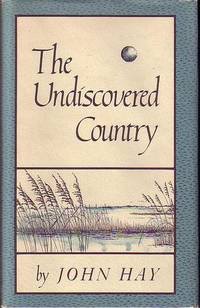
Hardcover. NY, Norton, 1st, 1982, Book: Very Good, Dust Jacket: Very Good, Hardcover in a bright, unclipped dust jacket, 192 pages. Through the distillation of a lifetime of experiences, John Hay describes in The Undiscovered Country his quiet, profound search for our place in the natural world. In considering snails, alewives, terns, woodland moths, and other forms of natural life, Hay shares with his readers a discovery that few have experienced and no one has written about so eloquently. Clean copy.
Hardcover. Boston, Houghton Mifflin , 1st, 1970, Book: Very Good, Dust Jacket: Good, Hardcover, 286 pages, endpaper maps, 60 b&w and color illustrations by Eric Hosking. Dust jacket has edgewear and chipping. Book is very good, tight, clean.
Hardcover. Bologna IT, Damiani, 1st, 2006, Book: Very Good, Dust Jacket: None, Hardcover, 100 pages. Original publisher's illustrated laminated boards. Issued without dust jacket. Copiously illustrated in color and black and white throughout. Beatrice Haverich believes that "trees embody life. They show us the seasons in a city landscape, and they provide us with wood, food and shelter. Their silence demands our respect." Her subjects, for whom she has the utmost sympathy, are survivors, stalwarts: for example, the Yew trees in Kingsley Vale, UK, are 4,000 years old. Among these portraits, she observes branches molded by the wind into lopsided hairstyles, and roots exposed by the rain. Some trees survive in cement planters or remain in the bounds of their sidewalk squares, but others reclaim their habitat, taking over old greenhouses and popping the glass panes one by one as they grow. Up from sand and boulders and cliffs and pavement, Haverich's trees are shaped by their landscape, but they persist in shaping it as well.
Hardcover. NY, Dodd Mead, 3rd pr., 1943, Book: Very Good, Dust Jacket: None, Hardcover, bright red cloth stamped in black. Endpapers map, b&w photographs. 410 pages. The widow of Carl Akeley, naturalist, tells the story back of the exhibits for which he was responsible in the Natural History Museum in New York. This is virtually a biography, with that as a focus; it is a record of the uphill struggle to get the chance to do the thing for which he was gifted and trained; the experiences securing his speciments, adventures in the wilderness, African jungles, the Belgian Congo, the Uganda frontier -- and the immense concentration on details to get the exhibits together and to present them with complete fidelity. Clean copy.
Softcover. Woodstok VT, The Woodstock Foundation, 1st, 1982, Book: Very Good, Dust Jacket: None, Softcover, 123 pages, b&w illustrations. SIGNED BY JANE AND WILL CURTIS on the front fly leaf. This work was published in observance of the 100th anniversary of Marsh's death in 1882. It graphically portrays the many-faceted career of this extraordinarily versatile Vermonter. Marsh is best known for his pioneering environmental study, Man and Nature, which was first published in 1864. Marsh was a lawyer, linguist, businessman, farmer, designer, Congressman, and diplomat (he was Minister to Turkey and to the newly-united Kingdom of Italy, where he spent the last twenty-one years of his life, a tour of duty unprecedented in American diplomacy). In Congress he supported creating of the Smithsonian Institution.
Hardcover. Wisconsin, Stanton & Lee Publishers, Inc., 1st, 1983, Book: Very Good, Dust Jacket: Good, Hardcover, 240 pages. SIGNED BY OWEN GROMME. Color and b/w illustrations throughout. "SIGNED" sticker on front cover. Dust cover shows wear: some chipping on spine and edges, small tears along edges, light fading. Boards in great shape, only very light fading along bottom edges. From the dust jacket front flap: "...presents the life and art of a man who through eight decades of accomplishment as a naturalist and artist has provided us with a link between the 19th and 21st centuries."
Hardcover. NY, Viking / Madison Press Books, 2nd pr., 1986, Book: Very Good, Dust Jacket: Very Good, Oversized hardcover with dust jacket, second (1986) printing, 168 pages. Selection of over 90 of Robert Bateman's wildlife paintings, reproduced in full color, together with his commentaries as a naturalist, plus an introduction based on extensive travels and interviews with the artist. DOMESTIC SHIPPING ONLY.
Hardcover. Univ of Louisiana at Lafayette, 1st, 2019, Book: Very Good, Dust Jacket: Very Good, Hardcover in a bright dust jacket, 80 pages. Over the past eight years, Tina Freeman has photographed the Louisiana wetlands and Arctic and Antarctic glaciers. In Lamentations, Freeman pairs images from each place in a series of diptychs that address climate change, ecological balance, and the connectedness of things across time and space. Lamentations demonstrates how the rising waters along the coast of Louisiana are both visually and physically connected to the melting glaciers at the poles, despite the separation of vast distances. Freeman's work makes plain the crucial, threatening, and global dialogue between water in two physical states. Lamentations is published to accompany an exhibition of the same name, organized by and presented at the New Orleans Museum of Art, September 11, 2019 to February 22, 2020. Text was provided by Tina Freeman, Russell Lord, Brent Goehring, and Jady Surrounding along with a forward by Susan M. Taylor.
Hardcover. Philadelphia, John C. Winston, 1st, 1930, Book: Very Good, Dust Jacket: None, Hardcover, blue cloth with gilt decoration, 500 pages. Color frontispiece and 246 illustrations, the majority black and white photographic illustrations. 3 maps and endpaper maps. Index. Gifford Pinchot (1865-1946) was an American forester, the first head of the US Forestry Service, the person for whom the Gifford Pinchot National Forest in Washington state is named, and a governor of Pennsylvania. In 1929 Pinchot and family took a seven-month cruise to the South Seas during which time he collected specimens for the National Museum. On board were other naturalists and representatives of scientific institutions. Profusely illustrated.
Hardcover. Barre, Mass., The Imprint Society, 1st thus, 1972, Book: Very Good, Dust Jacket: None, Hardcover, 514 pages, with 25 illustrations, translated by John Reinhold Foster, introduced by Ralph M. Sargent, number 380 of a limited 1500 copies, decorated cover and slipcase, very clean and tight copy.
Hardcover. New York, Blue Rider Press, First Edition, 2016, Book: Very Good, Dust Jacket: Very Good, 267 pages. Hardcover. Full color illustrations throughout. Bright, crisp dust jacket with light, marginal wear to edges. Clean & unmarked. A nice copy.
NY, Pantheon Books, 1st US, 1953, Book: Very Good, Dust Jacket: None, Hardcover. Green cloth binding with brown cloth spine. Illustrated with b&w woodcut drawings by Margaret Wetherbee. 124 pages. Story of a year in the life of a village schoolboy and his dominant elder brother - both are poachers and bird trappers, but both have a certain devotion to their victims. Through the eyes of these boys we see the change of seasons, the habits of birds and animals. Clean copy. No dust jacket.
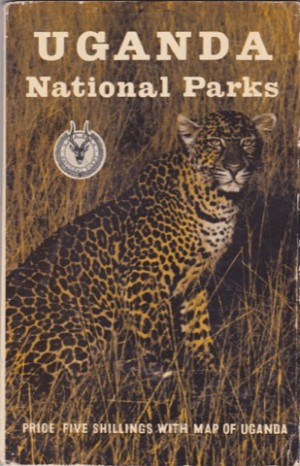
Softcover. UK, Trustees of the Uganda National Parks, 1957, Book: Good, Dust Jacket: None, Softcover, 102 pages plus ads in rear. Also has a small folded map of Uganda in back pocket. B&w illustrations throughout.


 "Tawny Goes Huntingby: Chaffee/Paul Bransom, Allen")
 "Tenants of an Old Farm: Leaves From the Note-Book of a Naturalistby: McCook, Henry C.")



![The American Crow and the Common Raven by: Lawrence Kilham; Joan Waltermire [Illustrator]](http://www.browsingisarousing.com/images-books/398063.jpg "The American Crow and the Common Raven by: Lawrence Kilham; Joan Waltermire [Illustrator]")


 "The Birds of Pandemoniumby: Michele Raffin")


 "The Chimpanzees of Gombe: Patterns of Behaviorby: Goodall, Jane")


 "The Lake and the Woods: Or Nature's Calendarby: Prishvin, Mikhail")


 "The Mushroom: Edible and Otherwise - Its Habitat and Its Time of Growth (WITH ORIGINAL ART)by: Hard, M.E.")

 "The Owls of North America, North of Mexico: All the Species and Subspecies Illustrated in Color and Fully Describedby: Eckert, Allan W.; Karalus, Karl E.")






 "The Smaller Majorityby: Piotr Naskrecki")



 "The Wilderness Lives Again: Carl Akeley and the Great Adventure by: Akeley, Mary L. Jobe with (F. Trubee Davison")


 "The World of Owen Gromme (SIGNED COPY))by: Peterson (Intro), Roger Tory")
 "The World of Robert Batemanby: Derry, Ramsay")



 "Tina Freeman: Lamentations by: Tina Freeman")
 "To the South Seas. The Cruise of the Schooner Mary Pinchot to the Galapagos, the Marquesas, and the Tuamotu Islands, and Tahiti by: Pinchot, Gifford")

 "Trespassing Across America - One Man's Epic, Never-Done-Before, (and Sort of Illegal) Hike Across the Heartlandby: Ilgunas, Ken")

)