Hardcover. Lanham MD, Lexington Books, 1st, 2022, Book: Very Good, Dust Jacket: None, Hardcover, pictorial boards, 143 pages. American nature writing characteristically embodies an appreciative, lyrical evocation of the natural world. But often, too, green-disposed authors have been moved to dramatize diverse, anthropogenic perils to environmental health. John Gatta freshly reveals how this dark yet graced and hopeful strain of environmental literature enlarges upon a jeremiad tradition of prophecy inherited from Puritan New England. Across successive historical periods, such expression has assumed a rich variety of American form--as creative nonfiction, poetry, fiction, or film documentary. In the spirit of ancient Hebrew prophecy, jeremiads--unlike diatribes--reach beyond effusions of doom and gloom toward the prospect of change through a conversion of heart. Accordingly, the new climate fiction and much other writing steeped in what Gatta terms this "Green Jeremiad" tradition not only warn of material threats to life's flourishing, but may also look to stir spiritual understanding and renewal. Clean copy.
Softcover. Kenosha WI, privately printed, 1998, Book: Very Good, Dust Jacket: None, Softcover, 30 pages, almost 300 color photos of shells with a description underneath. Clean copy.
Hardcover. Cambridge MA, Harvard University Press, 1st, 2005, Book: Very Good, Dust Jacket: Very Good, Hardcover, pages. Dr. Piotr (Peter) Naskrecki is a Polish-born entomologist, photographer and author, currently at the Museum of Comparative Zoology, Harvard University (Cambridge, MA, USA.) His research focuses on the evolution of sound-producing insects, and the theory and practice of nature conservation. As a writer, Piotr strives to promote appreciation and conservation of invertebrate animals - insects, arachnids, and their kin - by capturing both their beauty and roles as vital, often critically important members of the Earth's ecosystems. Piotr Naskrecki is a master photographer and an enormously knowledgeable biologist and ecologist. In this beautifully printed book, he captures the finer details of the some of the unusual animal life and adaptations that you find in tropical rain forests, savannas, and deserts. He also provides well written, informative supporting text.
NY, Harpercollins/Cliff Street , 2nd pr., 1998, Book: Very Good, Dust Jacket: Very Good, Hardcover in a bright, unclipped dust jacket. 239 pages, bibliography, appendices, maps on end-papers, illustrated with wonderful b&w line and color drawings by the author. A highly readable account of the author's 300-acre woodland in Maine, which he uses as a camp and outdoor laboratory.
Hardcover. NY, Norton, 1st, 1982, Book: Very Good, Dust Jacket: Very Good, Hardcover in a bright, unclipped dust jacket, 192 pages. Through the distillation of a lifetime of experiences, John Hay describes in The Undiscovered Country his quiet, profound search for our place in the natural world. In considering snails, alewives, terns, woodland moths, and other forms of natural life, Hay shares with his readers a discovery that few have experienced and no one has written about so eloquently. Clean copy.
Hardcover. Boston, Houghton Mifflin , 1st, 1970, Book: Very Good, Dust Jacket: Good, Hardcover, 286 pages, endpaper maps, 60 b&w and color illustrations by Eric Hosking. Dust jacket has edgewear and chipping. Book is very good, tight, clean.
Hardcover. Bologna IT, Damiani, 1st, 2006, Book: Very Good, Dust Jacket: None, Hardcover, 100 pages. Original publisher's illustrated laminated boards. Issued without dust jacket. Copiously illustrated in color and black and white throughout. Beatrice Haverich believes that "trees embody life. They show us the seasons in a city landscape, and they provide us with wood, food and shelter. Their silence demands our respect." Her subjects, for whom she has the utmost sympathy, are survivors, stalwarts: for example, the Yew trees in Kingsley Vale, UK, are 4,000 years old. Among these portraits, she observes branches molded by the wind into lopsided hairstyles, and roots exposed by the rain. Some trees survive in cement planters or remain in the bounds of their sidewalk squares, but others reclaim their habitat, taking over old greenhouses and popping the glass panes one by one as they grow. Up from sand and boulders and cliffs and pavement, Haverich's trees are shaped by their landscape, but they persist in shaping it as well.
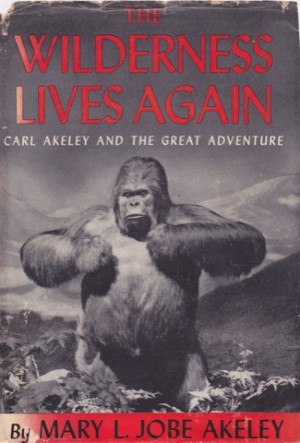
Hardcover. NY, Dodd Mead, 3rd pr., 1943, Book: Very Good, Dust Jacket: None, Hardcover, bright red cloth stamped in black. Endpapers map, b&w photographs. 410 pages. The widow of Carl Akeley, naturalist, tells the story back of the exhibits for which he was responsible in the Natural History Museum in New York. This is virtually a biography, with that as a focus; it is a record of the uphill struggle to get the chance to do the thing for which he was gifted and trained; the experiences securing his speciments, adventures in the wilderness, African jungles, the Belgian Congo, the Uganda frontier -- and the immense concentration on details to get the exhibits together and to present them with complete fidelity. Clean copy.
Hardcover. Berkeley CA, Ten Speed Press, 1st, 2018, Book: Very Good, Dust Jacket: None, Hardcover, pictorial boards. An illustrated tour of the planet exploring ecosystems large and small, from reefs, deserts, and rainforests to a single drop of water. Making earth science accessible and entertaining through art, maps, and infographics, The Wondrous Workings of Planet Earth explains how our planet works-and how we can protect it-from its diverse ecosystems and their inhabitants, to the levels of ecology, the importance of biodiversity, the cycles of nature, and more. Clean copy.
Softcover. Woodstok VT, The Woodstock Foundation, 1st, 1982, Book: Very Good, Dust Jacket: None, Softcover, 123 pages, b&w illustrations. SIGNED BY JANE AND WILL CURTIS on the front fly leaf. This work was published in observance of the 100th anniversary of Marsh's death in 1882. It graphically portrays the many-faceted career of this extraordinarily versatile Vermonter. Marsh is best known for his pioneering environmental study, Man and Nature, which was first published in 1864. Marsh was a lawyer, linguist, businessman, farmer, designer, Congressman, and diplomat (he was Minister to Turkey and to the newly-united Kingdom of Italy, where he spent the last twenty-one years of his life, a tour of duty unprecedented in American diplomacy). In Congress he supported creating of the Smithsonian Institution.
Hardcover. Wisconsin, Stanton & Lee Publishers, Inc., 1st, 1983, Book: Very Good, Dust Jacket: Good, Hardcover, 240 pages. SIGNED BY OWEN GROMME. Color and b/w illustrations throughout. "SIGNED" sticker on front cover. Dust cover shows wear: some chipping on spine and edges, small tears along edges, light fading. Boards in great shape, only very light fading along bottom edges. From the dust jacket front flap: "...presents the life and art of a man who through eight decades of accomplishment as a naturalist and artist has provided us with a link between the 19th and 21st centuries."
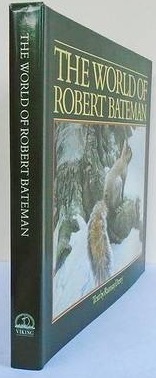
Hardcover. NY, Viking / Madison Press Books, 2nd pr., 1986, Book: Very Good, Dust Jacket: Very Good, Oversized hardcover with dust jacket, second (1986) printing, 168 pages. Selection of over 90 of Robert Bateman's wildlife paintings, reproduced in full color, together with his commentaries as a naturalist, plus an introduction based on extensive travels and interviews with the artist. DOMESTIC SHIPPING ONLY.
Hardcover. Univ of Louisiana at Lafayette, 1st, 2019, Book: Very Good, Dust Jacket: Very Good, Hardcover in a bright dust jacket, 80 pages. Over the past eight years, Tina Freeman has photographed the Louisiana wetlands and Arctic and Antarctic glaciers. In Lamentations, Freeman pairs images from each place in a series of diptychs that address climate change, ecological balance, and the connectedness of things across time and space. Lamentations demonstrates how the rising waters along the coast of Louisiana are both visually and physically connected to the melting glaciers at the poles, despite the separation of vast distances. Freeman's work makes plain the crucial, threatening, and global dialogue between water in two physical states. Lamentations is published to accompany an exhibition of the same name, organized by and presented at the New Orleans Museum of Art, September 11, 2019 to February 22, 2020. Text was provided by Tina Freeman, Russell Lord, Brent Goehring, and Jady Surrounding along with a forward by Susan M. Taylor.
Hardcover. Philadelphia, John C. Winston, 1st, 1930, Book: Very Good, Dust Jacket: None, Hardcover, blue cloth with gilt decoration, 500 pages. Color frontispiece and 246 illustrations, the majority black and white photographic illustrations. 3 maps and endpaper maps. Index. Gifford Pinchot (1865-1946) was an American forester, the first head of the US Forestry Service, the person for whom the Gifford Pinchot National Forest in Washington state is named, and a governor of Pennsylvania. In 1929 Pinchot and family took a seven-month cruise to the South Seas during which time he collected specimens for the National Museum. On board were other naturalists and representatives of scientific institutions. Profusely illustrated.
Hardcover. Barre, Mass., The Imprint Society, 1st thus, 1972, Book: Very Good, Dust Jacket: None, Hardcover, 514 pages, with 25 illustrations, translated by John Reinhold Foster, introduced by Ralph M. Sargent, number 380 of a limited 1500 copies, decorated cover and slipcase, very clean and tight copy.
Hardcover. New York, Blue Rider Press, First Edition, 2016, Book: Very Good, Dust Jacket: Very Good, 267 pages. Hardcover. Full color illustrations throughout. Bright, crisp dust jacket with light, marginal wear to edges. Clean & unmarked. A nice copy.
NY, Pantheon Books, 1st US, 1953, Book: Very Good, Dust Jacket: None, Hardcover. Green cloth binding with brown cloth spine. Illustrated with b&w woodcut drawings by Margaret Wetherbee. 124 pages. Story of a year in the life of a village schoolboy and his dominant elder brother - both are poachers and bird trappers, but both have a certain devotion to their victims. Through the eyes of these boys we see the change of seasons, the habits of birds and animals. Clean copy. No dust jacket.
Softcover. UK, Trustees of the Uganda National Parks, 1957, Book: Good, Dust Jacket: None, Softcover, 102 pages plus ads in rear. Also has a small folded map of Uganda in back pocket. B&w illustrations throughout.
Hardcover. New York, Sirecox, 2nd pr., 1991, Book: Very Good, Dust Jacket: Very Good, 243 pages. Hardcover with dust jacket. A very clean, unmarked copy with only minor wear to dust jacket edges. Color photographs throughout. Illustrated with color photographs by Jose Luis Gonzalez Grande. Translation by Louis Bourne. Foreword by Sam K. Sebagereka, Minister for Tourism and Wildlife of Uganda. Preface by Luis Yanez-Barnuevo. A photographic safari of Uganda.
Hardcover. Boston, L.C. Page, rep, 1922, Book: Very Good, Dust Jacket: Poor, 271 pages. Hardcover with dust jacket. A Book of animal life in the Guiana Wilds, 59 plates by Bull. Dj with wear, chunks missing from top and bottom spine, front bottom, and rear bottom. Gutter cracked in several spots.
Softcover. Cambridge MA, The MIT Press, 1st, 1997, Book: N, Softcover, 119 pages. Ultimately, Viewing Olmsted is a savvy and thought-provoking, yet diminutive picture book. The collaboration of three brilliant photographers under the sponsorship of the Canadian Centre for Architecture, it guides the reader down three highly personal, present day tours of legendary parks designed by Olmsted, the patron saint of American landscape architecture. Happily, though, its readers are left to intellectually fend for themselves as to meanings or implications of Frederick Olmsted's work, genius, and lasting influence as the man who designed such famous spaces as Central Park. Academics and artists will appreciate the fresh visual perspectives offered on the man's legacy, the sometimes soothing, sometimes haunting nature-by-design retreats for the urban soul. Those with more than a passing interest in the ways in which man interacts with his `natural' surroundings will appreciate vistas evocative of place rather than time. To the authors' credit, the book raises more questions than it answers, and is of a scale to fit neatly into a travel case. Far from definitive, the book is, nevertheless, a must have for architects, landscape architects, photographers, and Olmsted aficionados.
Hardcover. NY, Knopf, 1st, 1990, Book: Very Good, Dust Jacket: Very Good, Color illustrations by Thomas B. Allen. Nice, new-looking condition. Hardbound, dust jacket.
Hardcover. NY, Alfred A. Knopf, 2nd pr., 1967, Book: Very Good, Dust Jacket: Very Good, Hardcover in a bright, unclipped dust jacket, 302 pages. A follow-up to Margaret Murie's classic Two in the Far North about their earlier life in Alaska, this book set in and around Jackson Hole was co-authored with her husband Olaus, who died before its publication. In alternating chapters, Olaus, a renown wildlife biologist, writes about his animal studies, especially of elk (wapiti), and Margaret writes more generally about "their life together, on the trail, in the various camps, and nature adventures in the wilderness during four seasons." The Muries were pivotal in the wilderness movement and lived at the base of the Tetons in Moose, Wyoming. Their home is now the Murie Center in the National Park. Margaret has been called "the grandmother of the conservation movement." With photographs and illustrations by Olaus. Clean copy.

 "The Saving Grace of America's Green Jeremiad by: John Gatta")
 "The Seashells of Sanibel and Captiva Islandsby: Ross W. Gundersen")
 "The Smaller Majorityby: Piotr Naskrecki")
 "The Trees in My Forestby: Bernd Heinrich")
 "The Undiscovered Country by: Hay, John")
 "The Vanishing Jungle: The Story of the World Wildlife Fund Expeditions to Pakistanby: Guy Mountfort")
 "The Whisper of a Million Leaves by: HAVERICH, Beatrice.")
 "The Wilderness Lives Again: Carl Akeley and the Great Adventure by: Akeley, Mary L. Jobe with (F. Trubee Davison")

 "The Wondrous Workings of Planet Earth: Understanding Our World and Its Ecosystems by: Rachel Ignotofsky")
 "The World of George Perkins Marsh: America's First Conservationist and Environmentalist: An Illustrated Biography by: Curtis, Jane and Will/Frank Lieberman (designer)")
 "The World of Owen Gromme (SIGNED COPY))by: Peterson (Intro), Roger Tory")
 "The World of Robert Batemanby: Derry, Ramsay")

 "They Love and Kill: Sex, Sympathy and Aggression in Courtship and Mating by: Vitus B. Droscher")
 "Tina Freeman: Lamentations by: Tina Freeman")
 "To the South Seas. The Cruise of the Schooner Mary Pinchot to the Galapagos, the Marquesas, and the Tuamotu Islands, and Tahiti by: Pinchot, Gifford")
 "Travels into North Americaby: Kalm, Peter")
 "Trespassing Across America - One Man's Epic, Never-Done-Before, (and Sort of Illegal) Hike Across the Heartlandby: Ilgunas, Ken")
 "Truants, Theby: Badcock, J. C.")
 "Uganda National Parks Handbookby: N/A")
 "Uganda: Wellspring of Africaby: Leguineche, Manuel")
 "Under the Roof of the Jungleby: Bull, Charles Livingston")
 "Viewing Olmsted: Photographs by Robert Burley, Lee Friedlander, and Geoffrey Jamesby: Lambert, Phyllis")
 "Walking to the Creekby: Williams, David and Thomas B. Allen")
 "Wapiti Wildernessby: Margaret & Olaus Murie Murie")